
Evening at Medfield, Massachusetts — History & Facts
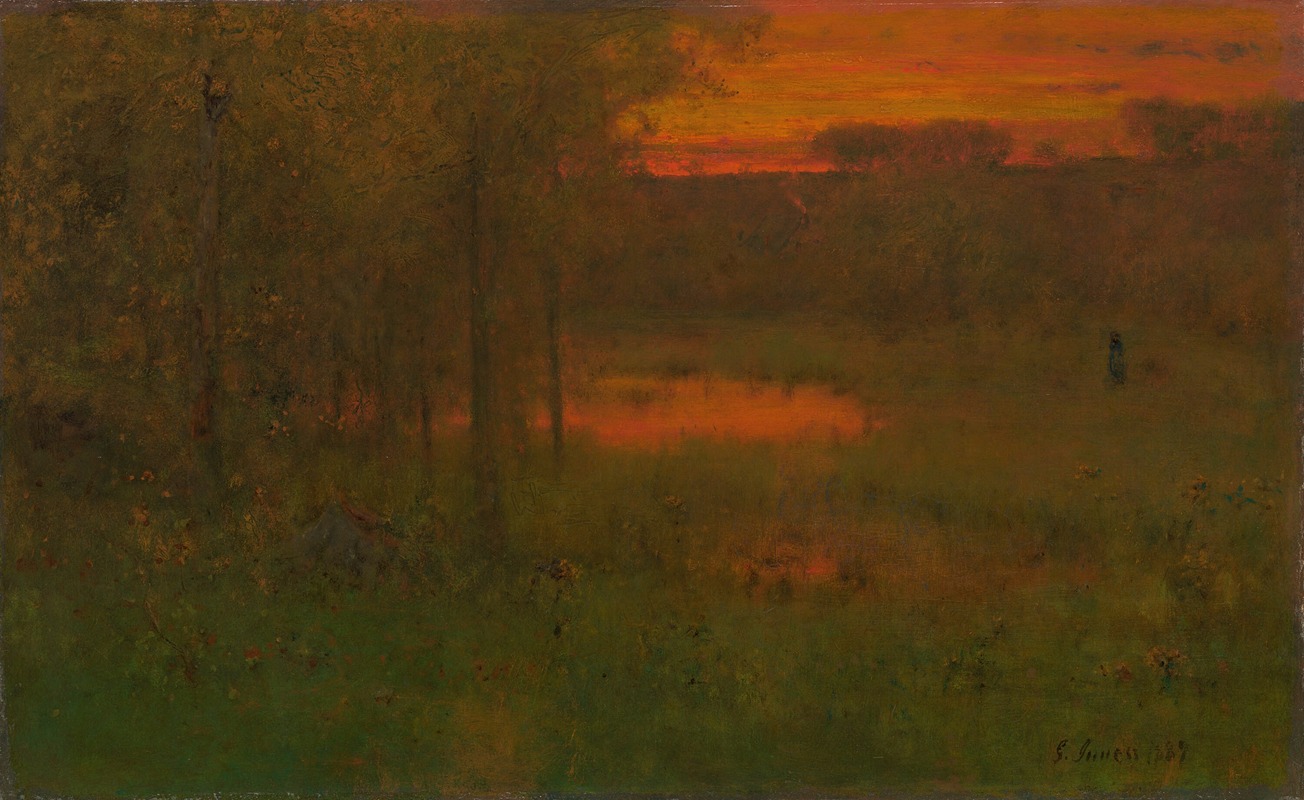
Who listens when art speaks of silence? In Evening at Medfield, Massachusetts, the stillness of twilight beckons contemplative thought, inviting viewers to explore the quiet revolution of nature. Look to the left at the deep, shadowy trees, their silhouettes softened by the fading light. The gentle hues of amber and blue blend seamlessly, ushering in the dusk. Notice how the brushstrokes create a texture that feels alive, as if the landscape breathes along with the viewer.
The composition, balanced yet dynamic, draws the eye into the serene expanse, where the horizon meets the tranquil waters, inviting a sense of peace. Within this idyllic scene lies the tension between dusk and dawn, a reminder of the fleeting nature of time. The interplay of light and shadow evokes emotional depth, hinting at the unknown that night brings. Each color choice, from the muted earth tones to the vibrant sky, encapsulates a moment of transition — not just of day into night, but of an era shifting towards appreciation for the subtleties of nature. In 1875, George Inness painted this work during a pivotal moment in American art, characterized by the rise of the Hudson River School and the nascent Impressionist movement.
Living in New Jersey and influenced by transcendental philosophy, he sought to capture the essence of the American landscape, merging realism with a spiritual vision. The painting reflects his commitment to conveying emotional resonance, aiming to inspire a deeper connection between humanity and the natural world.
More Artworks by George Inness
Browse all →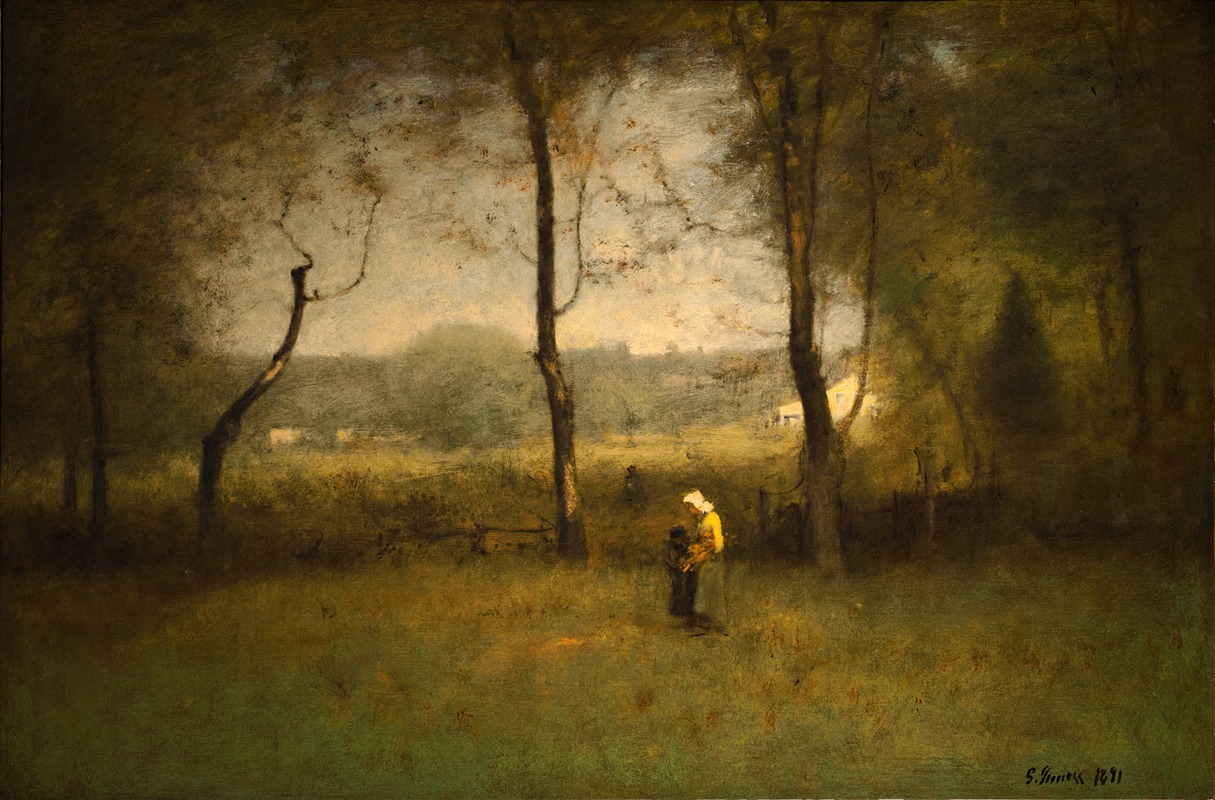
Autumn Woods
George Inness
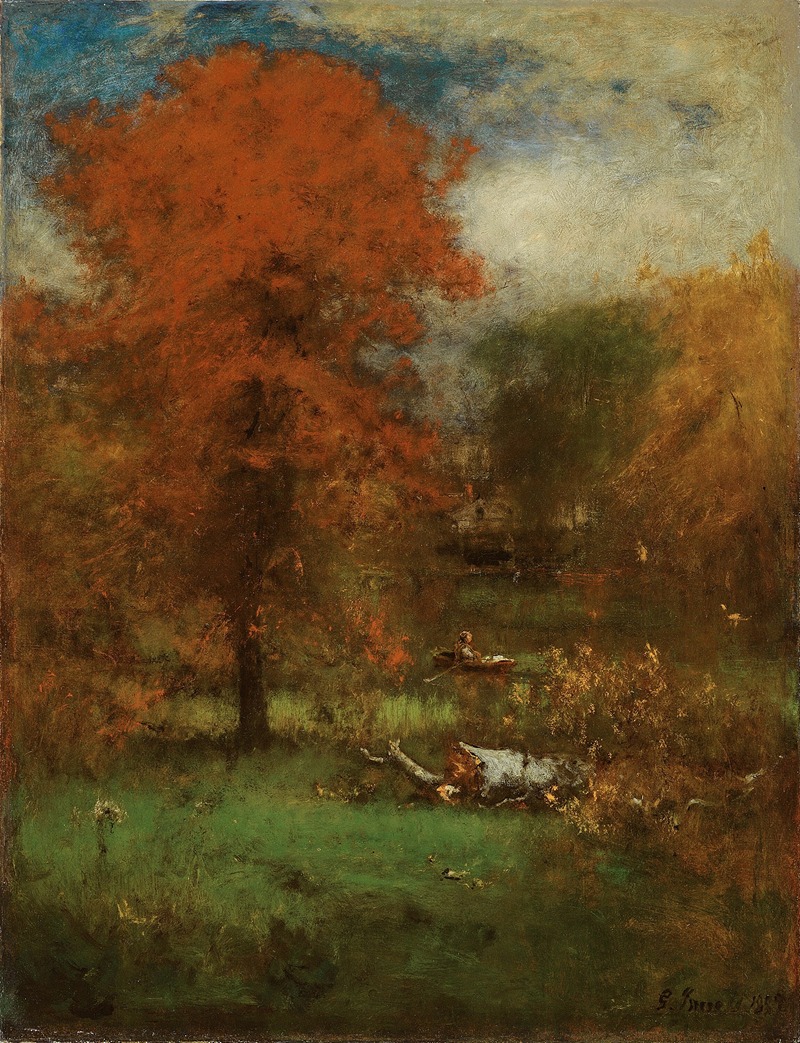
The Mill Pond
George Inness
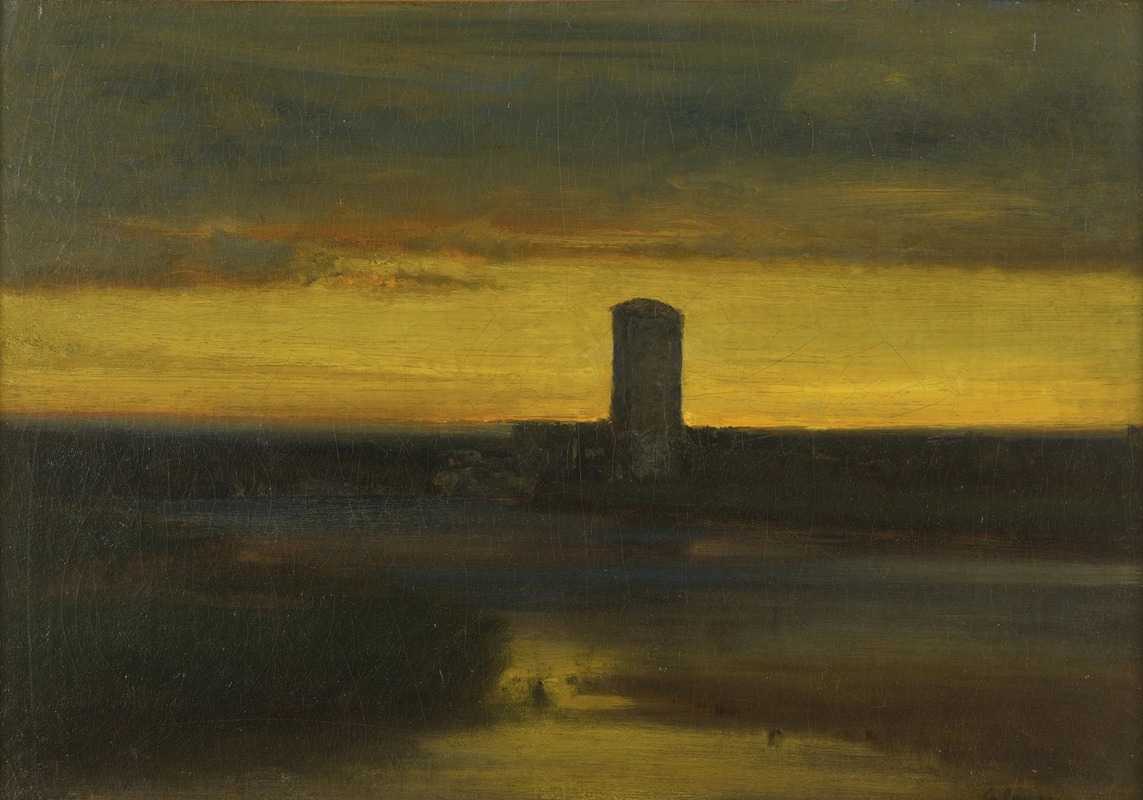
Afterglow
George Inness
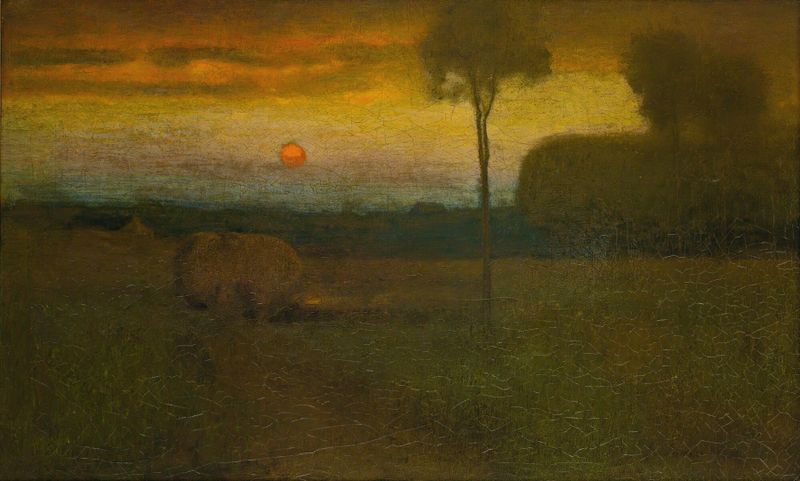
Landscape (Evening Landscape)
George Inness

Montclair
George Inness

View in Berkshire County, Massachusetts, Clearing Off after a September Storm
George Inness

October
George Inness
Landscape, Sunset
George Inness
Afterglow
George Inness
Catskill Mountains
George Inness





