
Evening Glow — History & Facts
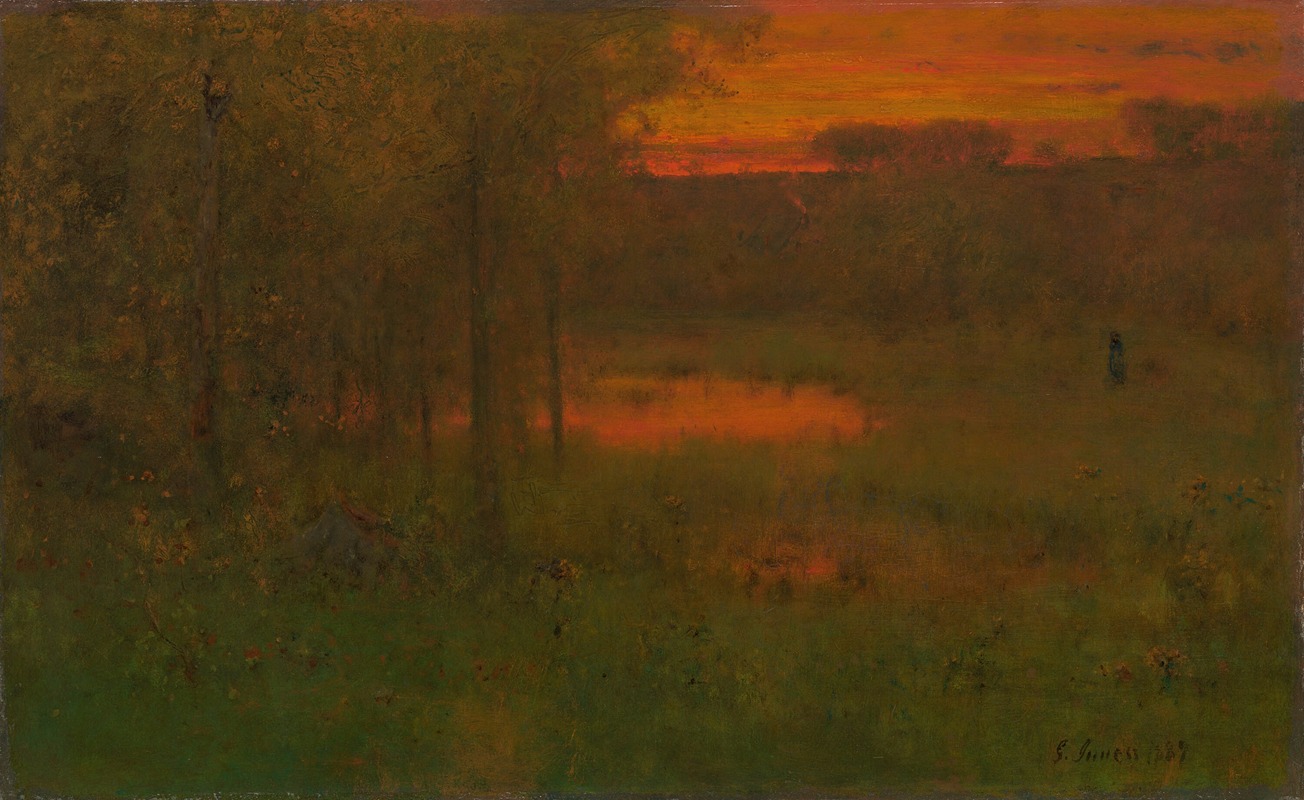
Is this a mirror — or a memory? The richness of color envelops the viewer, inviting a deep, contemplative journey into the twilight of the day. Look to the center, where the horizon blurs into a soft, golden haze, seamlessly blending with the clouds that cascade in gentle waves of pink and orange. The artist employs a delicate palette, accentuating the interplay of light and shadow across the landscape. Notice how the warm hues dance upon the tranquil water, creating a shimmering connection between earth and sky, an ethereal invitation to linger in the beauty of the moment. Yet beneath these serene colors lies a tension between permanence and transience.
The fading light evokes a sense of nostalgia, suggesting the inevitable passage of time and the fleeting nature of twilight. Each brushstroke captures the ephemeral quality of the fading day, resonating with the viewer’s own memories of moments gone by. The juxtaposition of the vibrant colors against the creeping darkness serves as a poignant reminder of life’s dualities — joy intertwined with loss, beauty with the sorrow of endings. In 1883, during a transformative period for American landscape painting, the artist was deeply influenced by the ideals of the Hudson River School and the emerging Impressionist movement.
He painted Evening Glow while residing in New Jersey, reflecting a personal journey toward a more evocative and atmospheric style. This was a time of exploration, not only for him but for the art world, as artists sought to capture the emotional resonance of nature in an increasingly industrialized society.
More Artworks by George Inness
Browse all →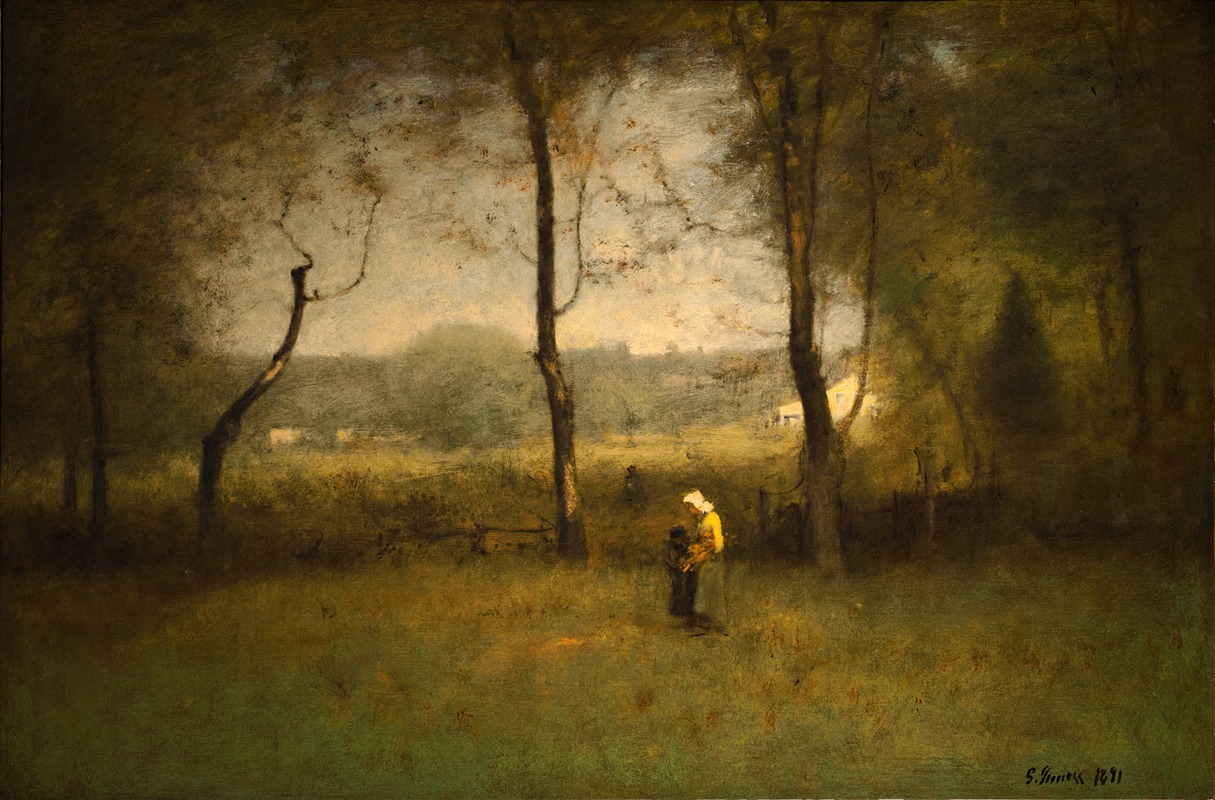
Autumn Woods
George Inness
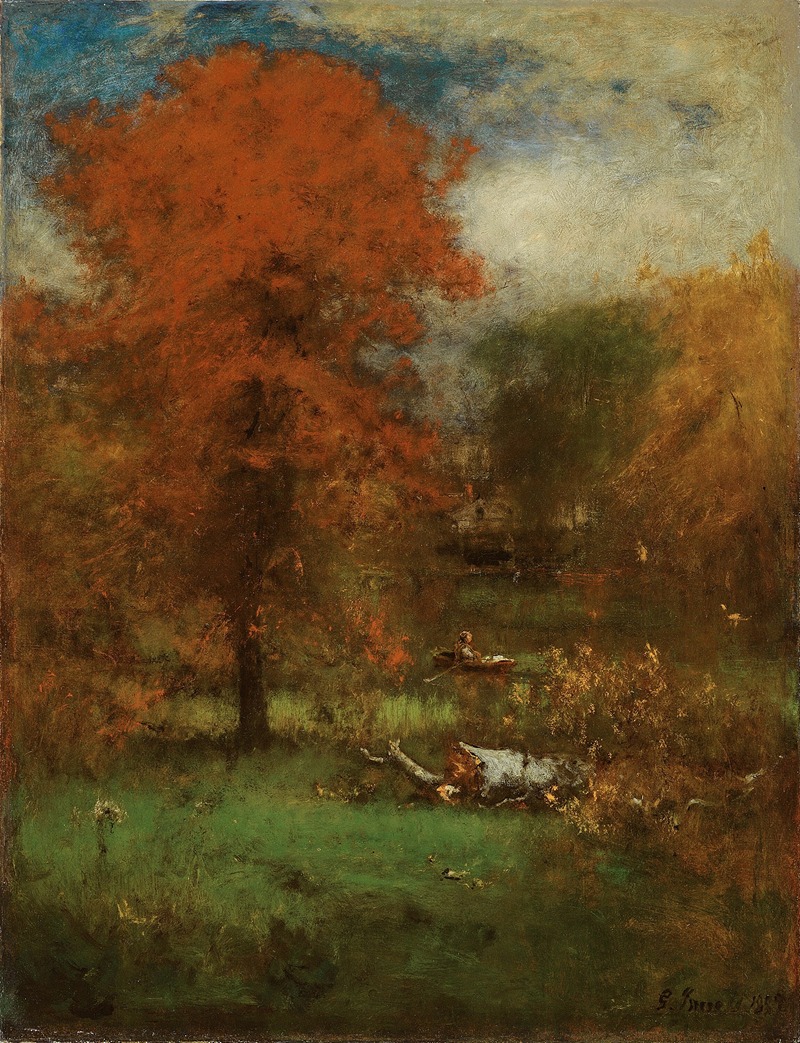
The Mill Pond
George Inness
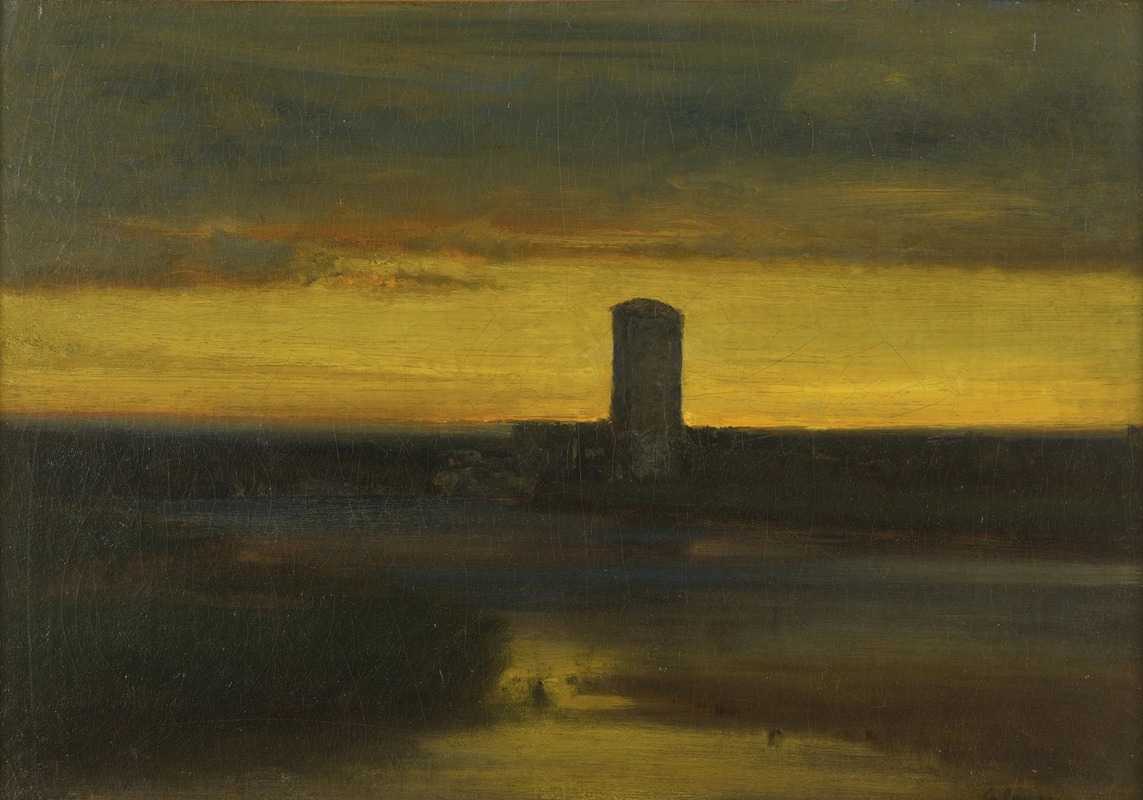
Afterglow
George Inness
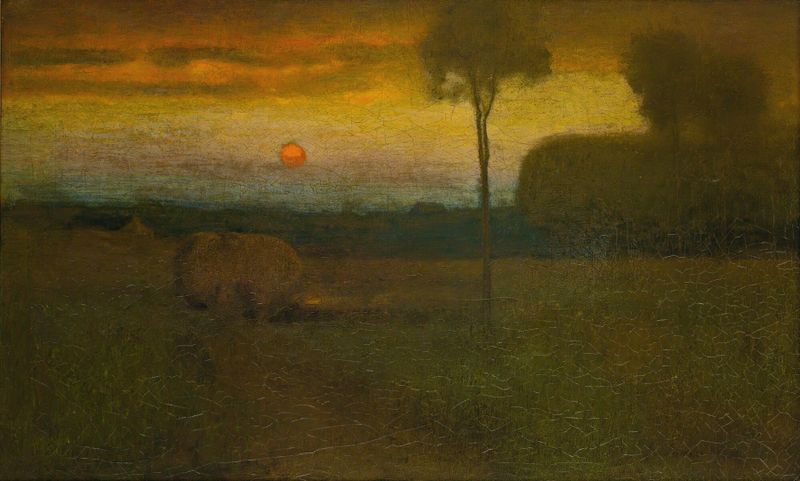
Landscape (Evening Landscape)
George Inness

Montclair
George Inness

View in Berkshire County, Massachusetts, Clearing Off after a September Storm
George Inness

October
George Inness
Landscape, Sunset
George Inness
Afterglow
George Inness
Catskill Mountains
George Inness





