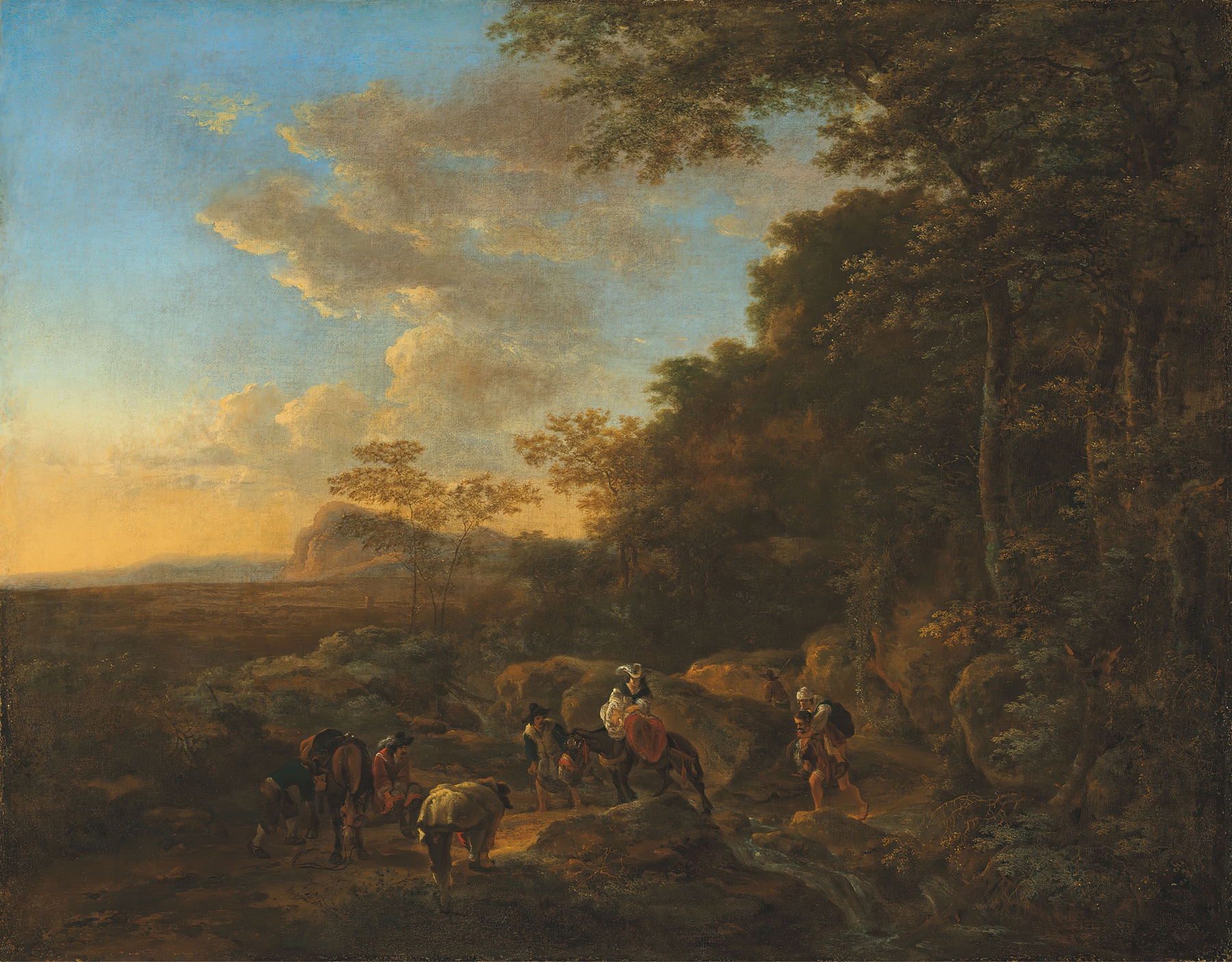
Extensive Italianate landscape with a traveler and drovers on a road, a farmhouse and a village beyond — History & Analysis
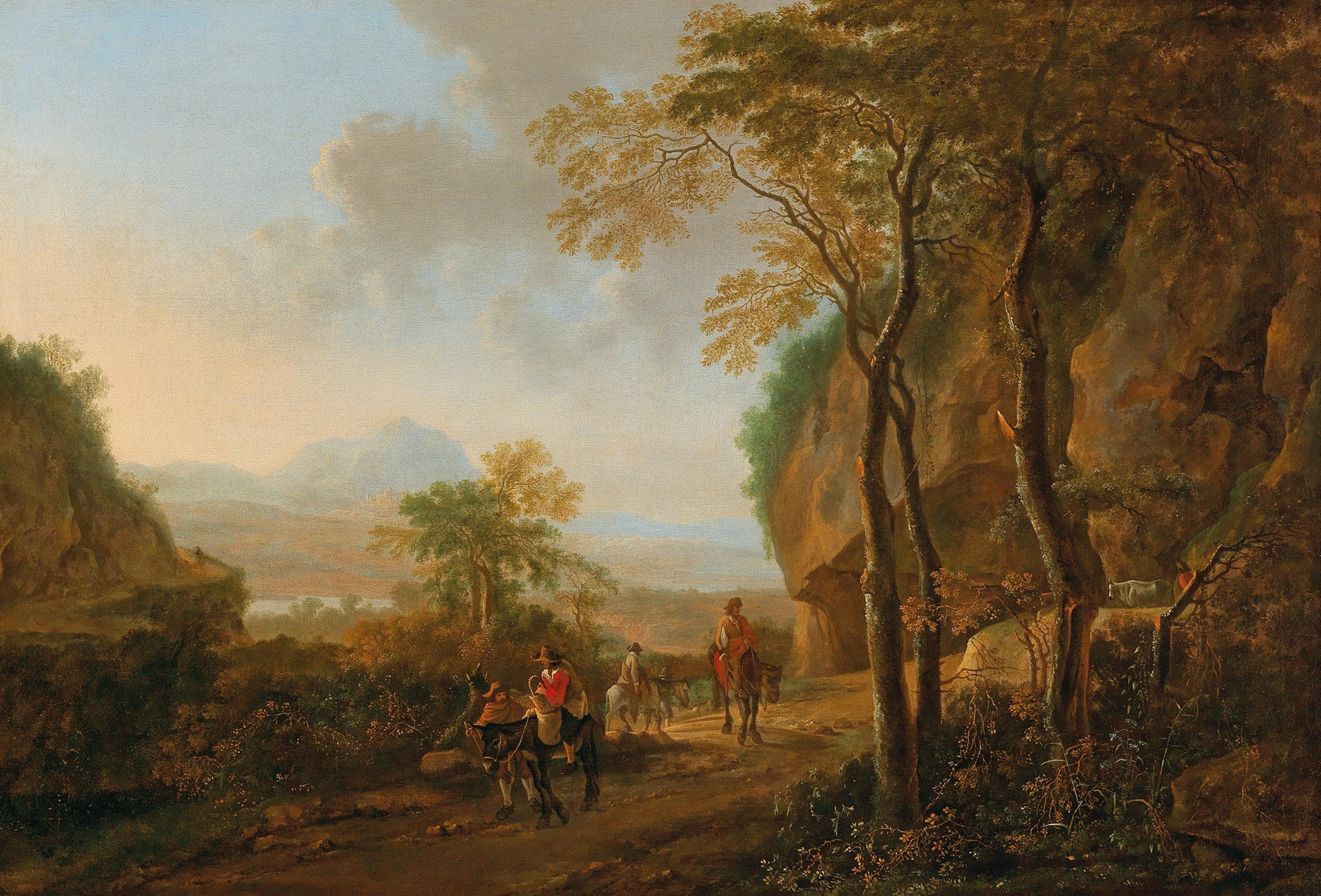
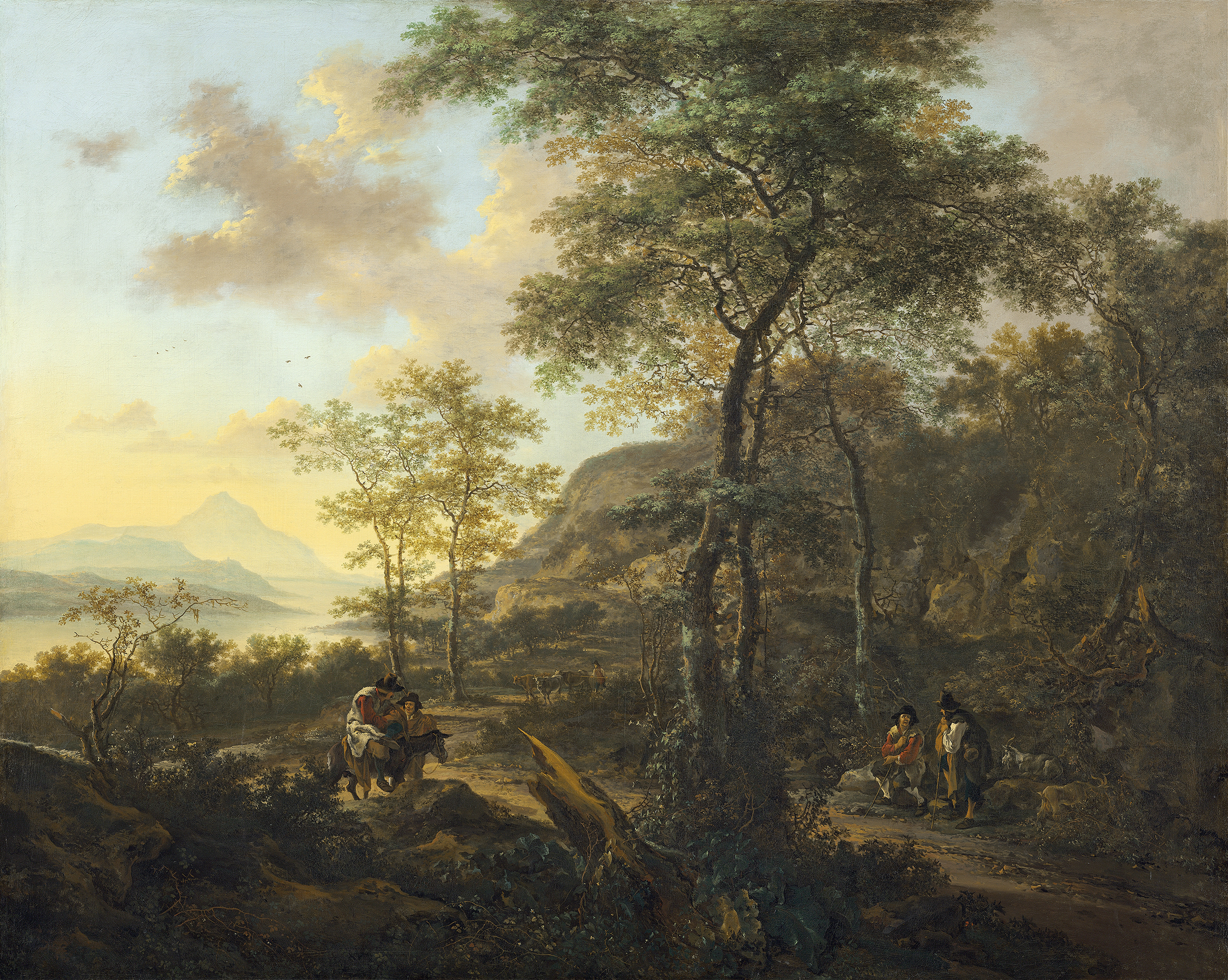
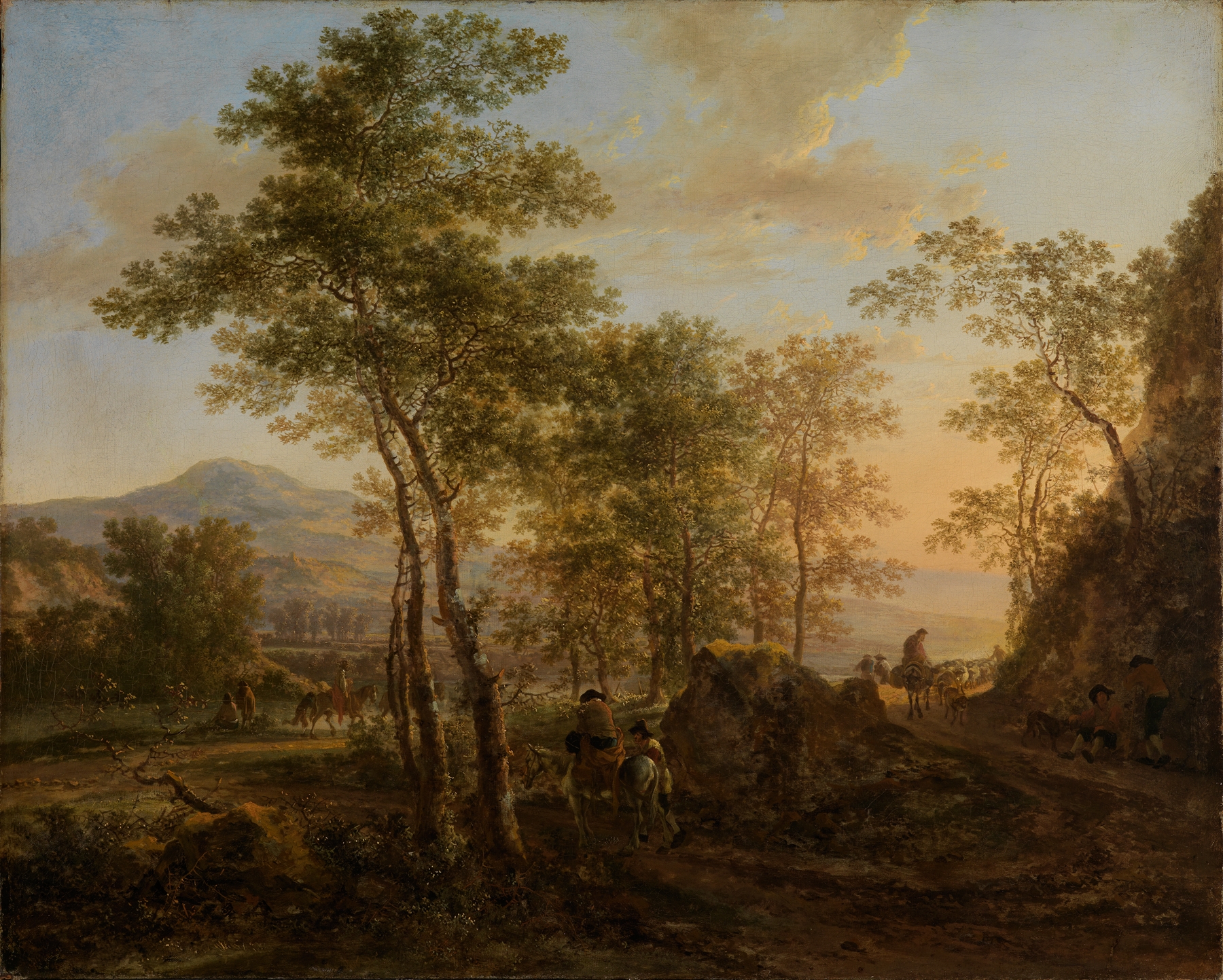
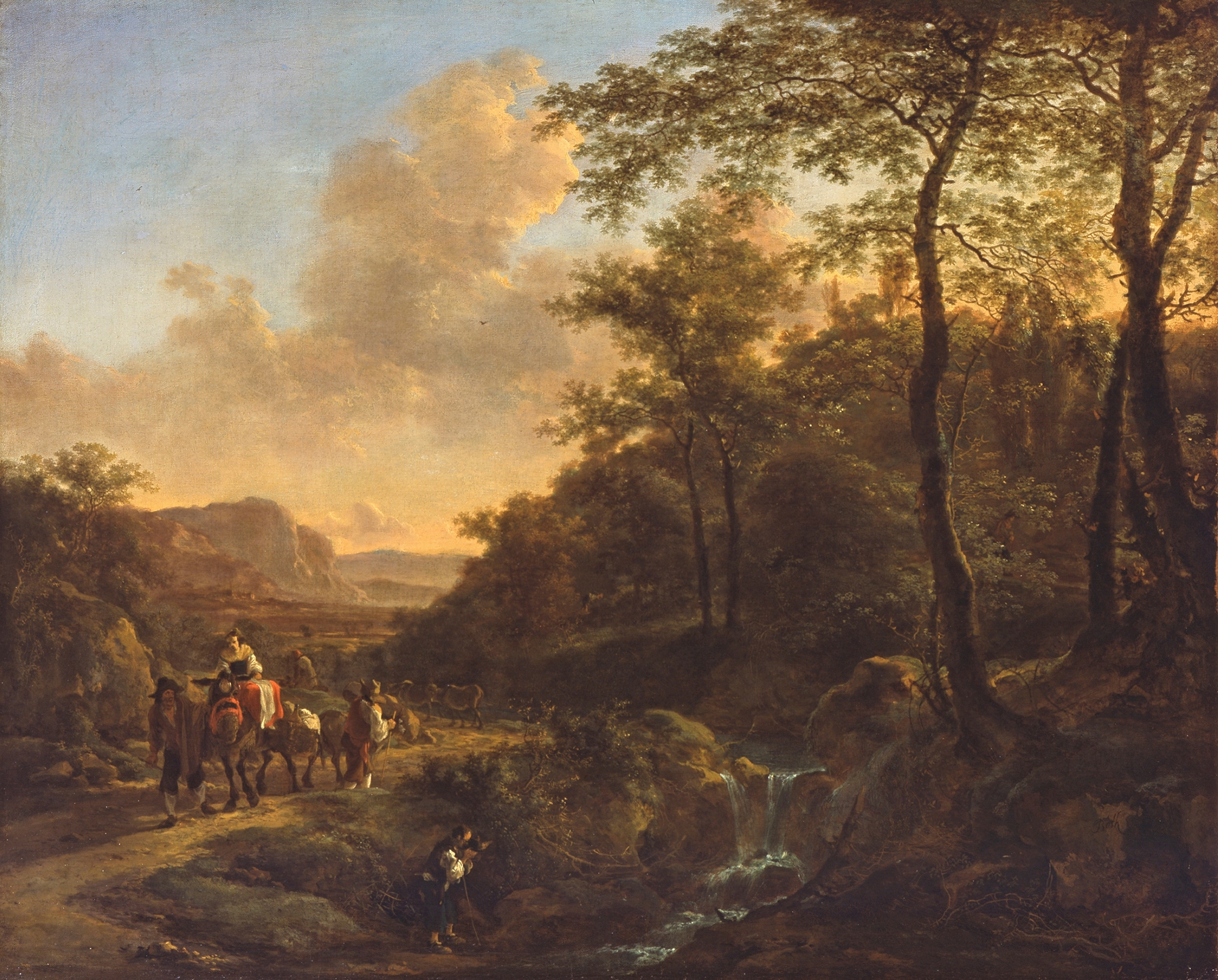
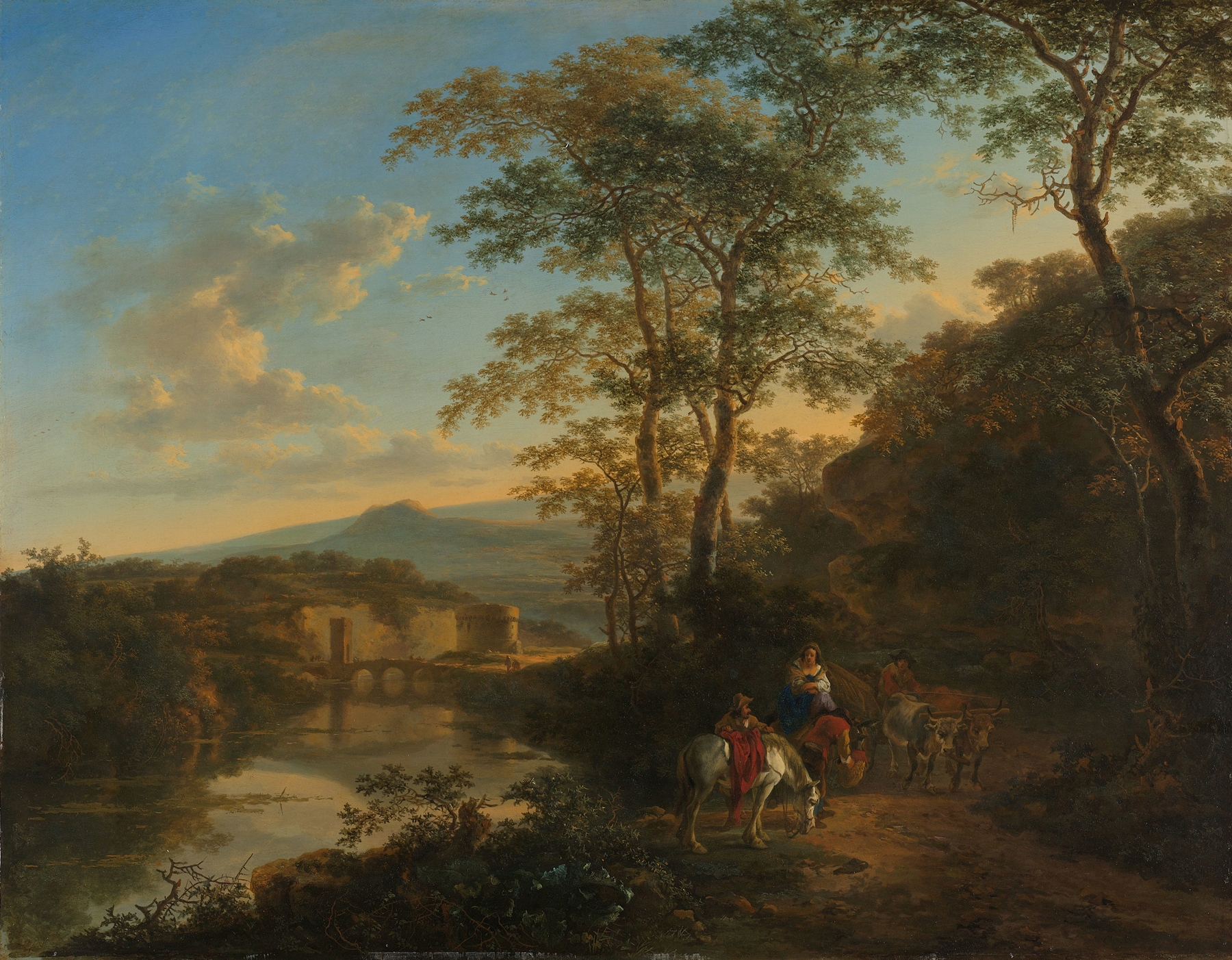
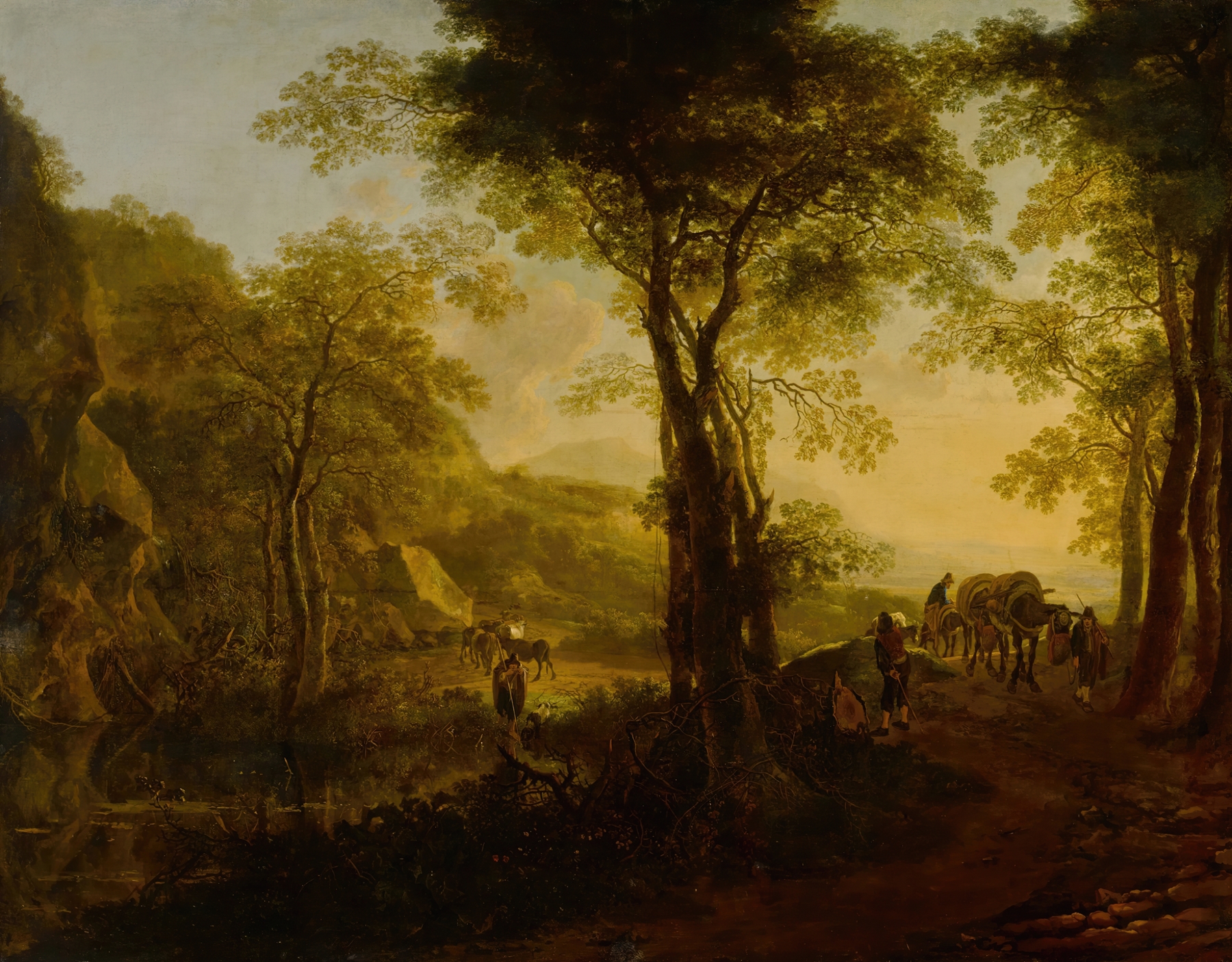
“Under the brush, chaos becomes grace.” This sentiment captures the essence of transformation, where the raw beauty of nature finds its voice through the artist’s hand. In a world that often feels static, a landscape can unveil the promise of rebirth. Look to the horizon, where the vibrant greens of rolling hills embrace the subtle blues of the sky. The soft strokes of the brushwork reveal a journey unfolding: a weary traveler, accompanied by a group of drovers, meanders along a dusty road.
The farmhouse stands resolute, a testament to human resilience amidst the bountiful embrace of nature, while the village in the background whispers stories of community and companionship. Each element is meticulously placed, drawing the eye deeper into an enchanting narrative. Yet, beyond the idyllic scenery, hidden tensions emerge. The winding road symbolizes not just a physical journey, but the passage of time and life’s uncertainties.
The juxtaposition of the distant village and the lone traveler hints at the solitude often felt even in collective spaces. Each shadow cast by the farmhouse serves as a reminder that amid the beauty, challenges persist, echoing the cycles of growth and decay inherent in the human experience. Created in an era where classicism and the allure of the pastoral were gaining momentum, the artist captured this landscape during a period rich with exploration and change. Working in the Netherlands, he immersed himself in the Italianate style, blending realism with romanticism, and offering viewers a glimpse into a world where nature and humanity coexist in harmony and tension.