
Farm at Sundown — History & Facts
In the quiet stillness of a fading day, hues linger on the horizon, evoking a profound sense of emptiness. It is in this moment, suspended between light and shadow, that the heart finds a reflective pause, yearning for connection amidst solitude. Look to the left at the rich, warm tones of the landscape, where the fading sun casts a golden glow over the fields. Notice how the gentle brush strokes create an ethereal quality, blending colors that range from deep amber to soft sepia.
The composition, with its expansive sky and humble farmhouse nestled within the landscape, invites the viewer to wander and ponder the relationship between nature and human presence. In the foreground, the quiet of an empty path may symbolize the journey once taken, now solitary and forgotten. The balance of light and dark suggests the complexities of existence — the fleeting joys of a setting sun mingling with the inevitable encroachment of night. This tension between vibrancy and desolation speaks to the ephemeral nature of life itself, leaving a haunting resonance that lingers long after the gaze shifts away. During the years 1863 to 1866, the artist found himself exploring themes of nature’s beauty through a personal lens, influenced by the Romantic ideals of the time.
Life was tumultuous in America, with the Civil War tearing at the fabric of society, yet Inness sought solace in the tranquility of rural landscapes. Painted in New Jersey, Farm at Sundown encapsulates his belief that the natural world could offer profound emotional truths, revealing the complexities of the human experience through the lens of simplicity.
More Artworks by George Inness
Browse all →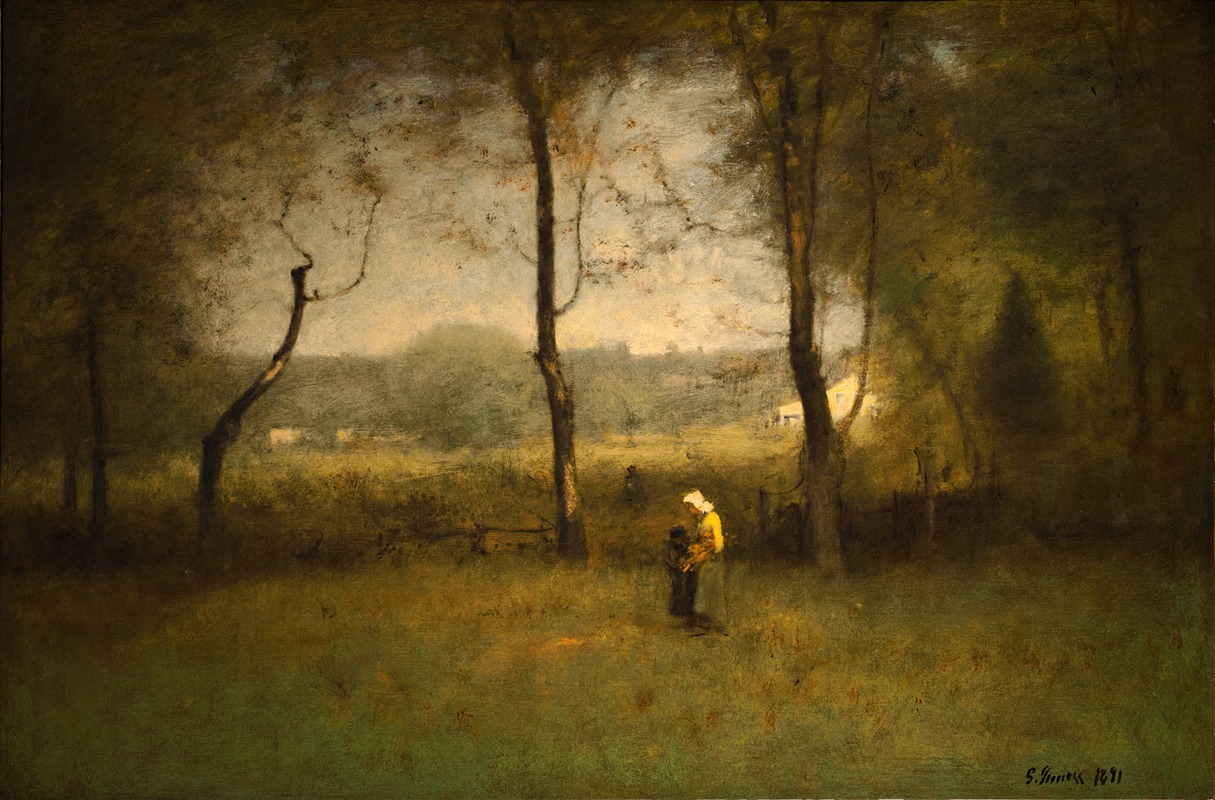
Autumn Woods
George Inness
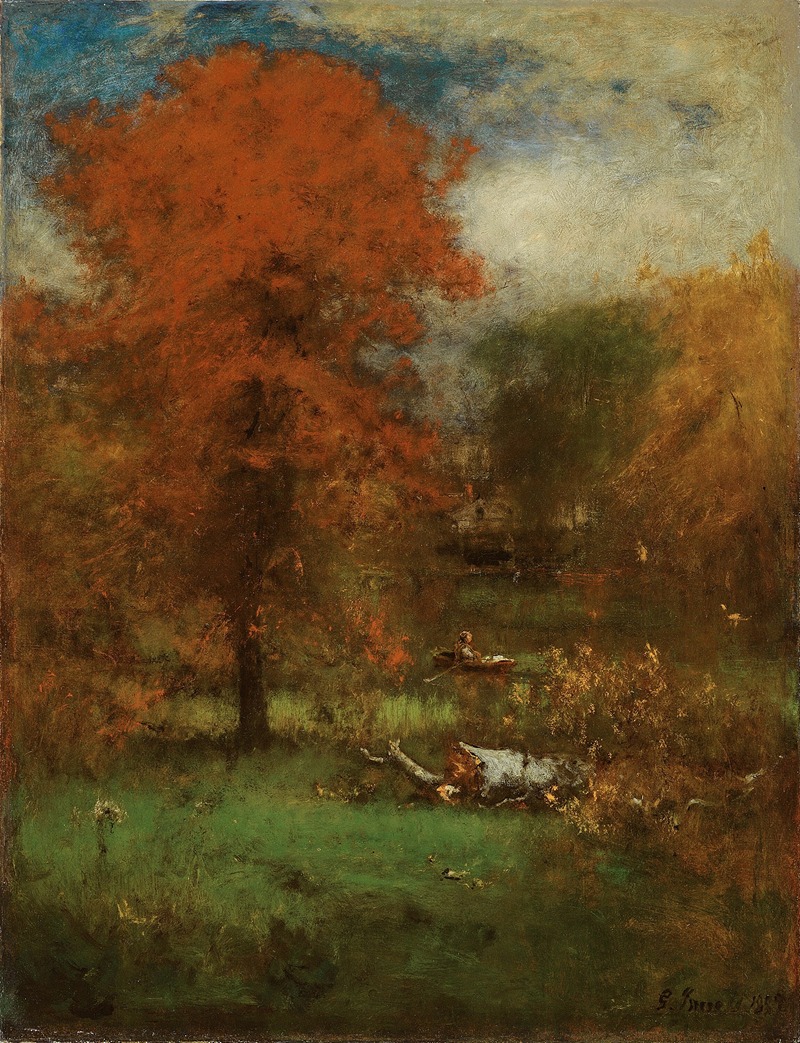
The Mill Pond
George Inness
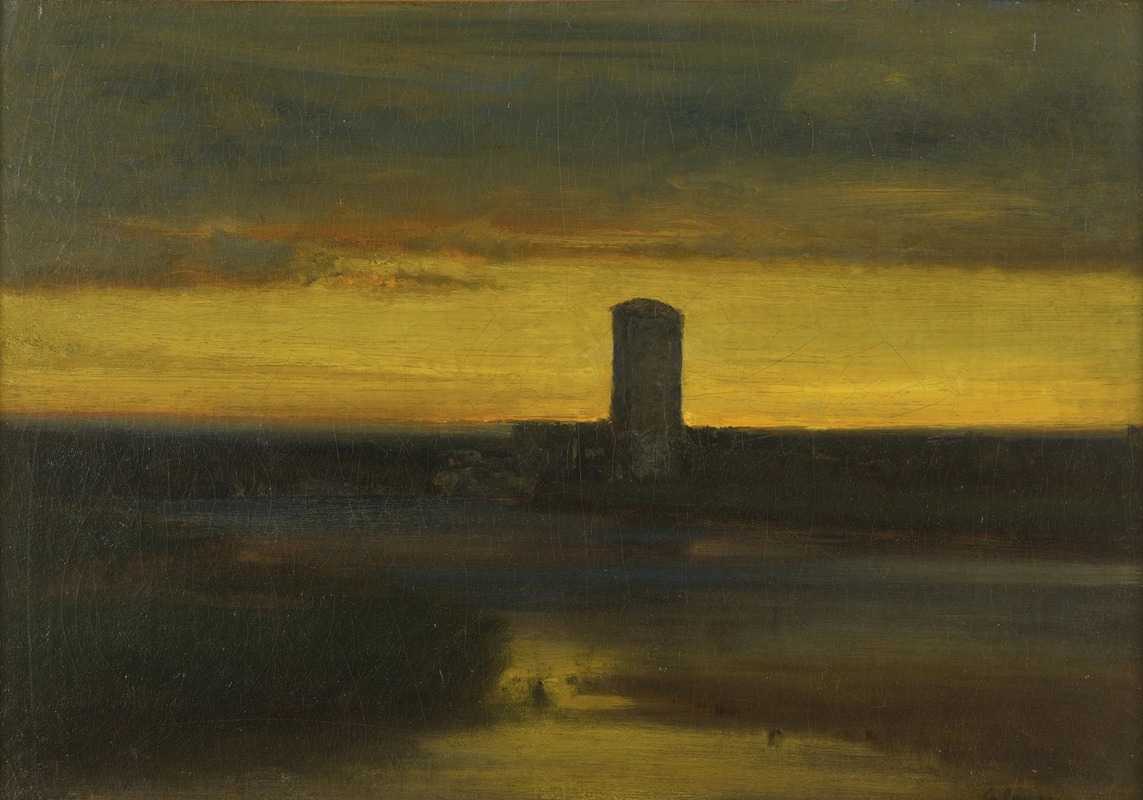
Afterglow
George Inness
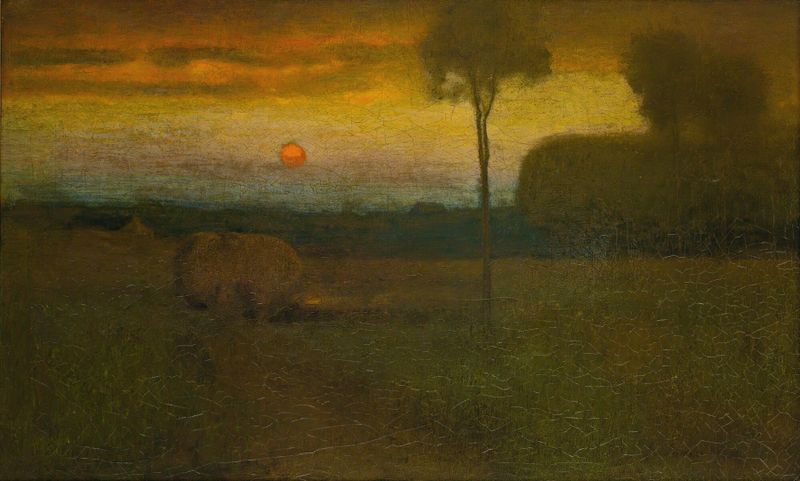
Landscape (Evening Landscape)
George Inness

Montclair
George Inness

View in Berkshire County, Massachusetts, Clearing Off after a September Storm
George Inness

October
George Inness
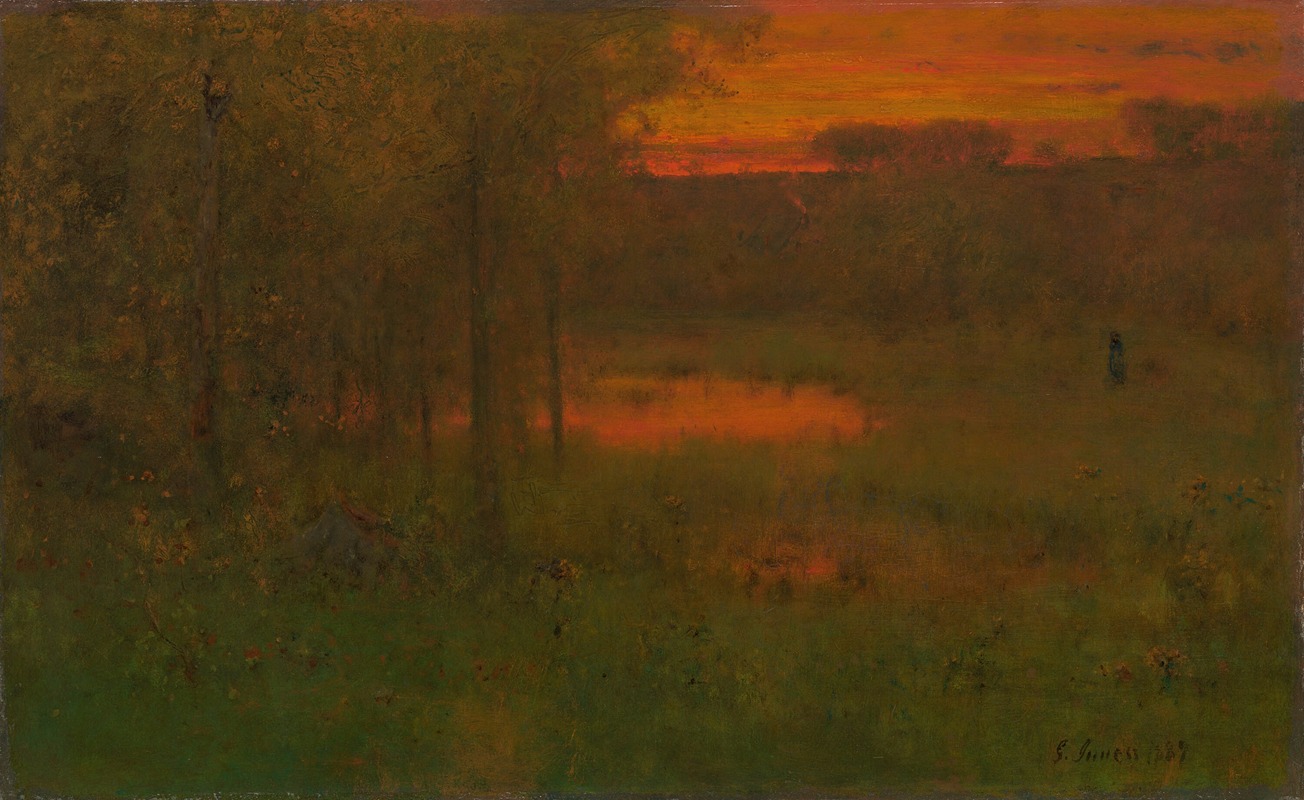
Landscape, Sunset
George Inness
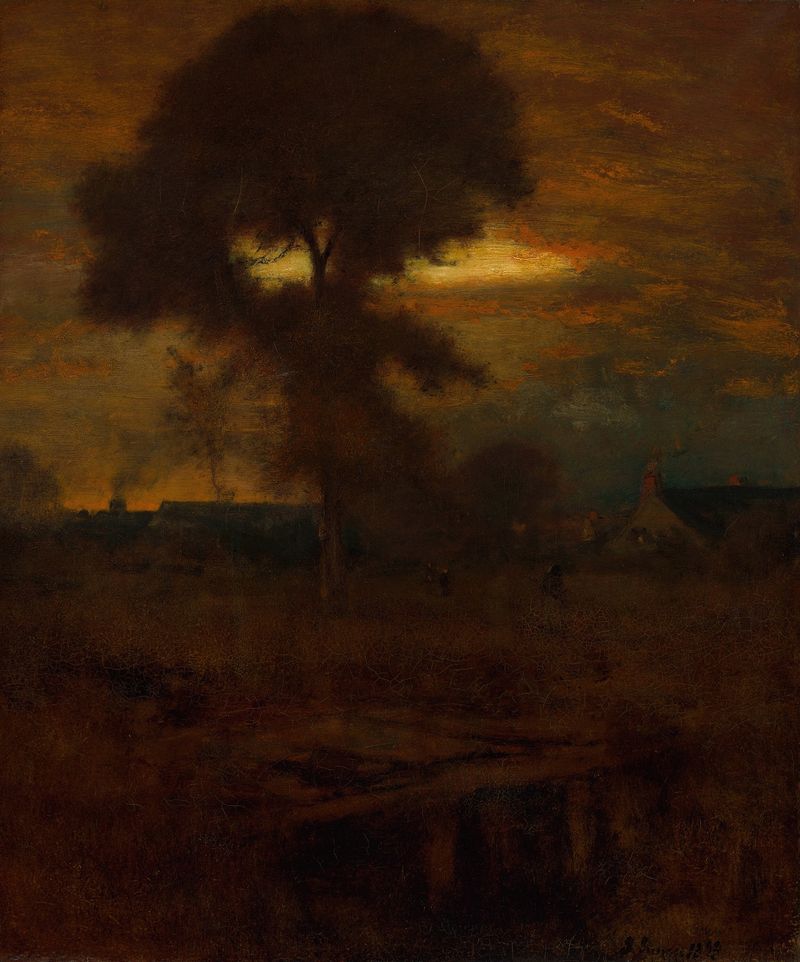
Afterglow
George Inness
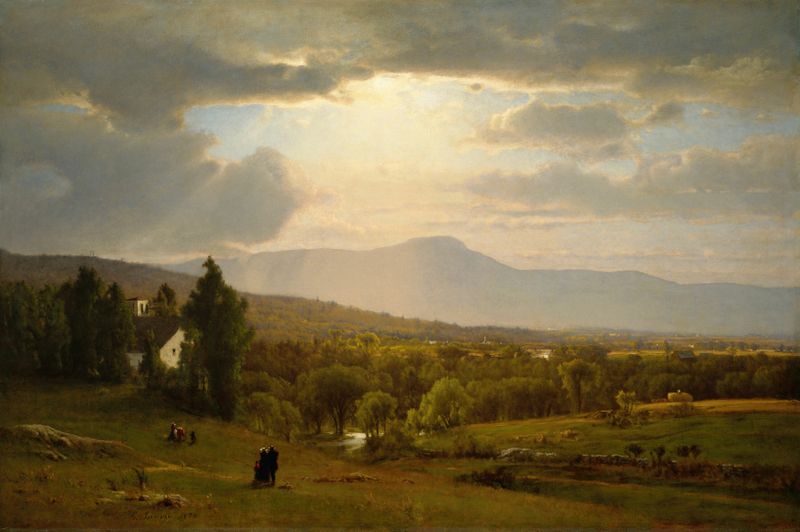
Catskill Mountains
George Inness





