
Faun e Amsel zupfeifend (1) — History & Facts
A faun sprawls in the grass, his body half-human, half-goat, caught in a moment of playful communion with a blackbird perched just above him. The faun’s lips are pursed, fingers lifted as if whistling or coaxing a tune from the bird, inviting the viewer into a private exchange between myth and nature. Light glances off his bare torso and the lush, tangled greenery, drawing the eye to the delicate pink blossoms and the bird’s attentive posture.
The scattered papers and pen at his side hint at a life of thought or poetry, now abandoned for this fleeting, musical conversation. Every detail—the faun’s relaxed limbs, the soft moss beneath him, the shimmering leaves—invites us to linger in this enchanted pause, where wildness and creativity meet. Painted in 1864/65, Faun e Amsel zupfeifend (1) belongs to a world fascinated by the ancient and the arcadian, when artists like Arnold Böcklin revived mythological figures to explore the boundaries between civilization and the untamed. Such works were often commissioned by collectors drawn to the imaginative escape of classical themes, their settings blending real landscapes with dreams of antiquity.
In the mid-19th century, as Europe’s cities grew and nature seemed ever more distant, paintings like this offered a vision of harmony between the human mind and the wild, a space where myth might still be encountered on a summer afternoon. History has kept few traces of this particular faun, but the scene’s gentle wit and quiet magic remain as fresh as the moment Böcklin set brush to canvas—inviting us, too, to listen for the music in the undergrowth.
More Artworks by Arnold Böcklin

Die Toteninsel III
Arnold Böcklin
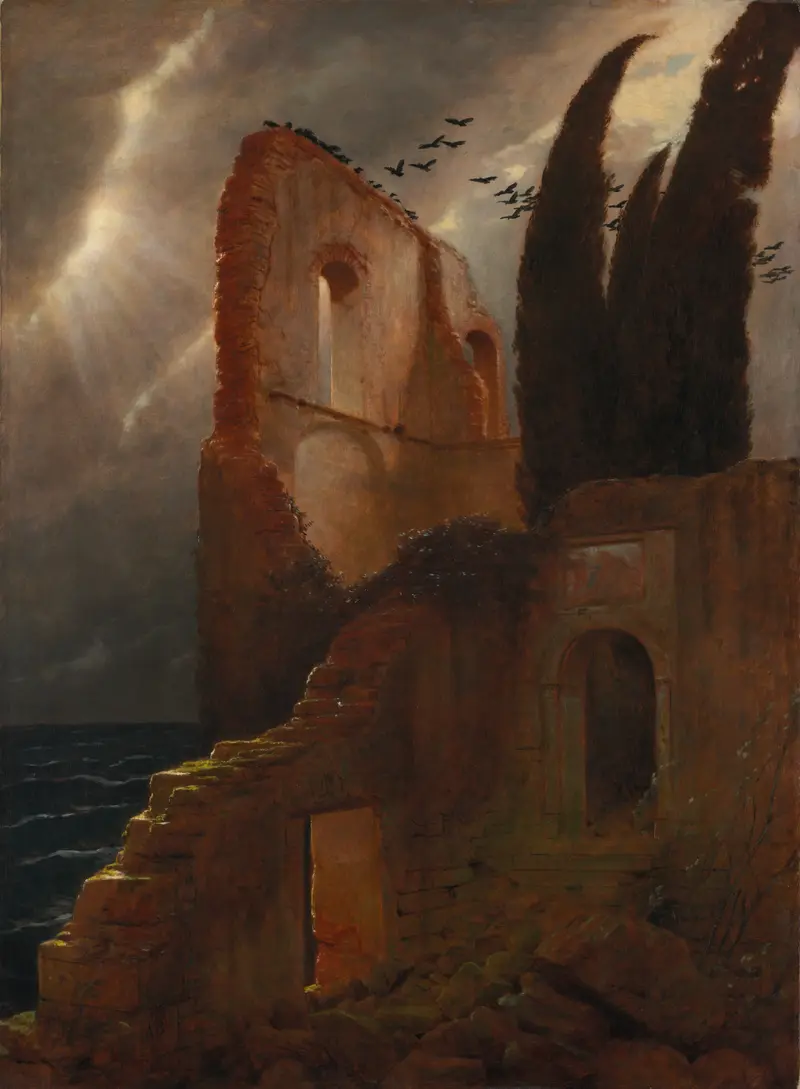
Ruin by the Sea
Arnold Böcklin
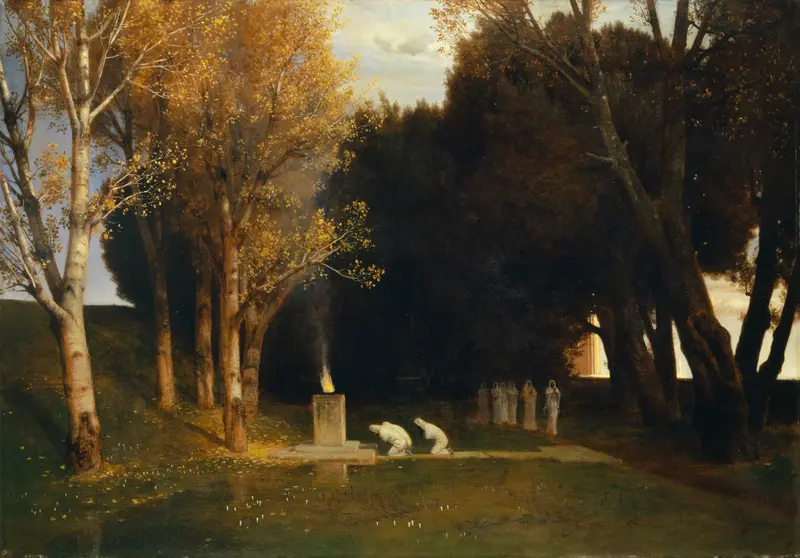
The Sacred Grove
Arnold Böcklin
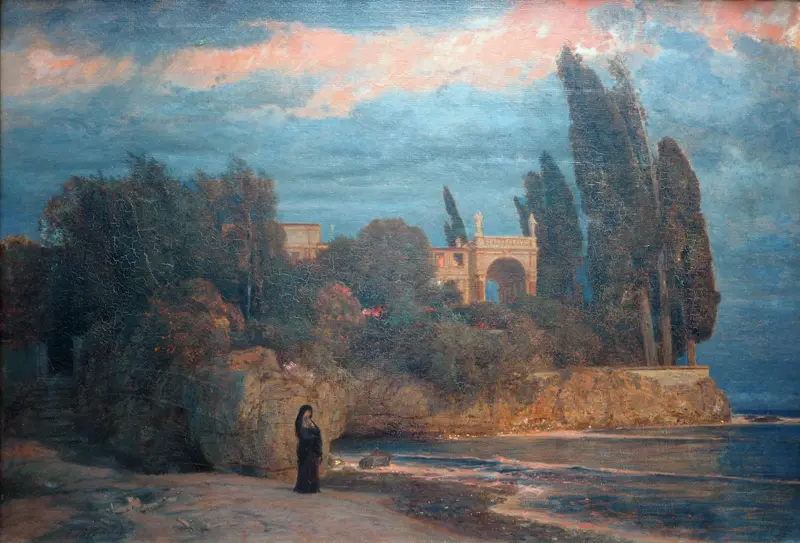
Villa by the Sea
Arnold Böcklin
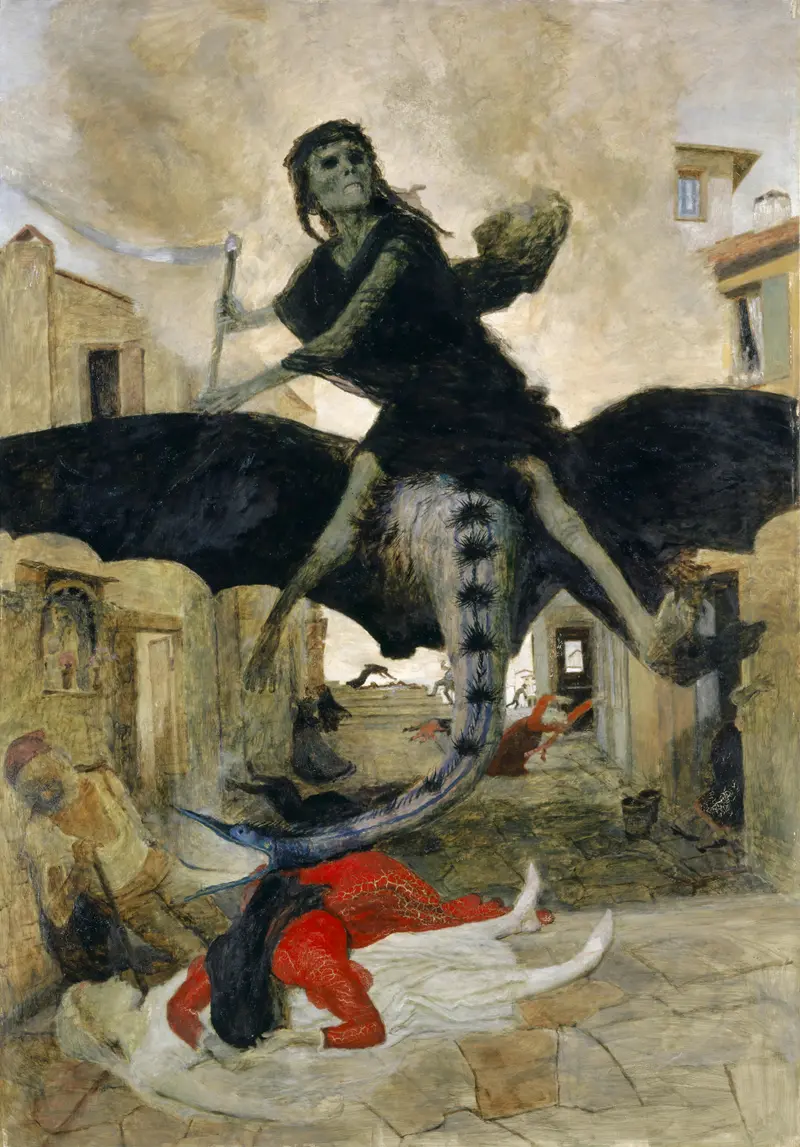
The Plague
Arnold Böcklin
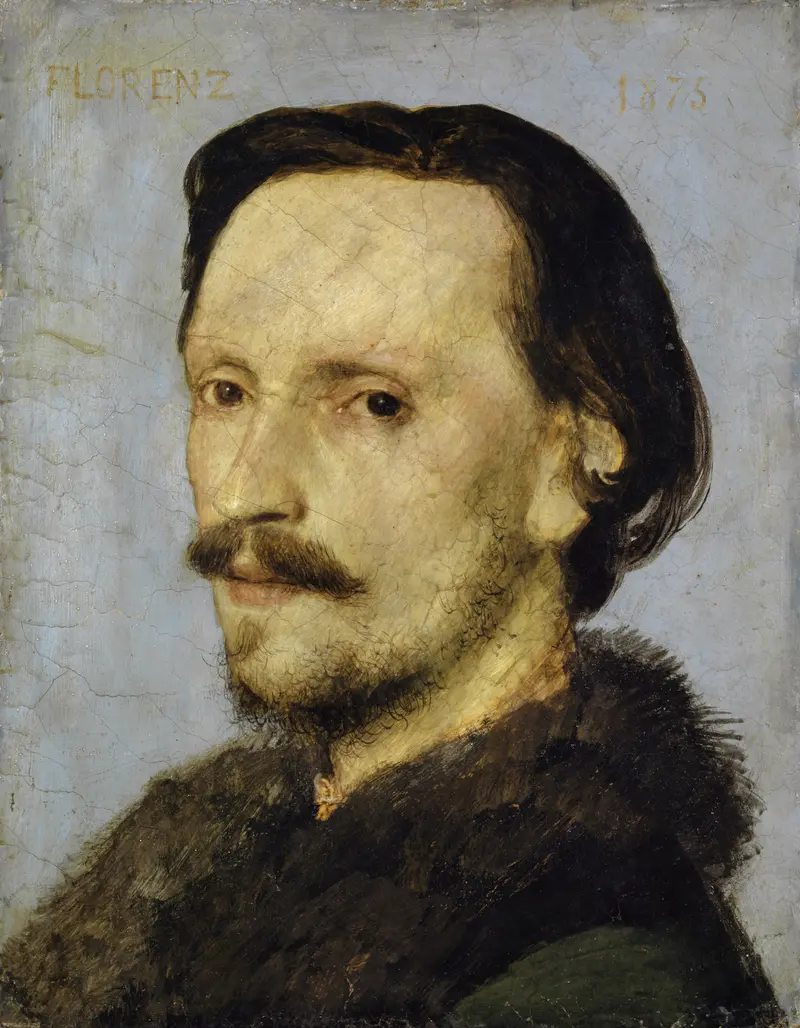
Böcklin Bildnis des Kunsthistorikers Adolph Bayersdorfer, 1875
Arnold Böcklin
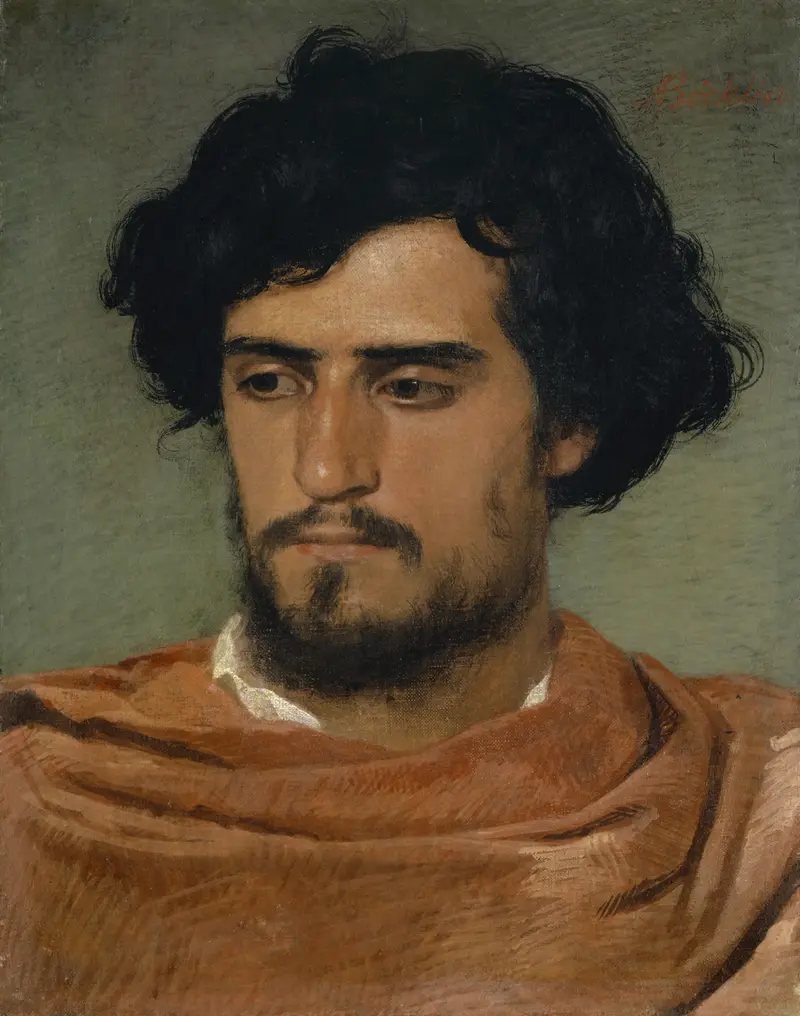
Head of a Roman
Arnold Böcklin
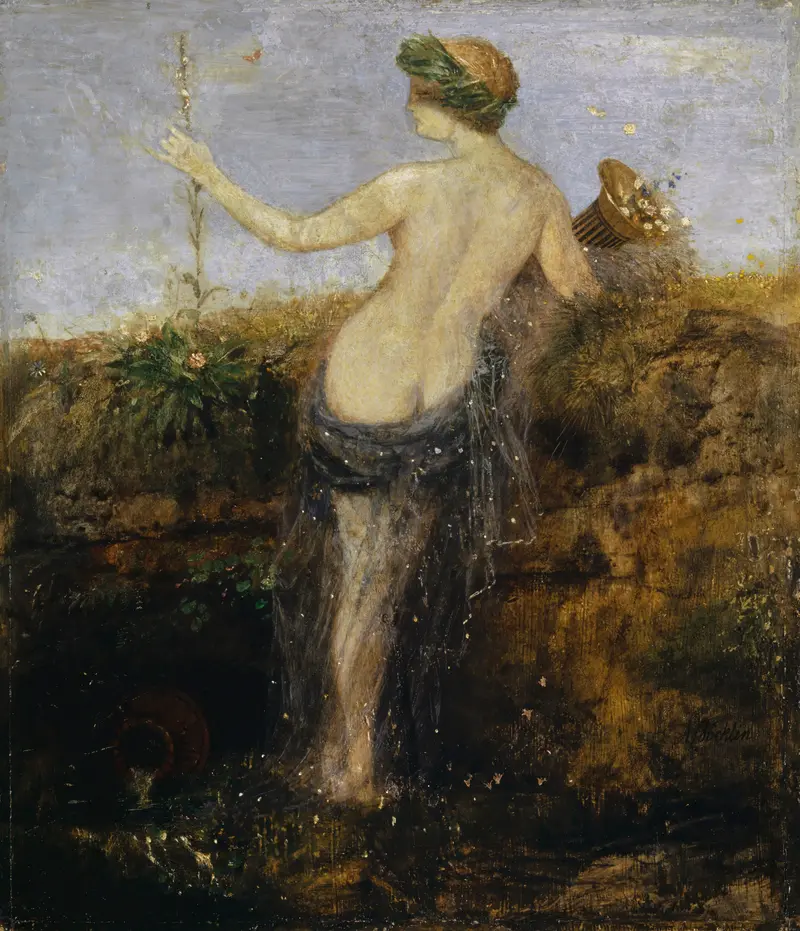
Nymphe with Horn of Plenty
Arnold Böcklin
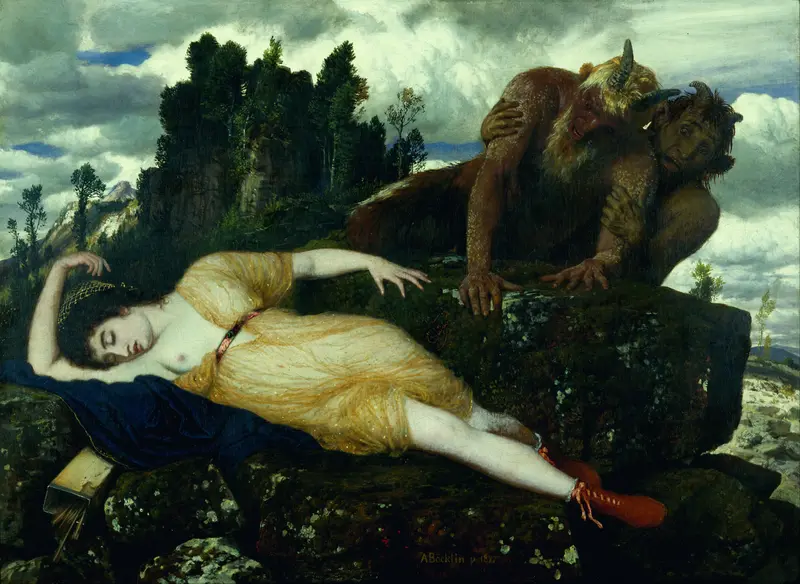
Sleeping Diana Watched by Two Fauns
Arnold Böcklin
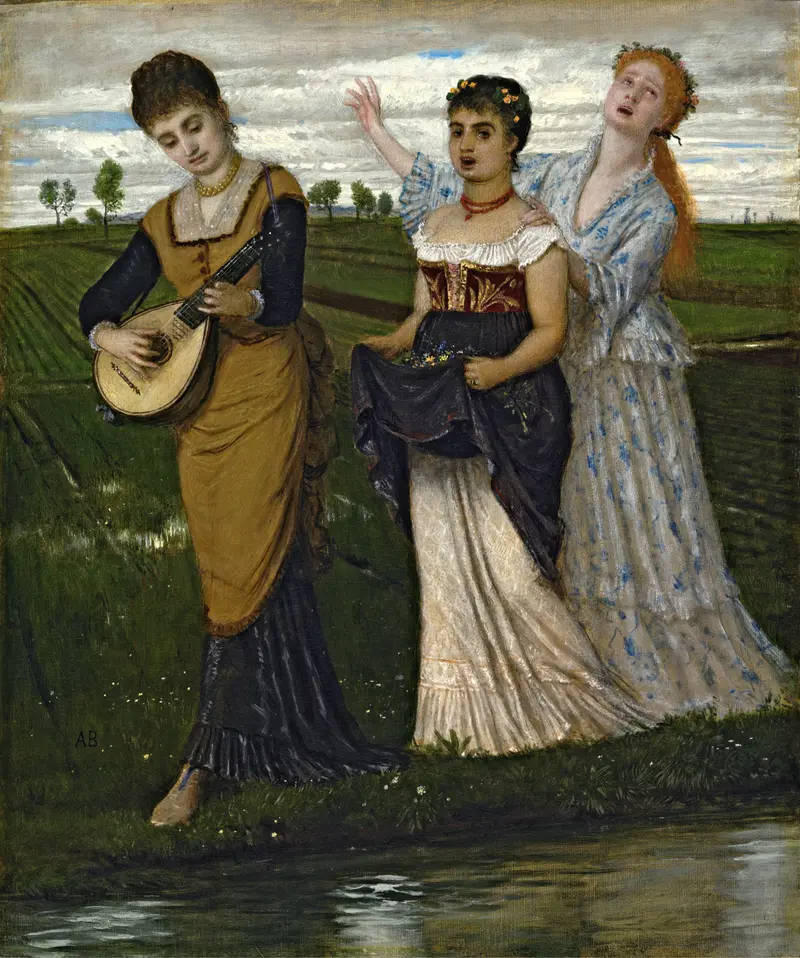
Spring (Songs of Spring)
Arnold Böcklin





