
Fernand Léger - La Danse — History & Facts
The first thing to catch the eye in La Danse by Fernand Léger is the sense of weight and rhythm carried by the two monumental figures, their forms both sculptural and strangely buoyant. The bodies, rendered in smooth, rounded volumes, seem to float and twist in a space that is neither fully real nor wholly abstract. Léger’s signature use of black contour lines and shaded modeling gives these dancers a mechanical solidity, yet their gestures—one arm arched overhead, a hand poised delicately at the chest—suggest a moment of suspended movement, as if the dance is captured in a single, timeless beat.
The rose at the right edge, with its careful stem and bloom, punctuates the composition, a note of organic life among the engineered forms. Created in 1929, this work stands at the crossroads of Fernand Léger’s engagement with the machine age and his fascination with the human body as a modern totem. In the late 1920s, artists across Europe were reimagining the figure, stripping away detail to reveal essential shapes and rhythms—an impulse seen in the contemporaneous work of Picasso or Ozenfant, though Léger’s dancers are unmistakably his own, more architectural than classical. History has kept few traces of this specific painting’s journey, but its bold clarity and stylized forms speak to a period when art sought new harmonies between the organic and the industrial.
Léger’s vision invites us to linger, tracing the dance of line and shadow, and to imagine what music might animate these figures.
More Artworks by Fernand Léger

The Tugboat Bridge
Fernand Léger
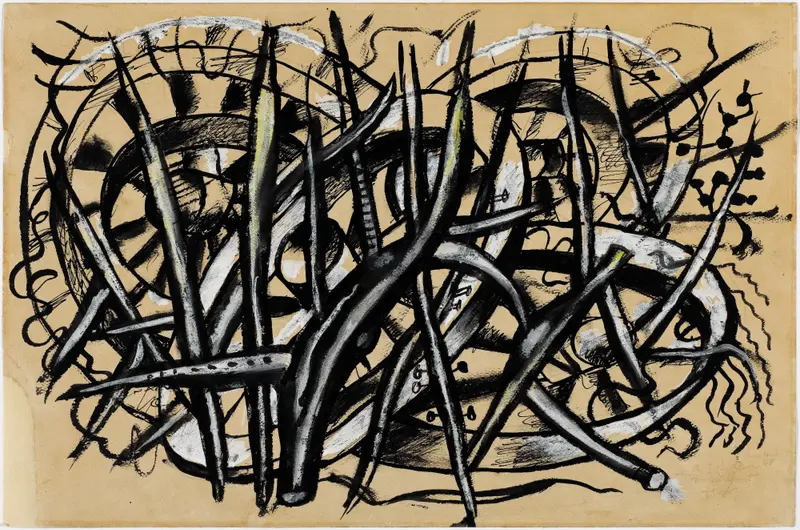
The Wheels
Fernand Léger

Le Cirque Médrano
Fernand Léger
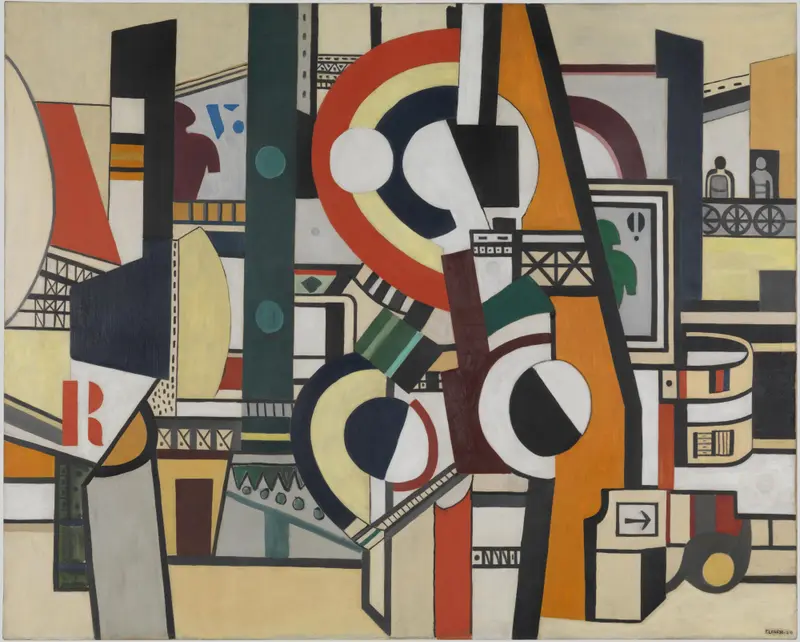
The Disks in the City
Fernand Léger
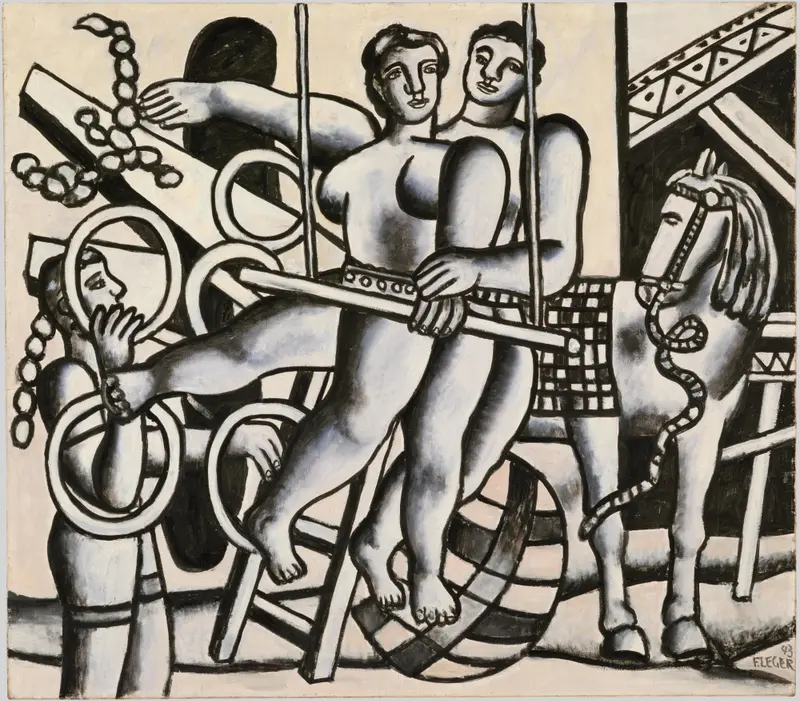
Le Jongleur et les acrobates
Fernand Léger
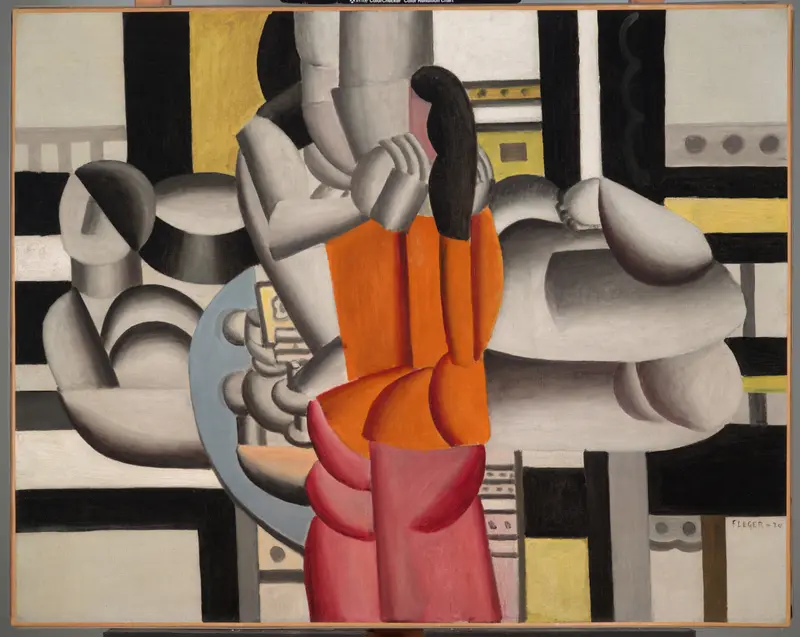
Three Women and Still Life (Déjeuner)
Fernand Léger
Reading
Fernand Léger
Femme couchée
Fernand Léger
Woman holding flowers
Fernand Léger
The Tug
Fernand Léger



