
Field flowers in woodland — History & Facts
A tangle of life and decay seizes the eye: a riot of wildflowers, insects, and birds, all set against the dark hush of woodland. In Field flowers in woodland, Abraham Mignon turns the forest floor into a stage where every living thing has its part. The light falls with purpose, catching the velvet of a poppy, the shimmer of a snail’s shell, the glint in a frog’s eye.
A nest of eggs perches above, safe for now, while a lizard slips through the leaf litter below—each detail a reminder that beauty and danger share the same soil. The fallen branch, hollow and pocked, anchors the scene: what has died feeds what flourishes. This kind of painting, born in the Dutch Golden Age, was more than a celebration of nature’s bounty. Collectors of the late seventeenth century prized such works for their hidden lessons and their technical bravura.
Every creature and blossom might carry a message about the cycles of life, the brevity of youth, or the persistence of hope. Mignon was famed for his ability to conjure a world from paint, and between 1665 and 1678, he was at the height of his powers. Today, this work resides in the Bayerische Staatsgemäldesammlungen, a testament to the era’s fascination with the natural world—inviting us to look again, and see how much life can be packed into a single patch of earth.
More Artworks by Abraham Mignon

Still Life with Flowers and a Watch
Abraham Mignon
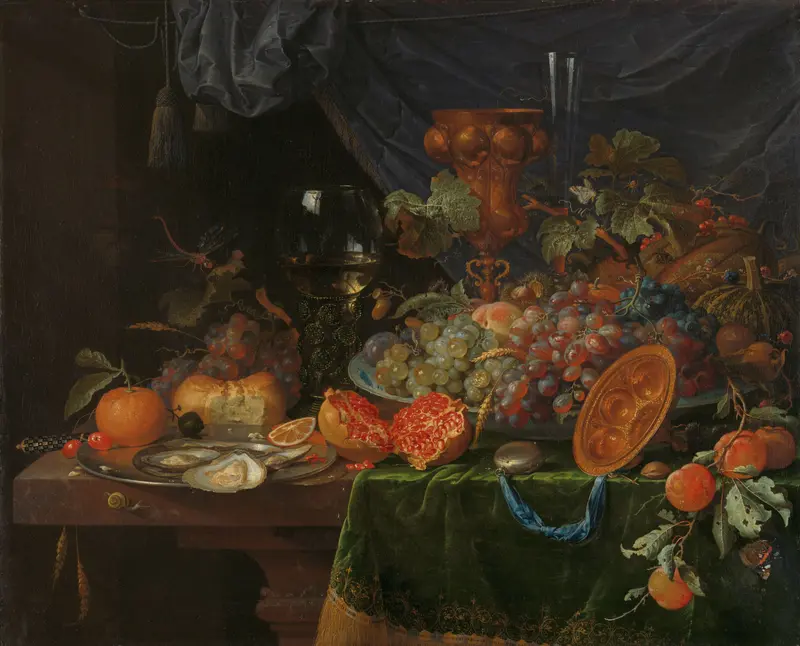
Still Life with Fruit and Oysters
Abraham Mignon
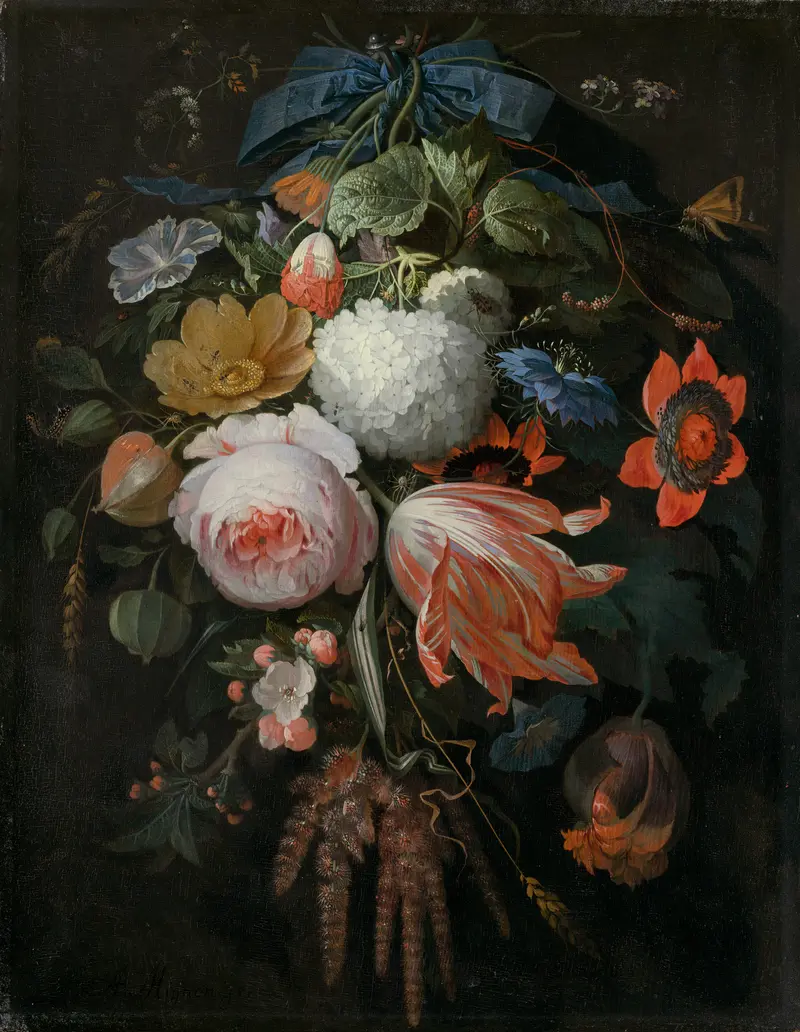
A Hanging Bouquet of Flowers
Abraham Mignon
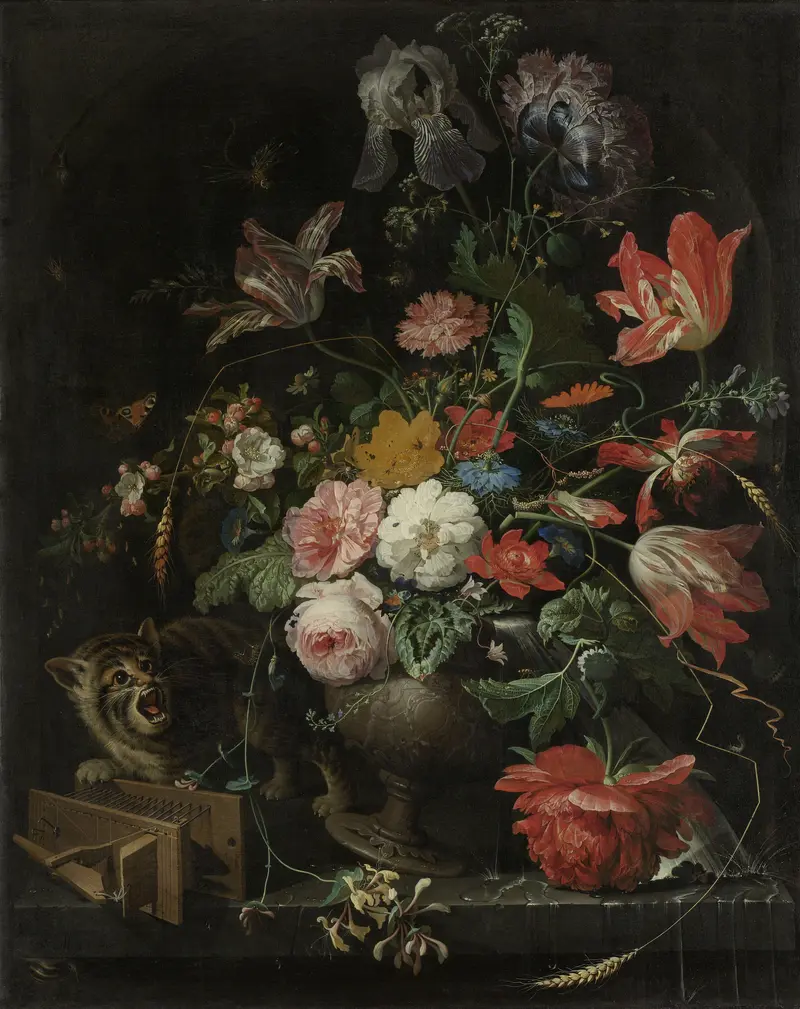
Bouquet with cat and mousetrap
Abraham Mignon
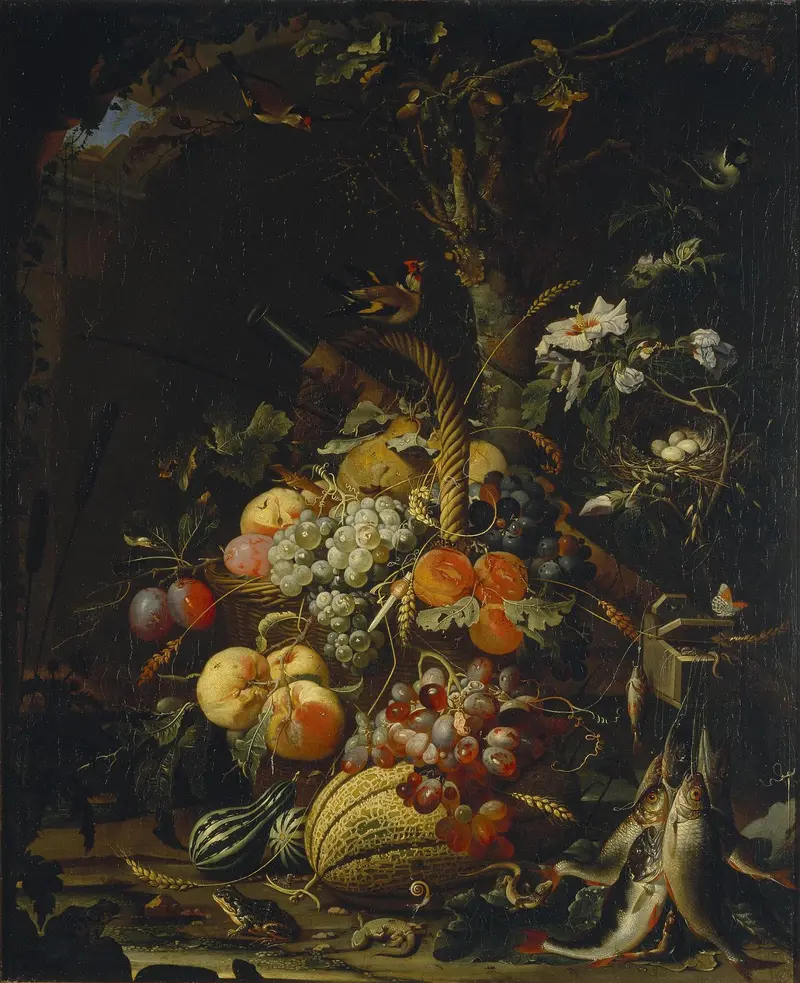
Forest floor still life with fruit, fish and a bird's nest
Abraham Mignon
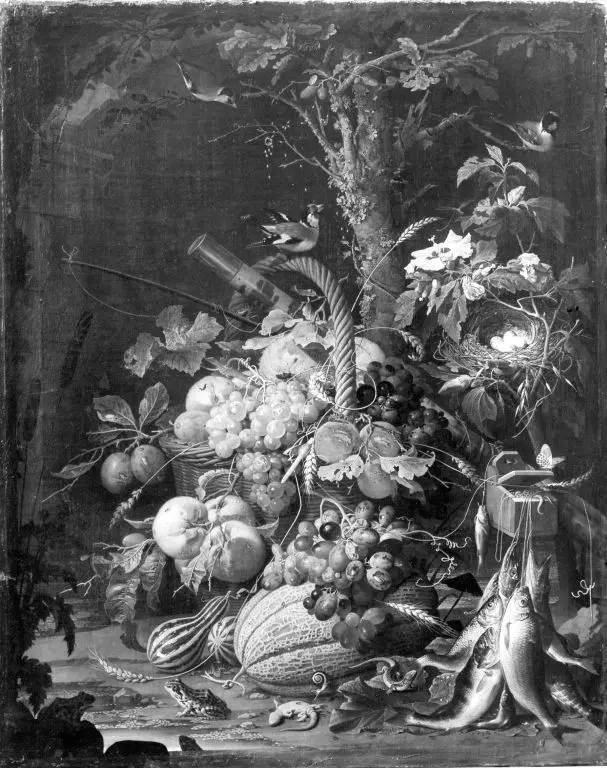
Still life with fruit, fish and a bird's nest
Abraham Mignon
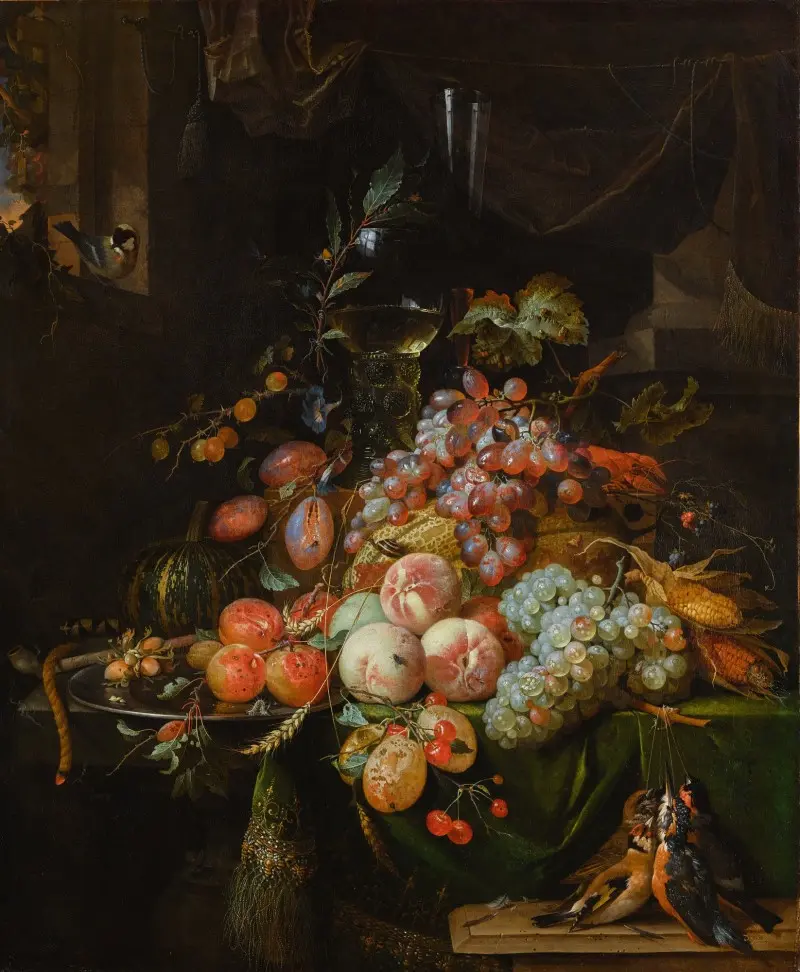
Still Life with Plums, Peaches, Apricots, Grapes and a Melon
Abraham Mignon
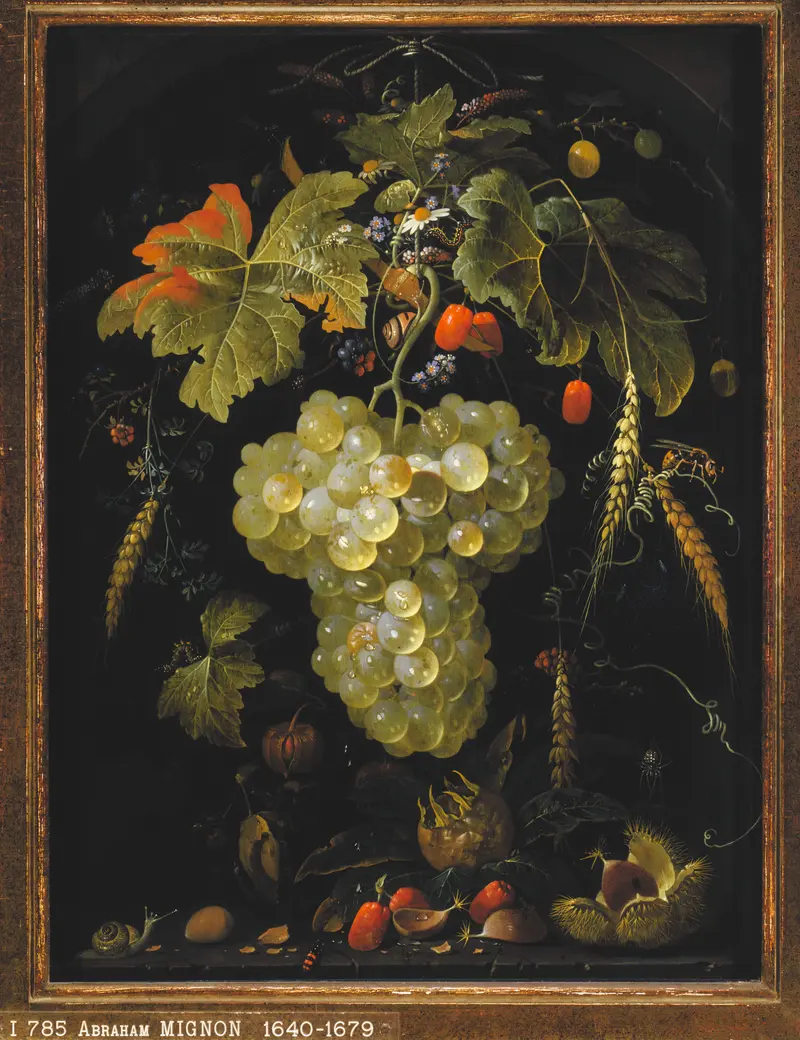
Festoon of fruit suspended from a rope, in a niche
Abraham Mignon
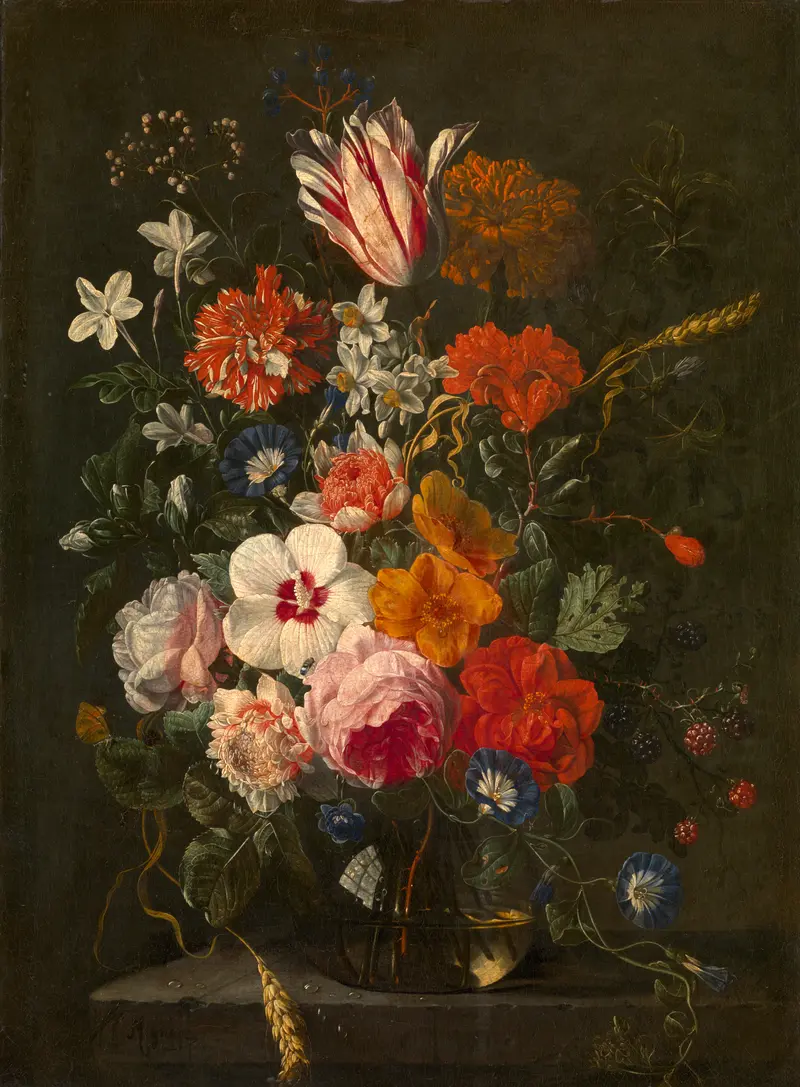
Flowers and a branch of berries in a glass vase on a stone ledge
Abraham Mignon
Flowers and fruit on a plinth
Abraham Mignon





