
Finding of Moses — History & Facts
What first draws the eye in Finding of Moses by Abraham Govaerts is the hush of discovery: a group of elegantly dressed women, clustered at the edge of a shadowy forest, are caught in the act of wonder. The painter guides us through a world where the drama is not thunderous but hushed, the moment of finding marked by gestures of surprise and gentle curiosity. The light falls delicately on the figures, picking out the gleam of silk and pearls, while the infant Moses, swaddled in a basket, becomes the quiet center of attention.
The lush greenery and distant palace seem to hold their breath, as if the entire landscape is witness to this secret event. Birds perch and wheel above, their presence echoing the theme of watchfulness and fate. Painted between 1621 and 1623, this work belongs to a period when biblical stories were often set in imagined, courtly landscapes, reflecting both the tastes and aspirations of early seventeenth-century patrons. Artists like Govaerts specialized in weaving together sacred history and contemporary fashion, producing scenes that were as much about the world of their viewers as about ancient Egypt.
Such paintings were prized by collectors for their ability to blend moral instruction with visual delight, and they often adorned the homes of the prosperous or the devout. Today, housed in the Hermitage Museum, this Finding of Moses stands as a quiet testament to an age when art invited contemplation as much as admiration—an invitation still open, if you linger before it.
More Artworks by Abraham Govaerts

Forest landscape
Abraham Govaerts
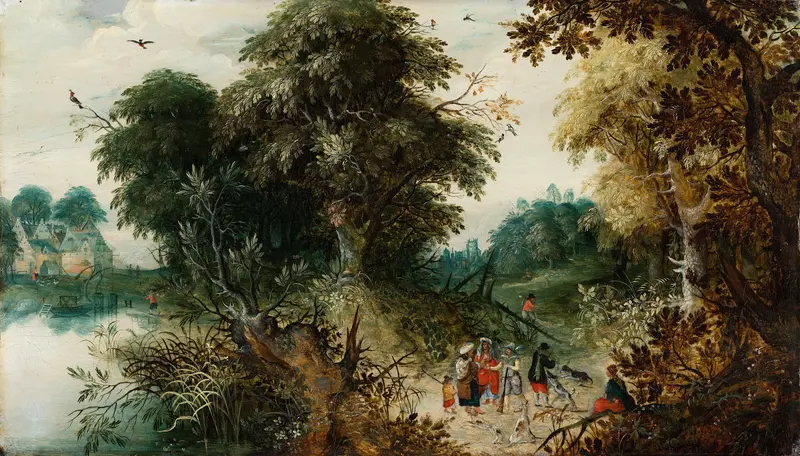
Forest View with Travellers
Abraham Govaerts
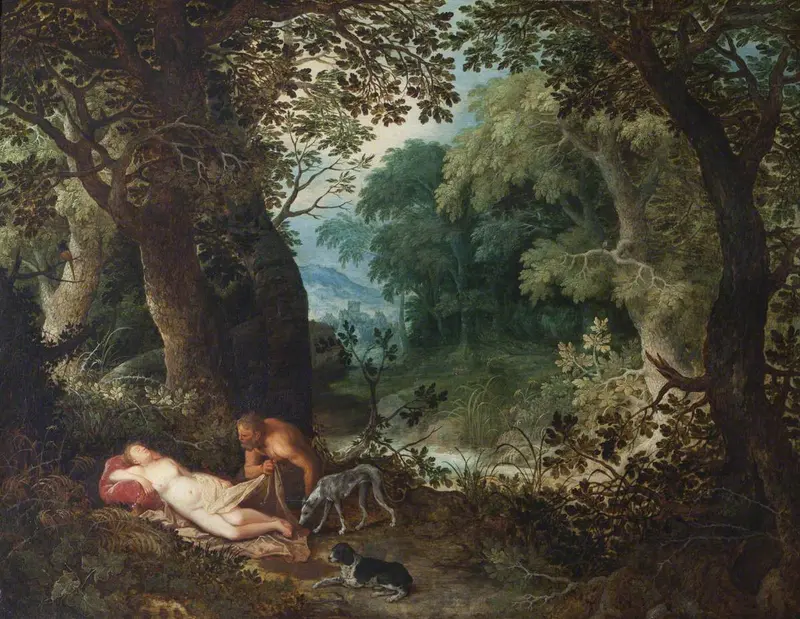
A Nymph and a Satyr
Abraham Govaerts
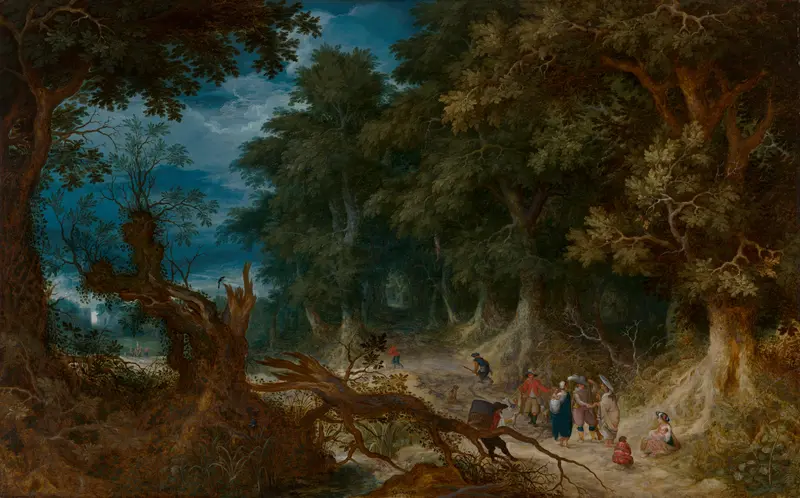
Wooded Landscape with Gipsy Women
Abraham Govaerts
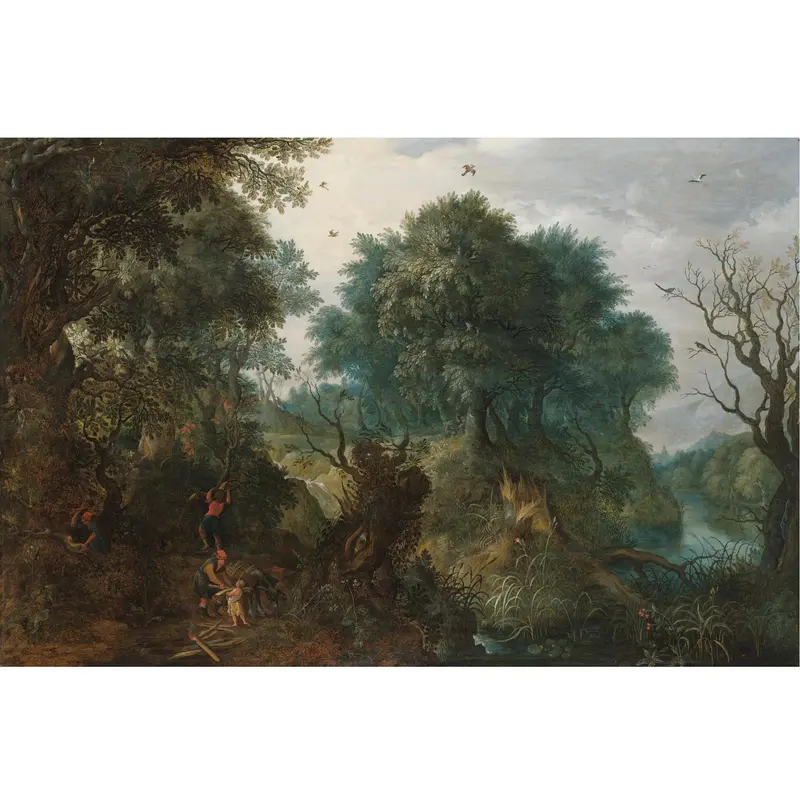
A Wooded Landscape with Woodcutters near a River
Abraham Govaerts
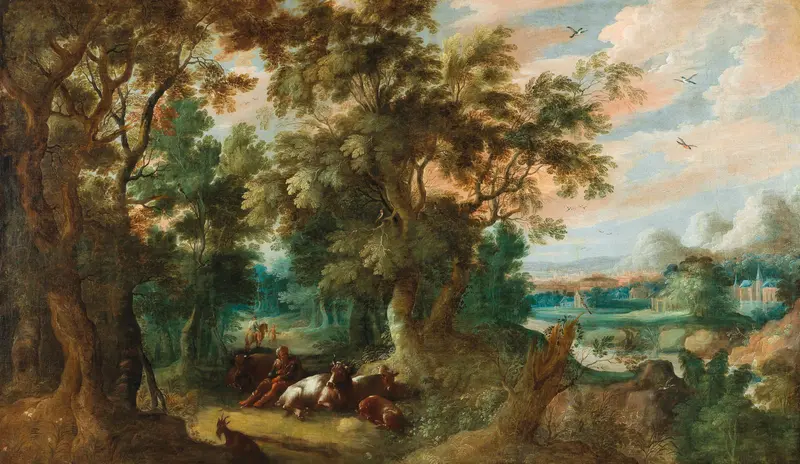
Wooded landscape with shepherds and their flock
Abraham Govaerts
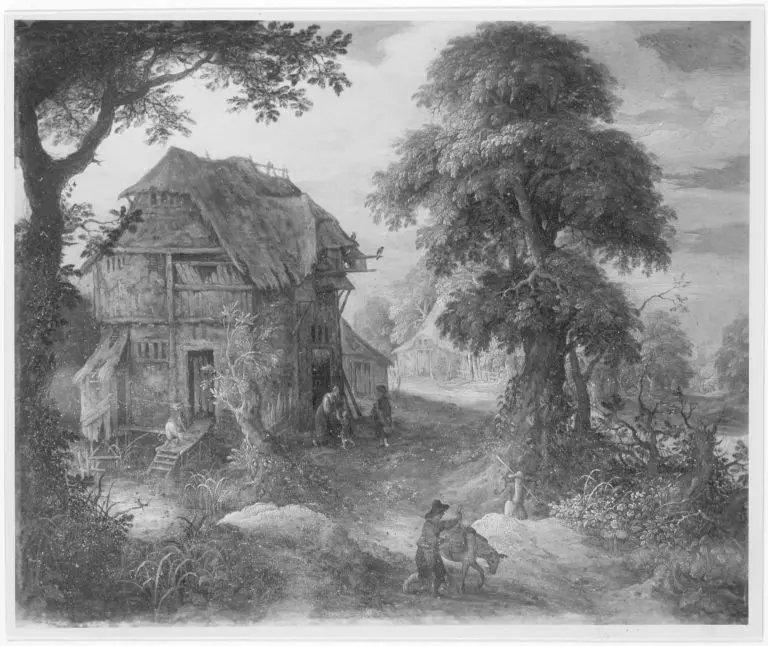
Dorf unter Bäumen
Abraham Govaerts
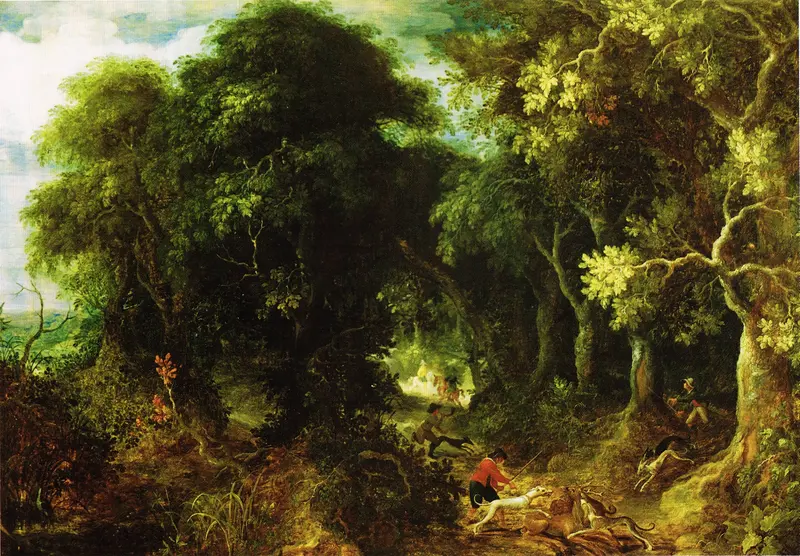
The Eternal Forest / Deer hunting
Abraham Govaerts
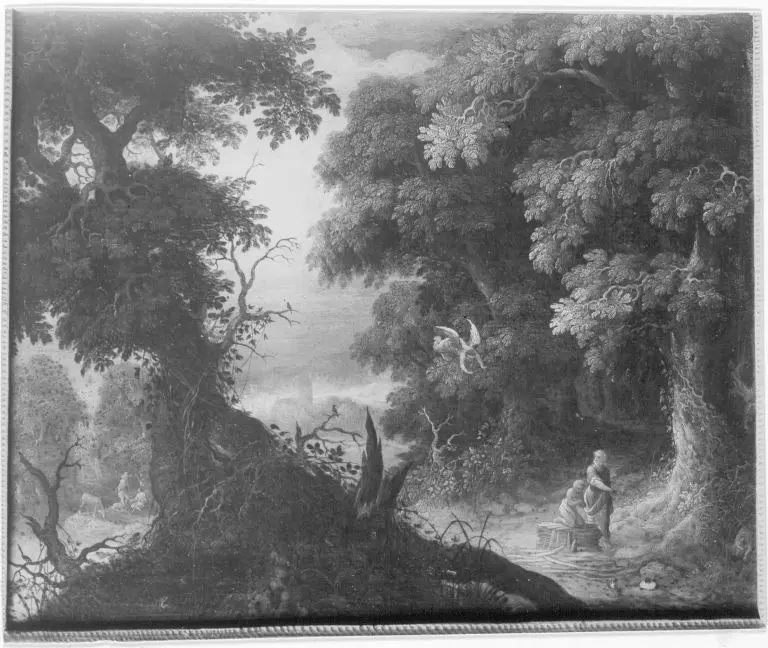
Wooded landscape with the sacrifice of Isaac (Genesis 22)
Abraham Govaerts
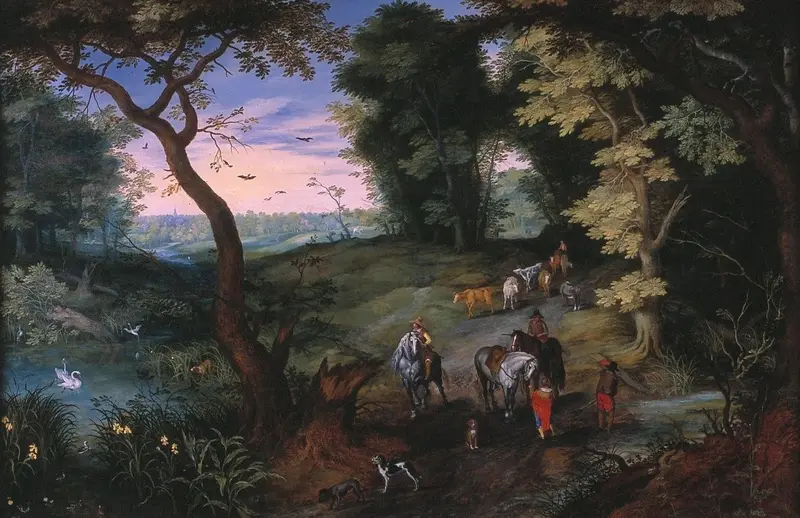
Landscape with Horsemen and Animals
Abraham Govaerts





