
The Eternal Forest / Deer hunting — History & Facts
A shaft of light slices through the dense canopy, drawing the viewer’s gaze into the heart of the forest where the drama of the hunt unfolds. The eye is first caught by the tangled, almost impenetrable foliage that dominates the scene, a living wall of green that seems to pulse with energy and shadow. Only then does the action reveal itself: a group of hunters and hounds converge on their quarry, their bright garments and urgent gestures standing out against the gloom.
The painter’s hand lingers on the play of sunlight and shade, using the forest’s darkness to heighten the sense of suspense, while the scattered dogs and the poised hunter in red create a rhythm that leads the viewer deeper into the thicket. Every branch and leaf seems to conspire in this moment, both concealing and framing the chase. Works like The Eternal Forest / Deer hunting, painted in the first half of the 17th century, belong to a tradition in which the forest is more than a backdrop—it is a character in its own right. In the age of Abraham Govaerts, such hunting scenes were prized by the wealthy, who saw in them both a celebration of privilege and a meditation on the wildness just beyond the garden wall.
Paintings of this kind, often commissioned for grand homes or hunting lodges, reflected a world in which the boundaries between civilization and nature were constantly negotiated. This particular work, preserved in the pages of a 20th-century history of Mecklenburg’s forests and hunting, is a reminder of how art once gave form to the rituals and aspirations of a vanished elite. The forest still waits in the shadows—step closer, and see what else the light reveals.
More Artworks by Abraham Govaerts

Forest landscape
Abraham Govaerts
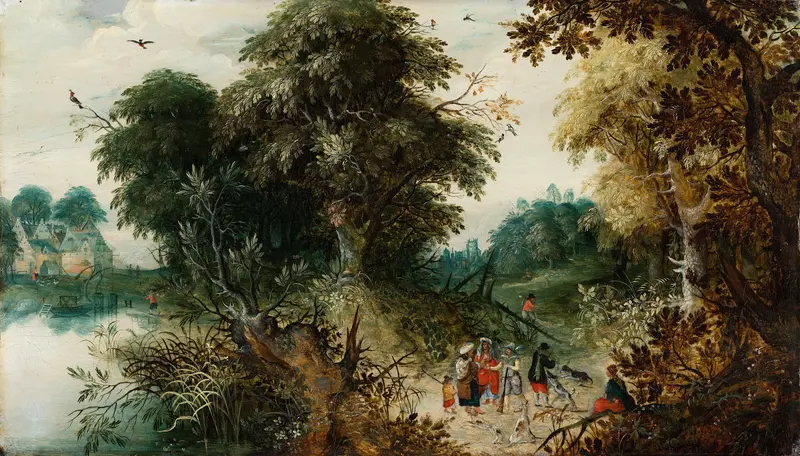
Forest View with Travellers
Abraham Govaerts
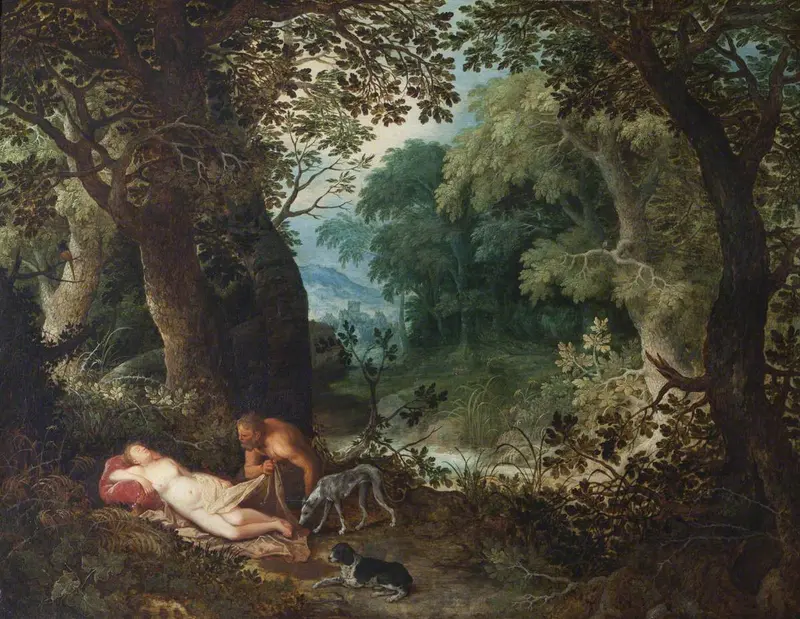
A Nymph and a Satyr
Abraham Govaerts
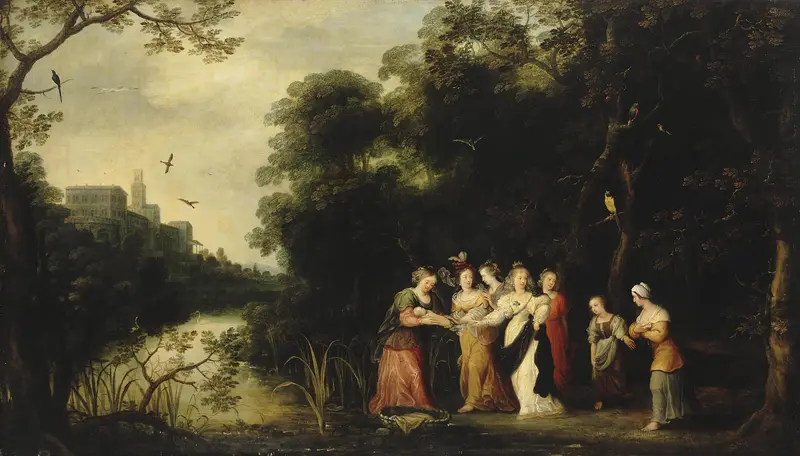
Finding of Moses
Abraham Govaerts
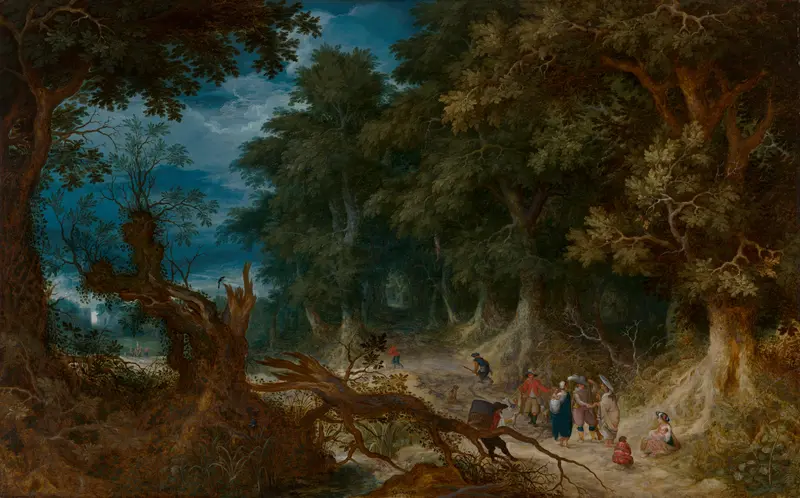
Wooded Landscape with Gipsy Women
Abraham Govaerts
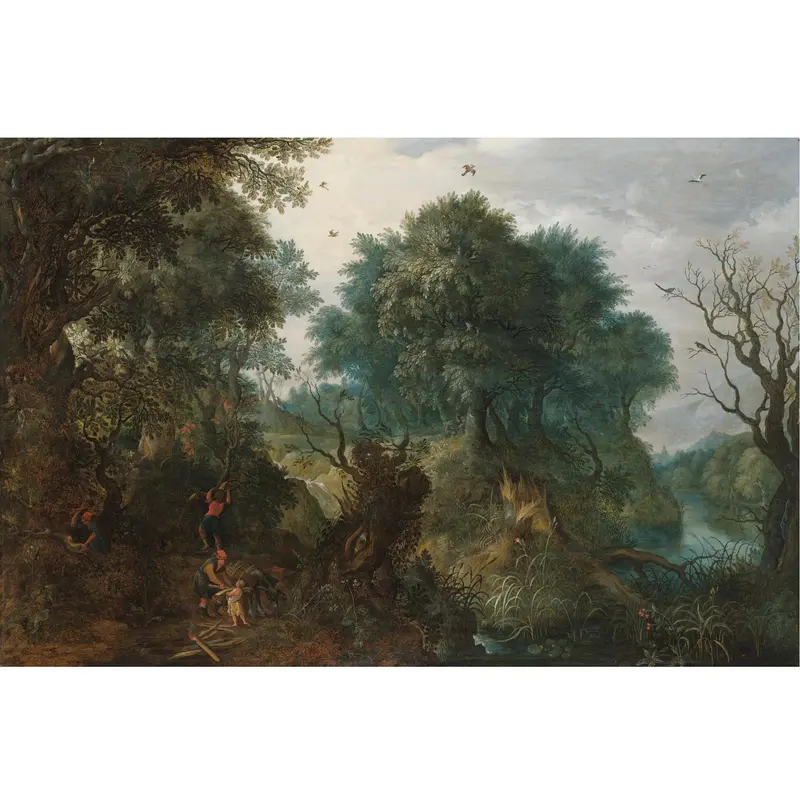
A Wooded Landscape with Woodcutters near a River
Abraham Govaerts
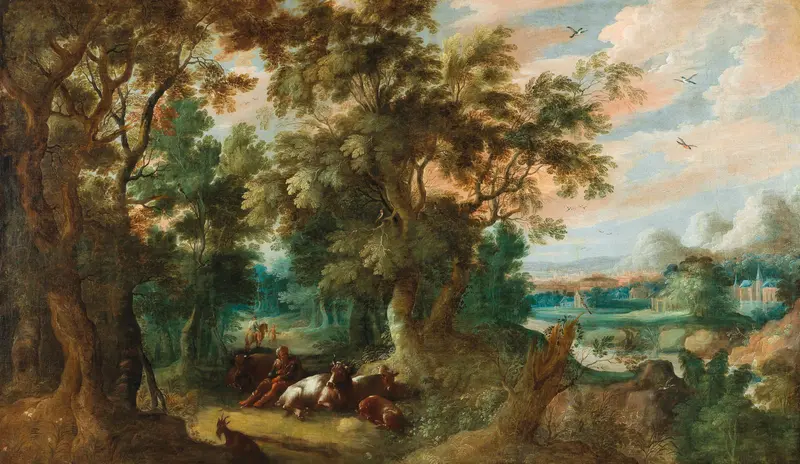
Wooded landscape with shepherds and their flock
Abraham Govaerts
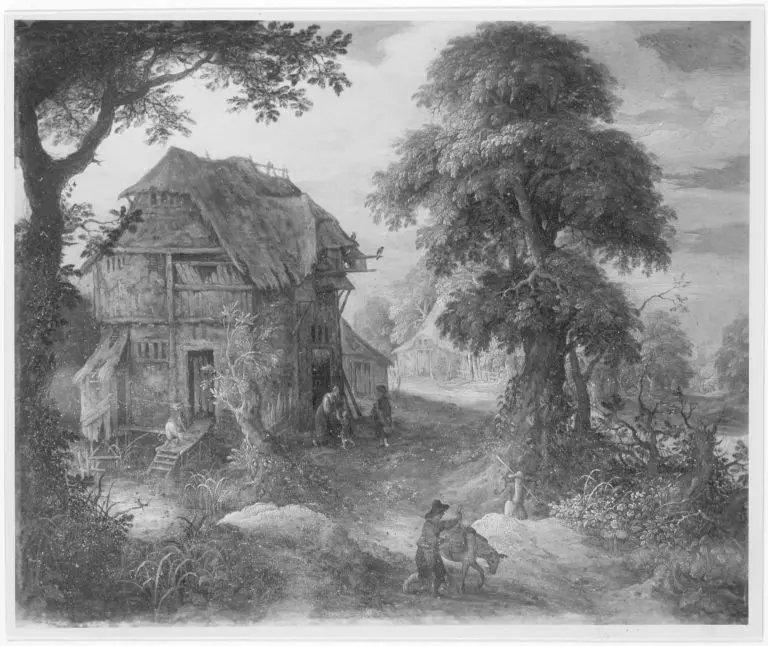
Dorf unter Bäumen
Abraham Govaerts
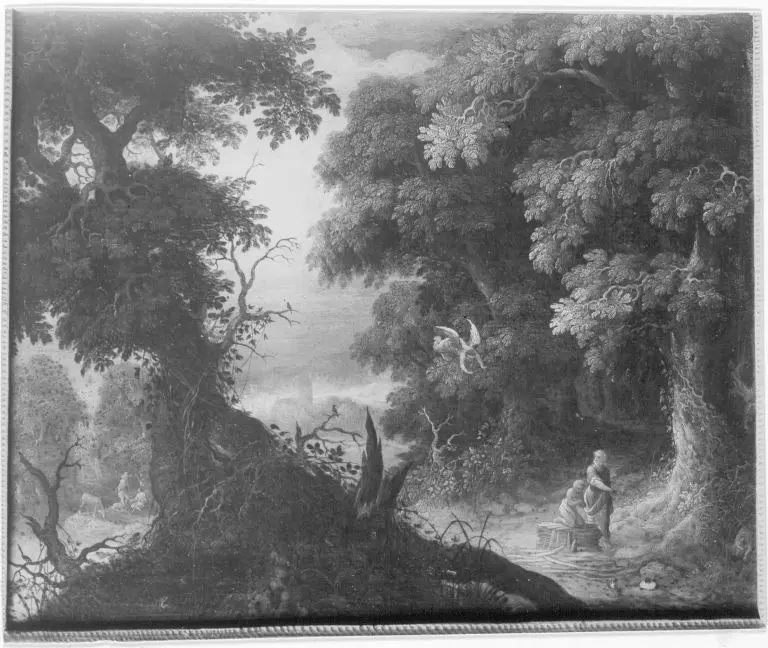
Wooded landscape with the sacrifice of Isaac (Genesis 22)
Abraham Govaerts
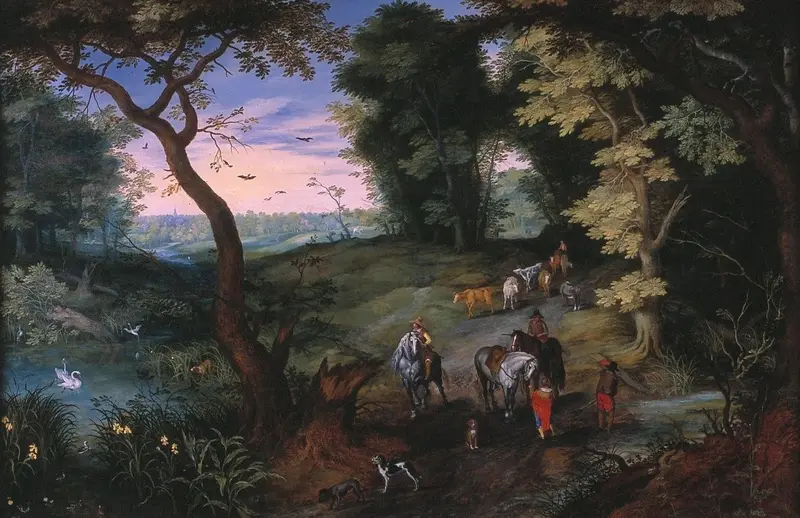
Landscape with Horsemen and Animals
Abraham Govaerts
More Landscape Art

The Starry Night
Vincent van Gogh

View of Delft
Johannes Vermeer

Water Lilies
Claude Monet

The Grand Canal, Venice, looking north-west from the Ca' Corner to the Ca' Contarini degli Scrigni, with the campanile of Santa Maria della Carità
Canaletto

Windsor Castle
Canaletto

The Grand Canal looking North-East from the Palazzo Dolfin-Manin to the Rialto Bridge
Canaletto