
A Wooded Landscape with Woodcutters near a River — History & Facts
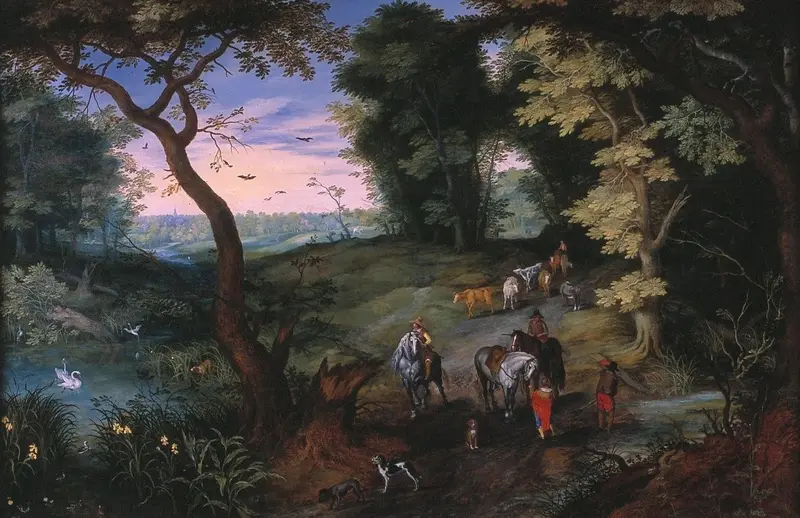
The first thing that catches the eye in A Wooded Landscape with Woodcutters near a River is the way the trees seem to dominate not just the land, but the very air itself. The figures of the woodcutters are small, almost swallowed by the dense, layered foliage, their red caps and swinging axes drawing the gaze only after the forest has made its impression. Light filters through the canopy in patches, guiding the viewer’s attention from the shadowed foreground, where the work of felling and gathering wood is underway, toward the brighter, more tranquil expanse of river and sky beyond.
The careful placement of each figure—one lifting an axe, another bent to gather branches—signals a rhythm of labor that is both ordinary and quietly heroic, set against the vastness of nature. Painted in the first half of the seventeenth century, this work belongs to a moment when landscapes were coming into their own as a genre in the Low Countries. Artists like Abraham Govaerts specialized in these wooded scenes, which were prized by collectors for their celebration of local scenery and the honest labor of rural life. Such paintings were often commissioned by prosperous townspeople eager to display both their wealth and their connection to the land.
The source documents this painting’s presence in a Sotheby’s auction, a reminder of how these once-private treasures now circulate in the global art market. History has kept few traces of the individual stories behind many of these landscapes, but the painting’s quiet drama invites us to imagine the world it once adorned—and to look again at the balance of man and nature within its frame.
More Artworks by Abraham Govaerts

Forest landscape
Abraham Govaerts
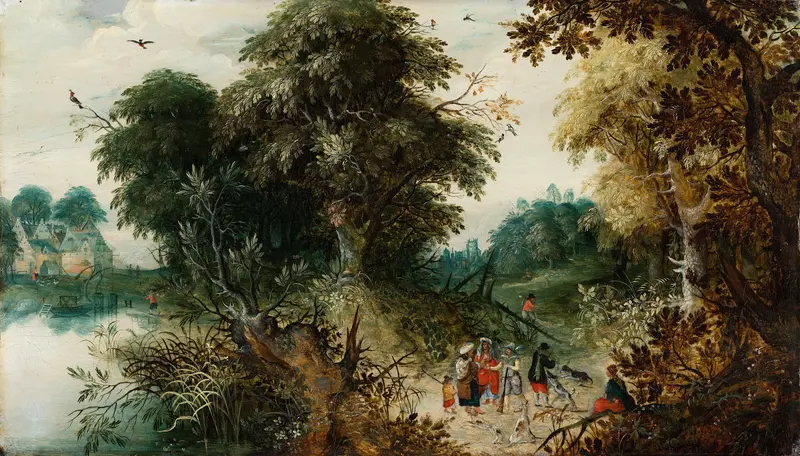
Forest View with Travellers
Abraham Govaerts
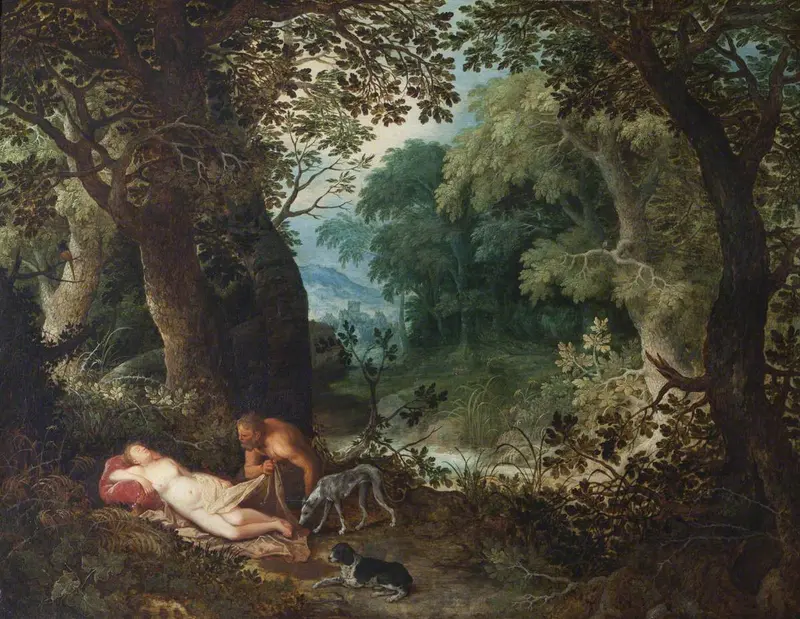
A Nymph and a Satyr
Abraham Govaerts
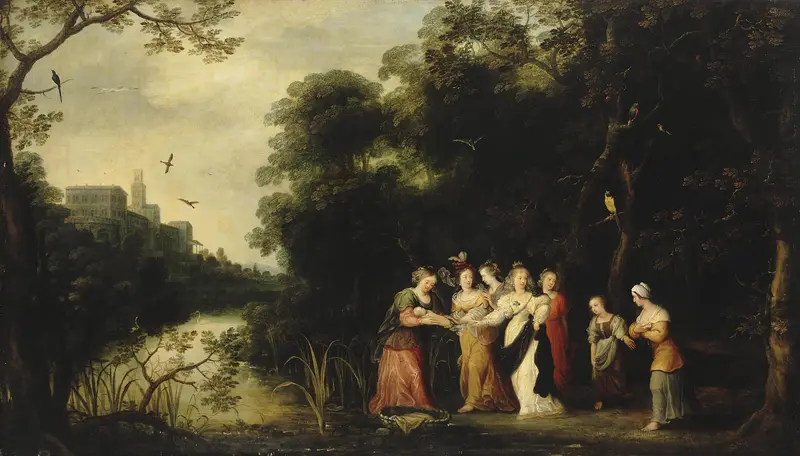
Finding of Moses
Abraham Govaerts
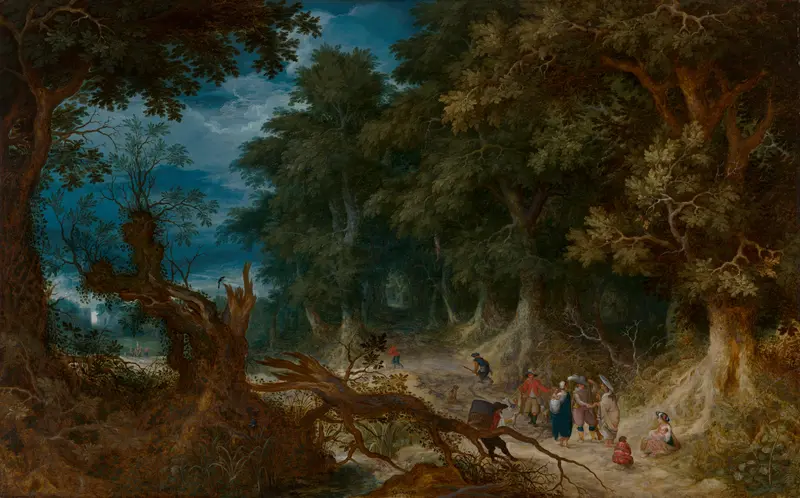
Wooded Landscape with Gipsy Women
Abraham Govaerts
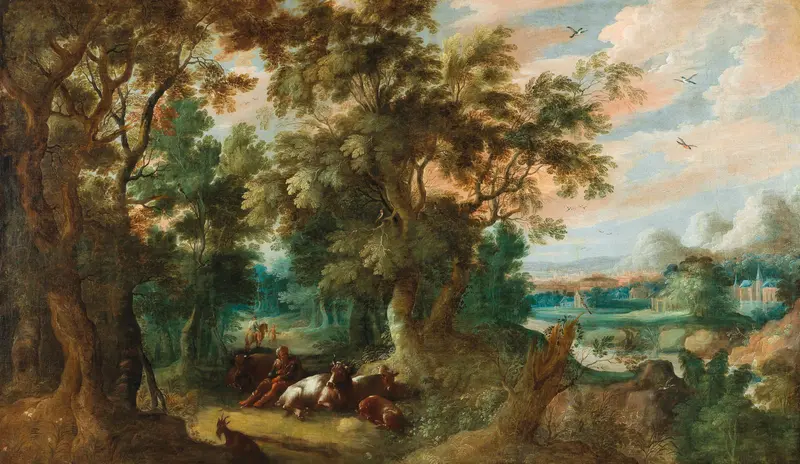
Wooded landscape with shepherds and their flock
Abraham Govaerts
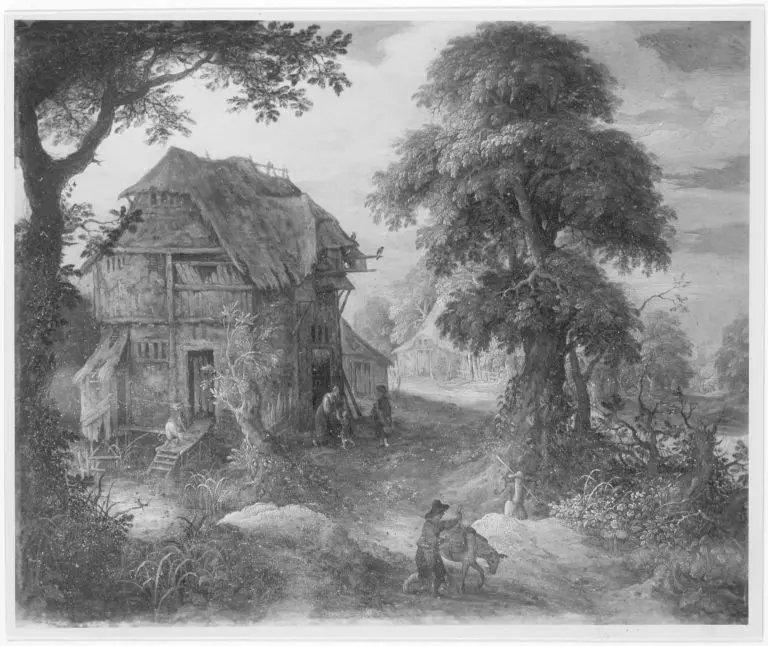
Dorf unter Bäumen
Abraham Govaerts
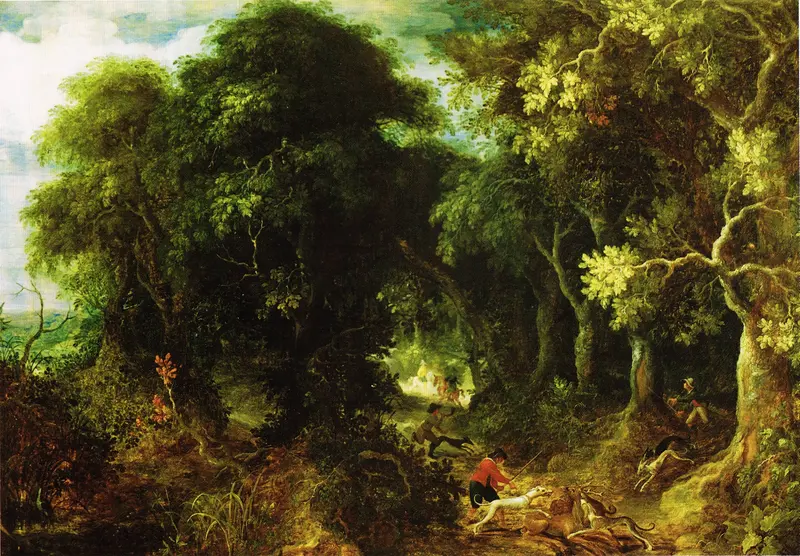
The Eternal Forest / Deer hunting
Abraham Govaerts
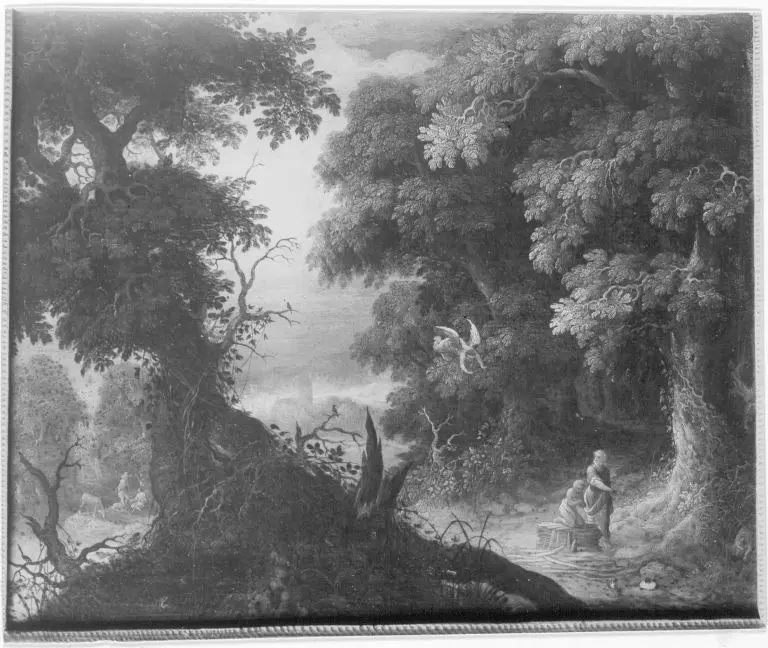
Wooded landscape with the sacrifice of Isaac (Genesis 22)
Abraham Govaerts
Landscape with Horsemen and Animals
Abraham Govaerts
More Landscape Art

The Starry Night
Vincent van Gogh

View of Delft
Johannes Vermeer

Water Lilies
Claude Monet

The Grand Canal, Venice, looking north-west from the Ca' Corner to the Ca' Contarini degli Scrigni, with the campanile of Santa Maria della Carità
Canaletto

Windsor Castle
Canaletto

The Grand Canal looking North-East from the Palazzo Dolfin-Manin to the Rialto Bridge
Canaletto