
Landscape with Horsemen and Animals — History & Facts
What draws the eye first in Landscape with Horsemen and Animals is the way the forest opens like a stage, revealing a tranquil world where humans and animals move together under a canopy of summer leaves. The path, dappled with light and shadow, leads us through the scene: riders on horseback, a cluster of cattle, and dogs ambling alongside, all threading their way from the cool, shadowed woods into the gentle glow of an evening sky. The painter’s careful orchestration of color—deep greens and browns giving way to the pink and blue horizon—guides us from the intimacy of the shaded foreground to the promise of open country beyond.
Every detail is a signal: the swans gliding on the pond, the scattered birds overhead, and the careful gestures of the travelers, all inviting the viewer to linger and imagine the slow rhythm of rural life. Painted in 1620, this work belongs to the flourishing tradition of Flemish landscape painting, a genre that blossomed in the Low Countries as urban patrons sought images of nature’s order and abundance. Artists like Abraham Govaerts specialized in these wooded vistas, often for collectors who prized the illusion of stepping into a world untouched by turmoil. While little is recorded of this specific painting’s early journey, its presence today in the Bonnefanten Museum speaks to the enduring appeal of such scenes—windows onto an imagined countryside, crafted at a time when Europe’s cities were growing and the countryside itself was becoming a subject of art.
The next time you look, notice how the light pulls your gaze along the winding path, as if inviting you to follow the travelers into the heart of the forest.
More Artworks by Abraham Govaerts

Forest landscape
Abraham Govaerts
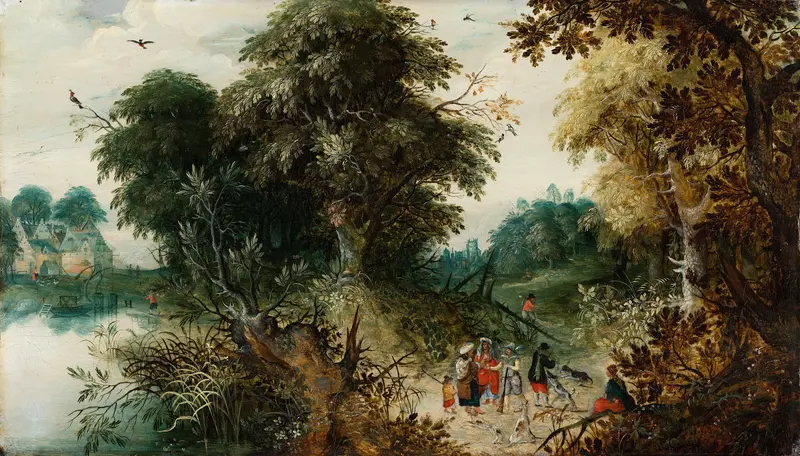
Forest View with Travellers
Abraham Govaerts
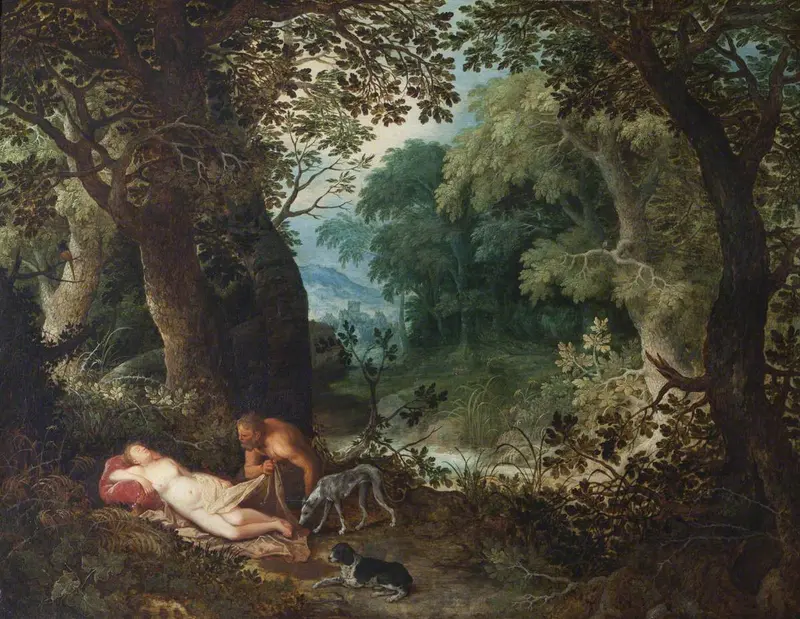
A Nymph and a Satyr
Abraham Govaerts
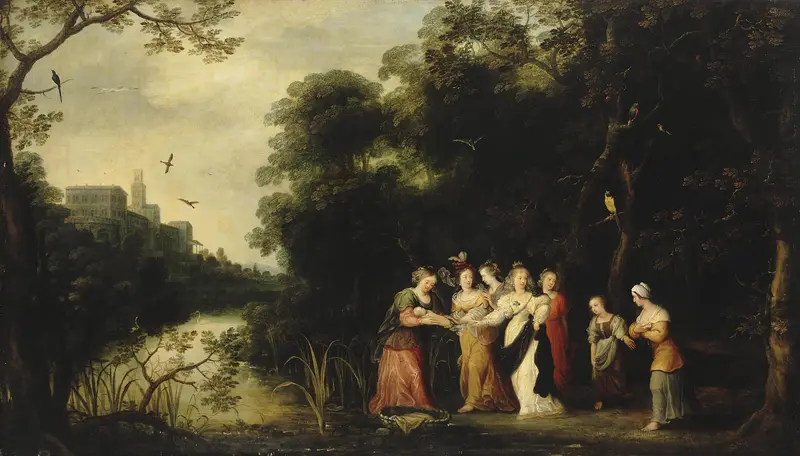
Finding of Moses
Abraham Govaerts
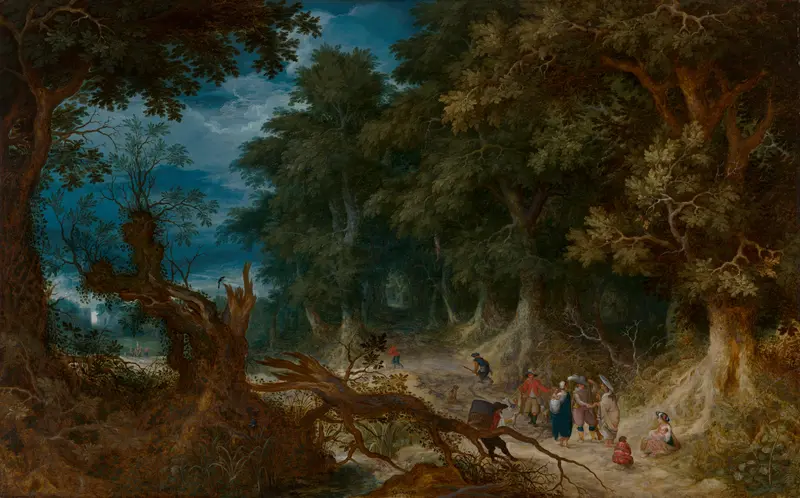
Wooded Landscape with Gipsy Women
Abraham Govaerts
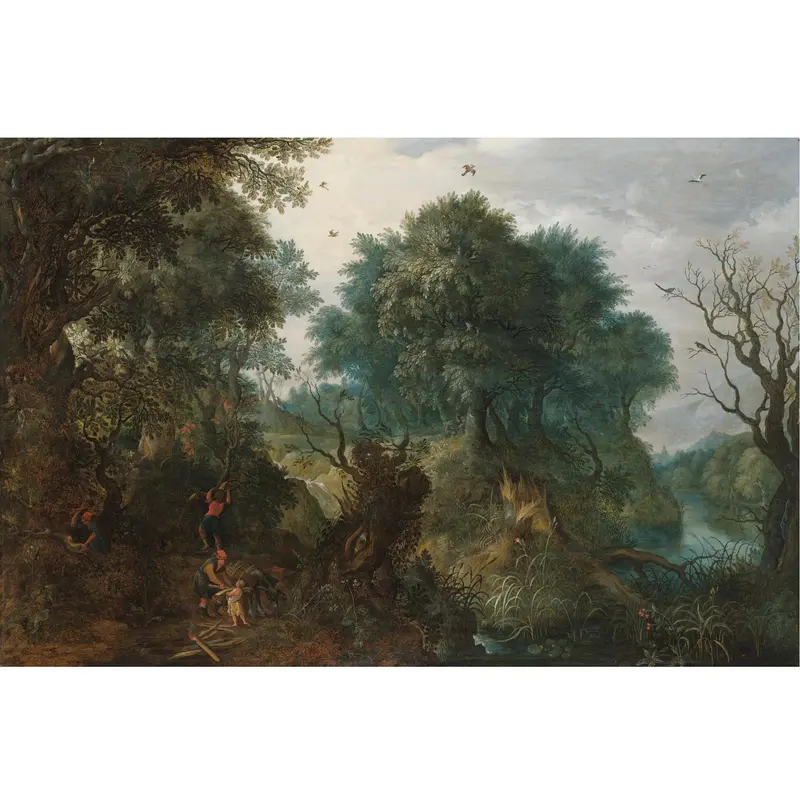
A Wooded Landscape with Woodcutters near a River
Abraham Govaerts
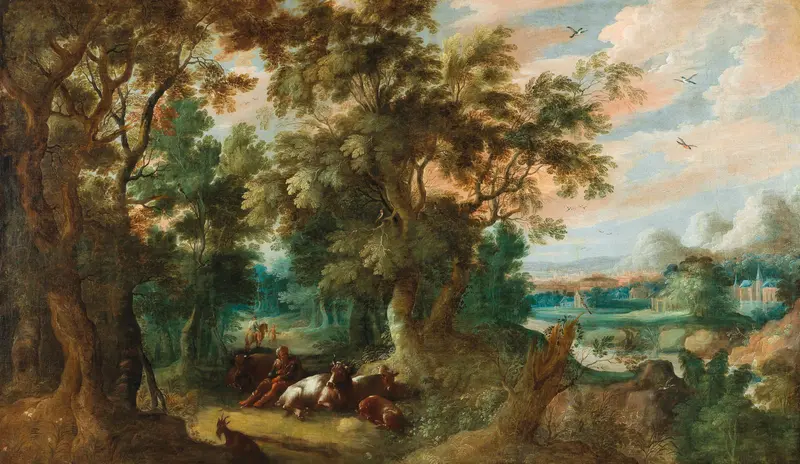
Wooded landscape with shepherds and their flock
Abraham Govaerts
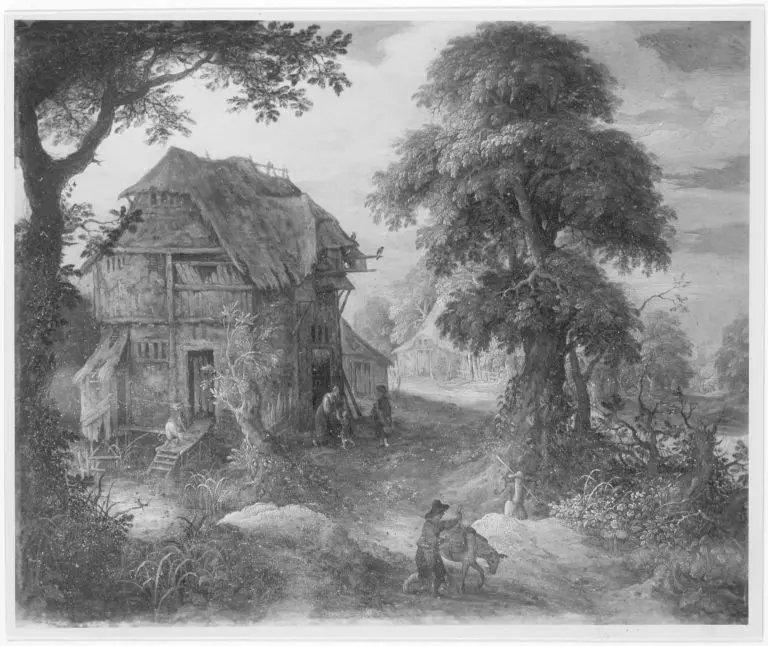
Dorf unter Bäumen
Abraham Govaerts
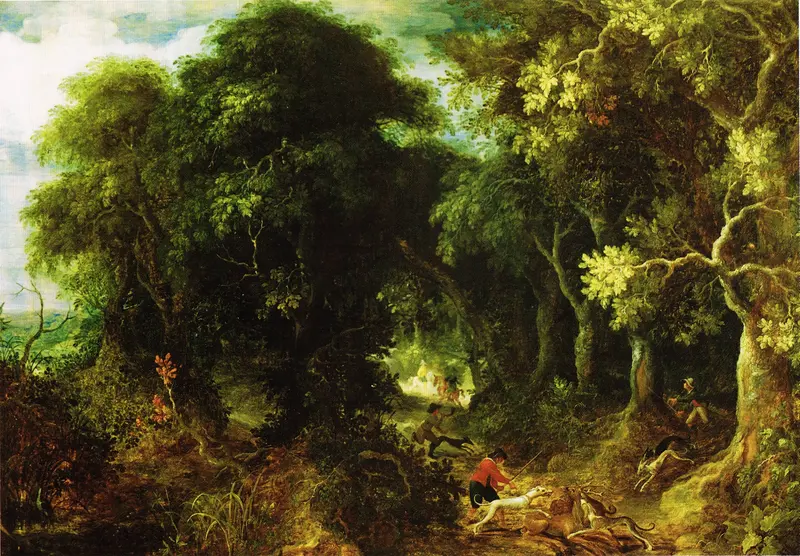
The Eternal Forest / Deer hunting
Abraham Govaerts
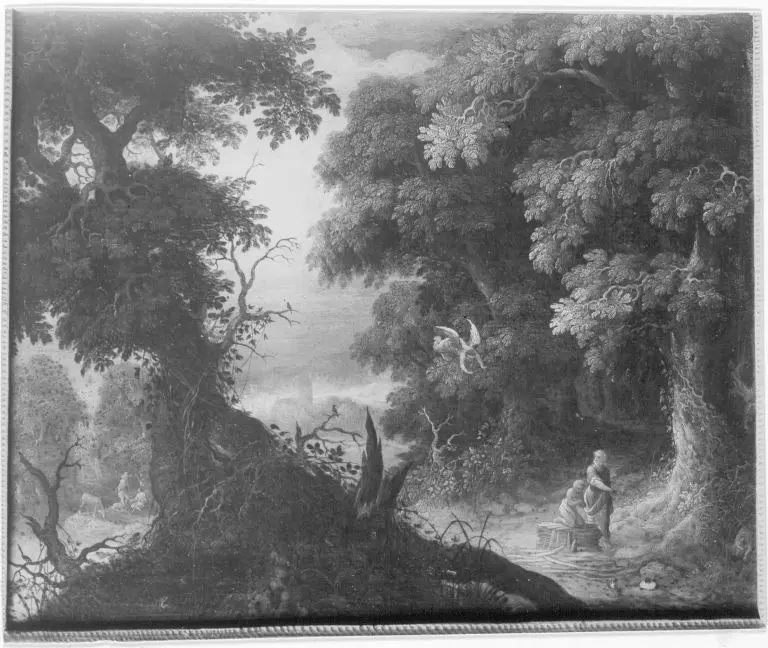
Wooded landscape with the sacrifice of Isaac (Genesis 22)
Abraham Govaerts
More Landscape Art

The Starry Night
Vincent van Gogh

View of Delft
Johannes Vermeer

Water Lilies
Claude Monet

The Grand Canal, Venice, looking north-west from the Ca' Corner to the Ca' Contarini degli Scrigni, with the campanile of Santa Maria della Carità
Canaletto

Windsor Castle
Canaletto

The Grand Canal looking North-East from the Palazzo Dolfin-Manin to the Rialto Bridge
Canaletto