
Dorf unter Bäumen — History & Facts
The eye is drawn first to the tangle of timber and thatch at the heart of the scene, where a rustic house leans into the shadows of ancient trees. Each plank and window seems to tell its own story of weather and work, but it is the quiet human presence—figures pausing on the steps, a man leading a laden donkey along the winding path—that animates the landscape. Light filters softly through the foliage, picking out the textures of moss, bark, and earth, while the path leads the viewer’s gaze deeper into the village, where other cottages nestle beneath the protective canopy.
This is not a grand narrative of history or myth, but a moment suspended in the slow rhythm of rural life, where every gesture—an exchange at the doorway, a figure lost in thought—adds to the sense of daily continuity. Painted by Abraham Govaerts between 1589 and 1626, Dorf unter Bäumen belongs to a world where landscape painting was coming into its own as a genre in the Low Countries. Such works were often commissioned by prosperous townspeople eager to celebrate the countryside that surrounded their cities, or to evoke a sense of rootedness and order in a time of rapid change. Govaerts, known for his detailed and atmospheric woodland scenes, offers here a vision shaped by both observation and idealization, capturing the harmony between human habitation and the natural world.
Today, the painting is held in the collection documented at the Pinakothek, a quiet testament to the enduring appeal of the everyday, and an invitation to linger over the details that make up a vanished village life.
More Artworks by Abraham Govaerts

Forest landscape
Abraham Govaerts
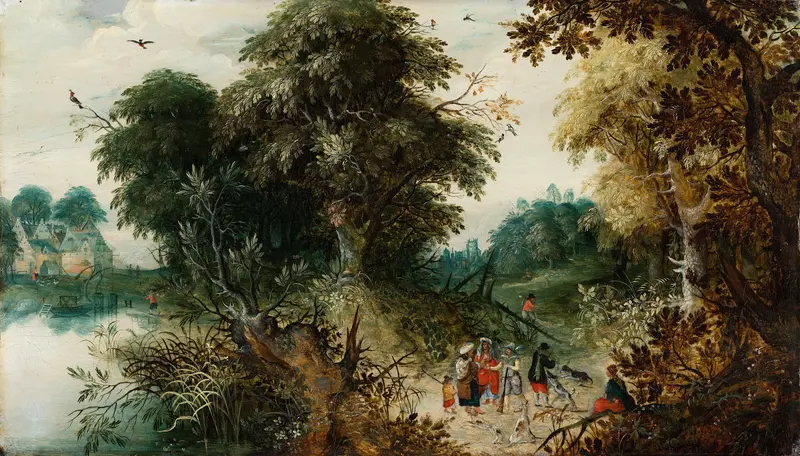
Forest View with Travellers
Abraham Govaerts
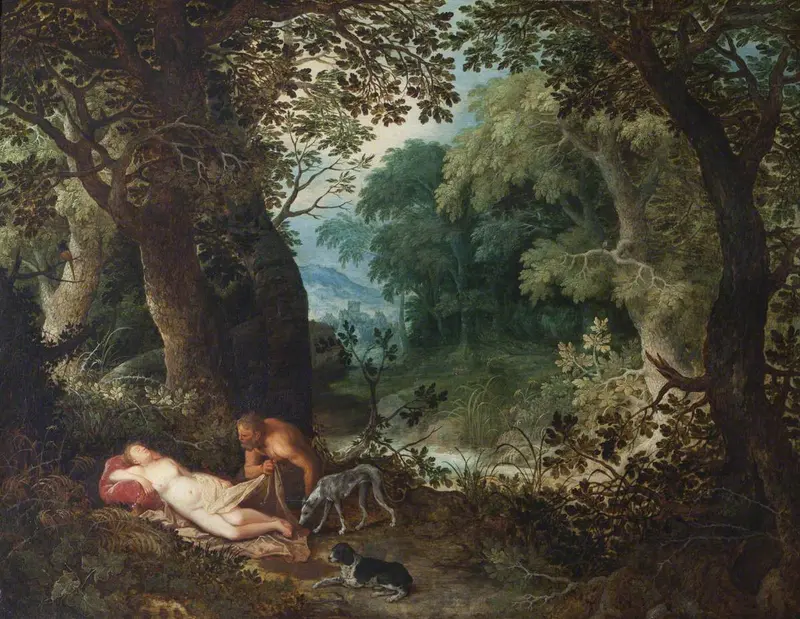
A Nymph and a Satyr
Abraham Govaerts
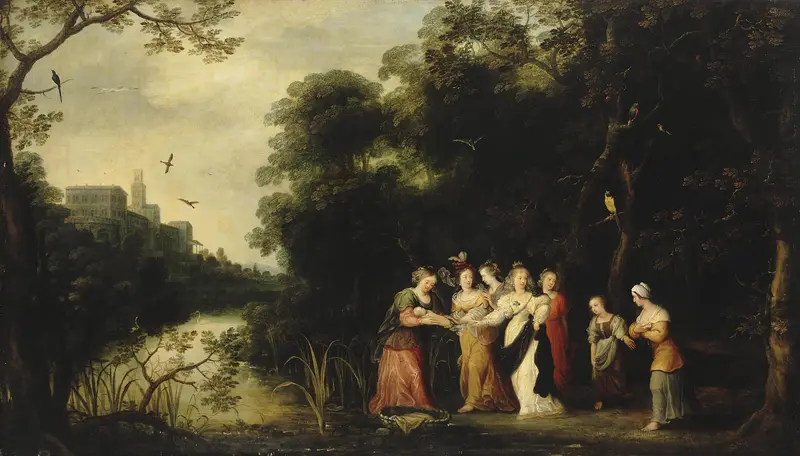
Finding of Moses
Abraham Govaerts
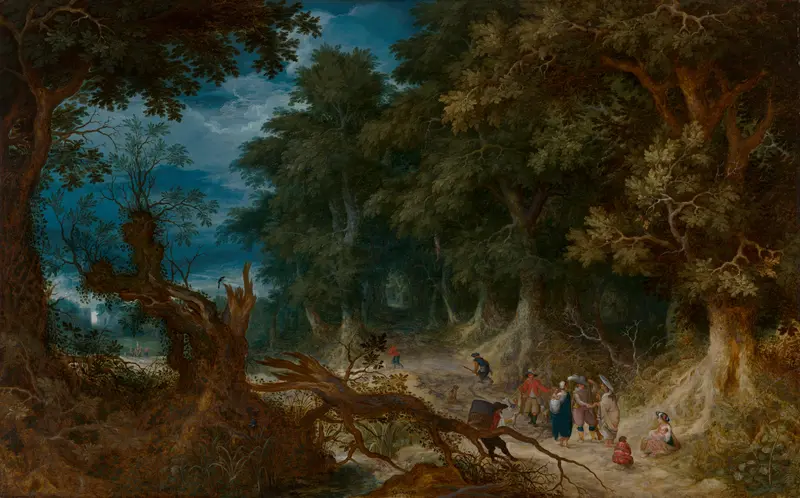
Wooded Landscape with Gipsy Women
Abraham Govaerts
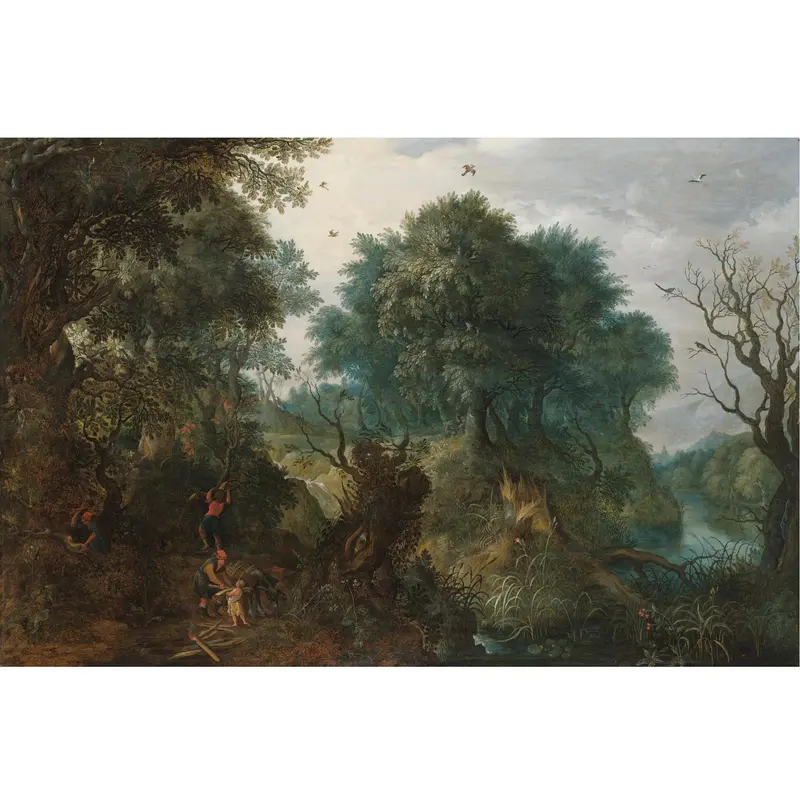
A Wooded Landscape with Woodcutters near a River
Abraham Govaerts
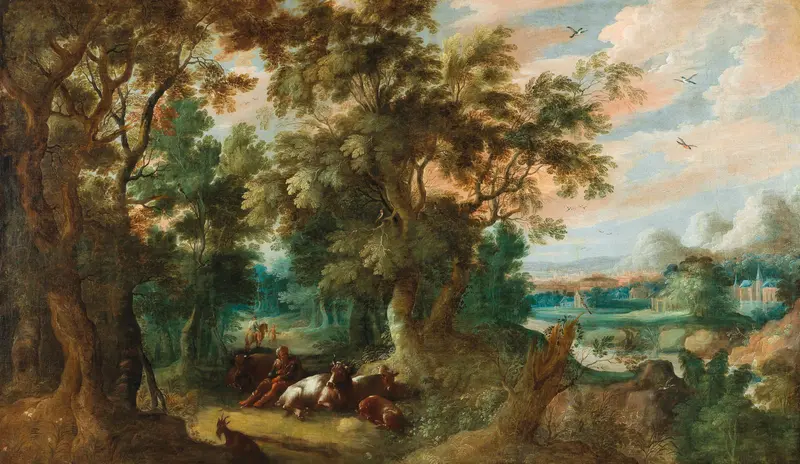
Wooded landscape with shepherds and their flock
Abraham Govaerts
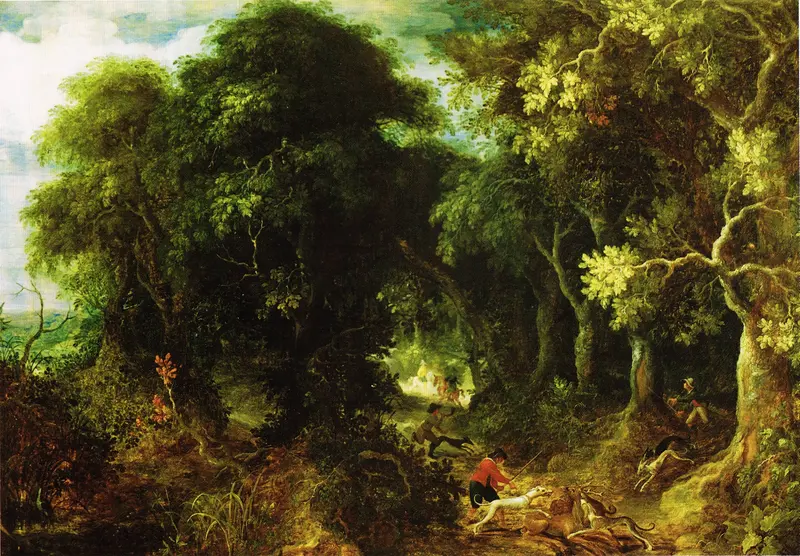
The Eternal Forest / Deer hunting
Abraham Govaerts
Wooded landscape with the sacrifice of Isaac (Genesis 22)
Abraham Govaerts
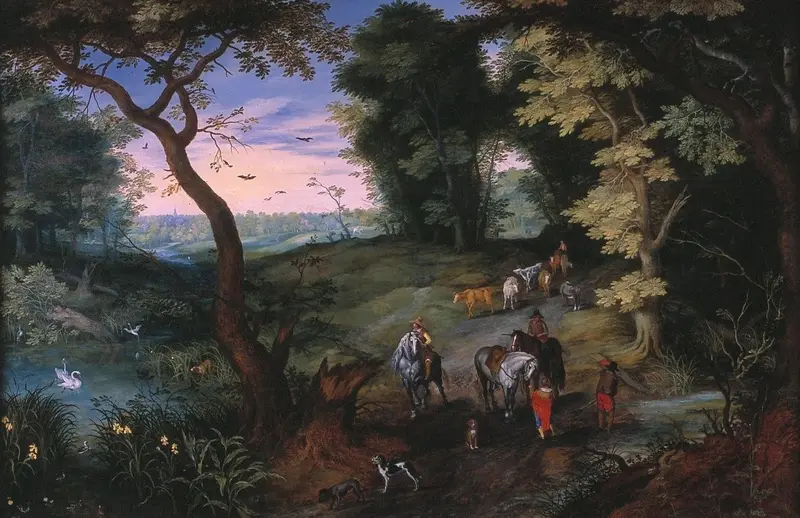
Landscape with Horsemen and Animals
Abraham Govaerts
More Landscape Art

The Starry Night
Vincent van Gogh

View of Delft
Johannes Vermeer

Water Lilies
Claude Monet

The Grand Canal, Venice, looking north-west from the Ca' Corner to the Ca' Contarini degli Scrigni, with the campanile of Santa Maria della Carità
Canaletto

Windsor Castle
Canaletto

The Grand Canal looking North-East from the Palazzo Dolfin-Manin to the Rialto Bridge
Canaletto