
Fishermen by Moonlight — History & Facts
A single moon glows like a lantern over water so still it seems to hold its breath. In Fishermen by Moonlight, Aelbert Cuyp leads the eye first to that orb, its light breaking through a curtain of clouds, then down to the faint shimmer it casts across the surface. The fishermen themselves are nearly swallowed by shadow, their boat a silhouette pressed against the night.
Yet look closer: the figures huddle together, intent on their work, their faces and gestures just discernible in the faintest glimmer. The sail, catching a whisper of moonlight, rises like a silent witness to the scene, its height echoing the drama of the sky above. This is the world of the Dutch Golden Age, when painters like Cuyp found poetry in the ordinary and the nocturnal. Between 1640 and 1700, scenes of night fishing were rare and prized, admired for their technical challenge and their quiet sense of suspense.
Collectors of the time valued such works for their ability to conjure atmosphere and invite contemplation—paintings not just to display, but to linger with. This example, now held in the collection documented by the RKD, is a testament to that era’s fascination with light, labor, and the mysteries hidden in darkness. Let your gaze drift back to the painting, and notice how the silence of the night deepens with every glance.
More Artworks by Aelbert Cuyp

The Maas at Dordrecht
Aelbert Cuyp
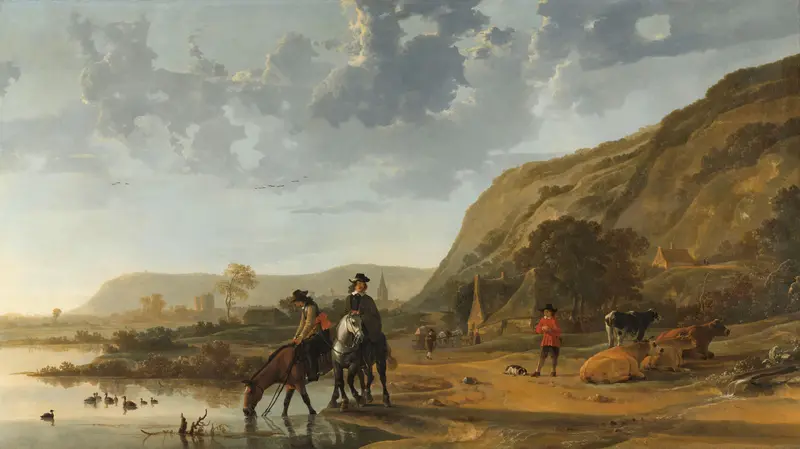
River Landscape with Riders
Aelbert Cuyp

The Maas at Dordrecht
Aelbert Cuyp
Gezicht op Dordrecht
Aelbert Cuyp
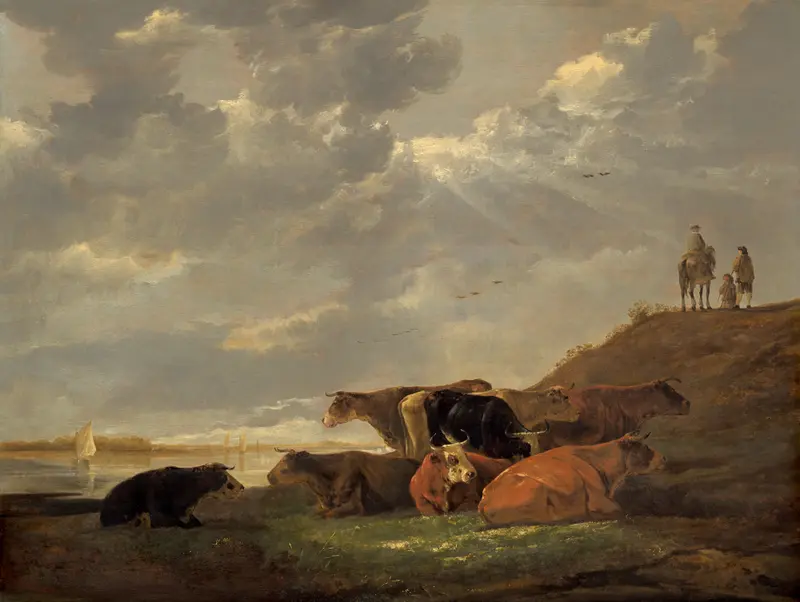
River Landscape with Cows
Aelbert Cuyp
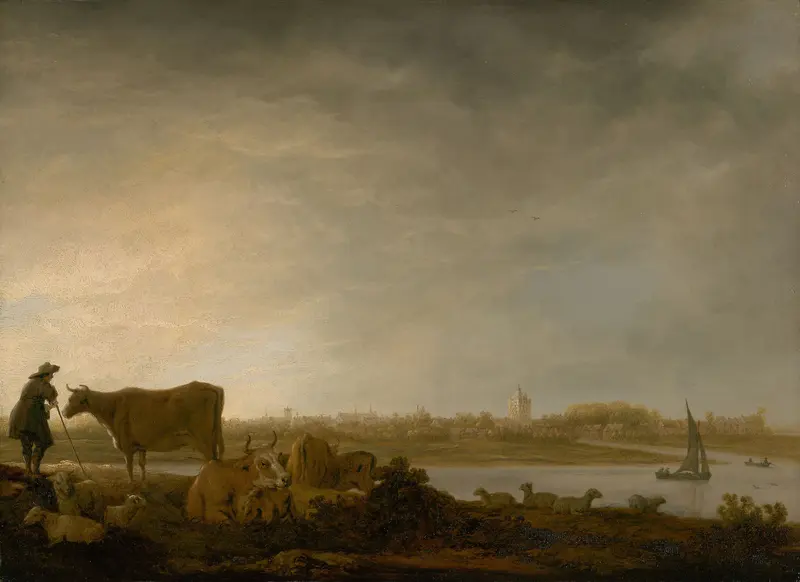
A View of Vianen with a Herdsman and Cattle by a River
Aelbert Cuyp
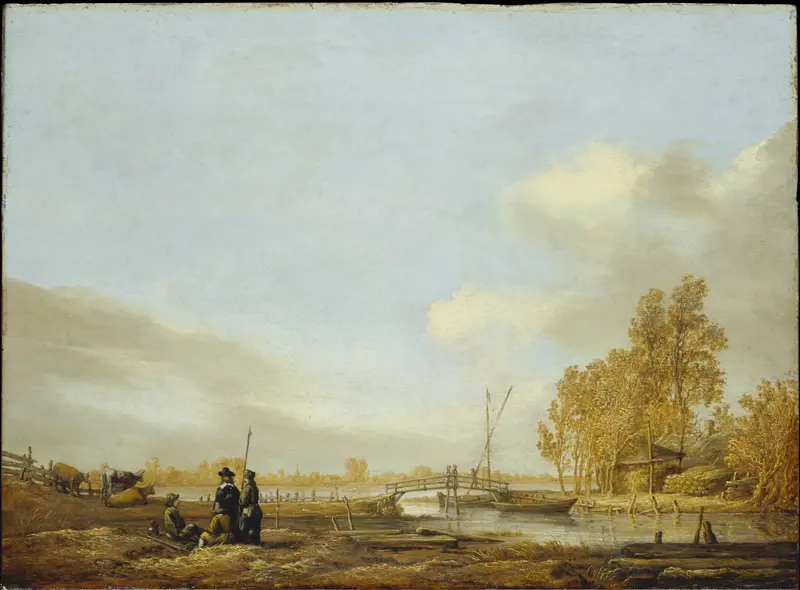
River Landscape with Footbridge
Aelbert Cuyp
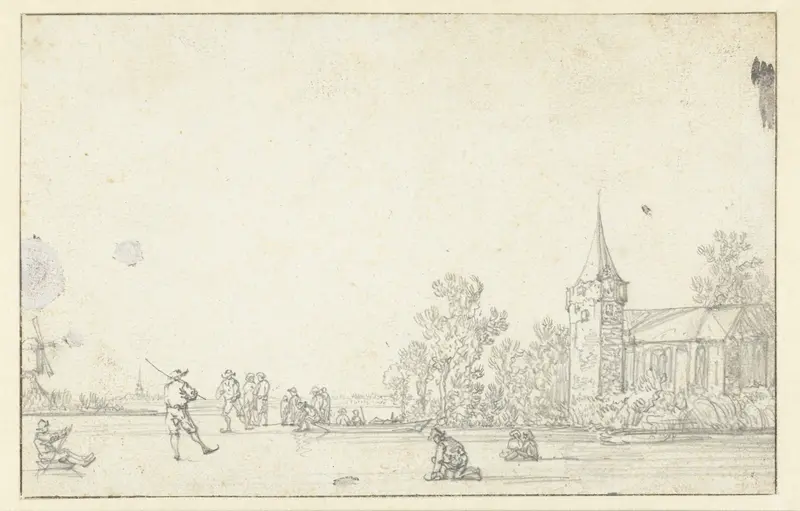
Bevroren rivier met schaatsers bij een kerk
Aelbert Cuyp

Cattle near a River
Aelbert Cuyp
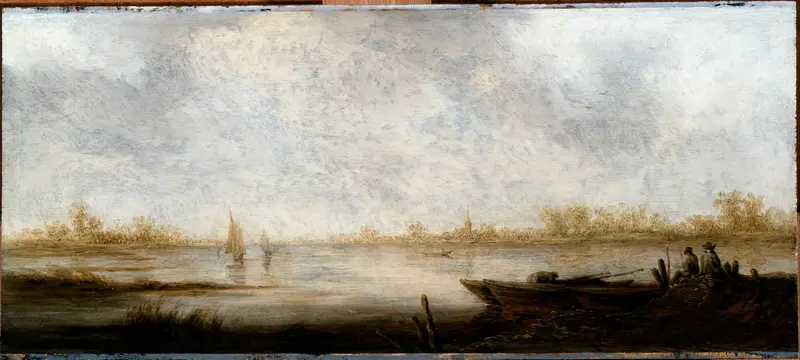
River Landscape
Aelbert Cuyp




