
Fishing Boats on the Maas — History & Facts
What first draws the eye in Fishing Boats on the Maas is the sweep of the sails—dark, weathered, and monumental—rising against a sky that seems to pulse with the North Sea’s restless weather. The horizon sits low, giving the sky a commanding presence, its clouds heavy and shifting, as if the wind that fills the boats’ sails has just swept through. Aelbert Cuyp orchestrates the scene so that the viewer’s gaze moves from the sturdy hulls and clustered figures, to the distant, almost spectral sails on the horizon, and finally to the pale light that glimmers along the water’s edge.
Each detail—the angled mast, the flag fluttering at the peak, the subtle gestures of the crew—serves to anchor the boats in a world of labor and anticipation, poised between the security of the shore and the uncertainty of the open water. This painting, made in 1645, belongs to the world of the Dutch Golden Age, when rivers and estuaries like the Maas were the lifelines of commerce, food, and daily life. Scenes like this were not only a celebration of local industry, but also a quiet assertion of the Dutch relationship with water: pragmatic, proud, and always watchful. Works of this kind were collected by prosperous burghers who saw their own fortunes reflected in the steady rhythms of river life.
Today, Fishing Boats on the Maas is part of the collection at the Philadelphia Museum of Art, a reminder of a time when the boundaries between work and nature, sky and water, were as fluid as the river itself. Let your gaze drift back to the painting—the next story is always waiting in the shifting light.
More Artworks by Aelbert Cuyp

The Maas at Dordrecht
Aelbert Cuyp
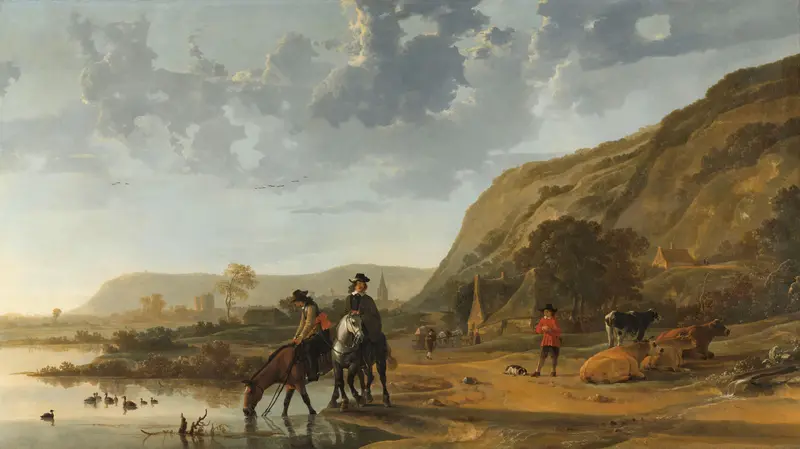
River Landscape with Riders
Aelbert Cuyp

The Maas at Dordrecht
Aelbert Cuyp
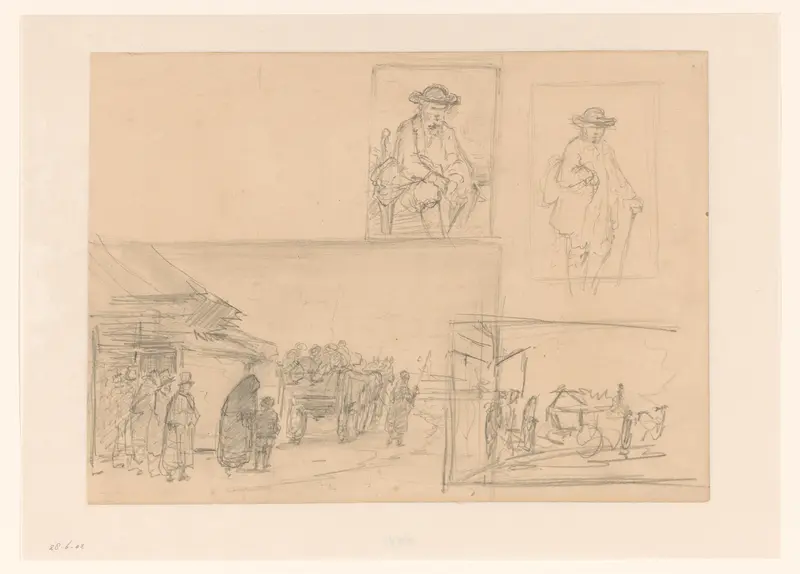
Gezicht op Dordrecht
Aelbert Cuyp
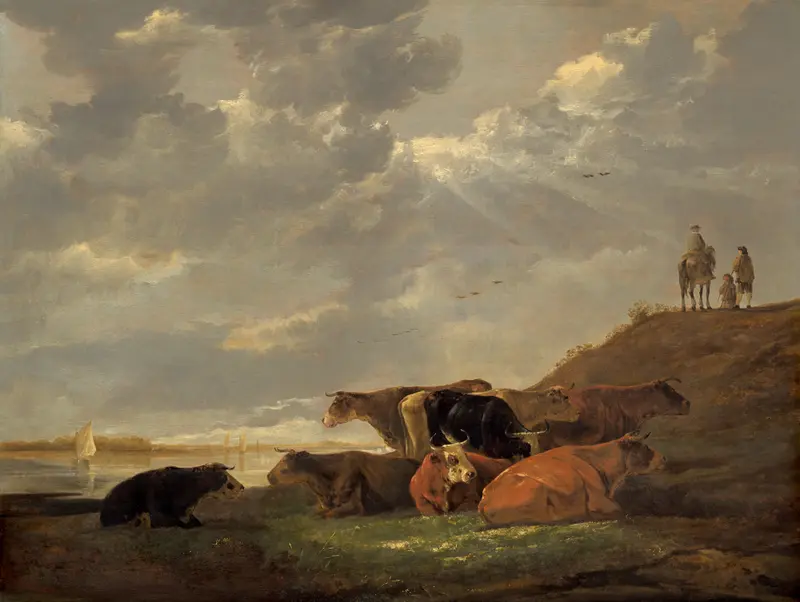
River Landscape with Cows
Aelbert Cuyp
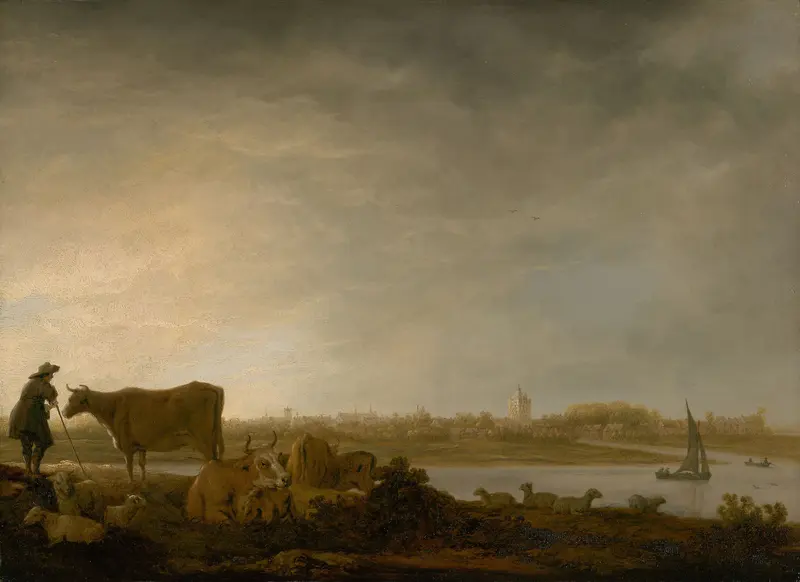
A View of Vianen with a Herdsman and Cattle by a River
Aelbert Cuyp
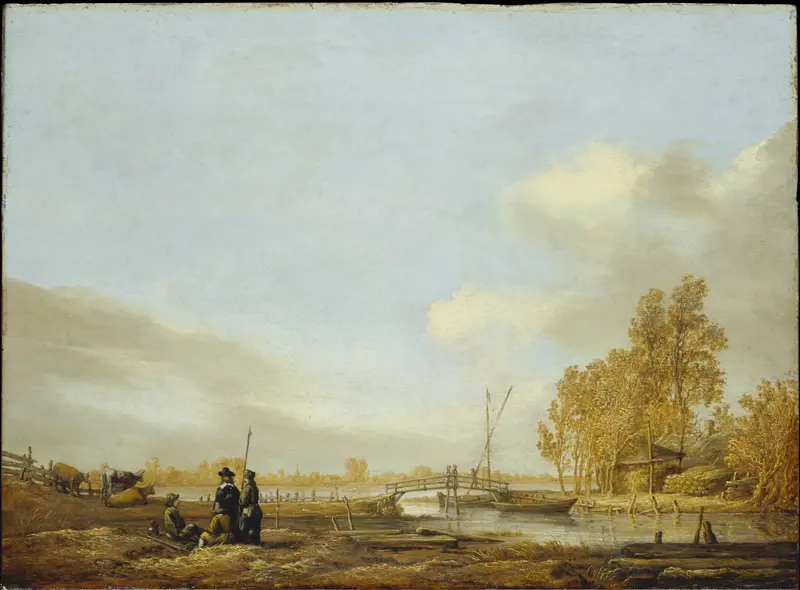
River Landscape with Footbridge
Aelbert Cuyp
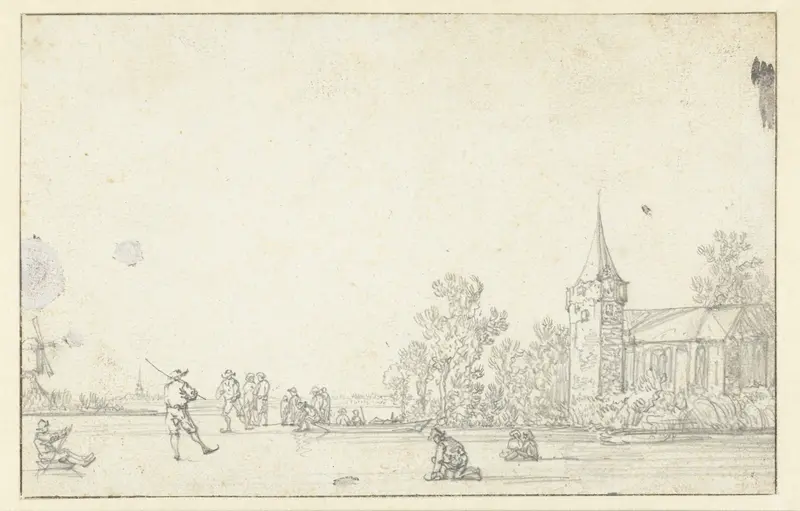
Bevroren rivier met schaatsers bij een kerk
Aelbert Cuyp

Cattle near a River
Aelbert Cuyp
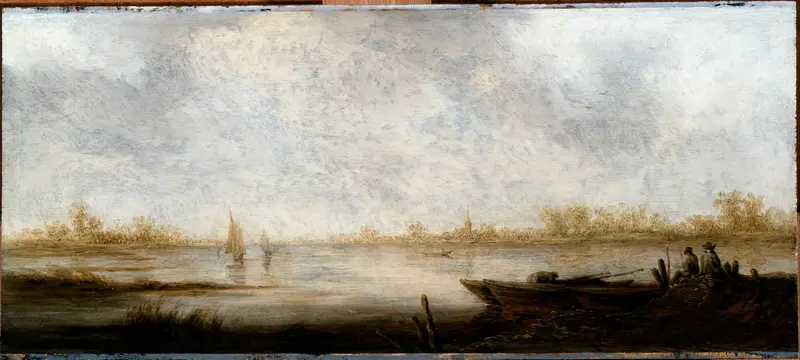
River Landscape
Aelbert Cuyp




