
Flachlandschaft Mit Vogelscheuche — History & Facts
This thought echoes in a landscape where the vibrancy of nature masks an underlying decay. Here, a solitary figure stands as a testament to time’s passage, inviting us to explore deeper truths hidden in the idyllic scenery. Look closely at the foreground where the weathered scarecrow stands, its tattered clothing fluttering gently in the breeze. The contrast between the lush green fields and the lifeless figure evokes a poignant sense of neglect.
The artist’s brushwork captures the richness of the landscape with bright greens and soft blues, yet the scarecrow’s muted tones draw the eye, reminding us of its purpose long since abandoned. In this painting, the idyllic scenery juxtaposes the inevitability of decay. Notice how the vibrant wheat fields, ripe for harvest, hint at the cycle of life, while the scarecrow, a symbol of protection, reflects a sense of futility. This duality encapsulates the tension between beauty and neglect, leaving the viewer pondering the transient nature of both human endeavors and the landscapes we hold dear. Carl Spitzweg created this piece during the mid-19th century in Germany, a time when the Romantic movement flourished.
As the burgeoning industrial age began to reshape society, Spitzweg’s work often celebrated simplicity and the beauty of rural life, contrasting sharply with the rapid urbanization around him. It was a period marked by a deep appreciation for nature, even as it succumbed to the encroachments of modernity.
More Artworks by Carl Spitzweg
Browse all →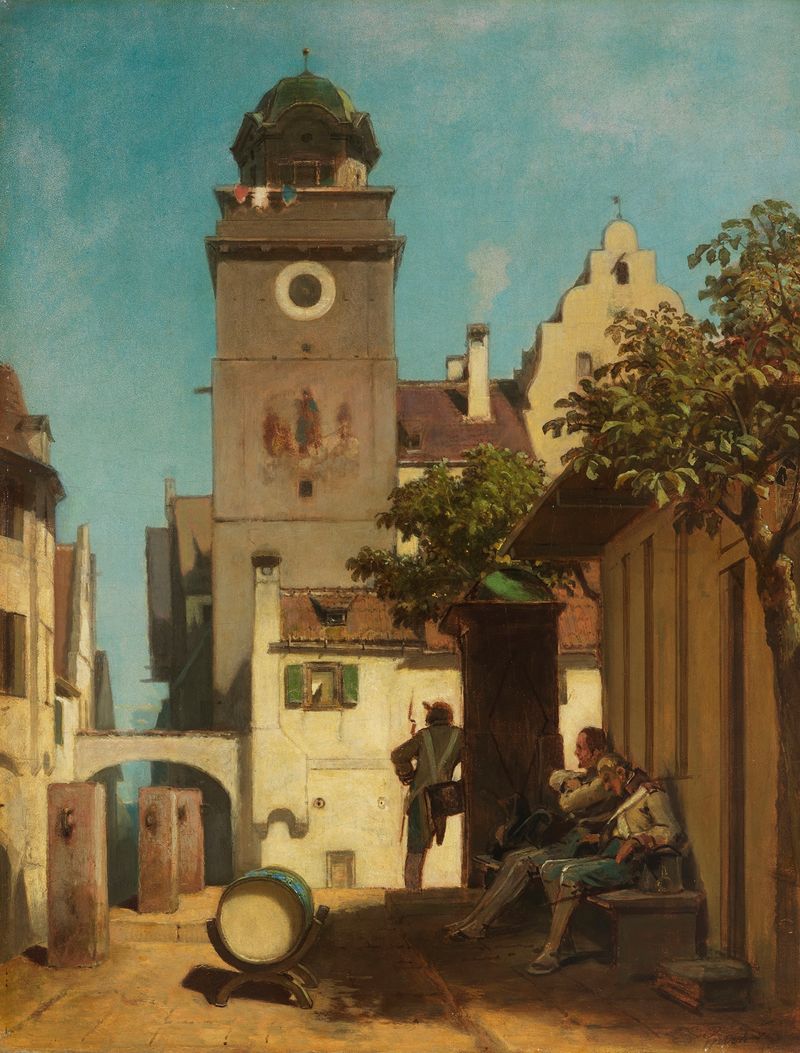
Die Stadtwache
Carl Spitzweg
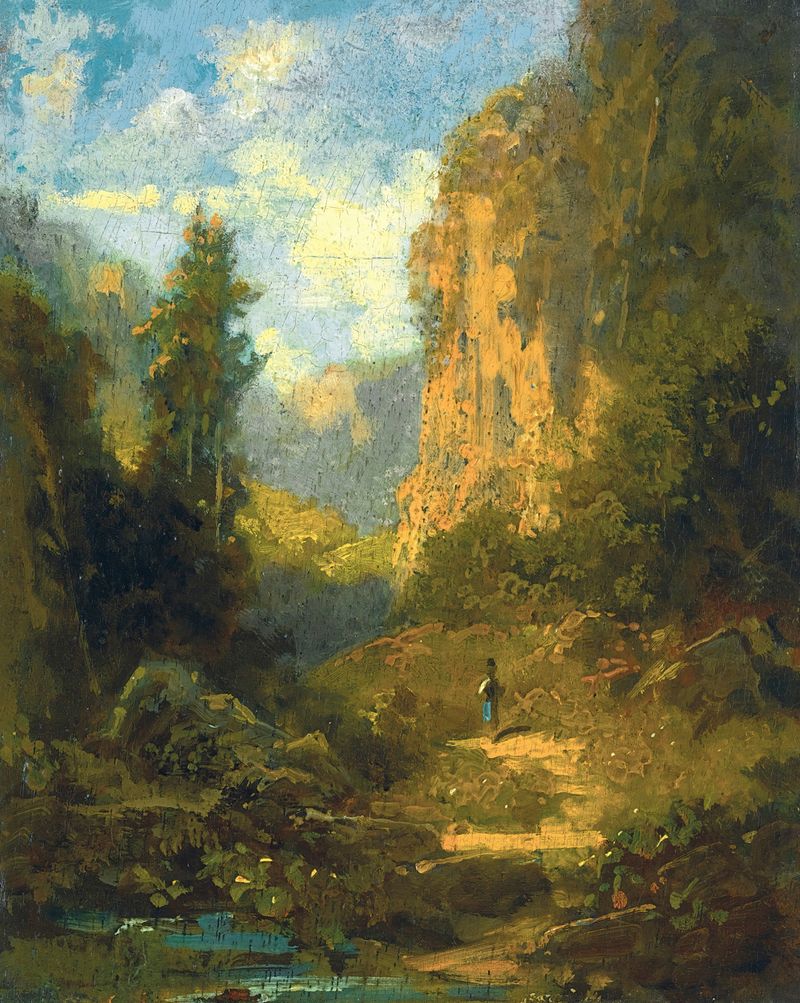
Gebirgslandschaft
Carl Spitzweg

In the Alpine High Valley (Landscape with Mt. Wendelstein)
Carl Spitzweg

Gebirgsmühle
Carl Spitzweg
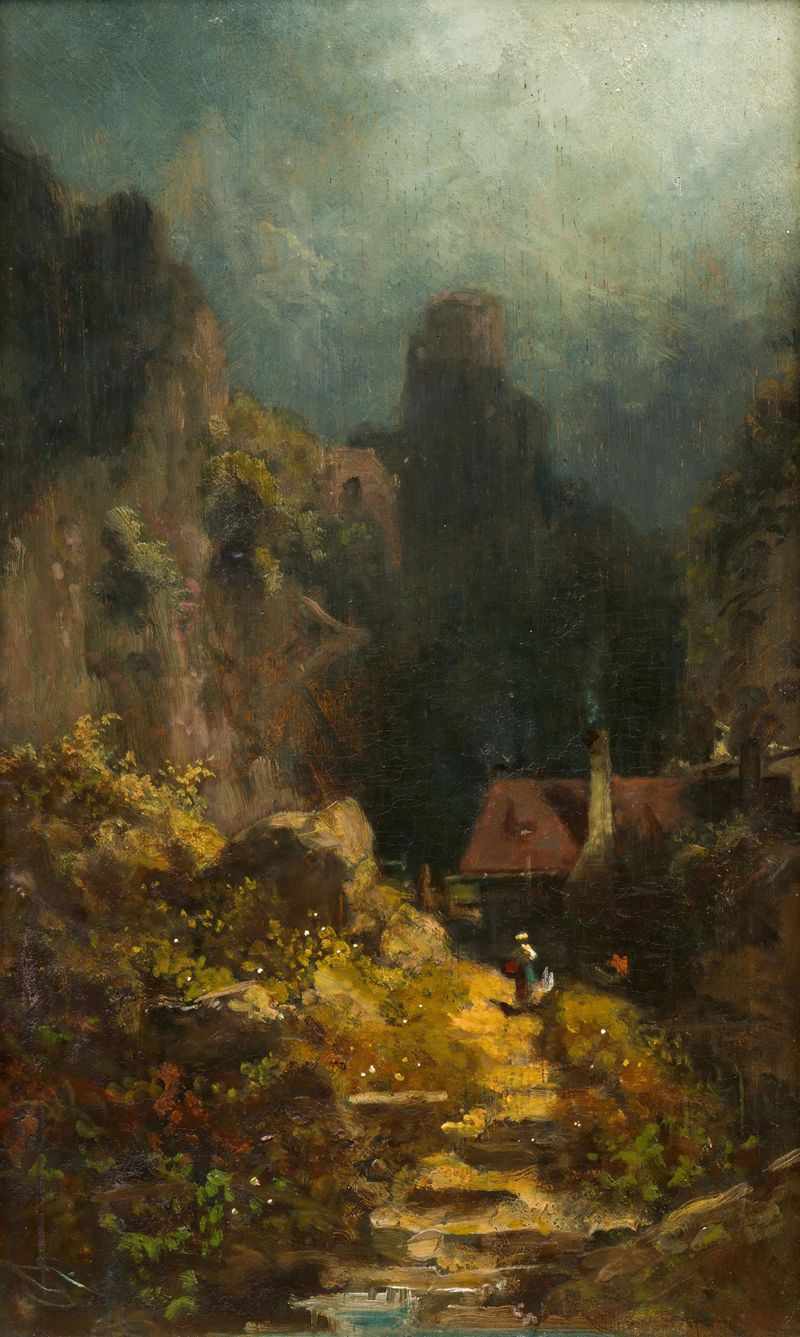
In der Schlucht
Carl Spitzweg
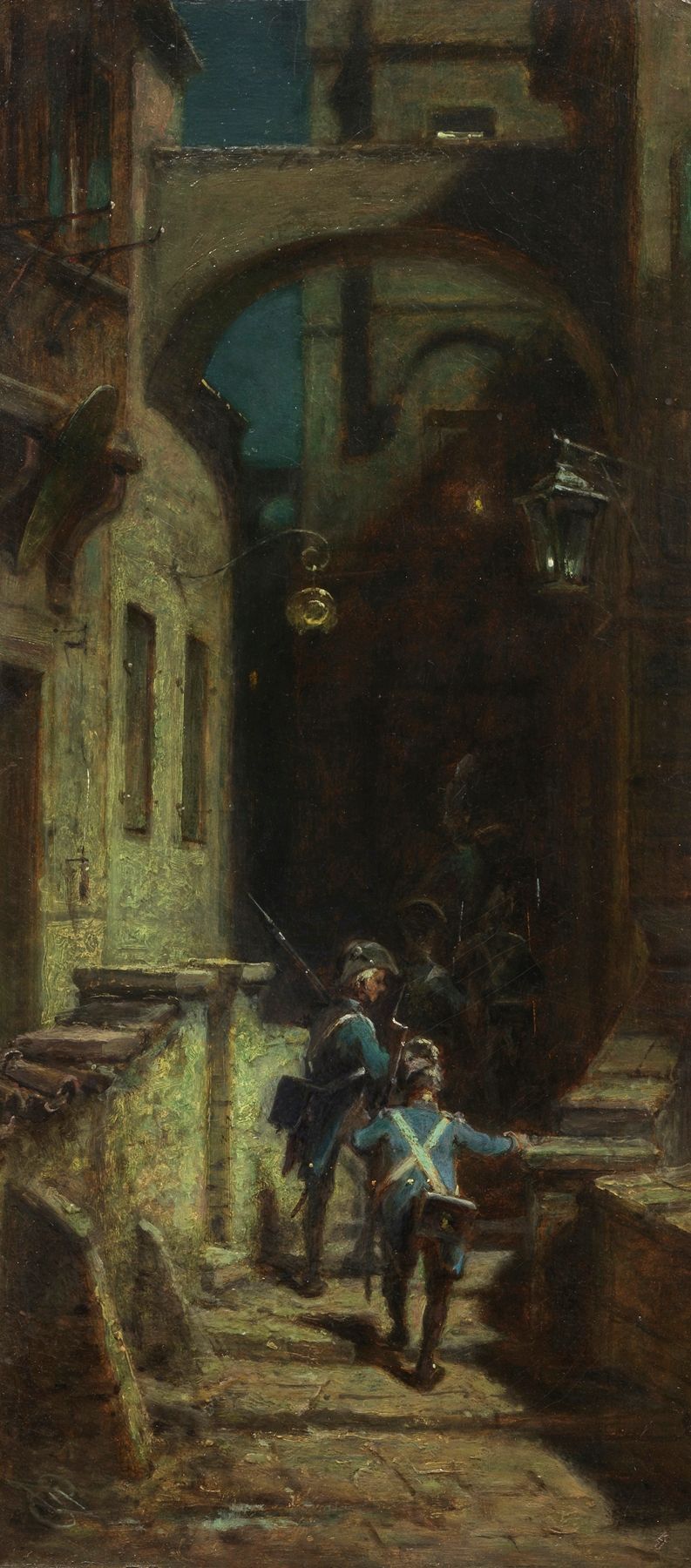
Die Scharwache
Carl Spitzweg

Einsiedler mit Mädchen
Carl Spitzweg

Lagernde Karrner (Rast der Streuner)
Carl Spitzweg
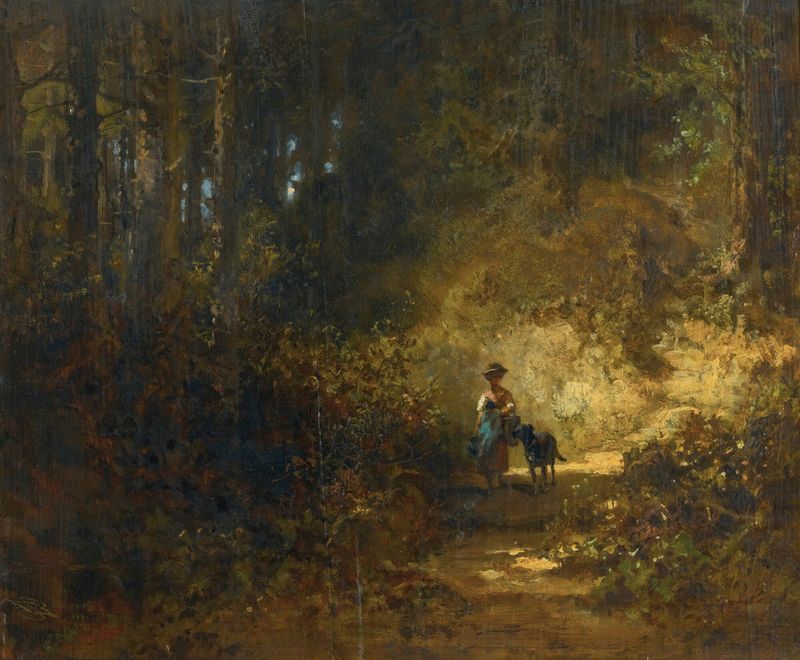
Im Walde
Carl Spitzweg
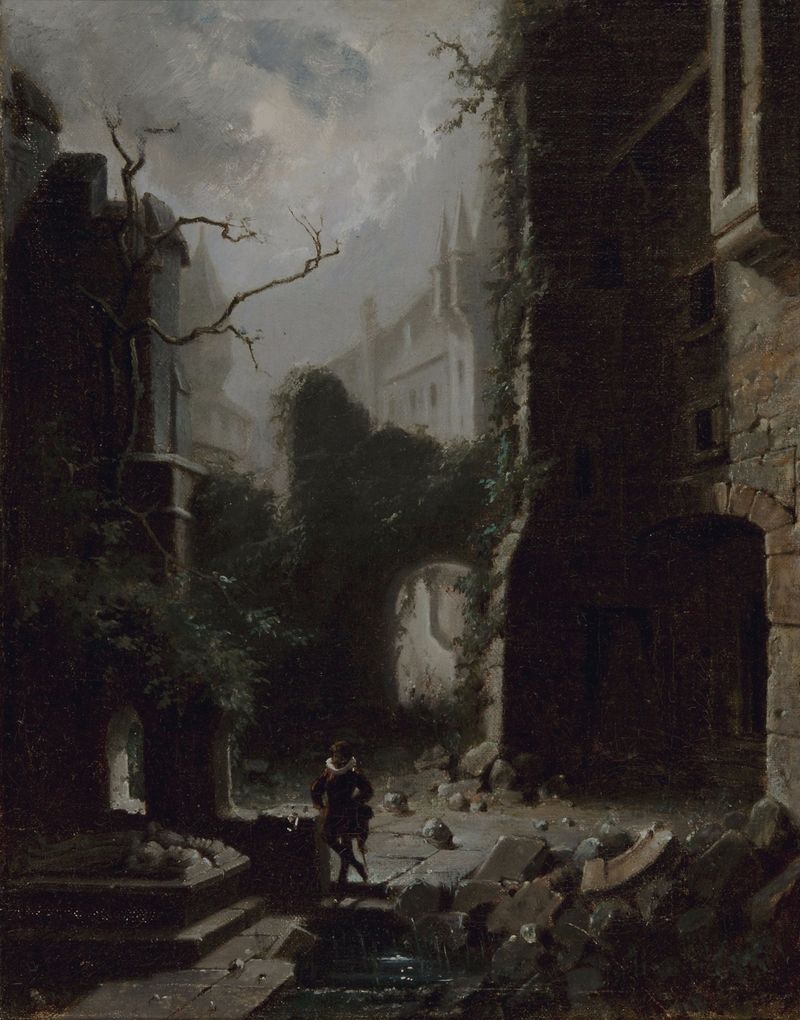
Moonlit Scene with Castle Ruins
Carl Spitzweg





