
Flower Still Life with a Timepiece — History & Facts
What first catches the eye in Flower Still Life with a Timepiece is not just the riot of blossoms, but the quiet drama of time itself, ticking away at the painting’s lower edge. The flowers—lush, layered, and impossibly fresh—crowd together in a glass vase, their petals catching the light in a way that makes each species distinct: ruffled poppies, striped tulips, and pale roses jostle for attention. But then the gaze drops to the stone ledge, where a delicate watch, its cover open, rests beside a fallen carnation.
The timepiece is no idle ornament; it is a memento mori, a reminder that even the most extravagant beauty is fleeting. The contrast between the vibrant, almost unruly bouquet and the precise, metallic coolness of the watch charges the scene with a sense of passing moments. This kind of still life flourished in the Dutch Republic of the mid-seventeenth century, when artists like Abraham van Beyeren competed to outdo each other in the depiction of nature’s bounty and the subtle play of light on glass and petal. Such paintings were sought after by prosperous burghers eager to display both their wealth and their awareness of life’s transience.
The inclusion of the timepiece is typical of the era’s fascination with vanitas themes—paintings that quietly meditate on mortality and the passage of time. Dated between circa 1663 and 1665 and now part of the Mauritshuis collection, this work stands as a testament to a world where opulence and introspection went hand in hand. The longer you look, the more you sense the hush between the ticking seconds and the slow wilting of the blooms.
More Artworks by Abraham van Beyeren

Still Life
Abraham van Beyeren
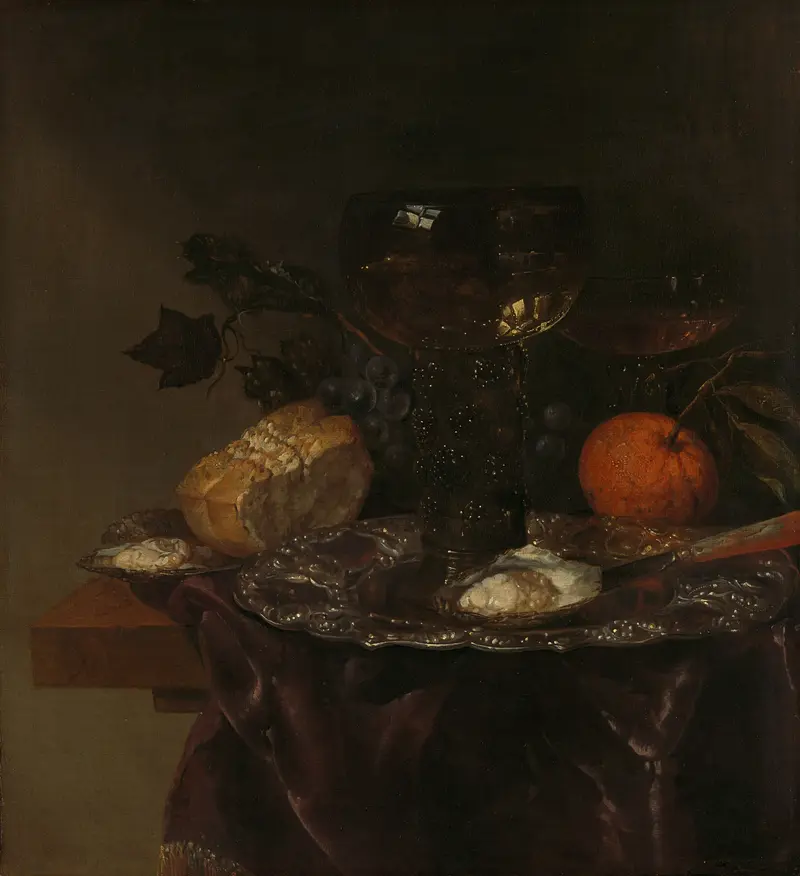
Still Life
Abraham van Beyeren
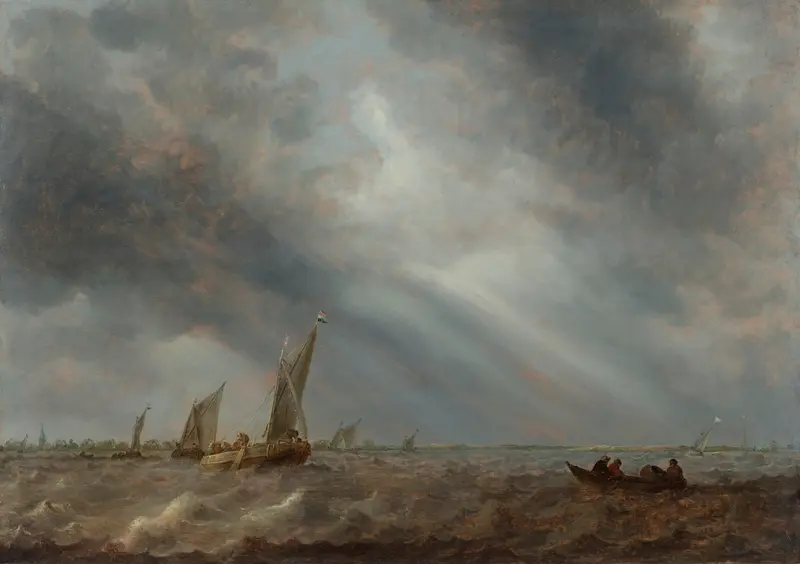
Various sailing vessels and a rowing boat with fishermen on choppy waters under a stormy sky
Abraham van Beyeren
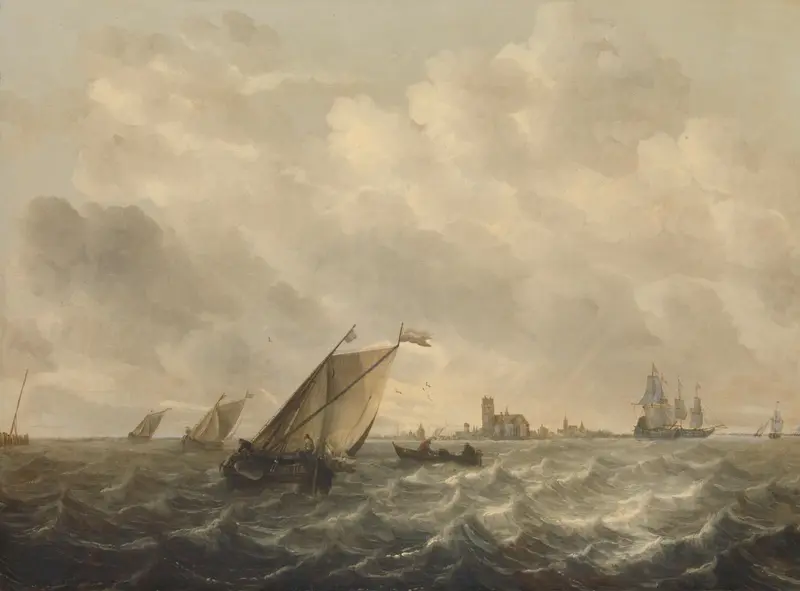
River View
Abraham van Beyeren
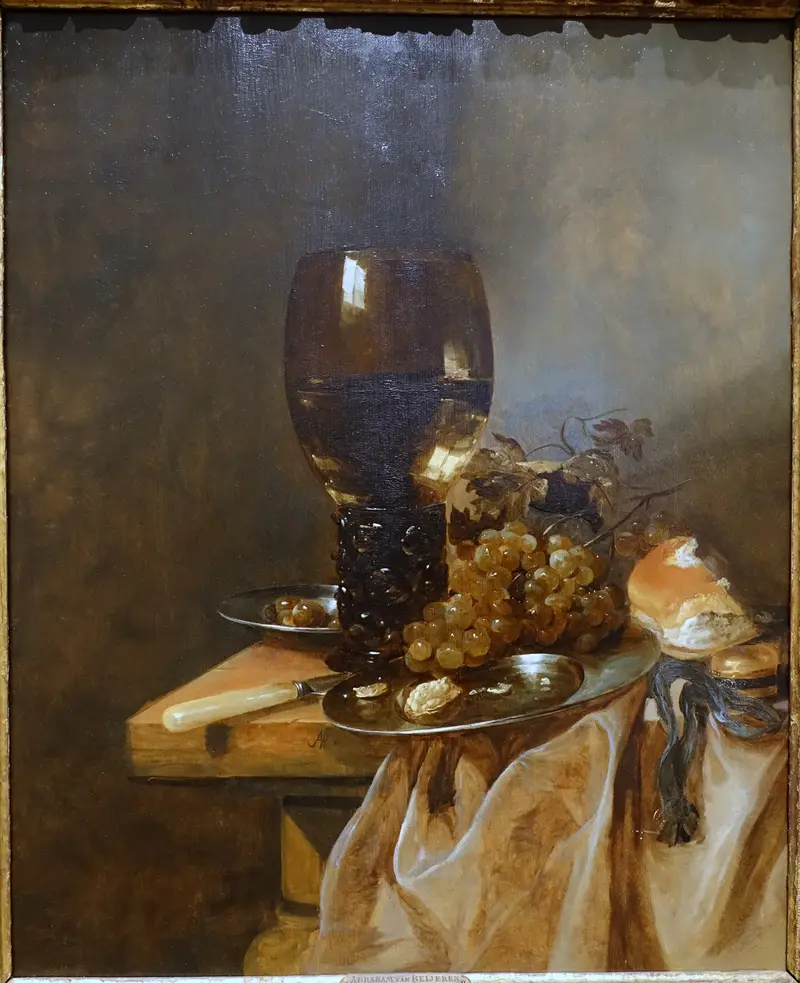
A Roemer with Grapes, a Pewter Plate and a Roll
Abraham van Beyeren
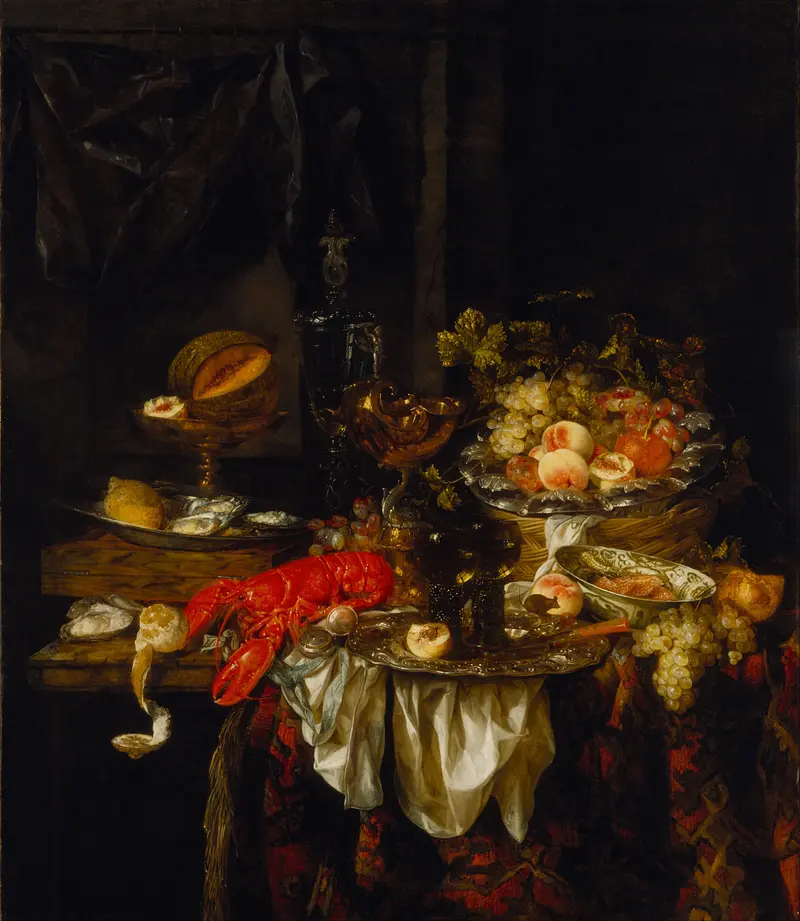
Banquet Still Life
Abraham van Beyeren
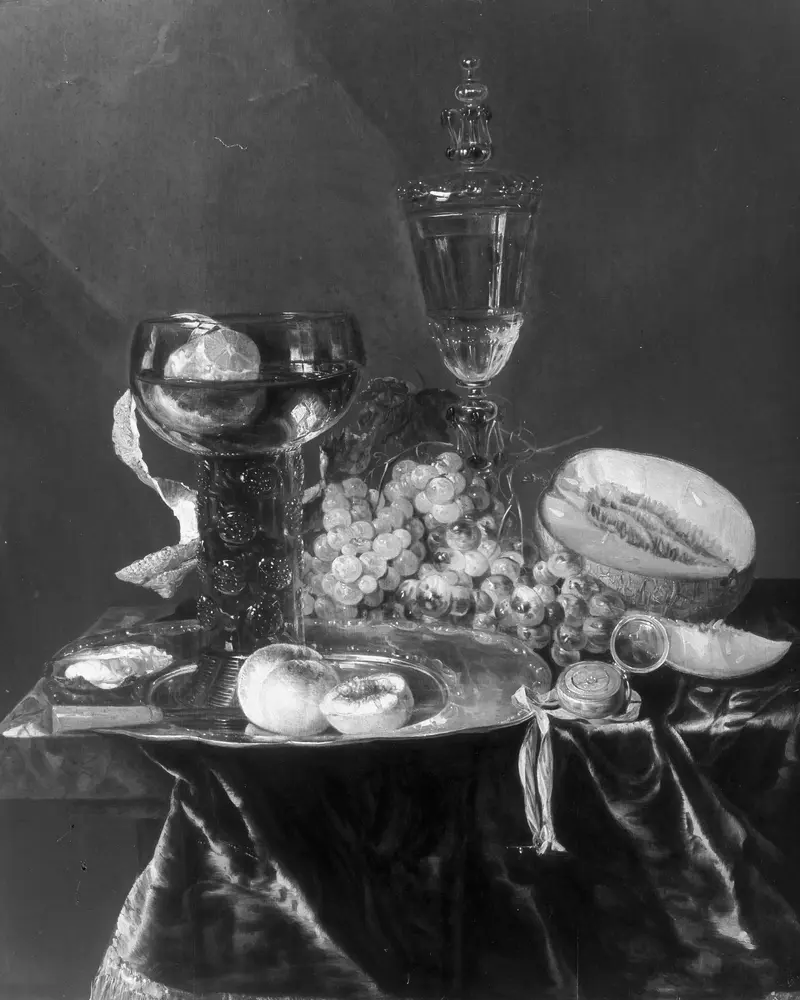
Still life with a glass lid goblet
Abraham van Beyeren
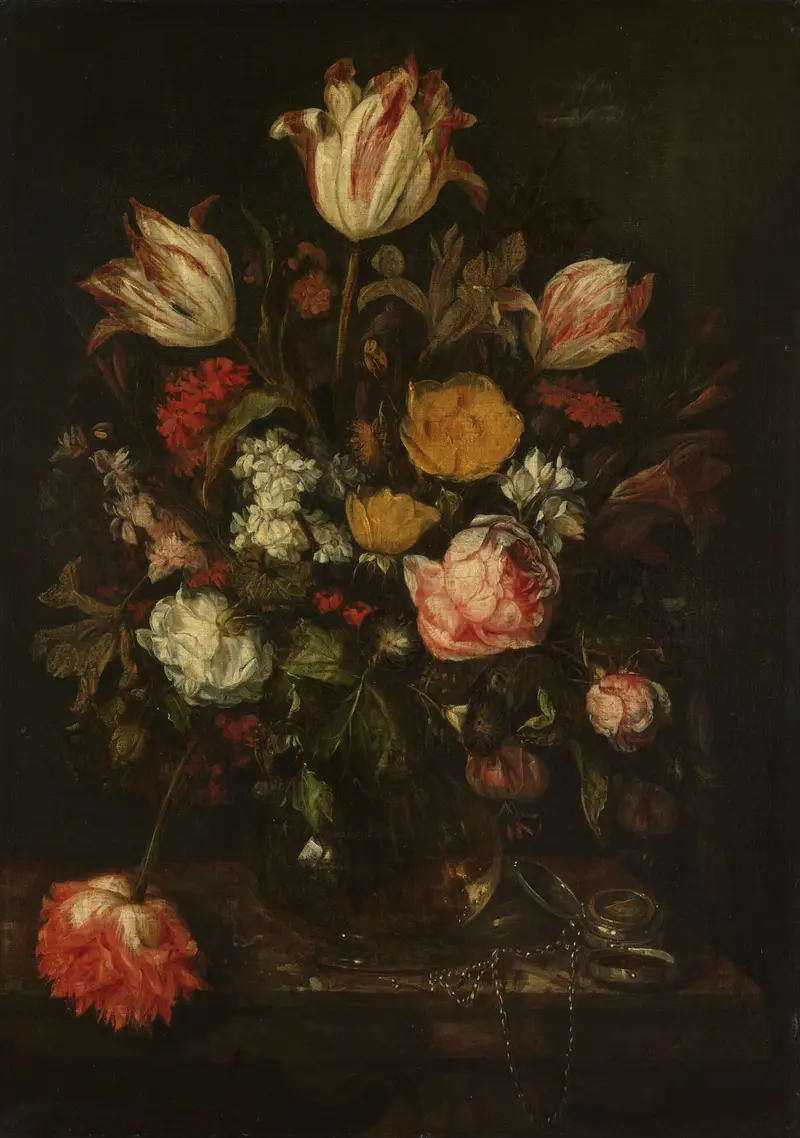
Still life with flowers
Abraham van Beyeren
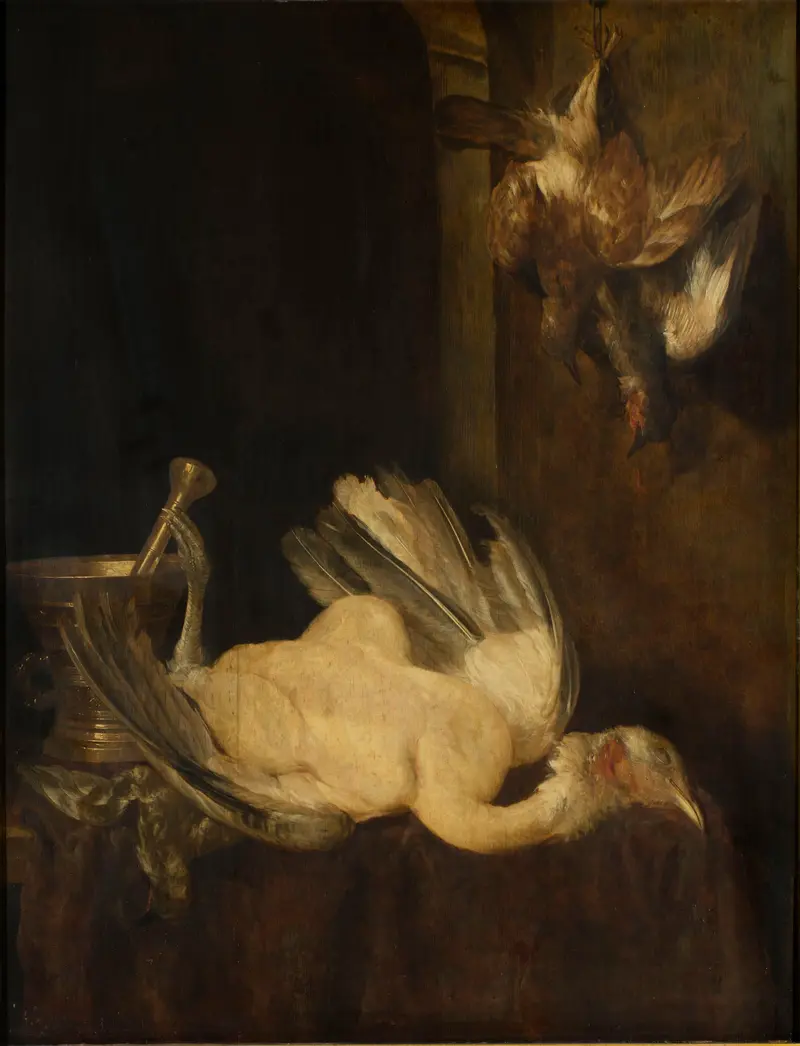
Still life with dead birds
Abraham van Beyeren
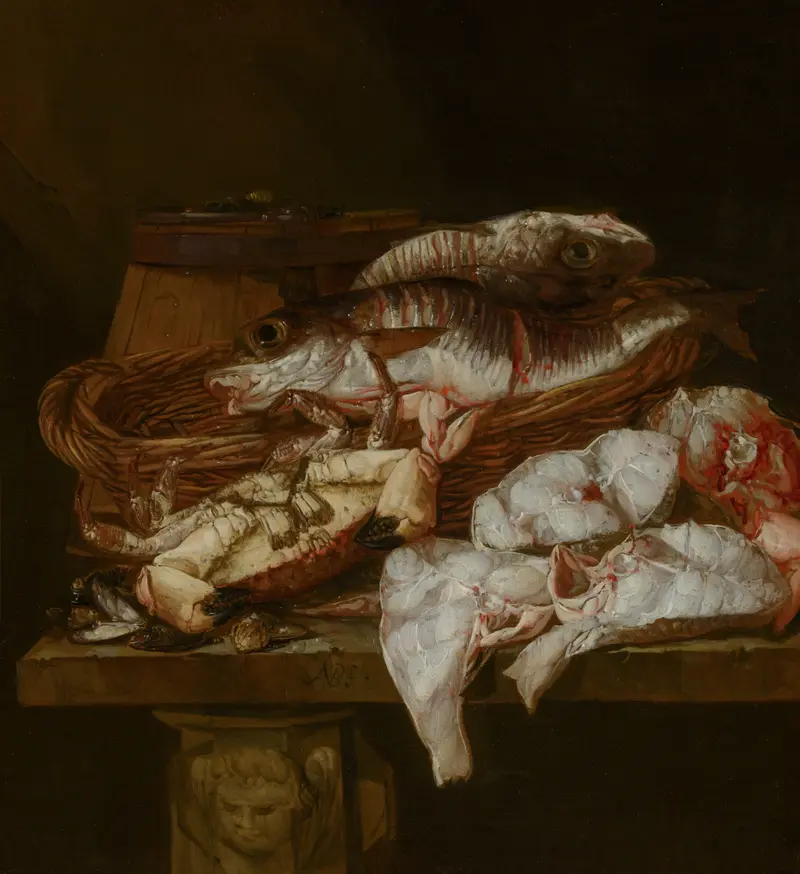
Still Life with Seafood
Abraham van Beyeren





