
Flowers and Fruit — History & Facts
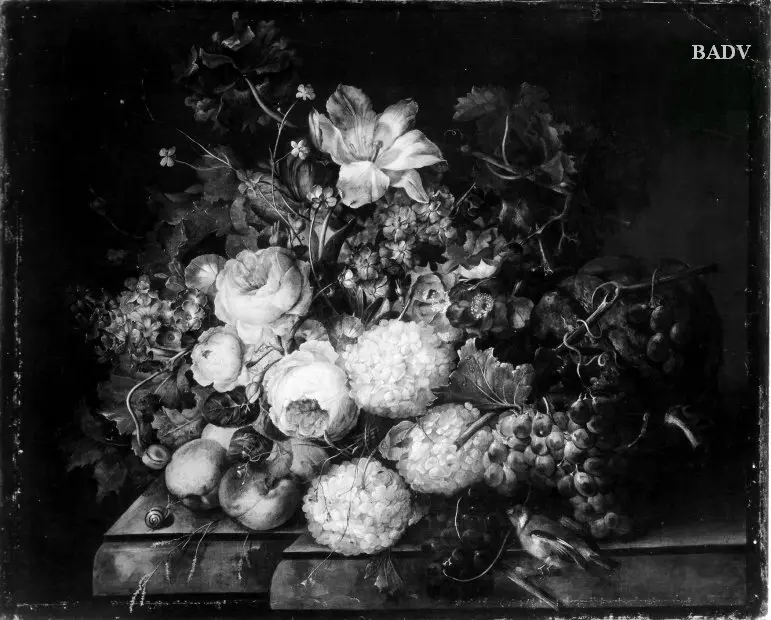
A riot of color bursts from the darkness, luring the viewer into a world where every petal, fruit, and insect seems poised on the edge of motion. The painter’s eye lingers on textures: the waxy sheen of peaches, the delicate veins of rose petals, the rough skin of a split melon. Light tumbles in from the left, catching the curve of a plum, the glossy wings of a beetle, and the dew still clinging to a blackberry leaf.
Each detail is a deliberate invitation to look closer—why does the butterfly rest here, why does the grapevine twist just so? In this crowded stage, abundance teeters on the brink of decay, and the tiniest creatures are as important as the grandest blooms. Painted between 1669 and 1679, this work belongs to the golden age of Dutch and Flemish still life, when artists like Abraham Mignon transformed the genre into a meditation on nature’s bounty and fragility. Such paintings were prized by wealthy collectors, eager to display both their taste and their knowledge of the natural world. In the world of the seventeenth-century Netherlands, these compositions were more than decoration: they were puzzles, sermons, and status symbols all at once.
Today, Flowers and Fruit is housed in the Mauritshuis, a fitting home for a painting that celebrates the richness of observation. Let your eyes wander—every detail rewards a second look.
More Artworks by Abraham Mignon

Still Life with Flowers and a Watch
Abraham Mignon
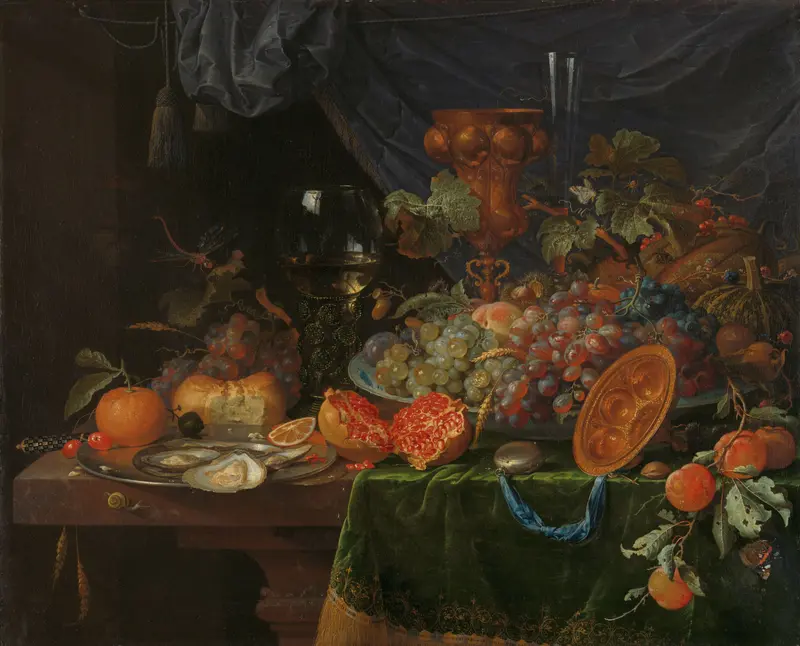
Still Life with Fruit and Oysters
Abraham Mignon
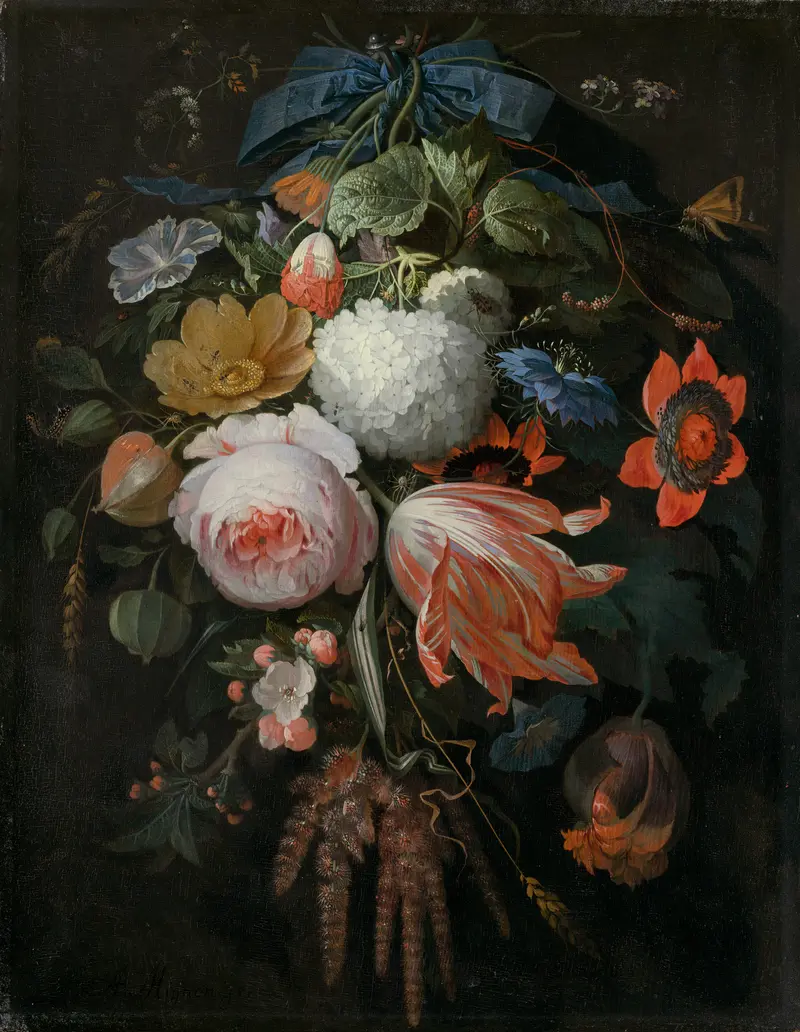
A Hanging Bouquet of Flowers
Abraham Mignon
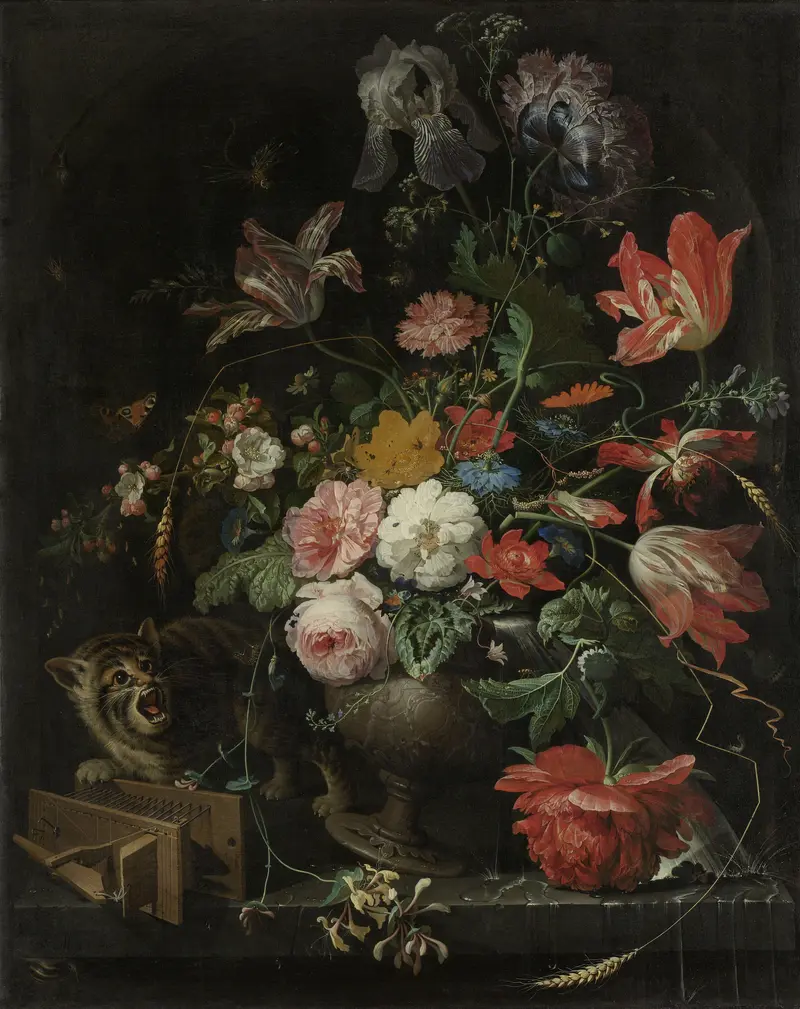
Bouquet with cat and mousetrap
Abraham Mignon
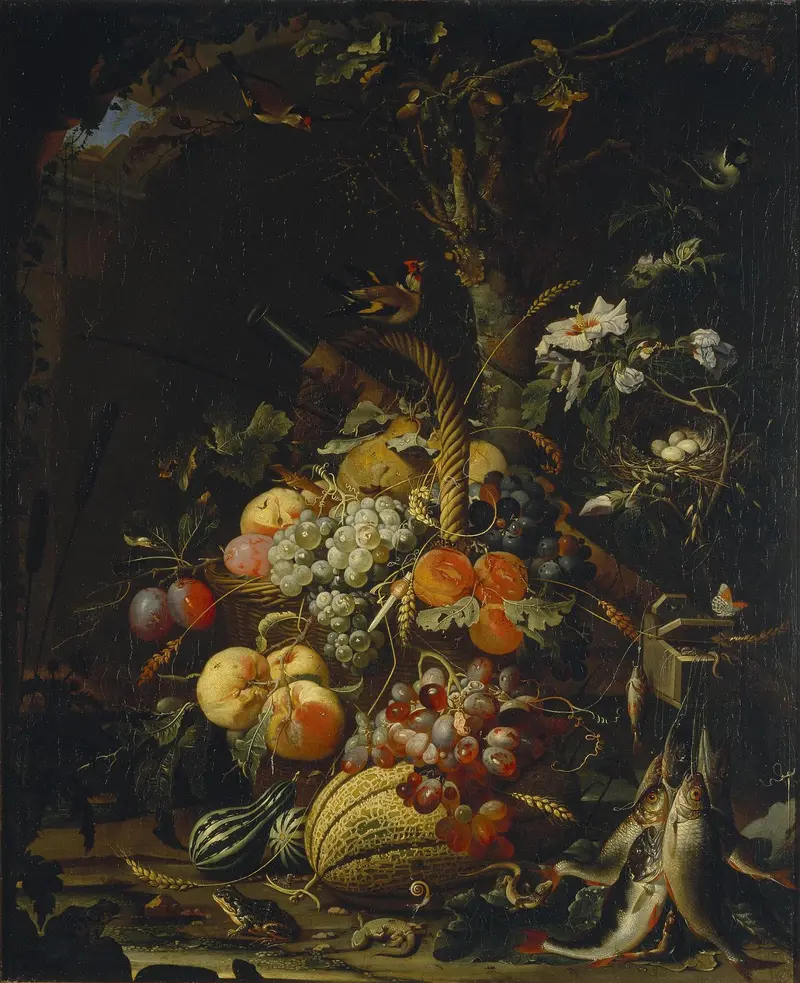
Forest floor still life with fruit, fish and a bird's nest
Abraham Mignon
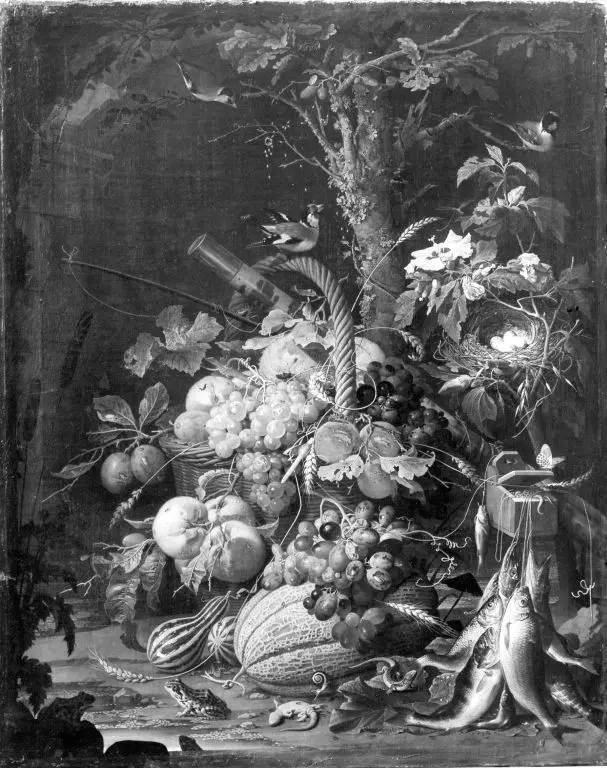
Still life with fruit, fish and a bird's nest
Abraham Mignon
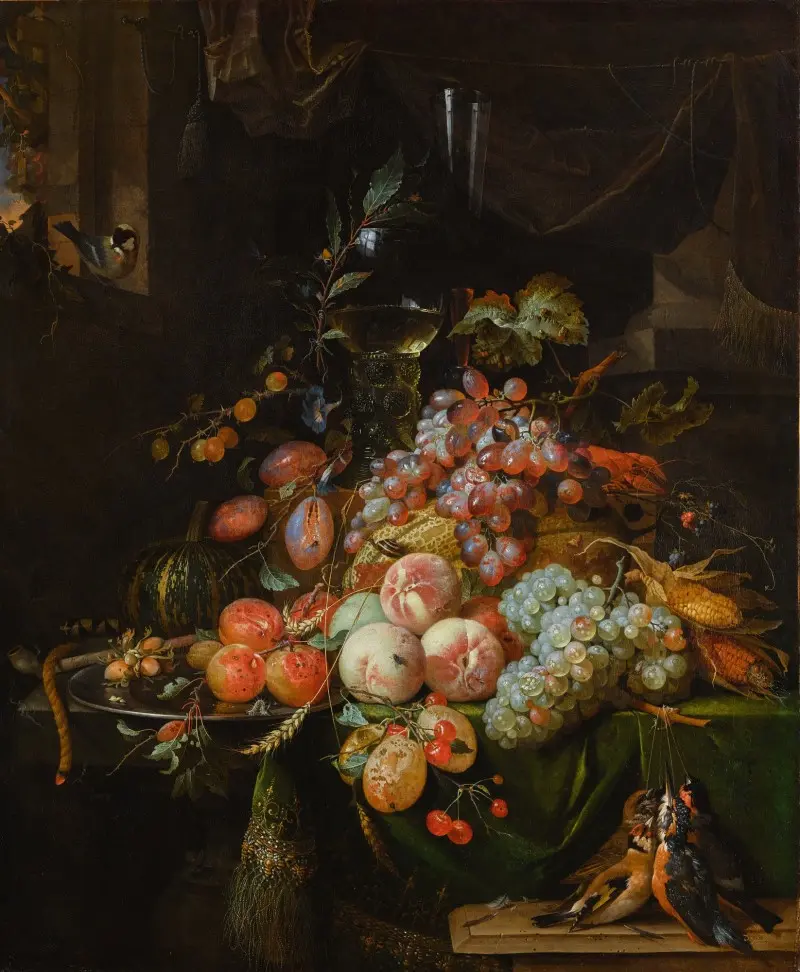
Still Life with Plums, Peaches, Apricots, Grapes and a Melon
Abraham Mignon
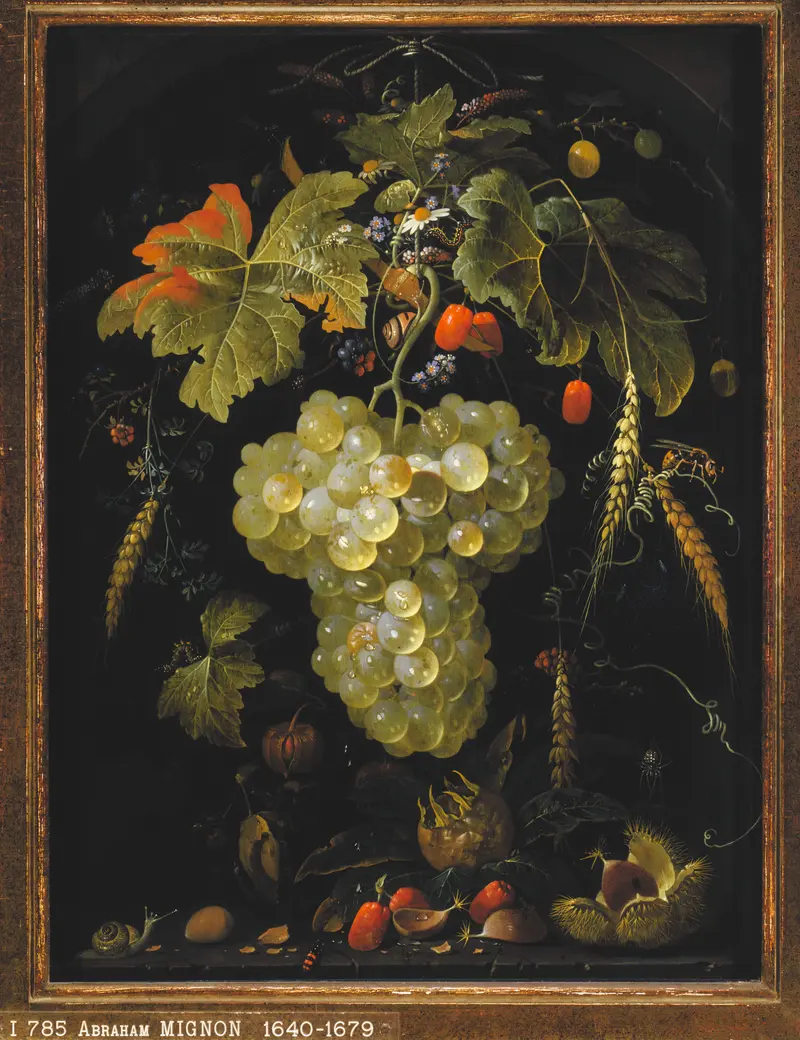
Festoon of fruit suspended from a rope, in a niche
Abraham Mignon
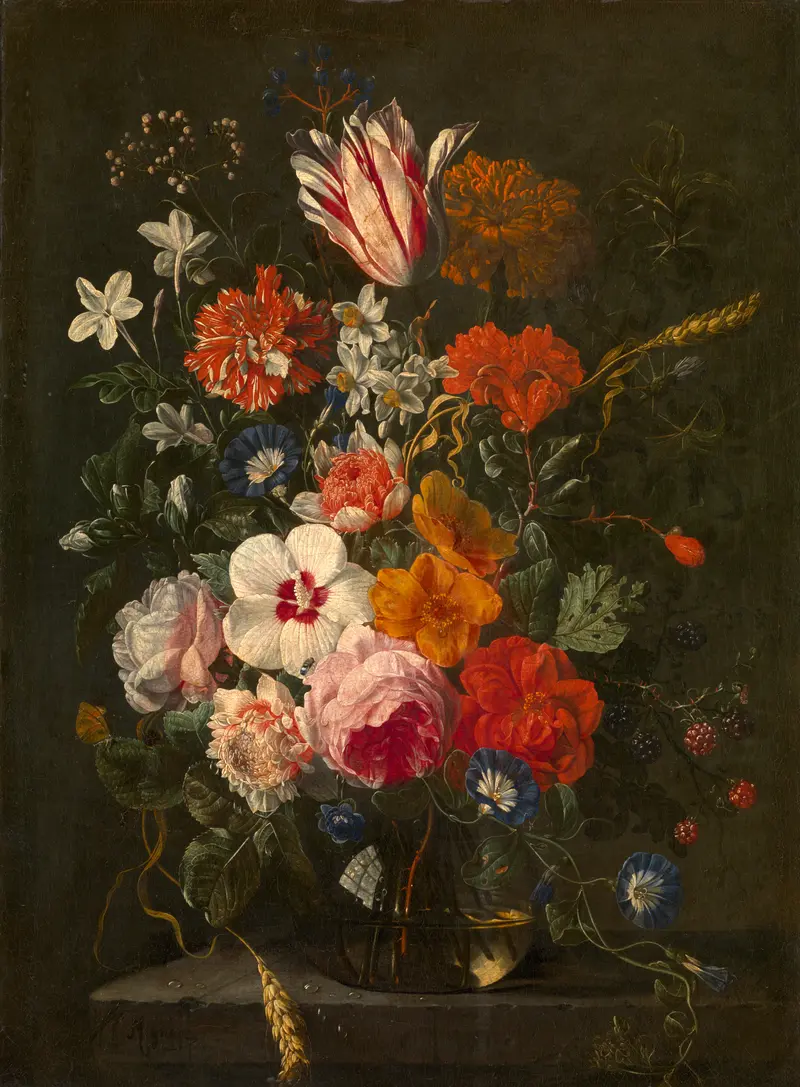
Flowers and a branch of berries in a glass vase on a stone ledge
Abraham Mignon
Flowers and fruit on a plinth
Abraham Mignon





