
Flowers and tiny creatures – Vanitas — History & Facts
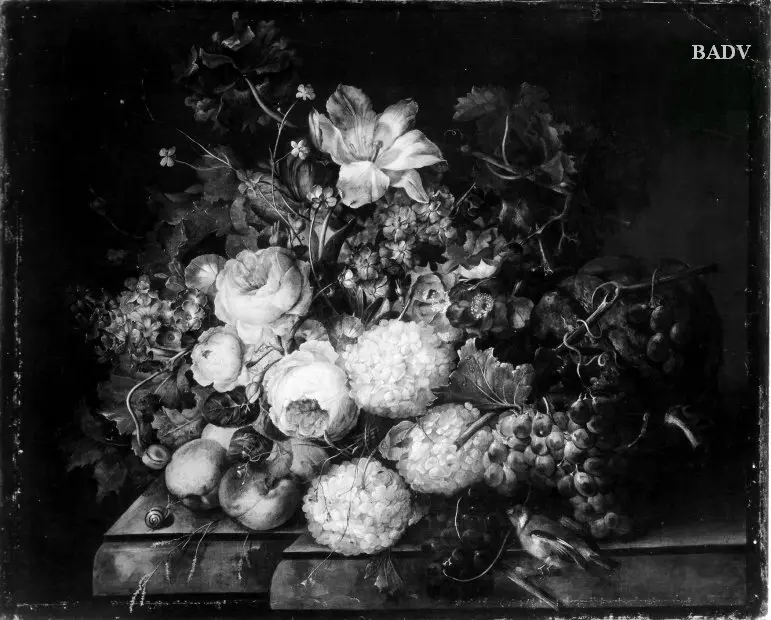
A riot of petals, wings, and shells bursts from shadow, yet nothing here is quite at rest. In Flowers and tiny creatures – Vanitas, Abraham Mignon draws the viewer into a dense tangle of life and decay, where every inch rewards curiosity. The eye is caught first by the lush, almost luminous blooms—peonies, lilies, irises—each rendered with a precision that borders on the miraculous.
But linger, and the flowers become only the beginning: a frog crouches near a fallen bird, beetles and butterflies perch on leaves, and the whole bouquet seems poised between flourishing and fading. The palette, rich with deep greens and flashes of coral and white, creates a mood that is both celebratory and uneasy, as if the garden’s beauty is aware of its own brevity. This painting belongs to the world of seventeenth-century Northern Europe, where still lifes like this one were more than displays of technical skill—they were meditations on time, mortality, and the pleasures of the senses. The genre of vanitas painting flourished in this era, especially in the Dutch and German lands, inviting viewers to reflect on the fleeting nature of worldly delights: the perfect bloom, the ripe fruit, the delicate insect, all destined to pass.
Such works were often commissioned by prosperous merchants or collectors, eager to display both their wealth and their wisdom. Today, this piece resides in the National Museum in Warsaw, a reminder that history has kept few traces of its early journey, but the painting’s message—life’s beauty, always shadowed by its end—remains as immediate as ever.
More Artworks by Abraham Mignon

Still Life with Flowers and a Watch
Abraham Mignon
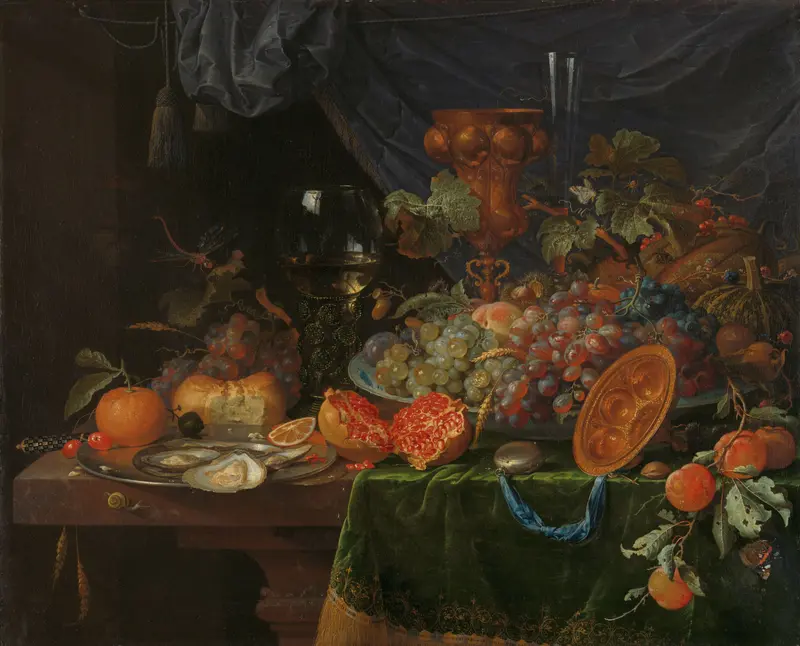
Still Life with Fruit and Oysters
Abraham Mignon
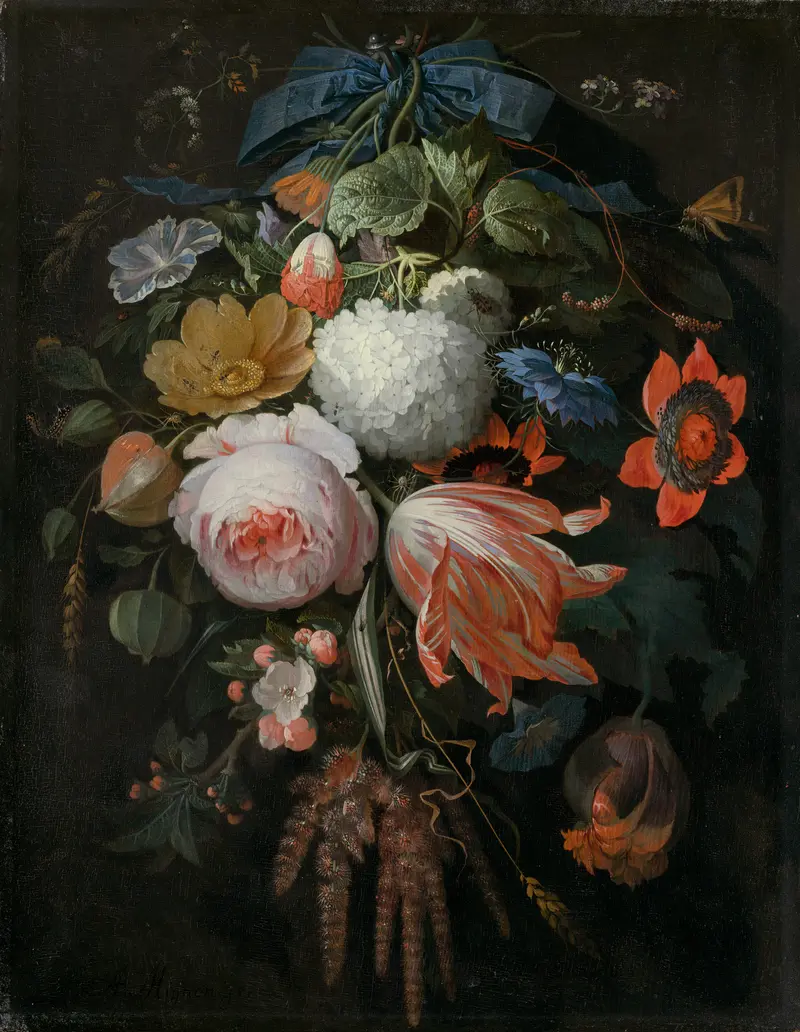
A Hanging Bouquet of Flowers
Abraham Mignon
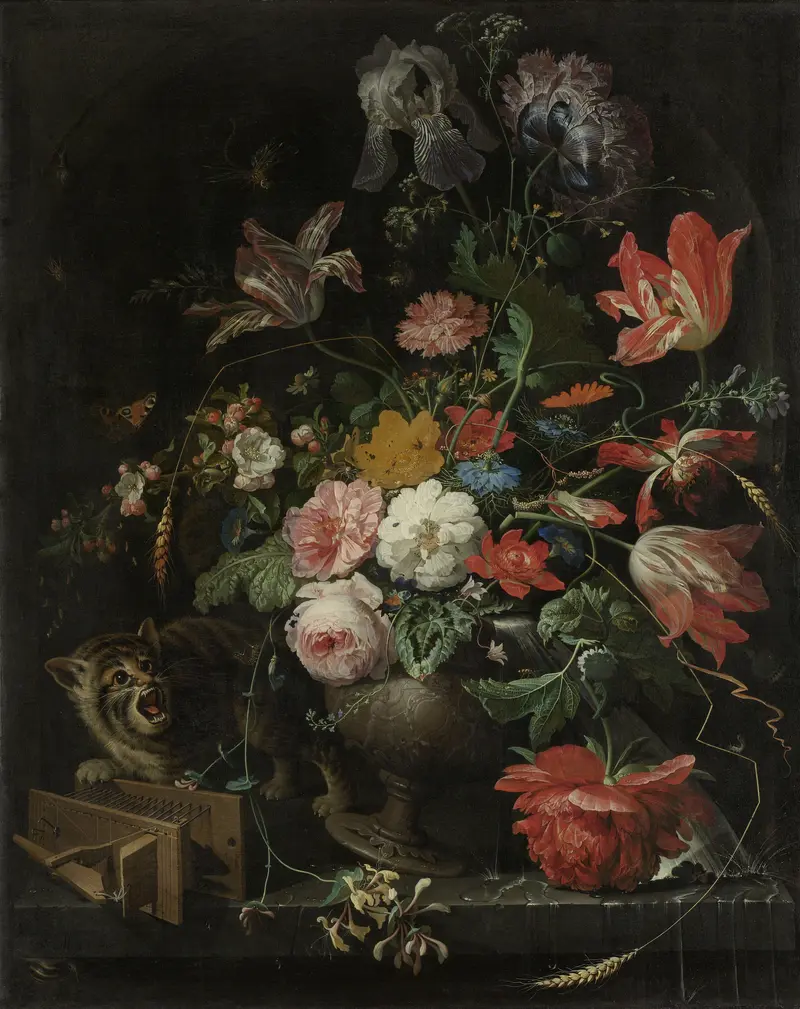
Bouquet with cat and mousetrap
Abraham Mignon
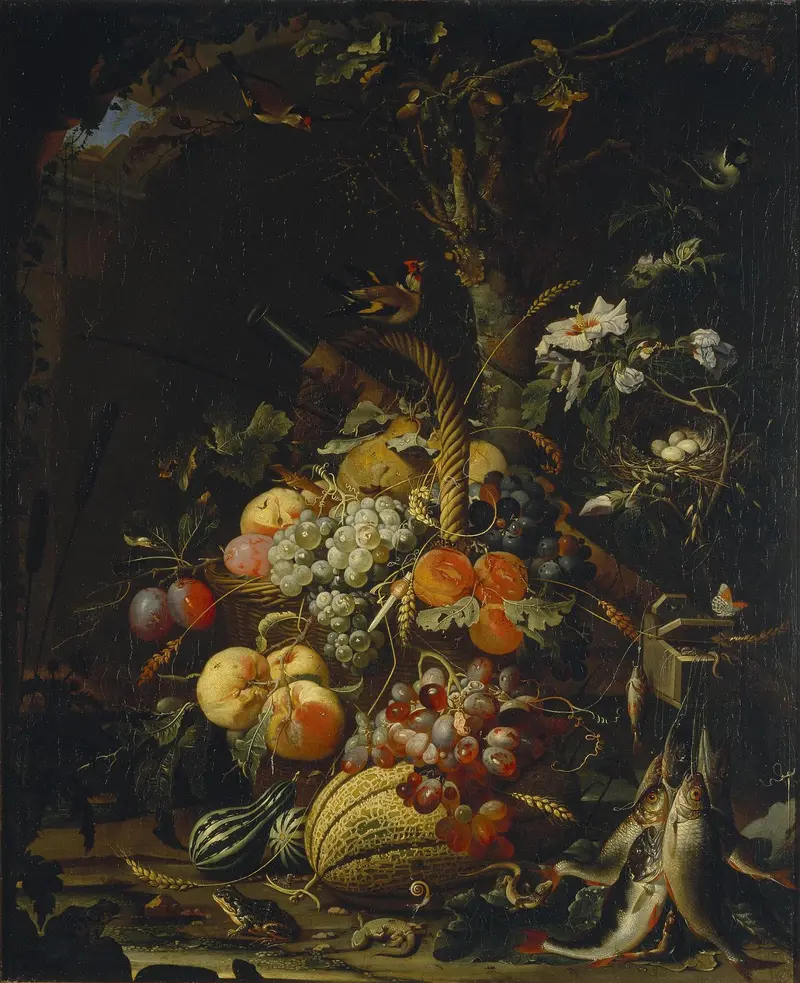
Forest floor still life with fruit, fish and a bird's nest
Abraham Mignon
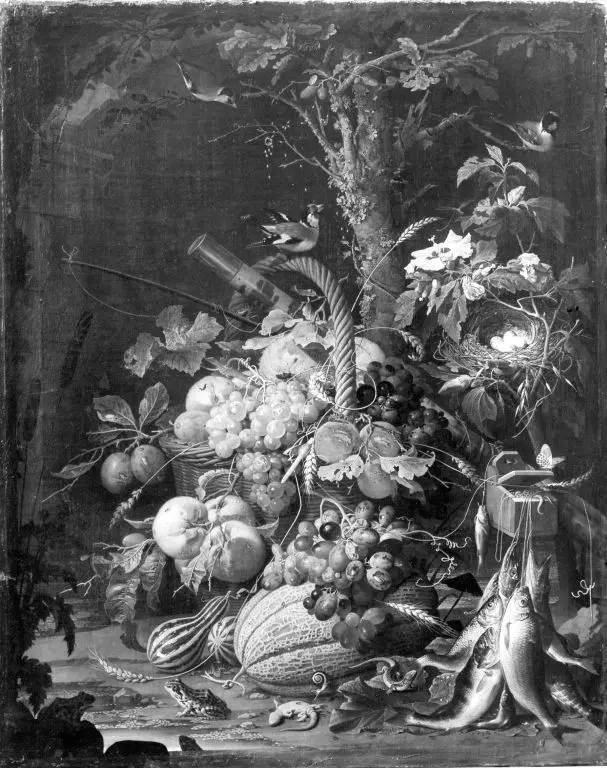
Still life with fruit, fish and a bird's nest
Abraham Mignon
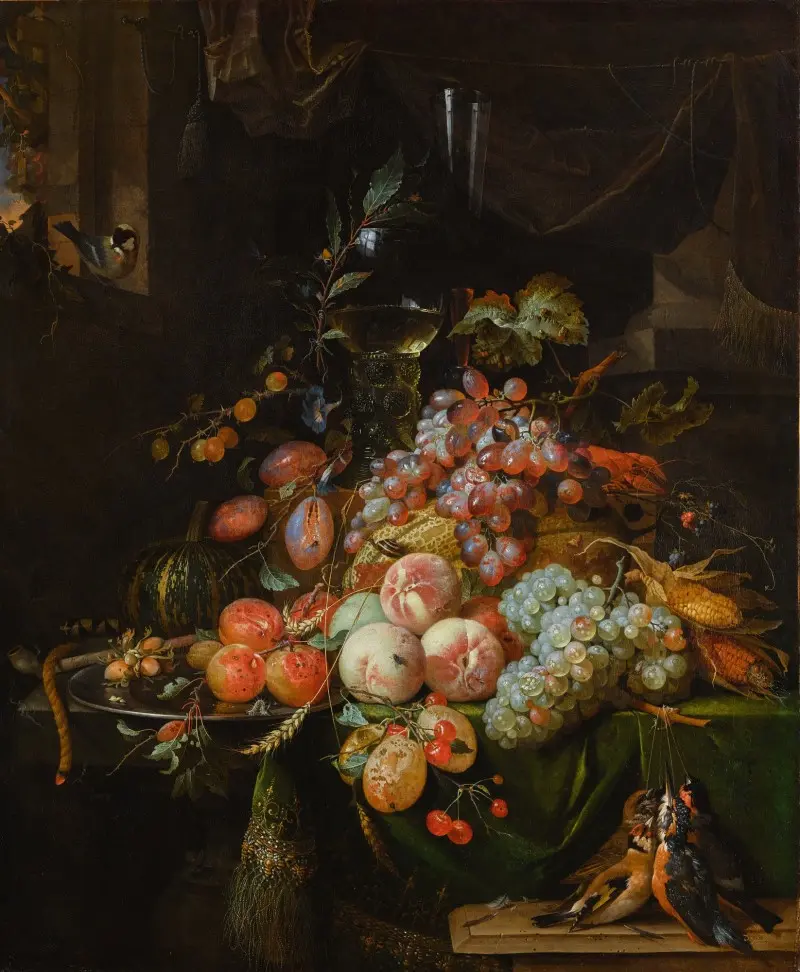
Still Life with Plums, Peaches, Apricots, Grapes and a Melon
Abraham Mignon
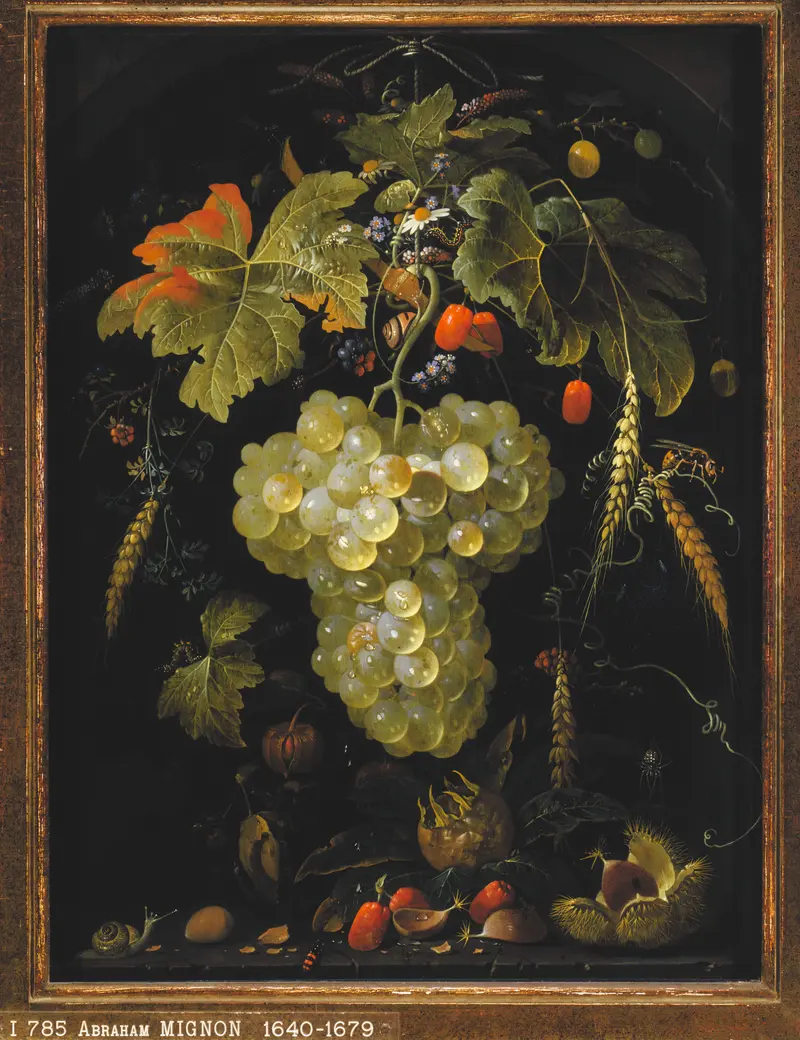
Festoon of fruit suspended from a rope, in a niche
Abraham Mignon
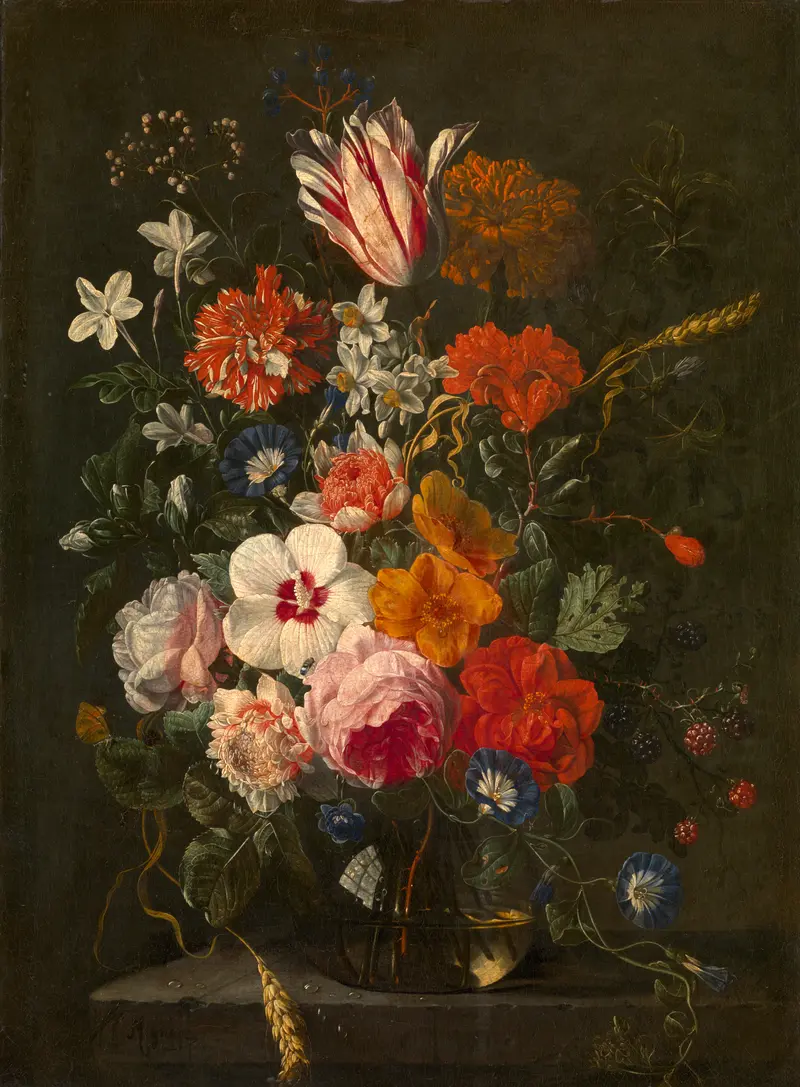
Flowers and a branch of berries in a glass vase on a stone ledge
Abraham Mignon
Flowers and fruit on a plinth
Abraham Mignon





