
Flowers in a Glass Vase — History & Facts
A single, luminous poppy rises above the crowded bouquet, its petals almost trembling with life—a silent drama played out in the stillness of a painted moment. The eye is drawn first to this bold red bloom, but soon the gaze is swept into a tangle of curling stems, drooping tulips, and fragile petals, each rendered with a precision that borders on the miraculous. Shadows carve out the space behind, pushing the riot of color forward, while glimmers of light pick out the glass vase’s reflections and the delicate fuzz on a leaf.
Insects—some barely visible—creep and hover, hinting at the quiet disorder beneath the surface beauty. The arrangement teeters on the edge of wildness, with blossoms spilling over the ledge and a fallen poppy resting at the bottom, as if the bouquet cannot be contained. This is the world of Abraham Mignon, working in the late seventeenth century, when Dutch and Flemish artists turned flower painting into a theater of wealth, science, and fleeting beauty. Such paintings were prized by collectors who delighted in both the rarity of the blooms and the painter’s skill in capturing every vein and shadow.
In 1670, when this work was created, the Dutch Republic was at the height of its fascination with botanical wonders, and artists like Mignon competed to outdo nature itself. Today, Flowers in a Glass Vase resides in the Mauritshuis, a pendant to another of Mignon’s lush bouquets, its origins and early journey largely lost to time. What remains is the invitation to look closer, to find the hidden spider or the glint of a water droplet, and to marvel at a world contained in a single vase.
More Artworks by Abraham Mignon

Still Life with Flowers and a Watch
Abraham Mignon
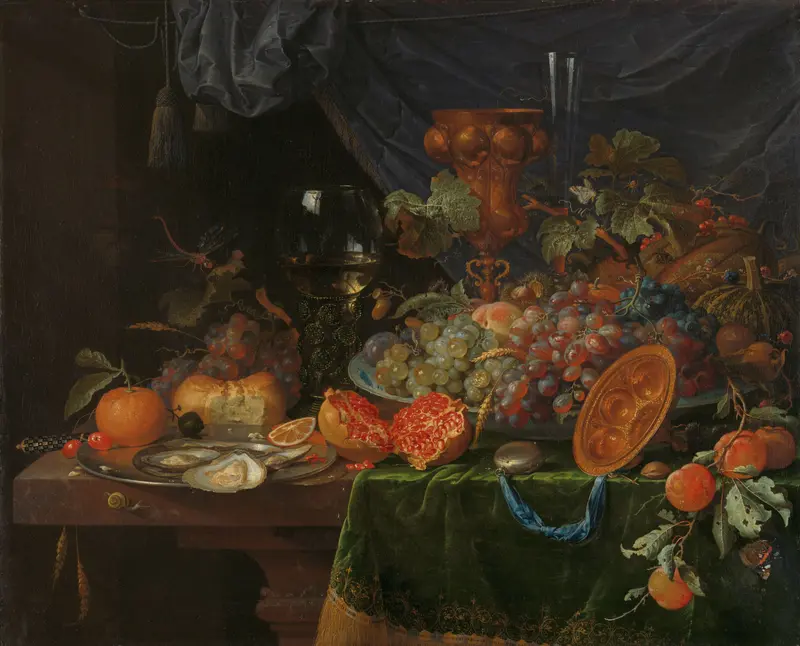
Still Life with Fruit and Oysters
Abraham Mignon
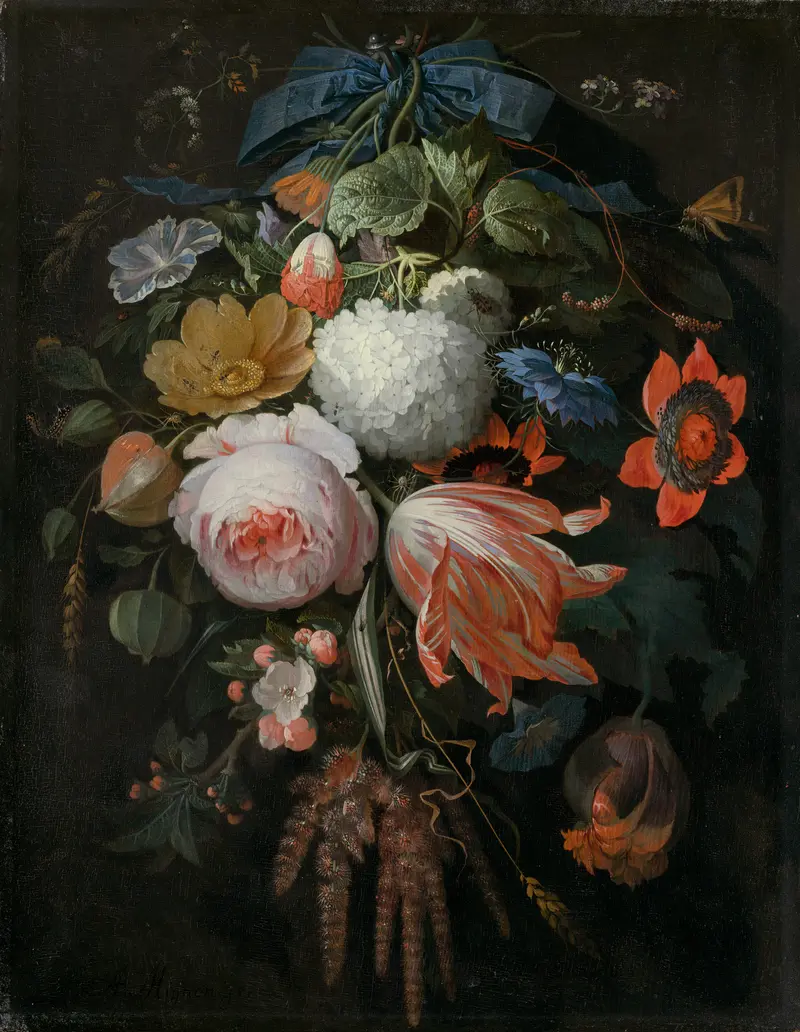
A Hanging Bouquet of Flowers
Abraham Mignon
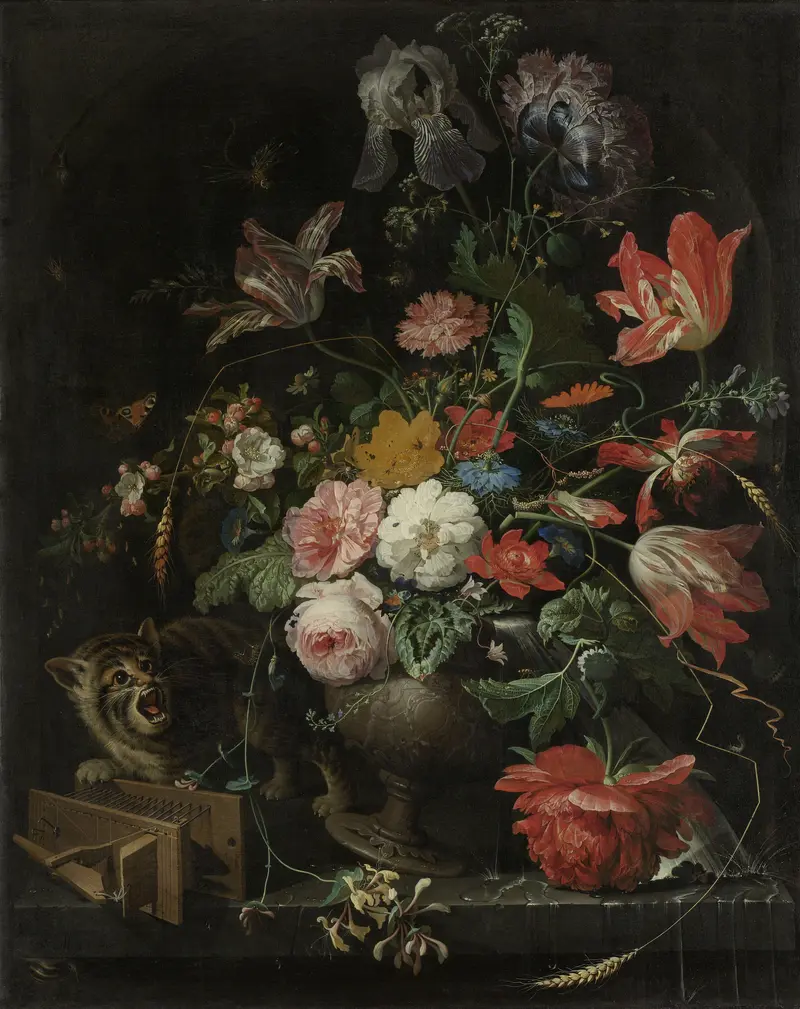
Bouquet with cat and mousetrap
Abraham Mignon
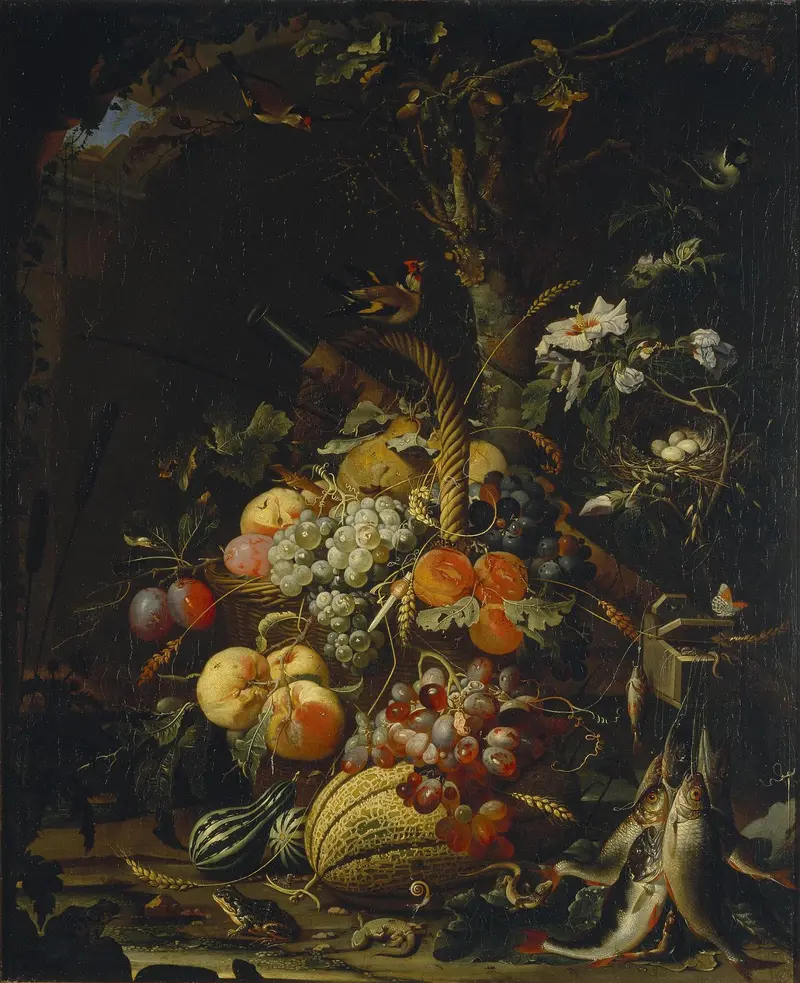
Forest floor still life with fruit, fish and a bird's nest
Abraham Mignon
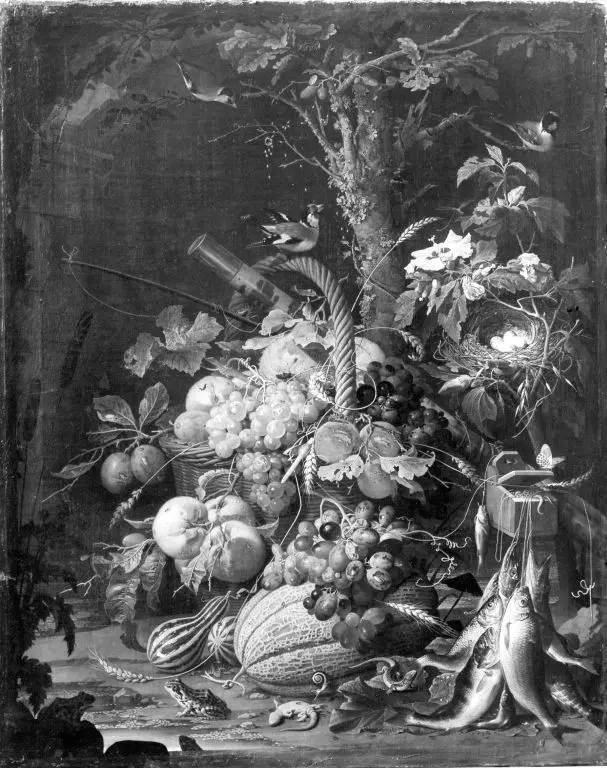
Still life with fruit, fish and a bird's nest
Abraham Mignon
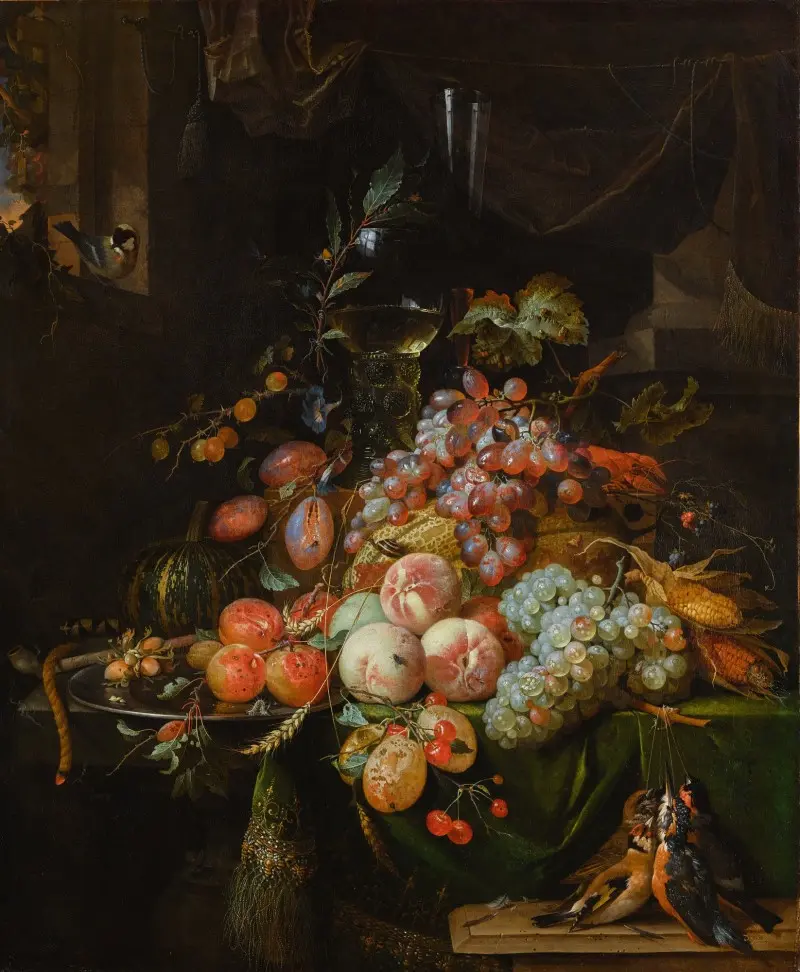
Still Life with Plums, Peaches, Apricots, Grapes and a Melon
Abraham Mignon
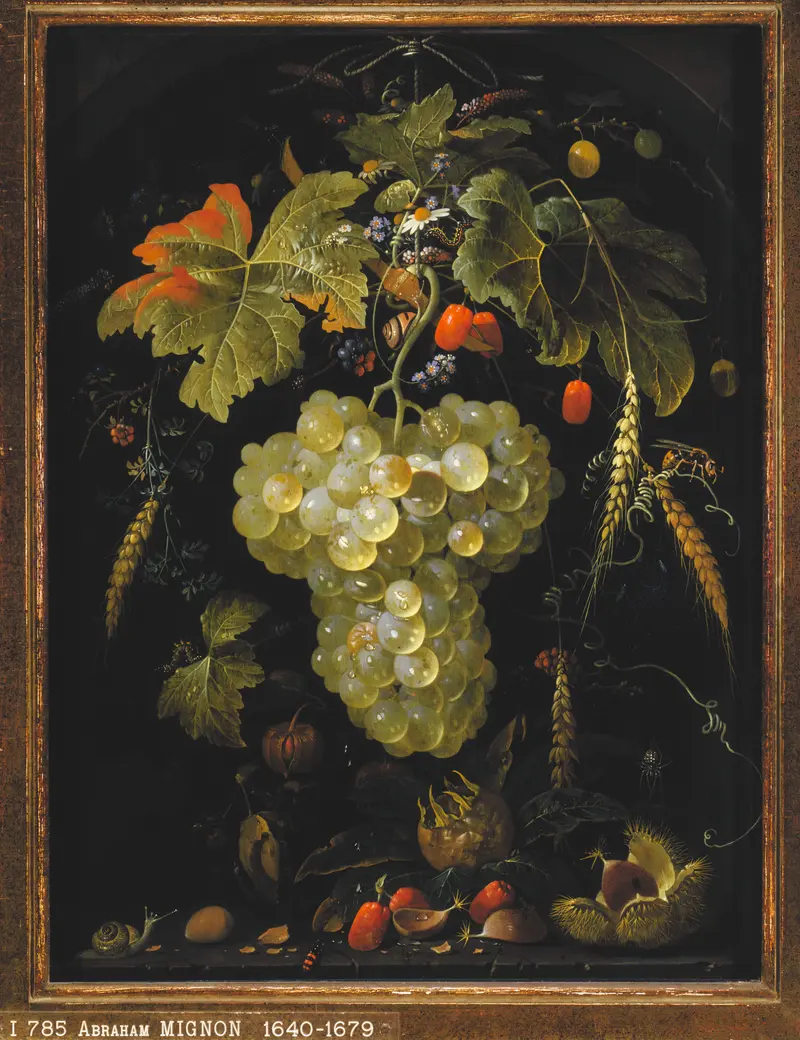
Festoon of fruit suspended from a rope, in a niche
Abraham Mignon
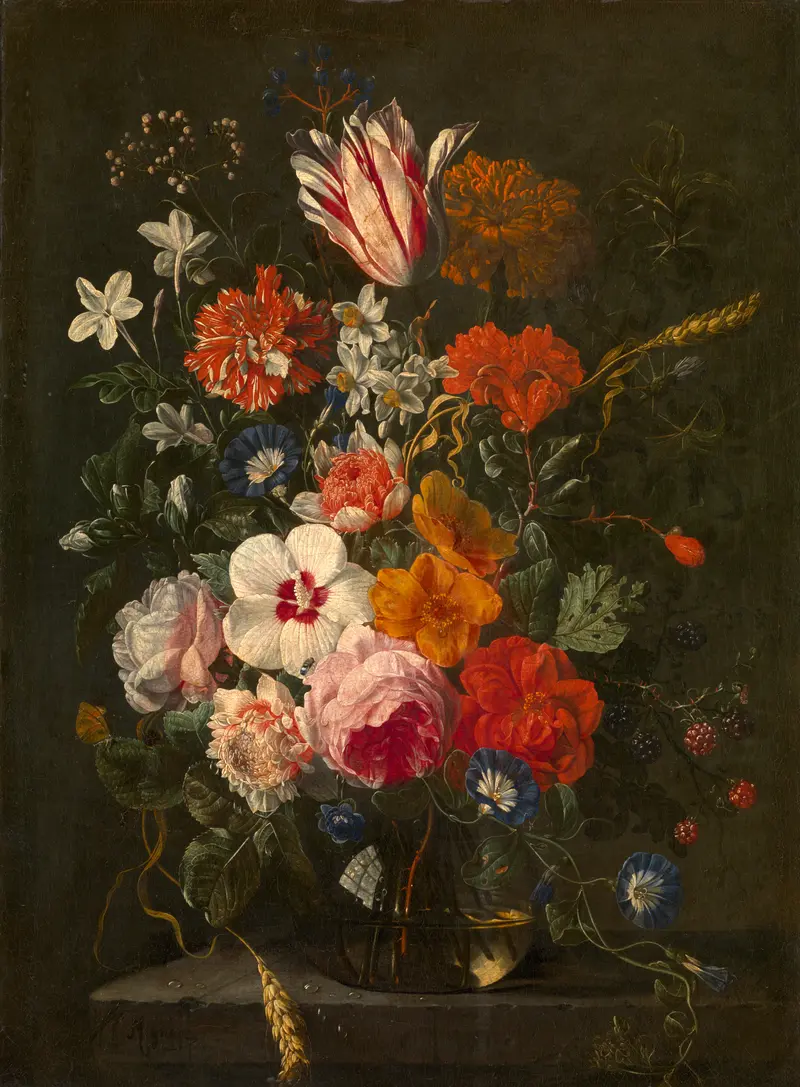
Flowers and a branch of berries in a glass vase on a stone ledge
Abraham Mignon
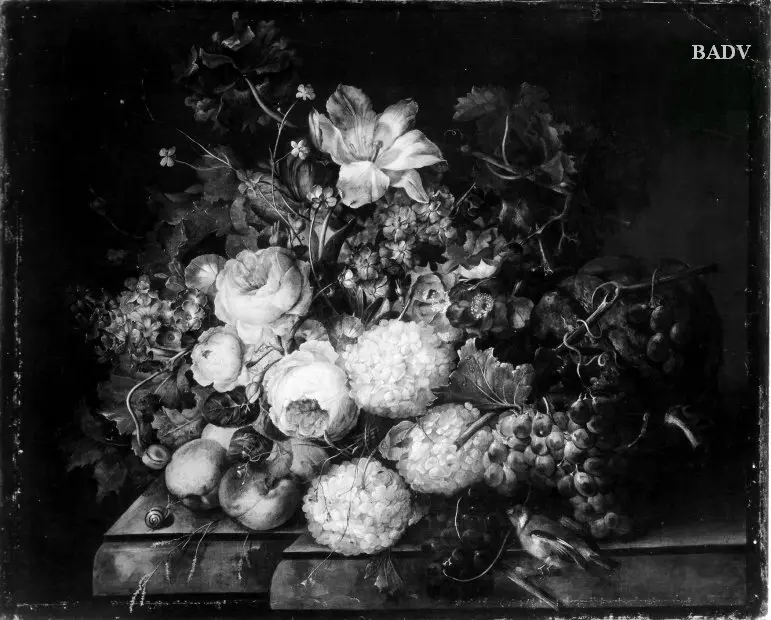
Flowers and fruit on a plinth
Abraham Mignon





