
Flowers in a glass vase, with snails and insects, in a niche — History & Facts
What first catches the eye in Flowers in a glass vase, with snails and insects, in a niche is not just the riot of color, but the sense that every petal, wing, and shell is caught in a moment of precarious balance. The flowers seem to burst from the glass, some arching proudly, others drooping under their own lushness, while droplets of water cling to leaves as if the bouquet has just been gathered. Look closely: a snail inches along the stone ledge, a bee hovers, and a dragonfly rests, all reminders that this is a world alive with movement and quiet drama.
The dark niche frames the arrangement like a stage, pushing the vivid reds, whites, and blues into the spotlight, while the glass vase anchors the whole composition in a fragile transparency. Painted between circa 1672 and 1679, this work belongs to the world of Dutch and German still life at its most intricate, a genre that flourished among collectors who delighted in both beauty and subtle moral lessons. In the late seventeenth century, such paintings were prized for their technical bravura and their ability to showcase rare blooms and creatures—luxuries in themselves. Abraham Mignon was celebrated for weaving together naturalistic detail and symbolic hints of transience: the snail and wilting petals quietly suggest the passage of time.
Though little is recorded about this specific painting’s early journey, its presence in a modern collection invites viewers to linger, tracing each insect and droplet, and to wonder at the careful world Mignon has preserved behind glass and paint.
More Artworks by Abraham Mignon

Still Life with Flowers and a Watch
Abraham Mignon
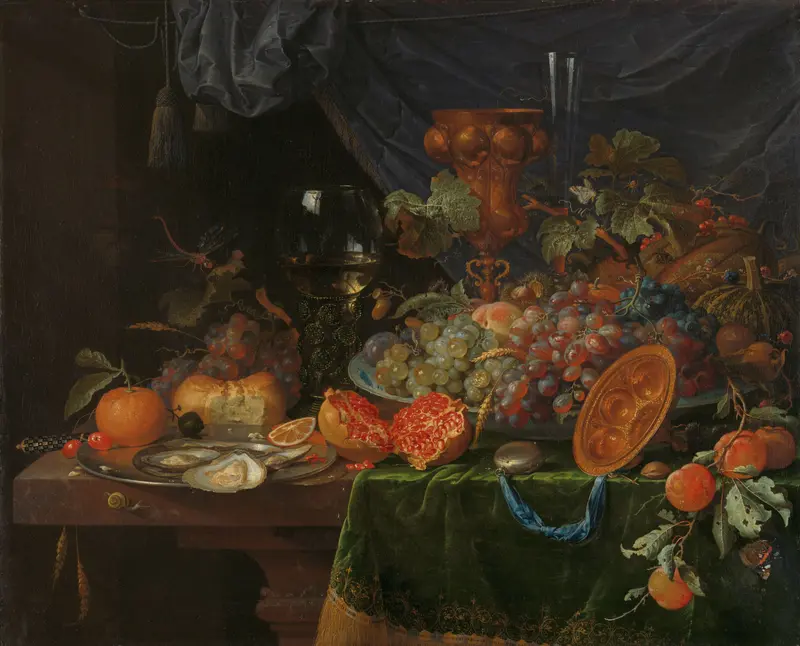
Still Life with Fruit and Oysters
Abraham Mignon
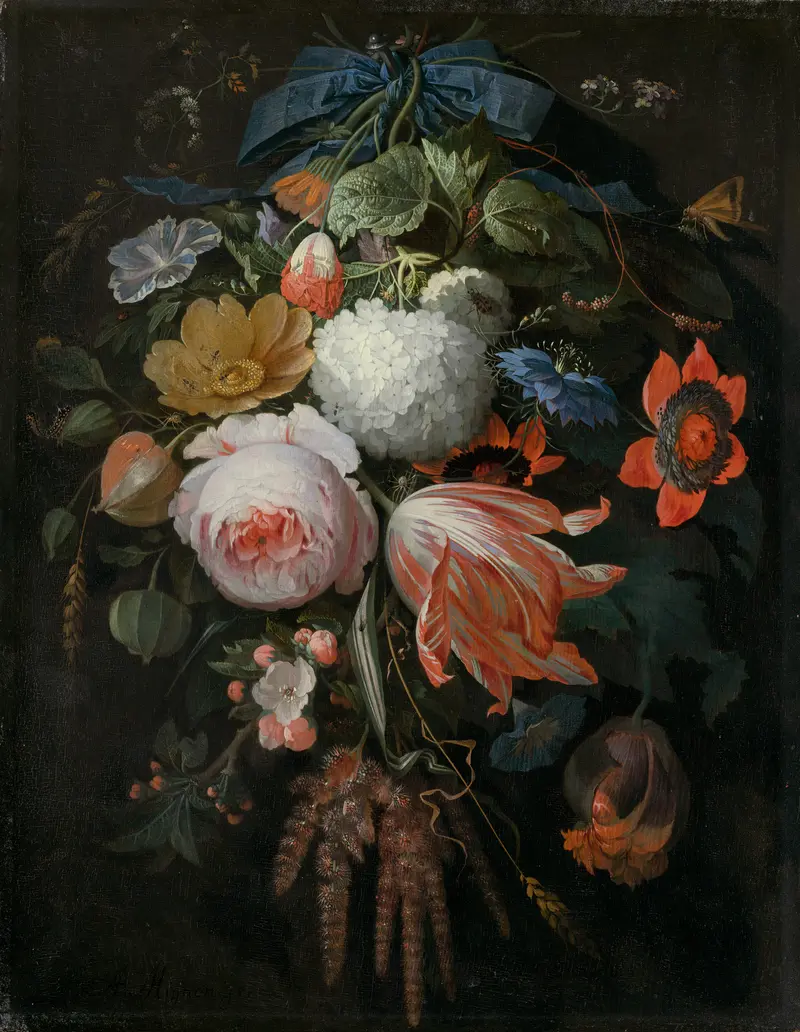
A Hanging Bouquet of Flowers
Abraham Mignon
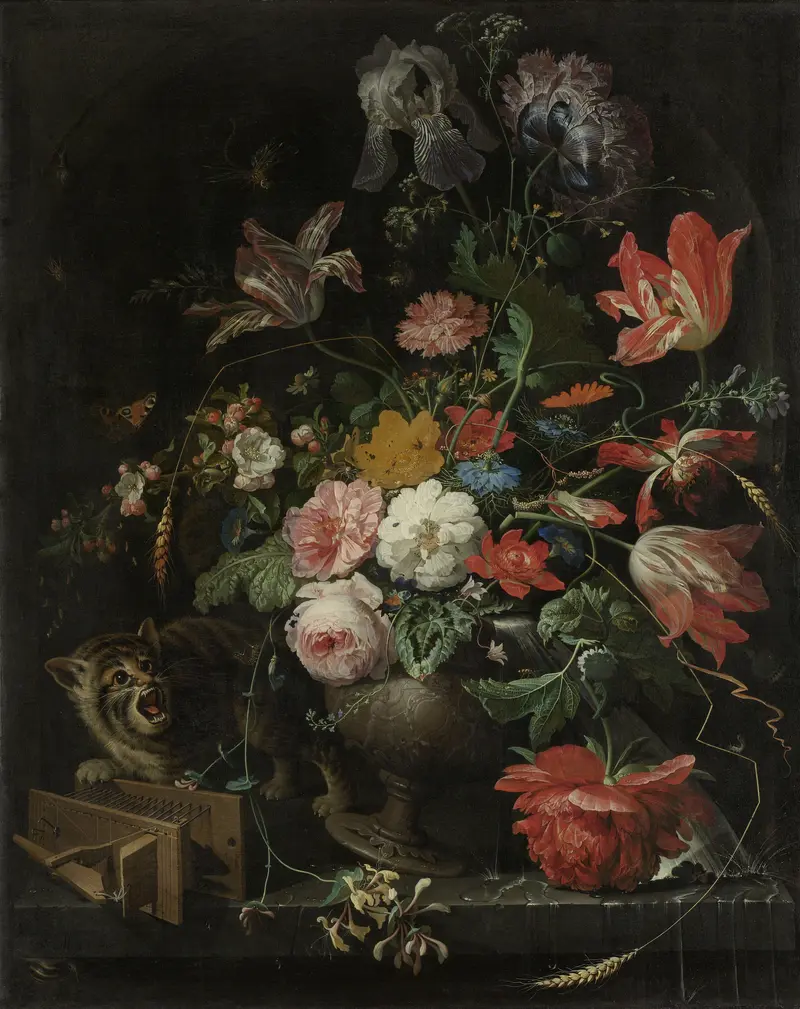
Bouquet with cat and mousetrap
Abraham Mignon
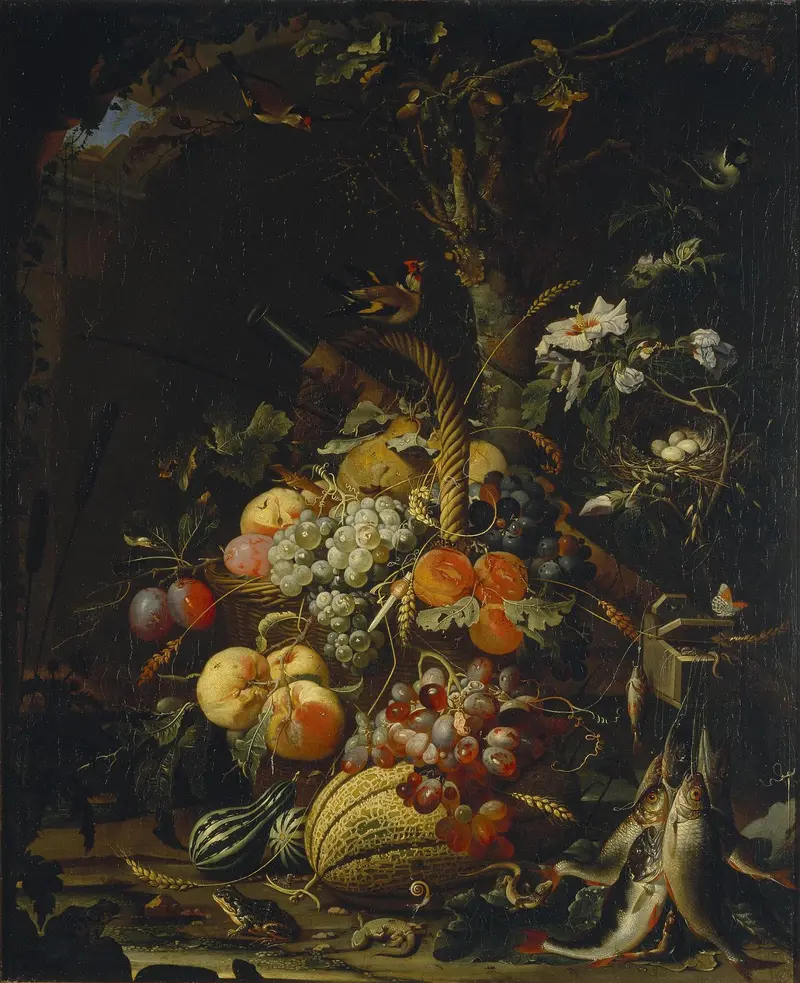
Forest floor still life with fruit, fish and a bird's nest
Abraham Mignon
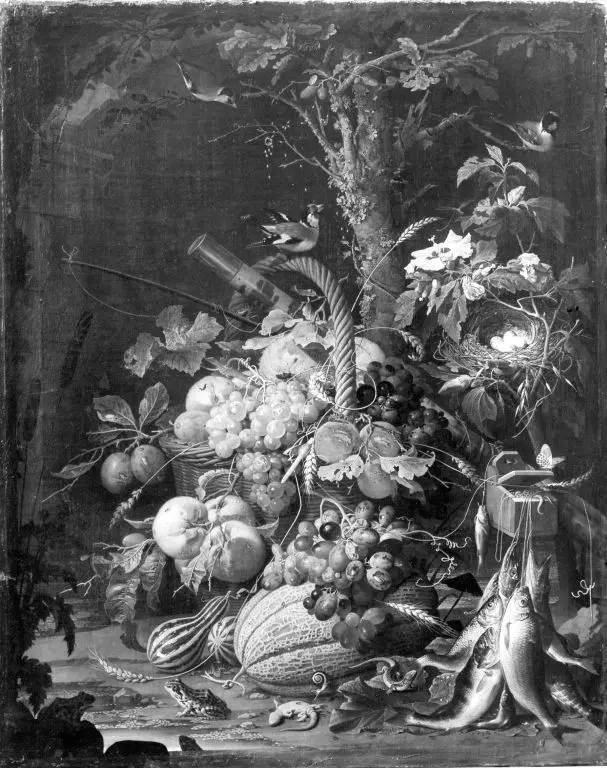
Still life with fruit, fish and a bird's nest
Abraham Mignon
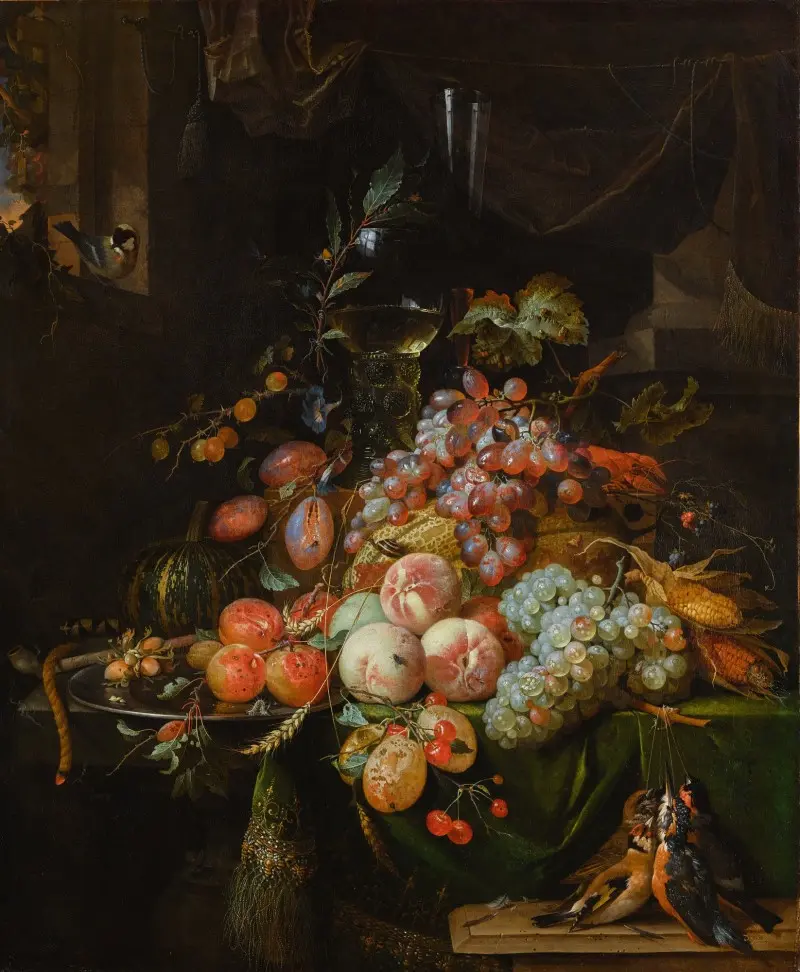
Still Life with Plums, Peaches, Apricots, Grapes and a Melon
Abraham Mignon
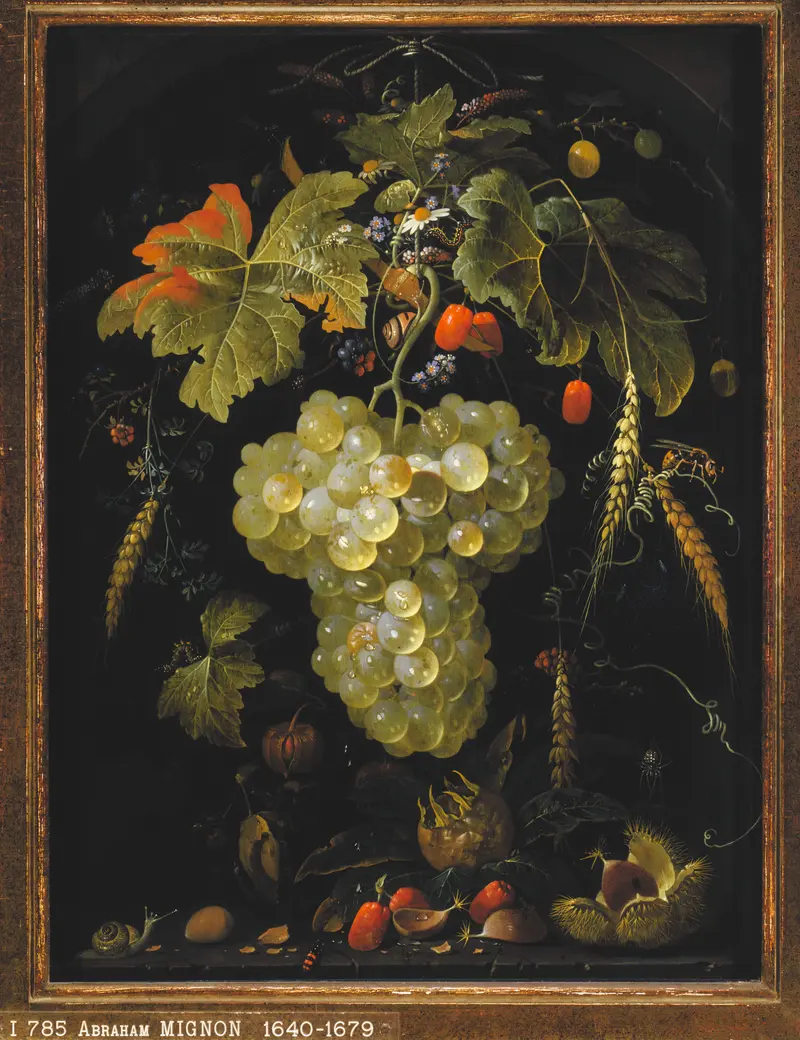
Festoon of fruit suspended from a rope, in a niche
Abraham Mignon
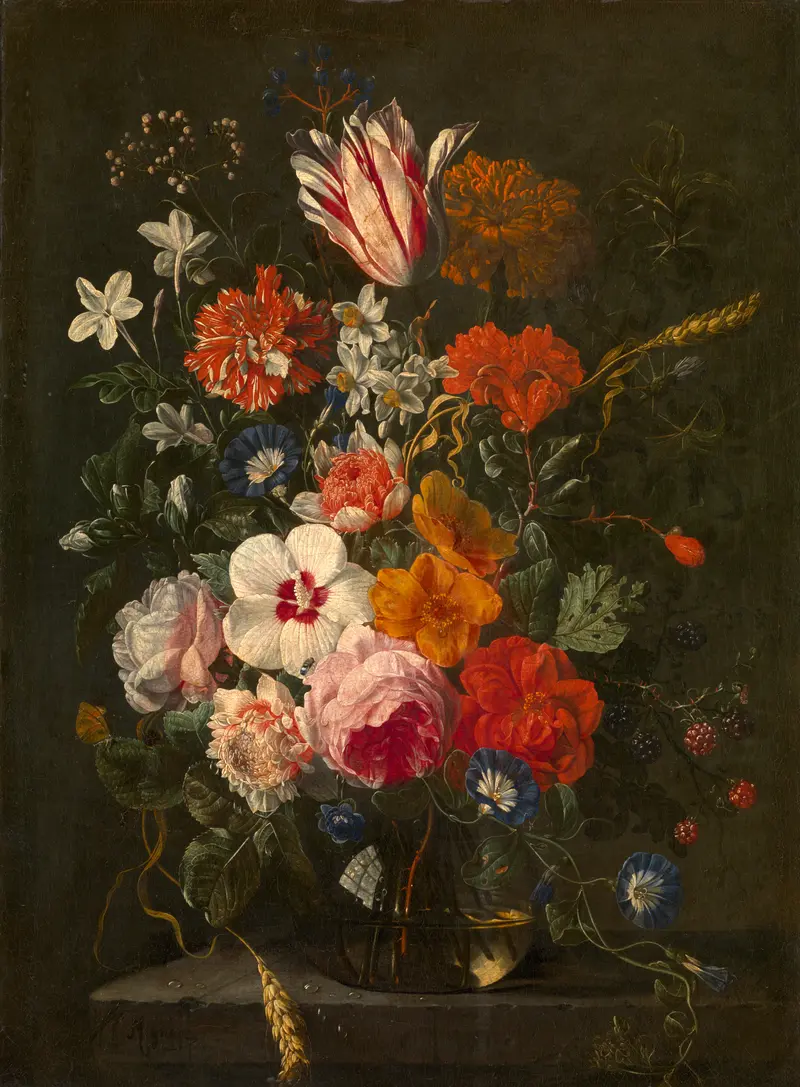
Flowers and a branch of berries in a glass vase on a stone ledge
Abraham Mignon
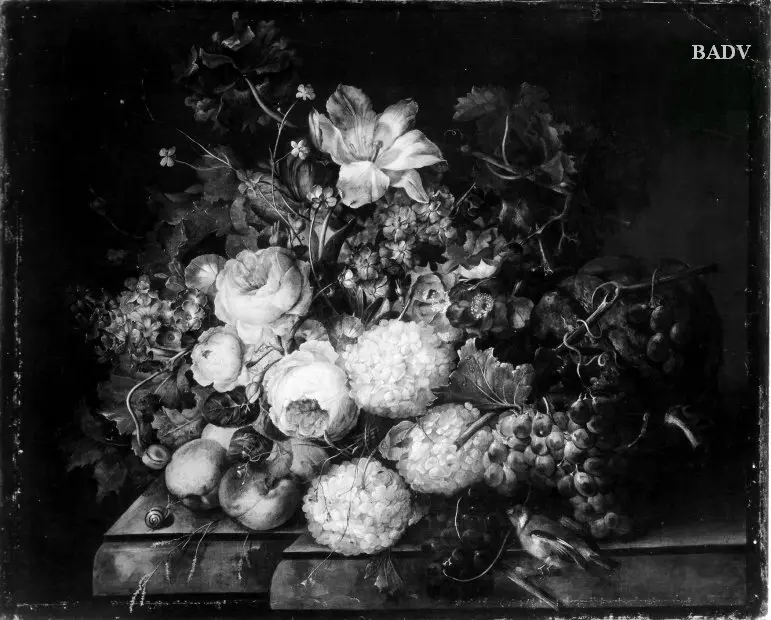
Flowers and fruit on a plinth
Abraham Mignon





