
Flowers in a Grotto — History & Facts
Light falls in a narrow shaft, catching the glisten of rose petals and the fragile blue of irises, while the rest of the grotto recedes into shadow. At the heart of Flowers in a Grotto, the eye is drawn not just to the riot of blossoms, but to the quiet drama below: a bird’s nest, three eggs, and a watchful parent perched on the edge. The artist, Abraham Mignon, sets up a world where life teems in every corner—fluttering butterflies, crawling insects, berries swelling in the half-light—yet the mood is hushed, almost secretive, as if the viewer has stumbled upon a hidden sanctuary.
The careful placement of each flower and creature is no accident; every twist of vine and flicker of wing is a deliberate invitation to linger, to look closer, to discover. This work belongs to the rich tradition of Dutch and German still life painting of the 17th century, when artists like Mignon turned the natural world into a stage for both beauty and allegory. Such paintings were prized in prosperous homes, their detail and variety a testament to both wealth and the fleeting nature of life. The 1660s, the decade of this painting’s creation, saw a flourishing of these intricate compositions, often commissioned by merchants and collectors eager to display their taste and learning.
While little is recorded about the specific journey of this piece—its presence today as a comparison image in a Sotheby’s auction catalogue hints at a quieter history—it stands as a vivid reminder of an age when art and nature met in the shadows and sunlight of a painted grotto. Let your eye wander back to the nest, the berries, the curling leaves; there is always something more to see.
More Artworks by Abraham Mignon

Still Life with Flowers and a Watch
Abraham Mignon
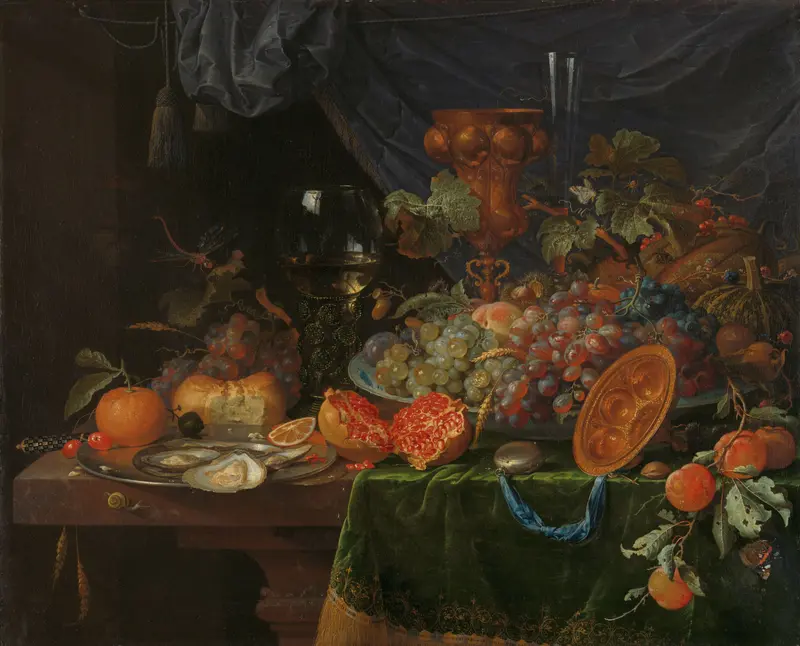
Still Life with Fruit and Oysters
Abraham Mignon
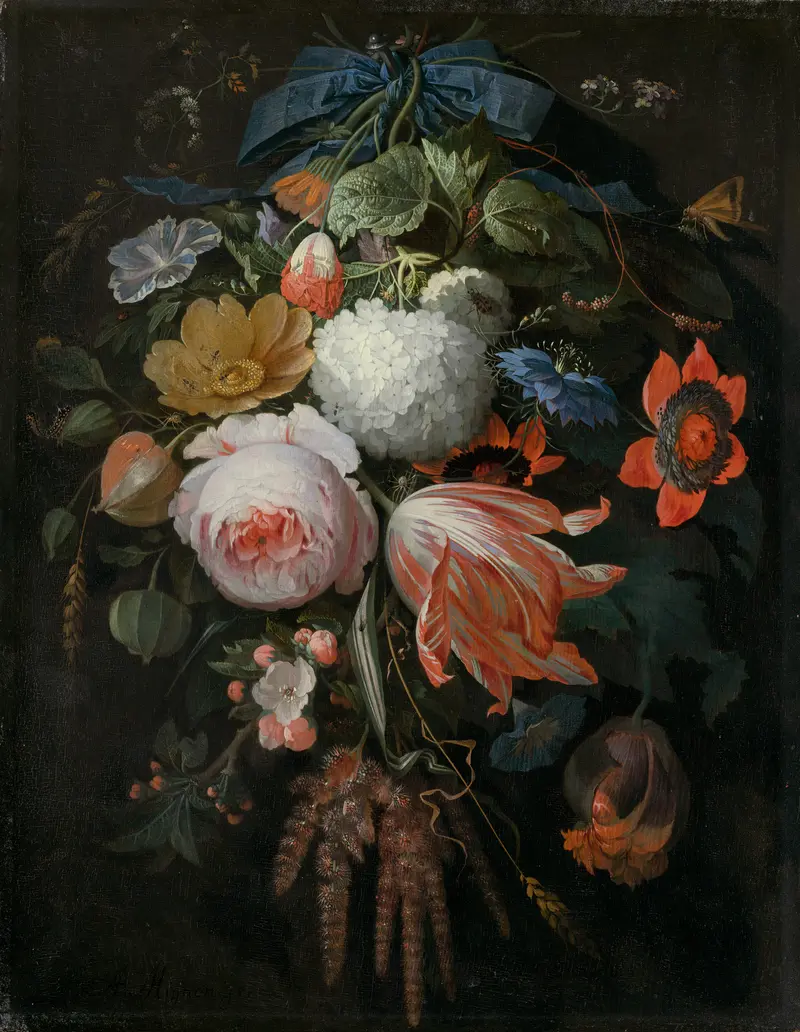
A Hanging Bouquet of Flowers
Abraham Mignon
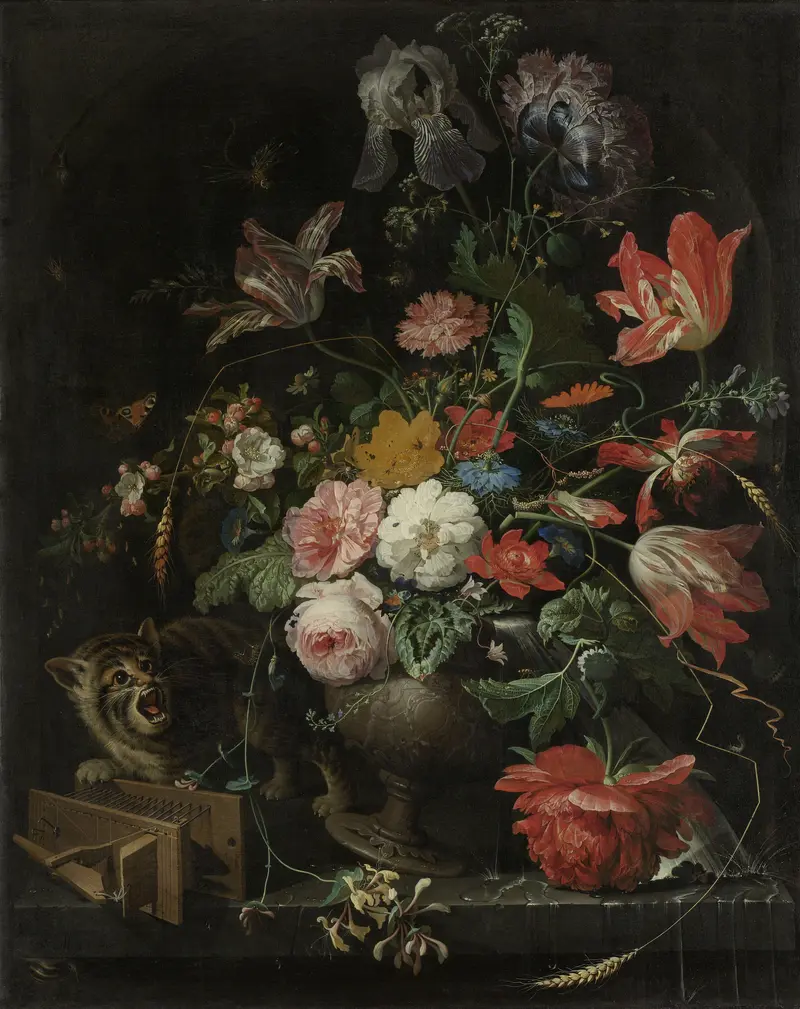
Bouquet with cat and mousetrap
Abraham Mignon
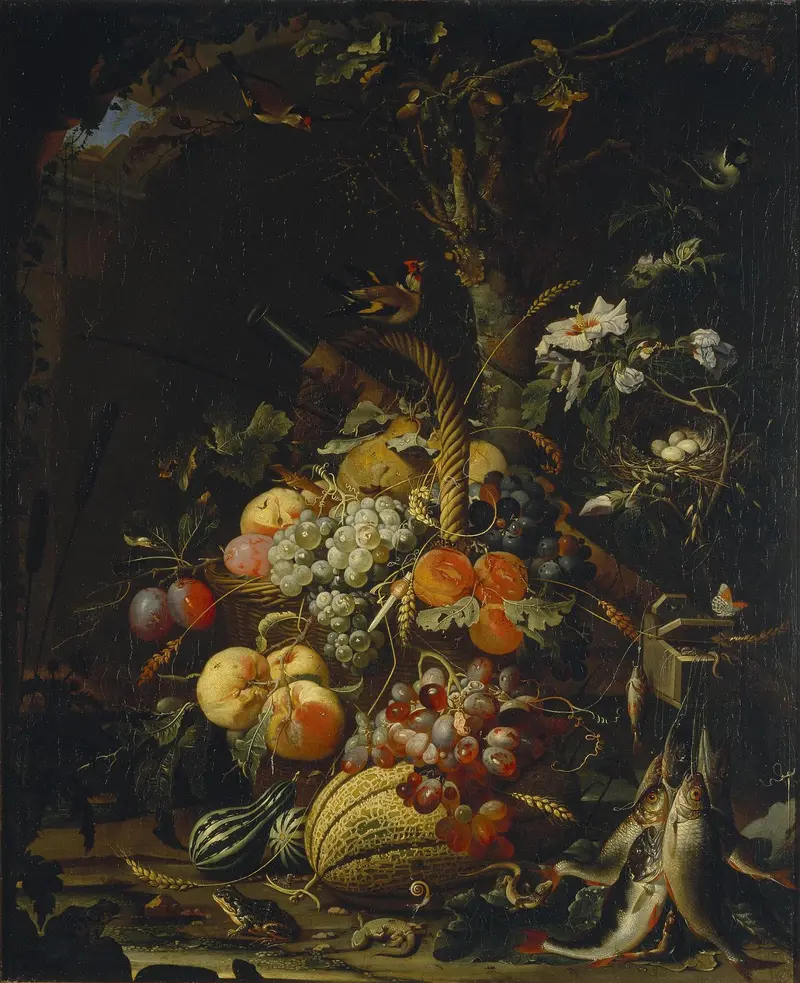
Forest floor still life with fruit, fish and a bird's nest
Abraham Mignon
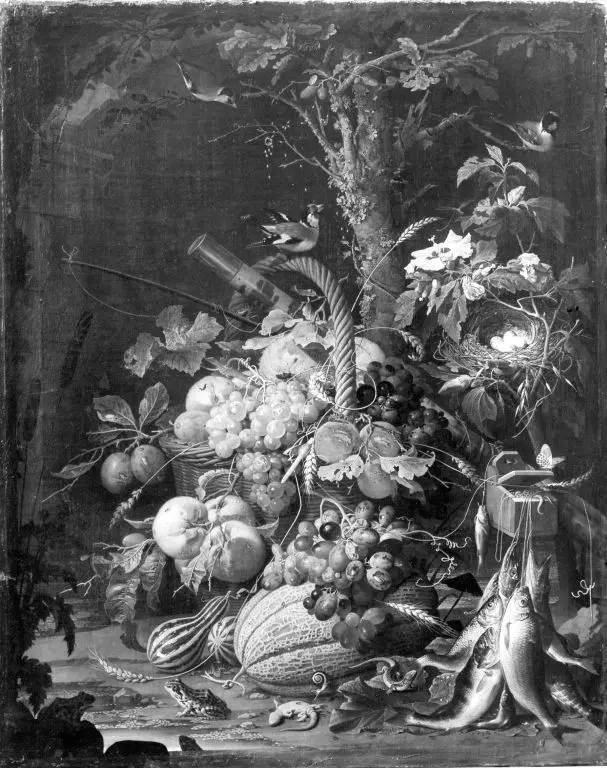
Still life with fruit, fish and a bird's nest
Abraham Mignon
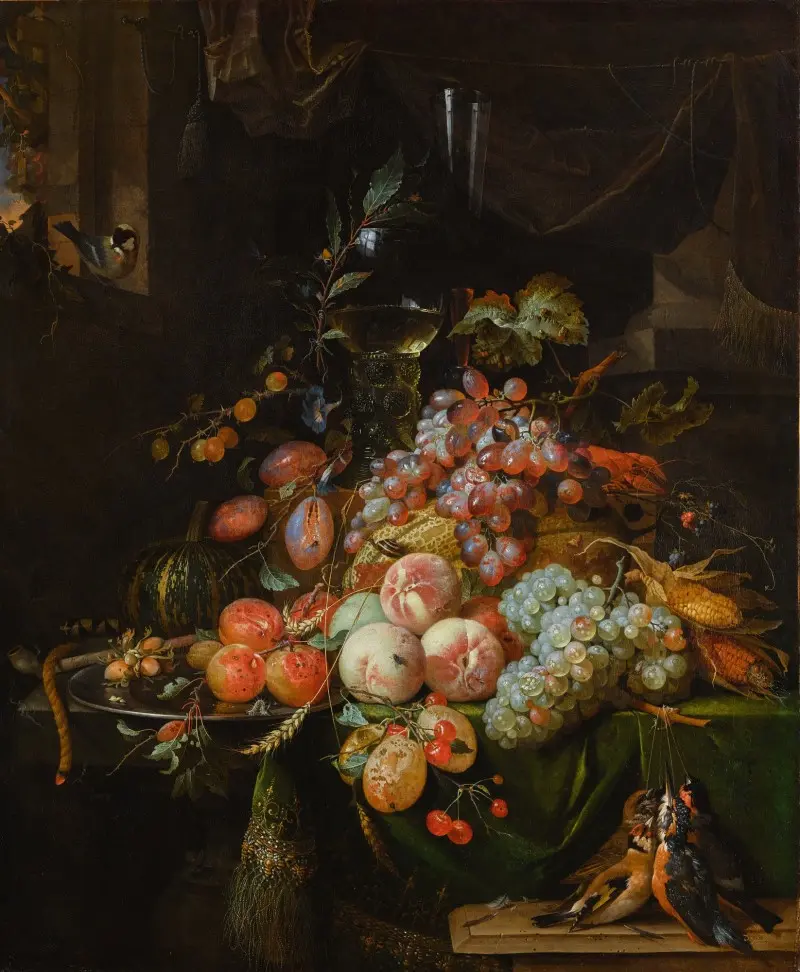
Still Life with Plums, Peaches, Apricots, Grapes and a Melon
Abraham Mignon
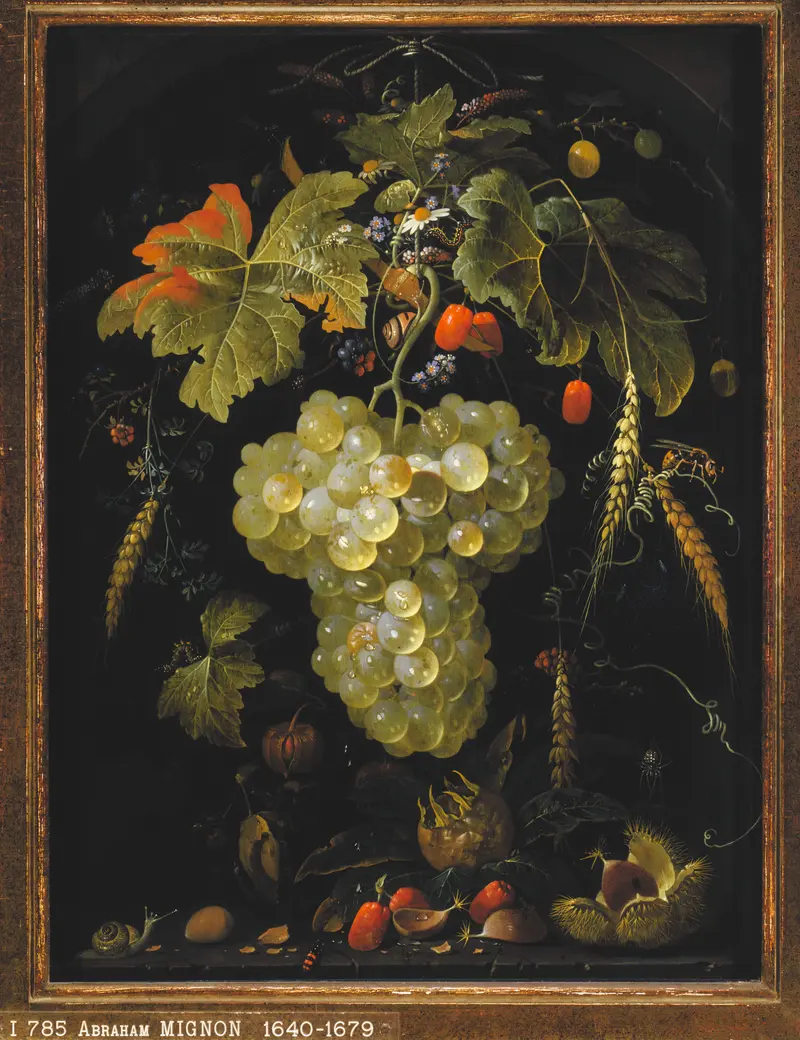
Festoon of fruit suspended from a rope, in a niche
Abraham Mignon
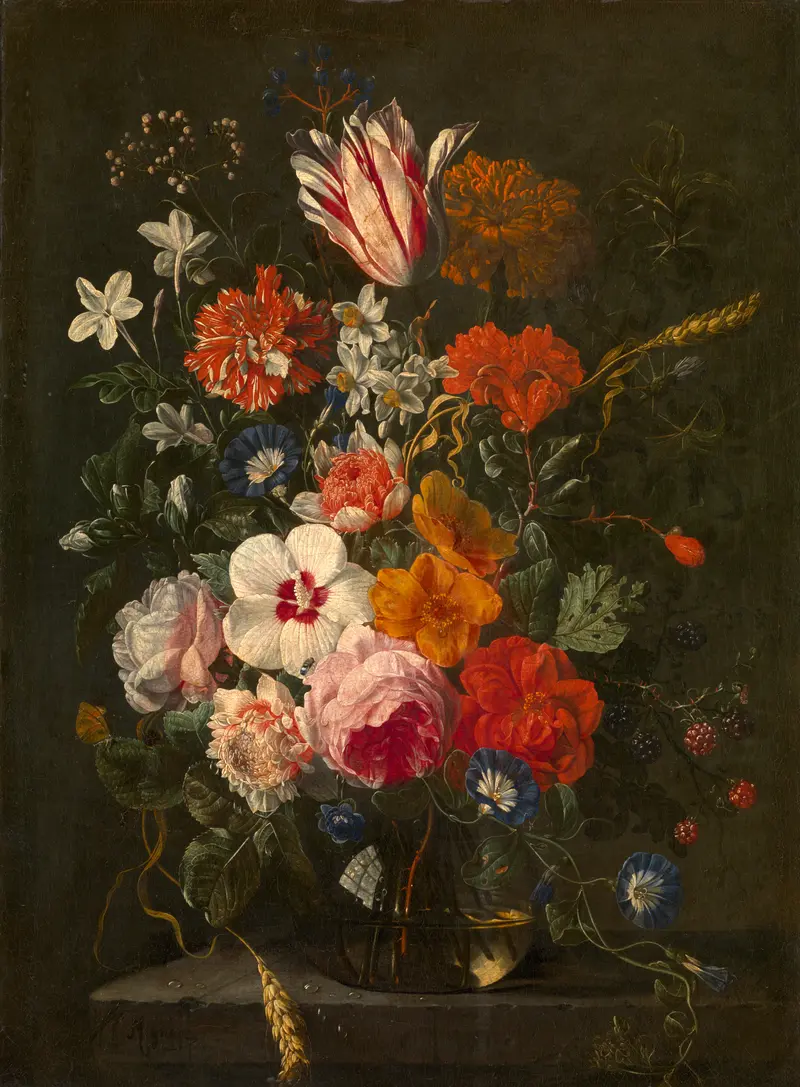
Flowers and a branch of berries in a glass vase on a stone ledge
Abraham Mignon
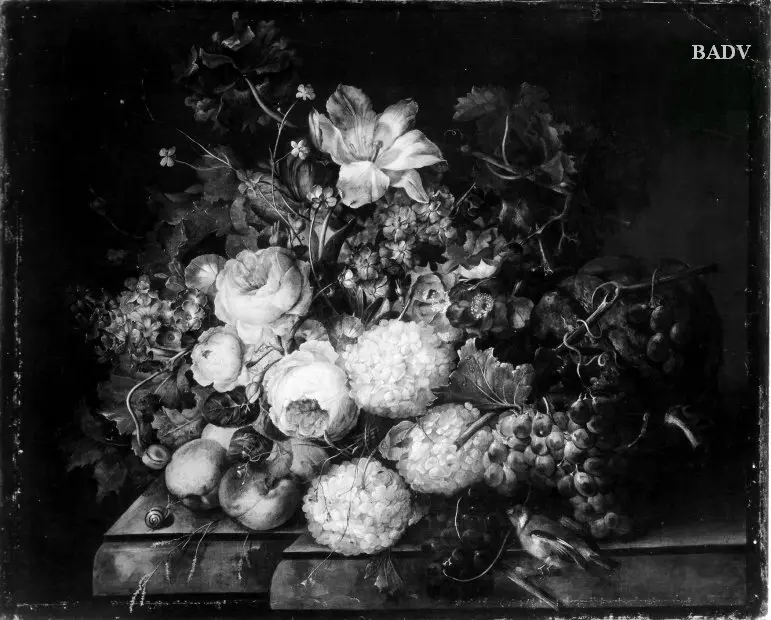
Flowers and fruit on a plinth
Abraham Mignon





