
Fluitspelende herder en spinster — History & Facts
In Berchem’s work, the transformation of pastoral life into a serene tableau reveals both the harmony and the heartache that coexist in nature. Look to the left at the shepherd, his flute poised delicately between his fingers, serenading the moment with unspoken melodies. The soft, earthy tones of his cloak blend seamlessly with the lush greens and golden hues of the landscape, evoking a sense of tranquility. Your gaze then drifts to the spinster, her graceful posture framed by a sunlight-drenched patch of grass that seems to embrace her figure.
The interplay of light and shadow in this piece heightens the emotional depth, inviting viewers to ponder the silent stories behind their gazes. The lush environment encapsulates a moment of fleeting beauty, yet the expressions of both figures hint at unfulfilled desires. The shepherd’s distant look contrasts with the spinster’s vulnerable demeanor, suggesting a longing that transcends their idyllic setting. This duality reflects the tension between the enchantment of pastoral life and the shadows of longing that linger, transforming moments of beauty into intricate narratives of the heart. Created between 1662 and 1694, this work emerged during a period of profound change in the art world, where emotive realism began to inspire artists like Berchem.
Living in the Netherlands, he was influenced by the burgeoning Dutch Golden Age, characterized by a growing appreciation for nature and its representation. In this serene piece, he captures not only the essence of pastoral beauty but also the complex interplay of love, longing, and transformation that defines the human experience.
More Artworks by Nicolaes Pietersz Berchem
Browse all →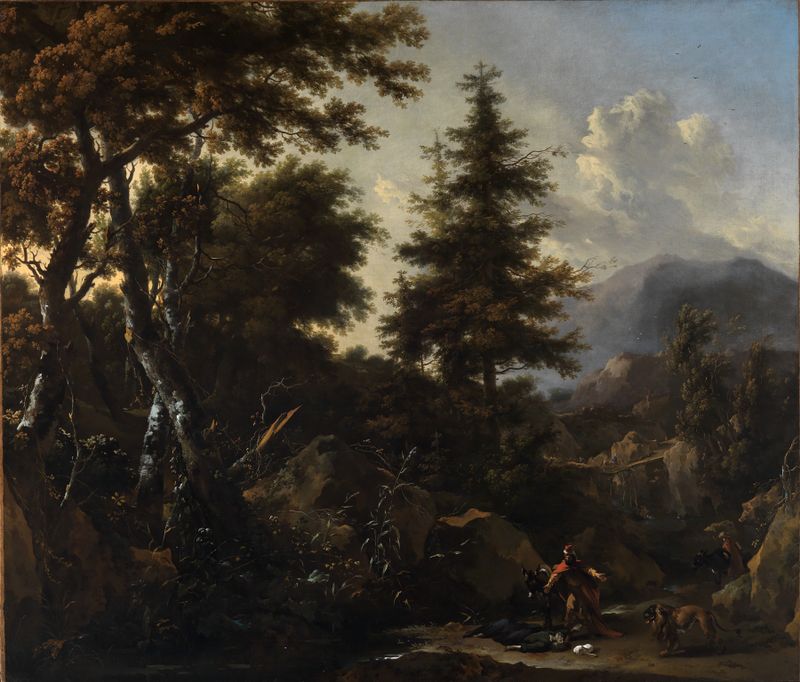
Schlucht im Bergwald mit alttestamentlicher Staffage
Nicolaes Pietersz Berchem
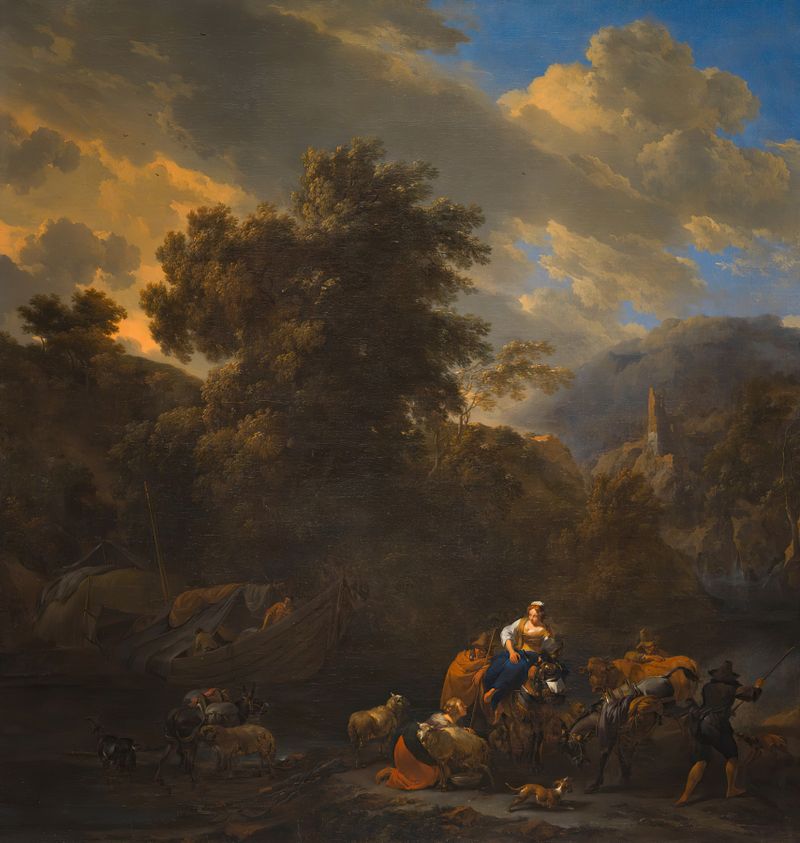
Italianate Landscape with Figures and Pack Animals on the Banks of a River
Nicolaes Pietersz Berchem
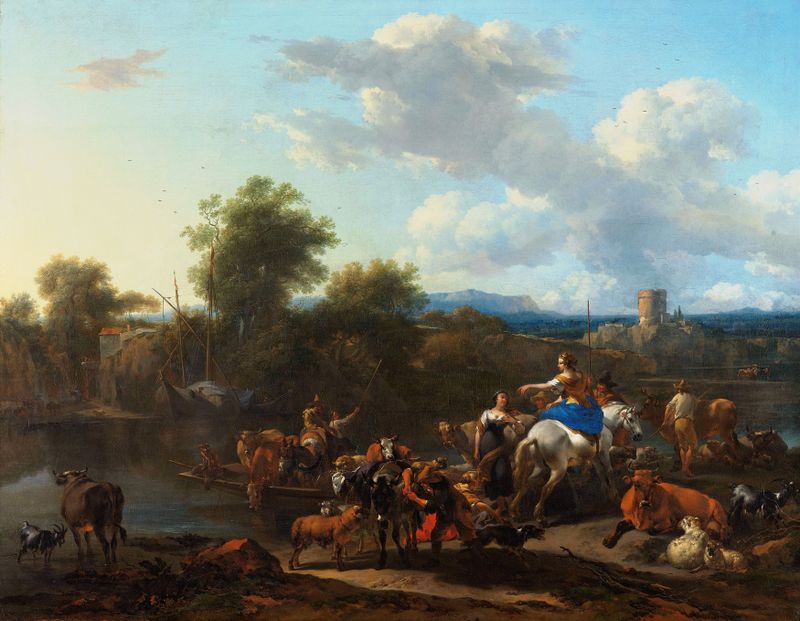
The Cattle Ferry
Nicolaes Pietersz Berchem
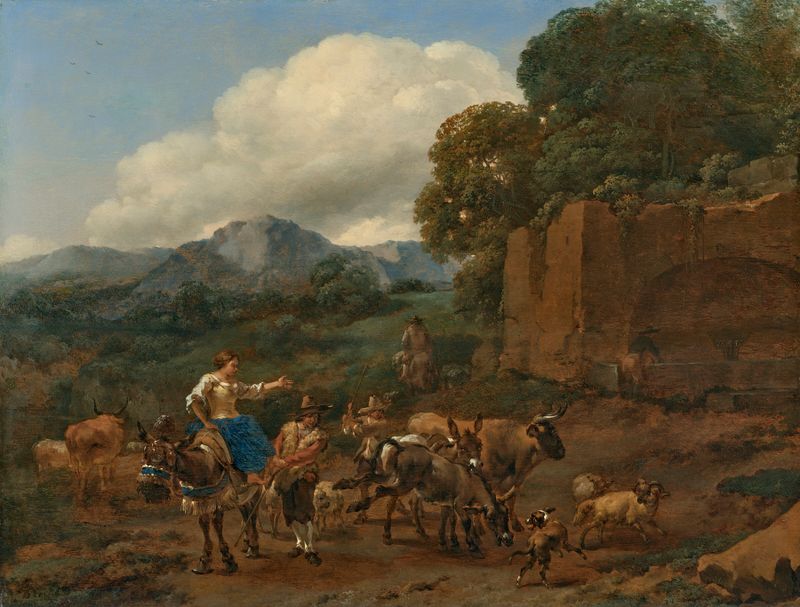
An Italianate landscape with a shepherdess on a mule and a shepherd, herding cattle, sheep, donkeys and dogs on a mountain track next to ruins
Nicolaes Pietersz Berchem
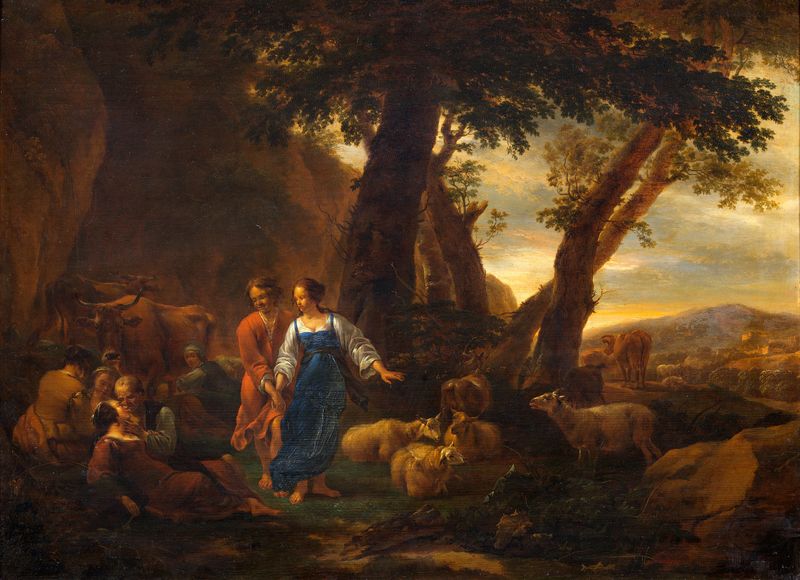
Landscape with Peasants and Cattle
Nicolaes Pietersz Berchem
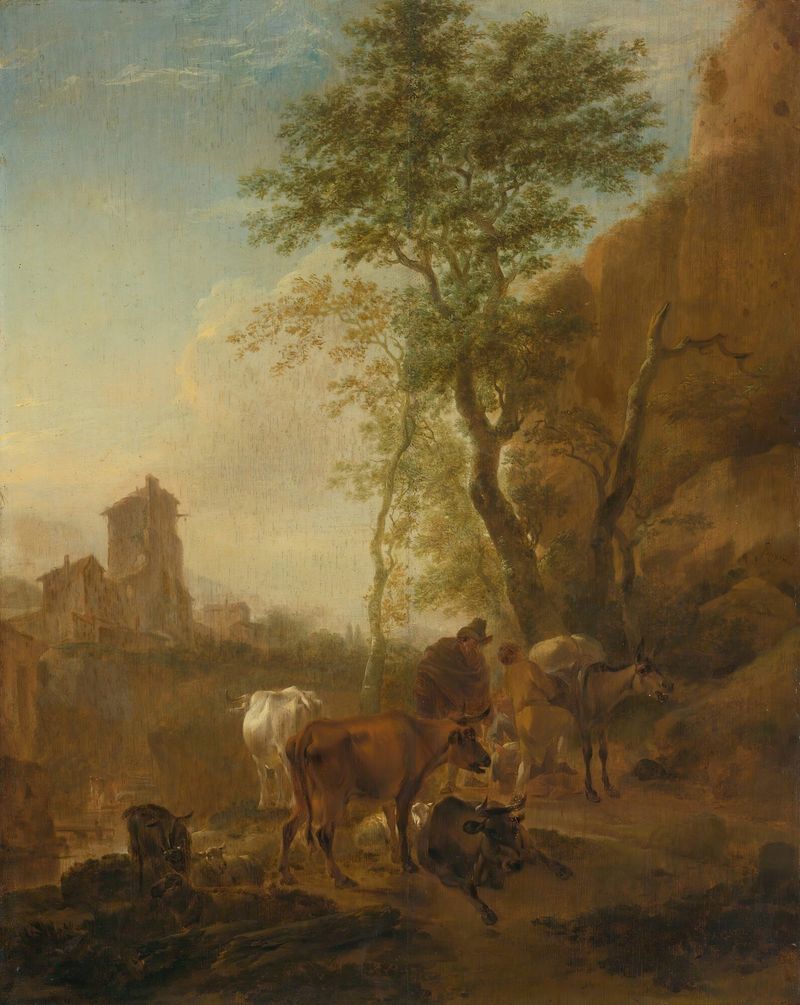
Italianate Landscape With Cows
Nicolaes Pietersz Berchem
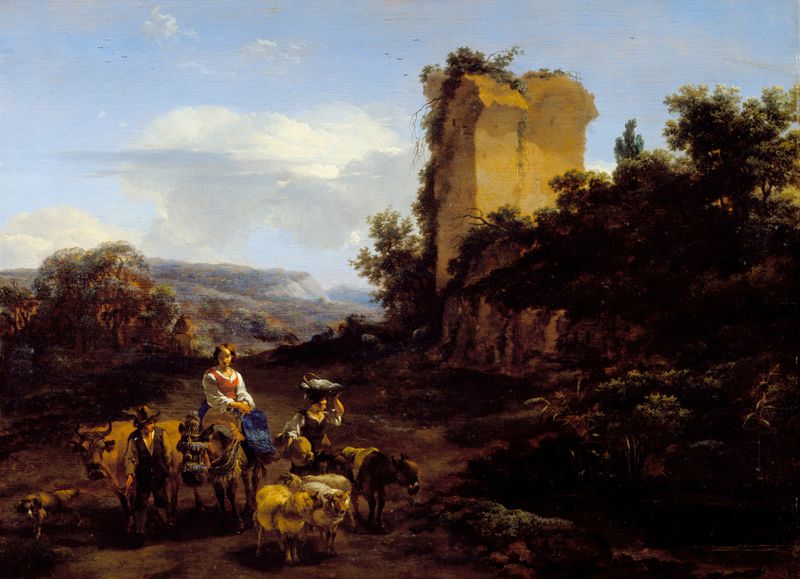
Landscape with Ruins and Travelers
Nicolaes Pietersz Berchem
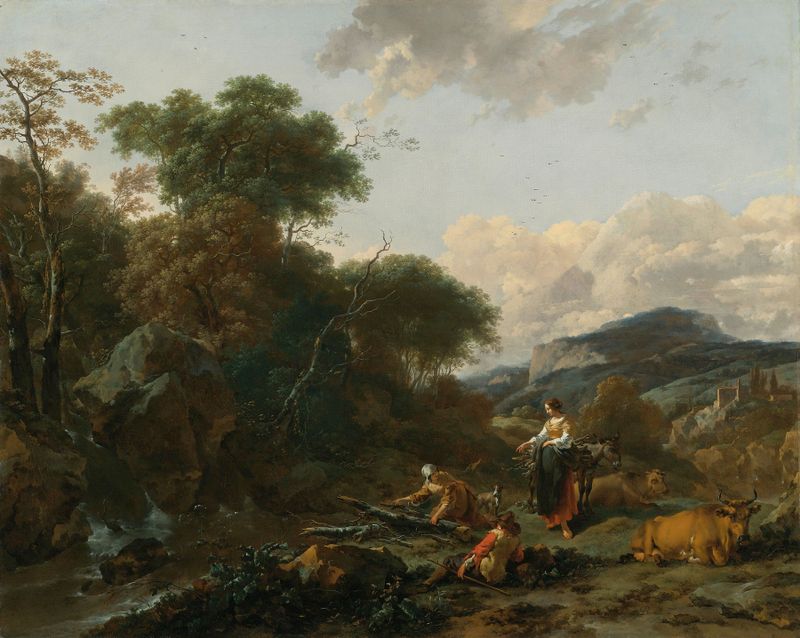
A Landscape With Figures
Nicolaes Pietersz Berchem
Slapende herdersfamilie en rustend vee
Nicolaes Pietersz Berchem
Ruins in Italy
Nicolaes Pietersz Berchem





