
Fluitspelende herder en spinster — History & Facts
In a world rich with hues, we find a delicate balance where vibrancy and quietude entwine, revealing hidden depths of emotion. Look to the left of the canvas where the shepherd, mid-play on his flute, captures our gaze with a serene expression. His gentle posture, framed by a lush, pastoral landscape, invites tranquility. Notice how the light cascades over the rolling hills, accentuating the deep greens and muted browns.
The subtle use of contrasting warm and cool colors creates a harmonious visual rhythm that draws the eye across the scene, invoking a sense of peace. Yet, beneath this pastoral serenity lies an echo of tension. The shepherd’s gaze appears contemplative, almost melancholic, hinting at unspoken stories. The figure of the spinster, seated quietly, embodies a contrasting stillness, her presence a reminder of solitude amidst the pastoral joy.
Their separation in both space and emotion suggests the complexities of connection, wherein music becomes a bridge between their worlds, yet also a reminder of their solitary existence. During the years between 1662 and 1694, the artist created Fluitspelende herder en spinster while navigating the vibrant art scene of the Dutch Golden Age. Living in the Netherlands, he was influenced by the burgeoning interest in genre scenes that celebrated the simplicity of daily life. This period was marked by a fascination with light and color, as well as the interplay of human emotion against the backdrop of nature—an exploration that Berchem masterfully encapsulated in this work.
More Artworks by Nicolaes Pietersz Berchem
Browse all →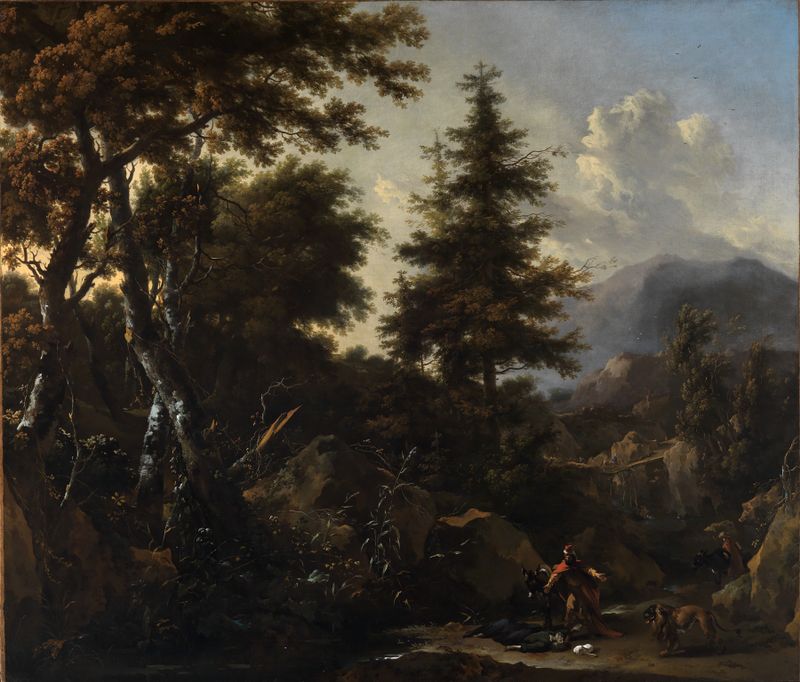
Schlucht im Bergwald mit alttestamentlicher Staffage
Nicolaes Pietersz Berchem
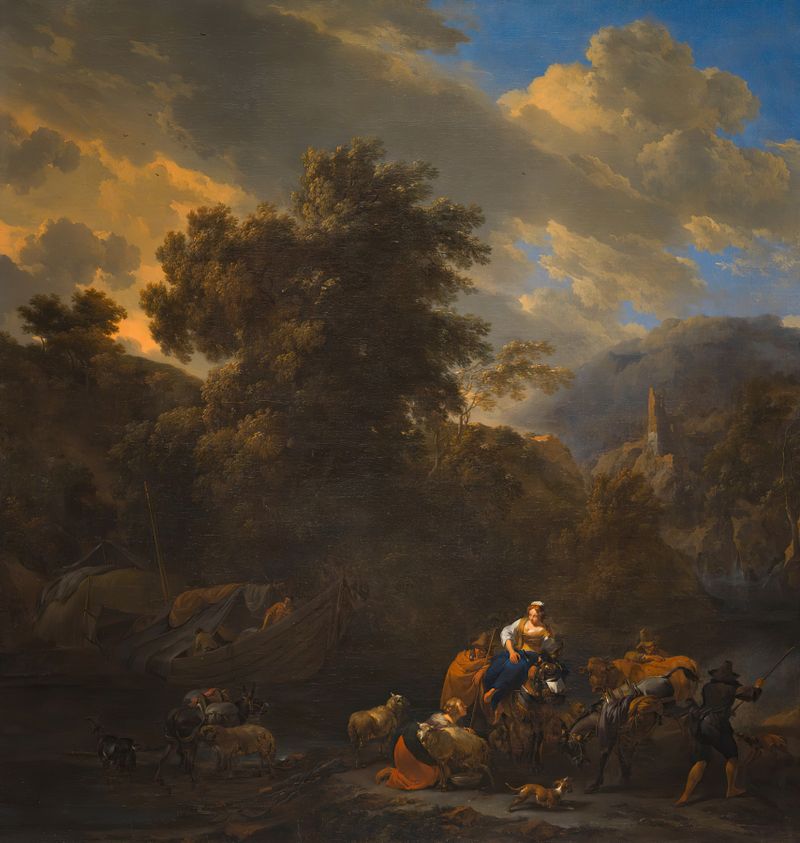
Italianate Landscape with Figures and Pack Animals on the Banks of a River
Nicolaes Pietersz Berchem
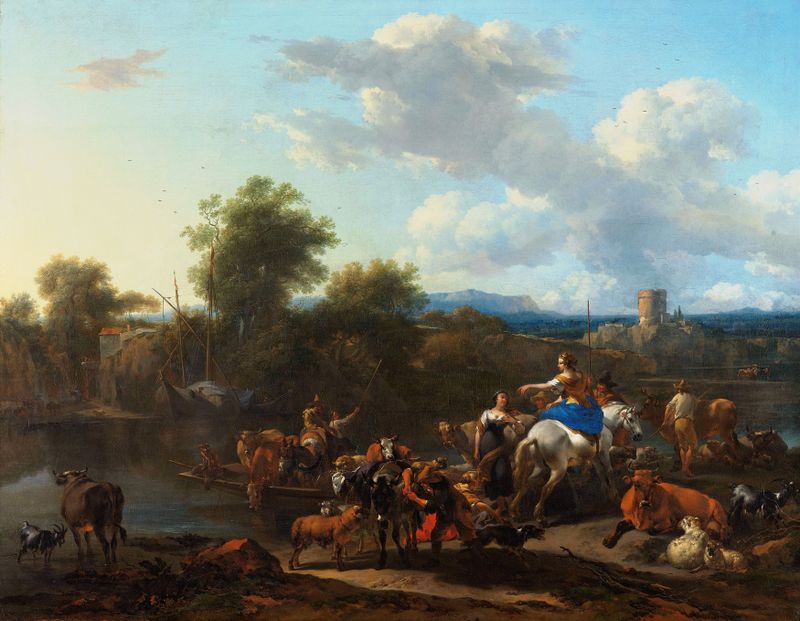
The Cattle Ferry
Nicolaes Pietersz Berchem
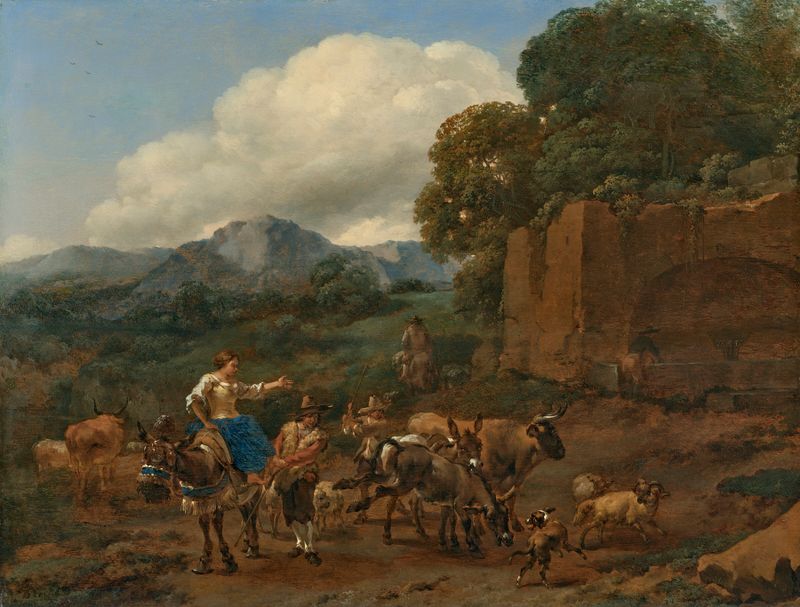
An Italianate landscape with a shepherdess on a mule and a shepherd, herding cattle, sheep, donkeys and dogs on a mountain track next to ruins
Nicolaes Pietersz Berchem
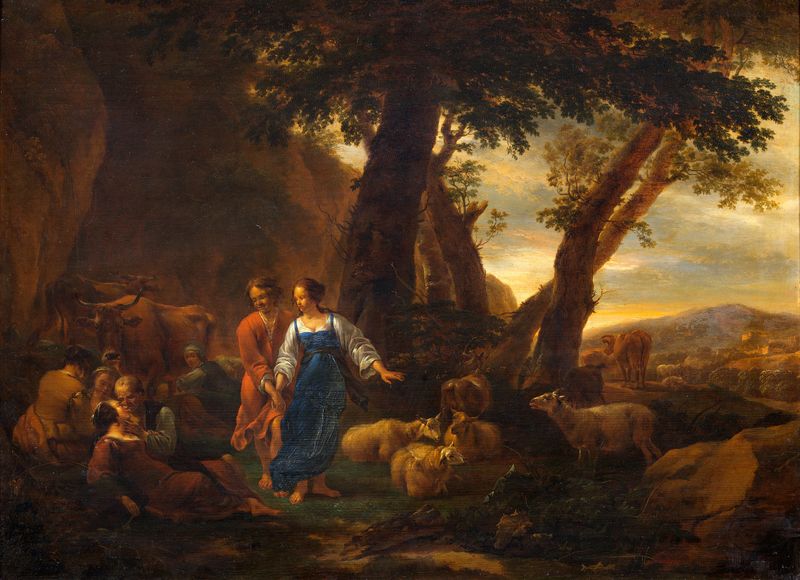
Landscape with Peasants and Cattle
Nicolaes Pietersz Berchem
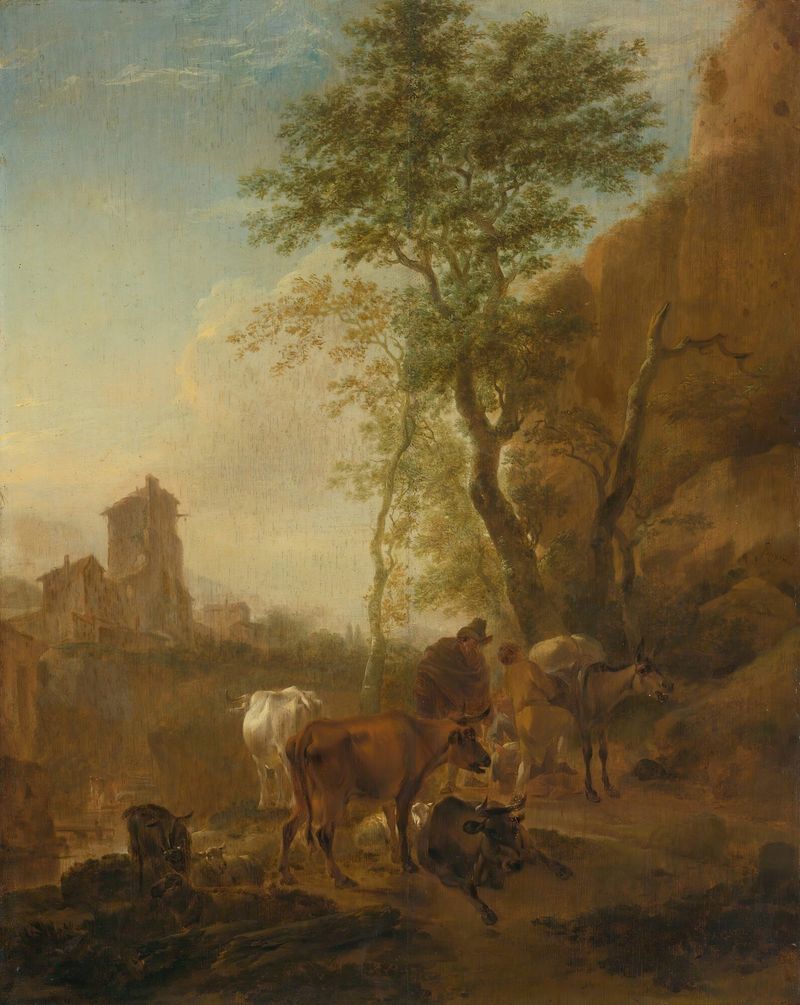
Italianate Landscape With Cows
Nicolaes Pietersz Berchem
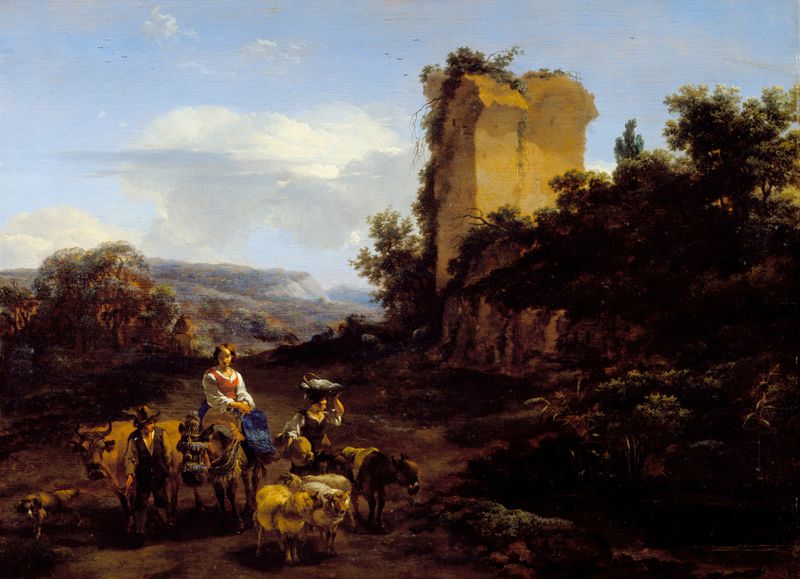
Landscape with Ruins and Travelers
Nicolaes Pietersz Berchem
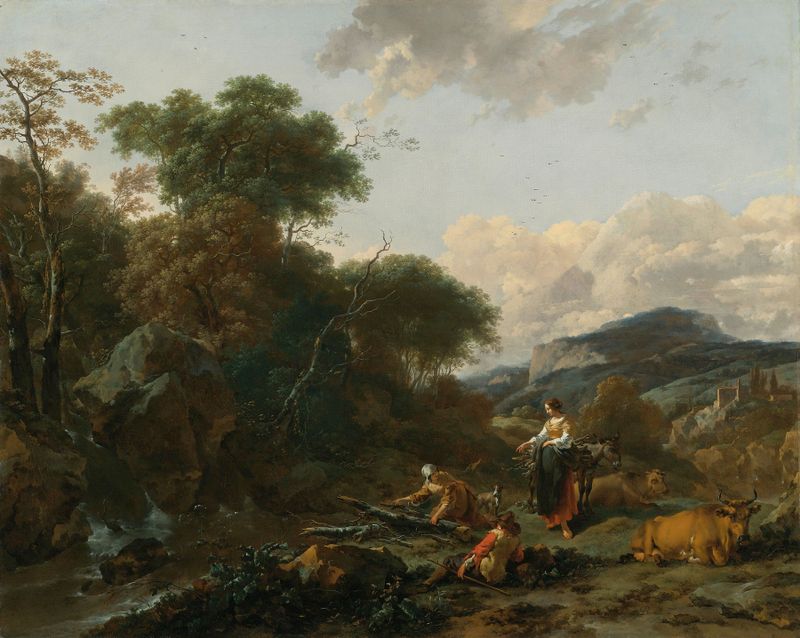
A Landscape With Figures
Nicolaes Pietersz Berchem
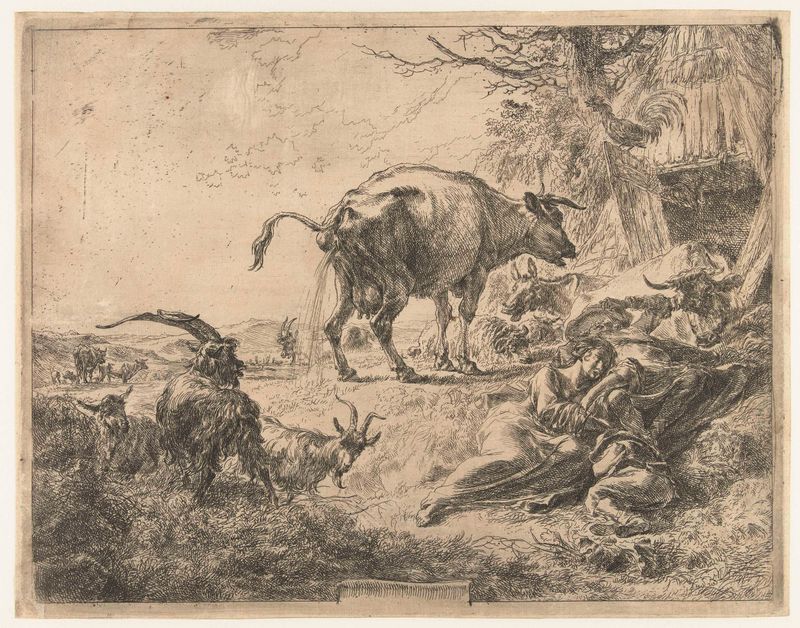
Slapende herdersfamilie en rustend vee
Nicolaes Pietersz Berchem
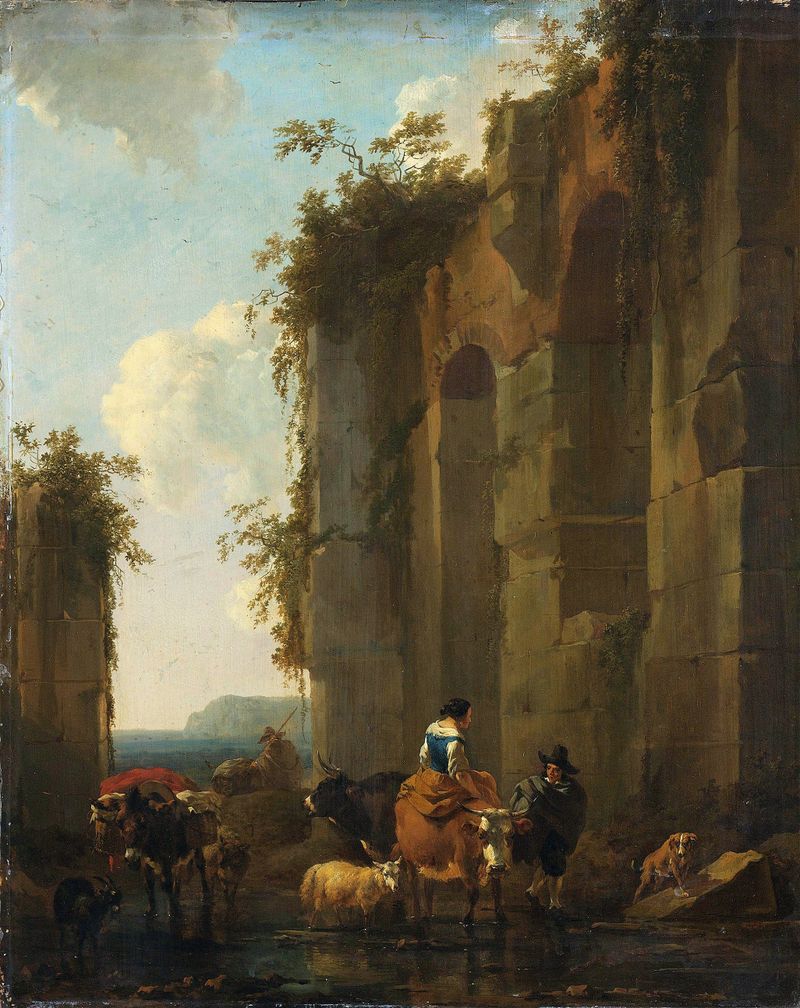
Ruins in Italy
Nicolaes Pietersz Berchem





