
Foire à Plougastel — History & Facts
Can beauty exist without sorrow? This question looms over the vibrant portrayal of life in Foire à Plougastel, where joy and melancholy intertwine seamlessly in the heart of a bustling fair. Look to the left at the lively figures, their faces animated under a canopy of colorful tents. The artist employs a palette rich in blues and yellows, capturing the essence of a perfect day while inviting the viewer to bask in the warmth of the scene. Notice how Boudin’s brushstrokes dance across the canvas, creating a sense of movement that draws your eye toward the cheerful interactions.
There is a palpable energy as laughter fills the air, yet a subtle shadow lingers, suggesting that all gatherings are tinged with the bittersweet. As you delve deeper, the contrasts become apparent. The vibrant festivities underscore a fleeting nature, where laughter often masks deeper thoughts. The interplay of light and shadow hints at underlying stories, perhaps the struggles of the local community or the passage of time that forever alters the joyous moment.
Each character's expression seems a reflection of personal histories, linking individual narratives to a collective experience, rich in both beauty and an unspoken yearning. Eugène Boudin painted this work between 1867 and 1872, during a period when he was establishing his reputation as a master of capturing light and atmosphere. Living in Normandy, he was deeply influenced by the coastal scenes around him and the plein air movement that sought to depict natural moments in real time. While the world of art was shifting towards Impressionism, Boudin's dedication to portraying everyday life and its ephemeral beauty laid the groundwork for this transformative era.
More Artworks by Eugène Boudin
Browse all →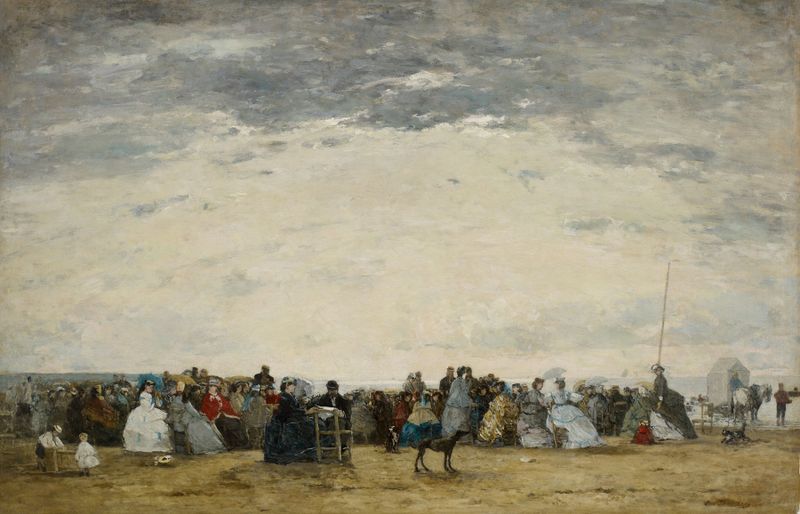
Vacationers on the Beach at Trouville
Eugène Boudin

Washerwoman near Trouville
Eugène Boudin
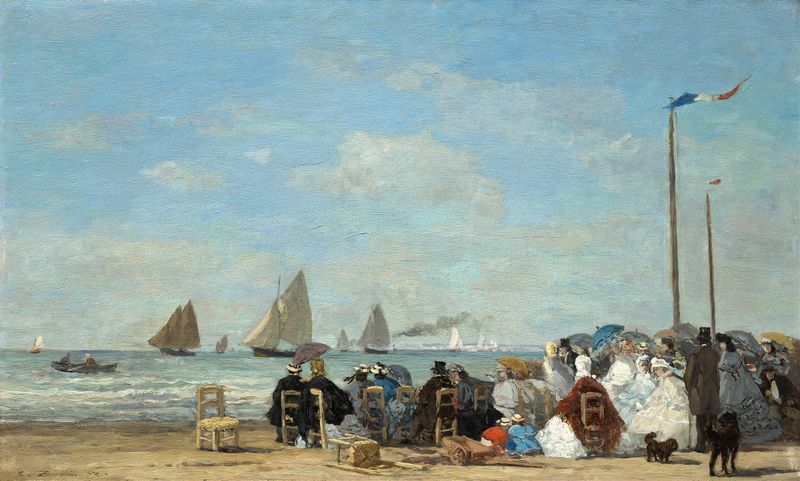
Beach Scene at Trouville
Eugène Boudin

Port aux environs d’Honfleur
Eugène Boudin

Le Faou, un coin du village
Eugène Boudin
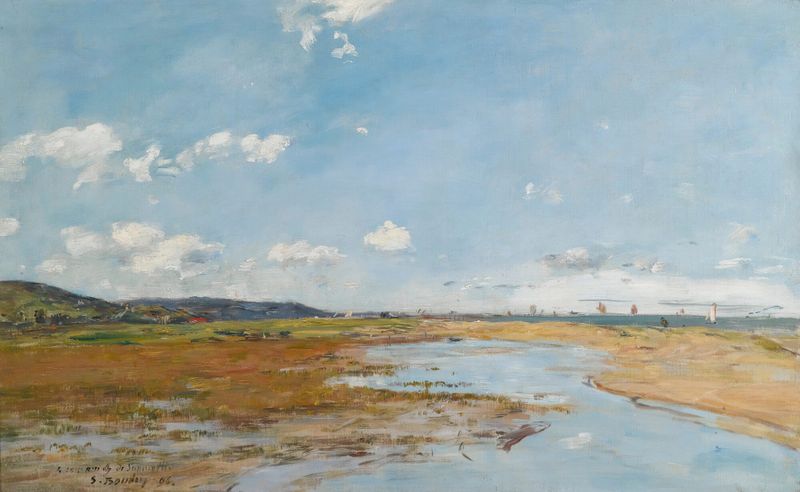
Deauville. Le Rivage
Eugène Boudin
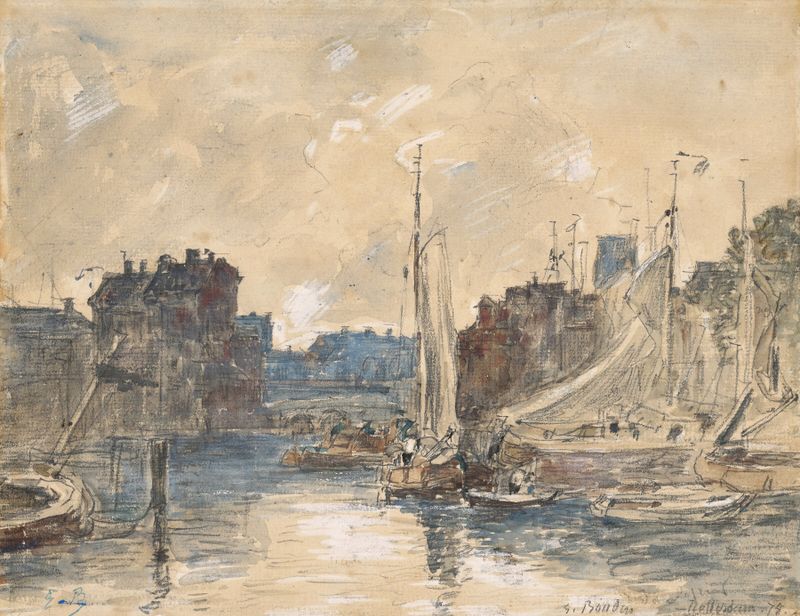
Port de Rotterdam
Eugène Boudin

View of Bordeaux, from the Quai des Chartrons
Eugène Boudin

Trouville, Scène De Plage
Eugène Boudin

Trouville, Le Port
Eugène Boudin





