
For to Be a Farmer’s Boy — History & Facts
What if silence could speak through light? The stillness captured in 1887 resonates with an unsettling madness, revealing the weight of rural existence and the fleeting dreams of youth. Look closely at the foreground, where the figure of the boy stands in the midst of a sprawling field. His posture is relaxed yet watchful, a testament to the duality of innocence and responsibility. Notice how the golden hues of the sun-soaked grass contrast with the deep greens of the distant woods, creating a dialogue between vitality and solitude.
The painter’s deft brushwork conveys the texture of the earth and the boy's presence, each stroke breathing life into the scene while simultaneously evoking a sense of impending change. Beneath the bright surface lies a poignant tension; the boy’s gaze is both hopeful and haunted, suggesting a yearning for freedom amidst the constraints of farm life. The interplay of light and shadow hints at the madness lurking within the mundane, as the idyllic rural backdrop belies the struggles of existence. This emotional complexity is further accentuated by the wildflowers, vibrant yet fragile, symbolizing the fleeting nature of childhood and the burdens that will soon overshadow it. During this period, the artist was exploring the theme of rural life with a keen eye for detail and emotional depth.
Working in Maine, For to Be a Farmer’s Boy emerged amid a growing interest in realism and the American experience. The societal shifts of the late 19th century influenced his focus on the balance between nature and human endeavor, capturing a moment that resonates with timeless relevance.
More Artworks by Winslow Homer
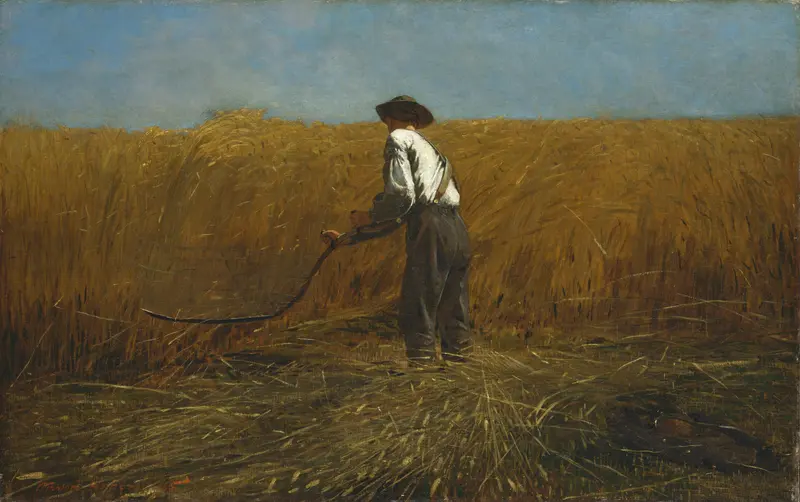
The Veteran in a New Field
Winslow Homer
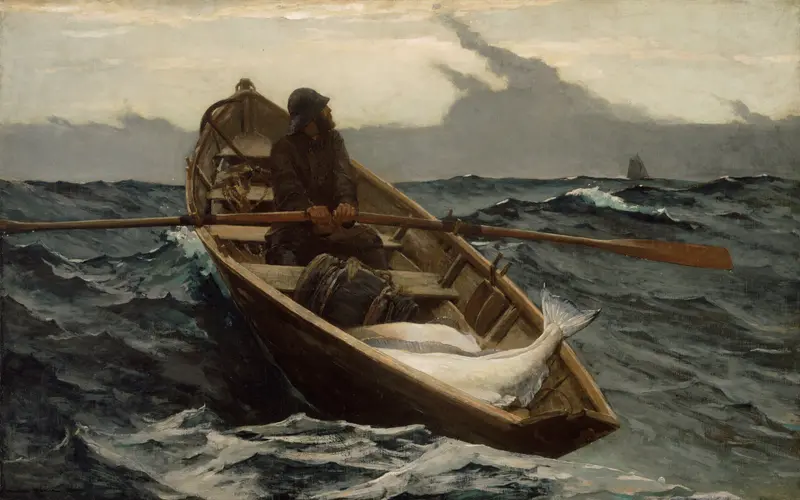
The Fog Warning
Winslow Homer
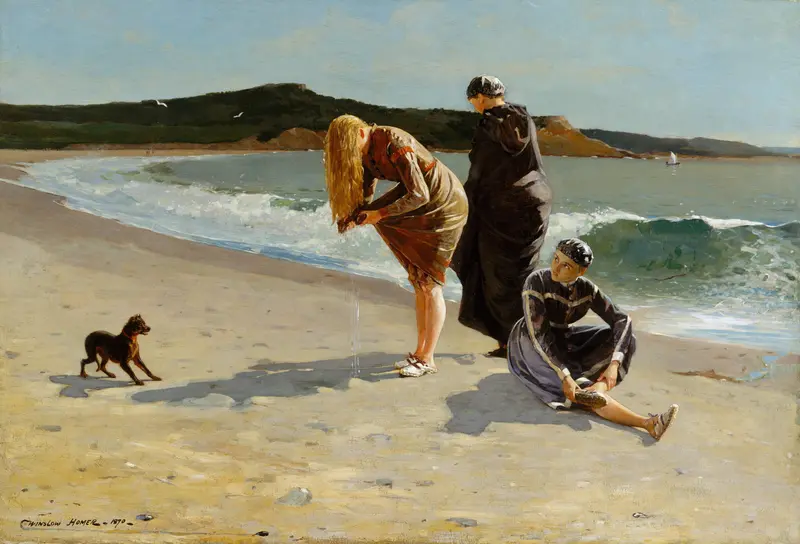
Eagle Head, Manchester, Massachusetts (High Tide)
Winslow Homer
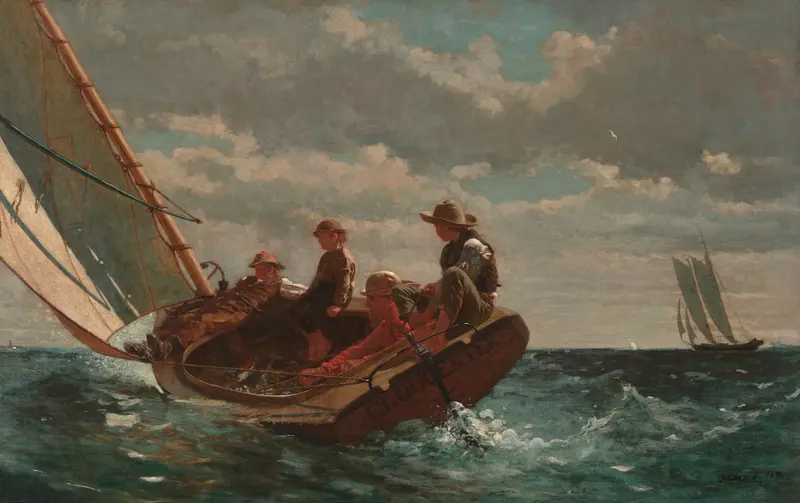
Breezing Up (A Fair Wind)
Winslow Homer
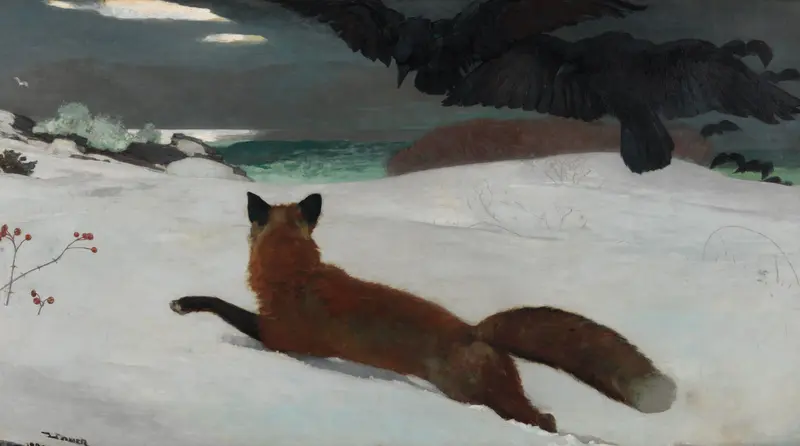
The Fox Hunt
Winslow Homer
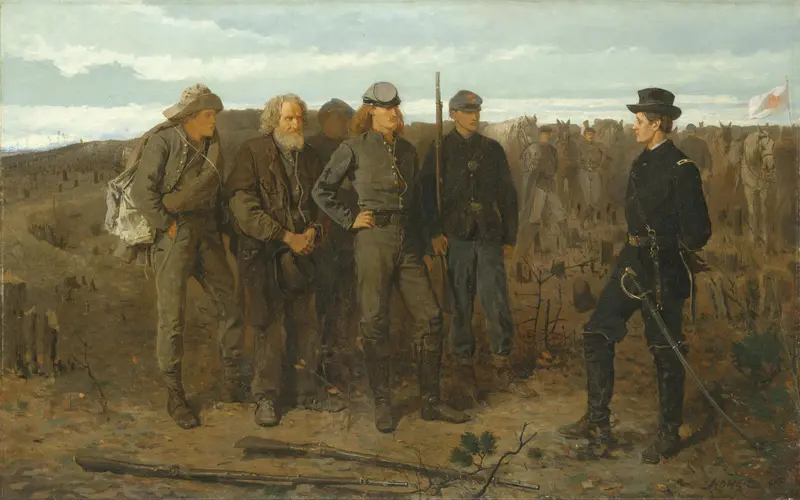
Prisoners from the Front
Winslow Homer
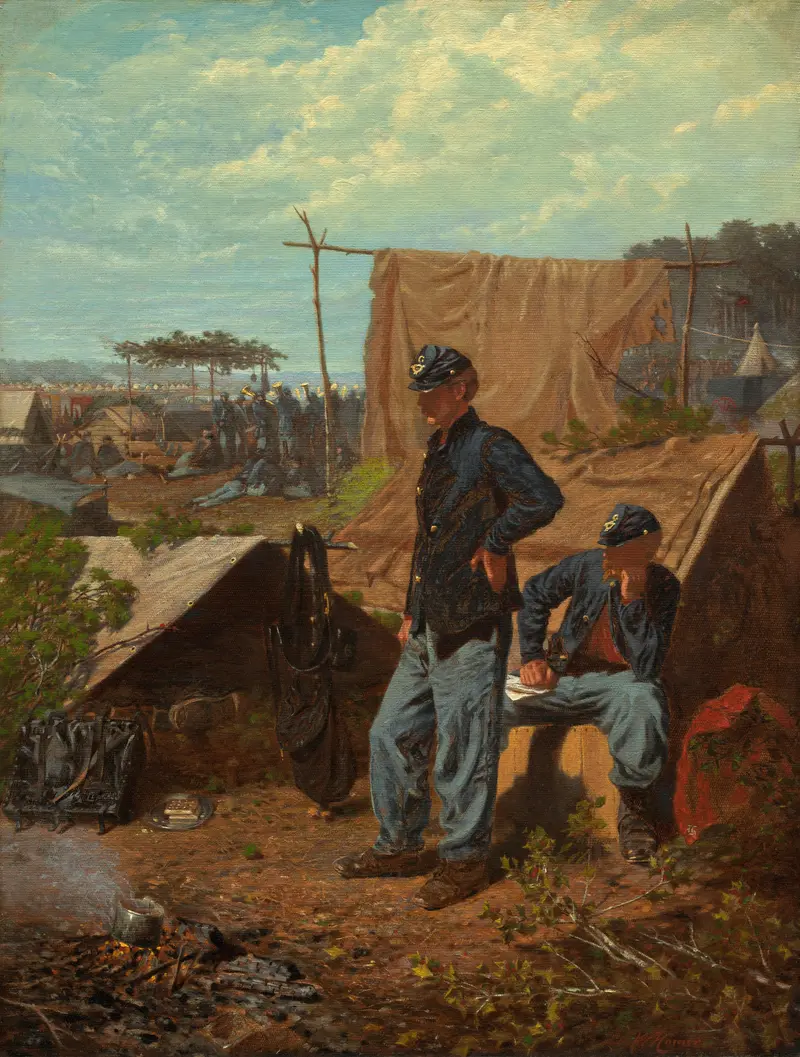
Home, Sweet Home
Winslow Homer
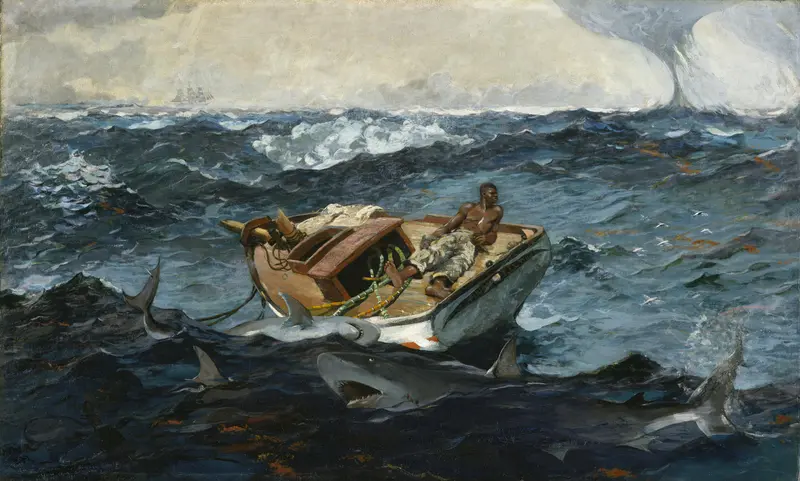
The Gulf Stream
Winslow Homer
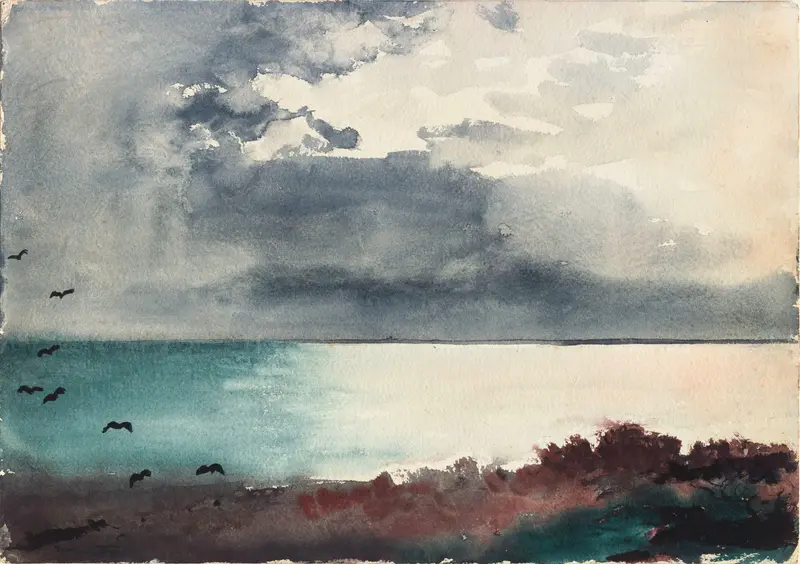
Breaking Storm, Coast of Maine
Winslow Homer
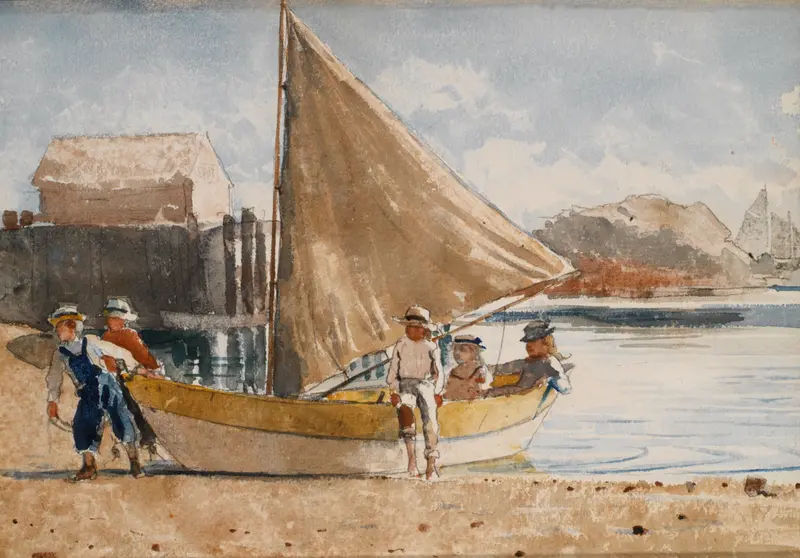
Summertime
Winslow Homer
More Genre Scene Art

Banquet of the Officers of the St George Civic Guard
Frans Hals

Rembrandt and Saskia in the Scene of the Prodigal Son
Rembrandt van Rijn

Bal du moulin de la Galette
Pierre-Auguste Renoir

Quadrille at the Moulin Rouge
Henri de Toulouse-Lautrec

A Burial at Ornans
Gustave Courbet

When Will You Marry?
Paul Gauguin