
Forest landscape — History & Facts
The first thing to catch the eye in Forest landscape by Alexander Keirincx is the sheer abundance of green—a living cathedral of trees, their canopies arching overhead and drawing the viewer deep into a world where humans are small, almost incidental. The light slips through the leaves in patches, guiding you from the shadowed foreground to the sunlit clearing beyond, where a shepherd tends his flock and a lone figure stoops beneath a heavy basket. The winding paths invite the imagination to wander, while the careful placement of figures and animals hints at the quiet industry of rural life.
Every branch and blade of grass is painted with the kind of attention that asks you to linger, to notice the dog bounding after its master or the subtle play of clouds across the sky. Painted in 1622, this work belongs to a moment in Northern Europe when landscape painting was coming into its own, no longer just a backdrop for biblical or mythological stories but a subject worthy of attention in itself. Artists like Keirincx responded to a growing appetite among collectors—often prosperous merchants or civic leaders—for scenes that celebrated the land and the rhythms of everyday life. The painting now resides in the collection of Museum Schwerin, a fitting home for a piece that speaks to the enduring fascination with nature’s order and abundance.
History has kept few traces of this particular canvas’s journey, but its invitation remains unchanged: follow the paths, lose yourself among the trees, and discover what waits just beyond the next bend.
More Artworks by Alexander Keirincx

River Landscape with Oak Forest
Alexander Keirincx
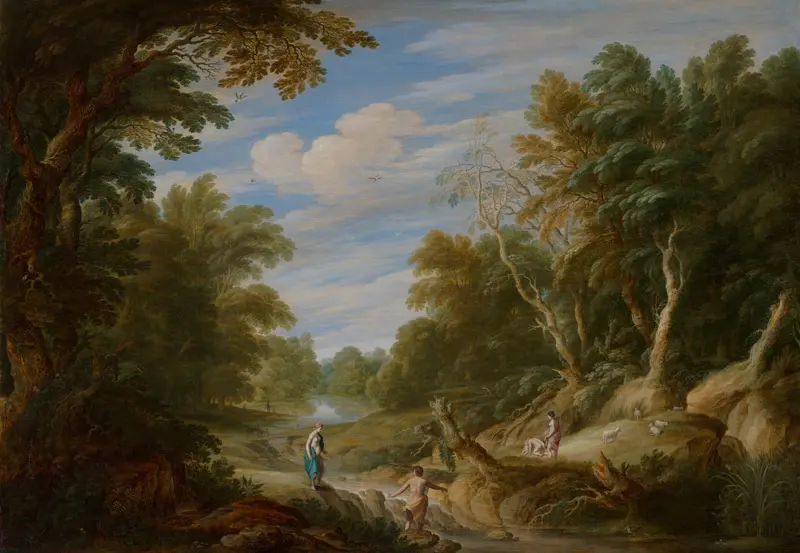
Wooded Landscape with Figures
Alexander Keirincx
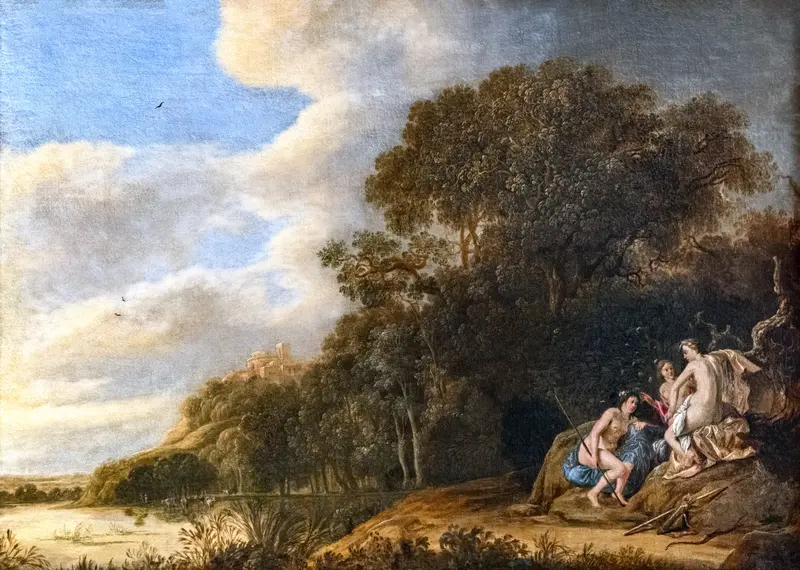
Rest of the nymphs
Alexander Keirincx
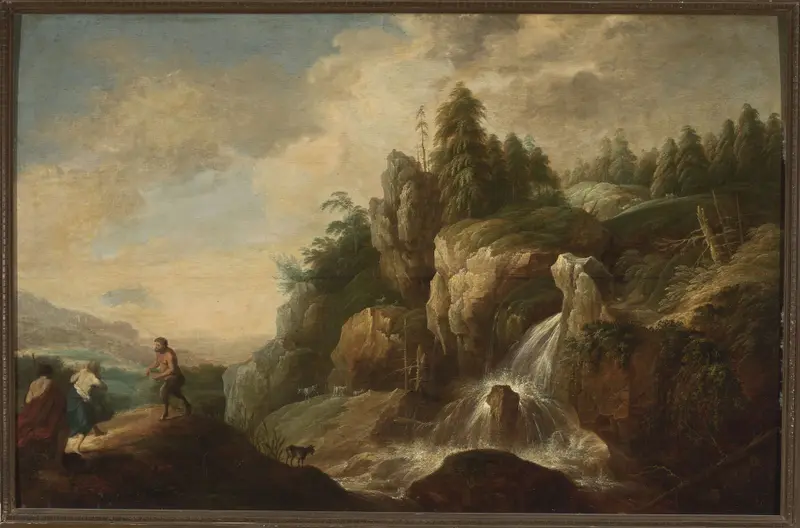
Landscape at a waterfall
Alexander Keirincx
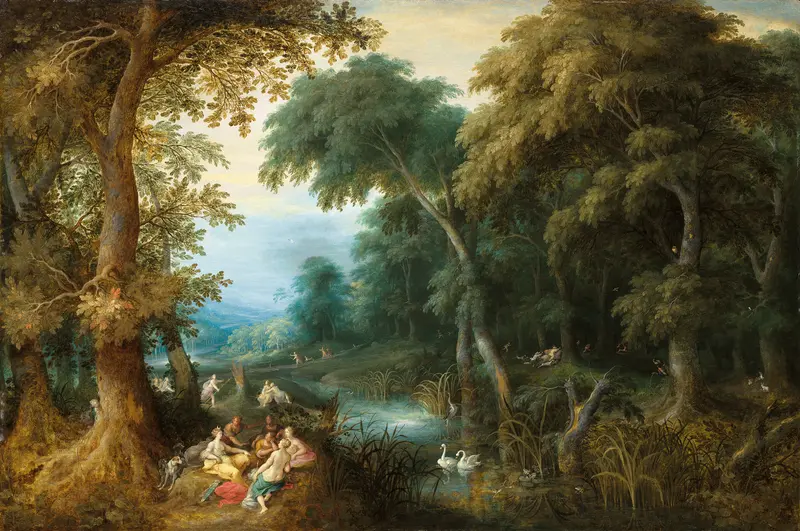
Diana and her nymphs in a wooded landscape
Alexander Keirincx
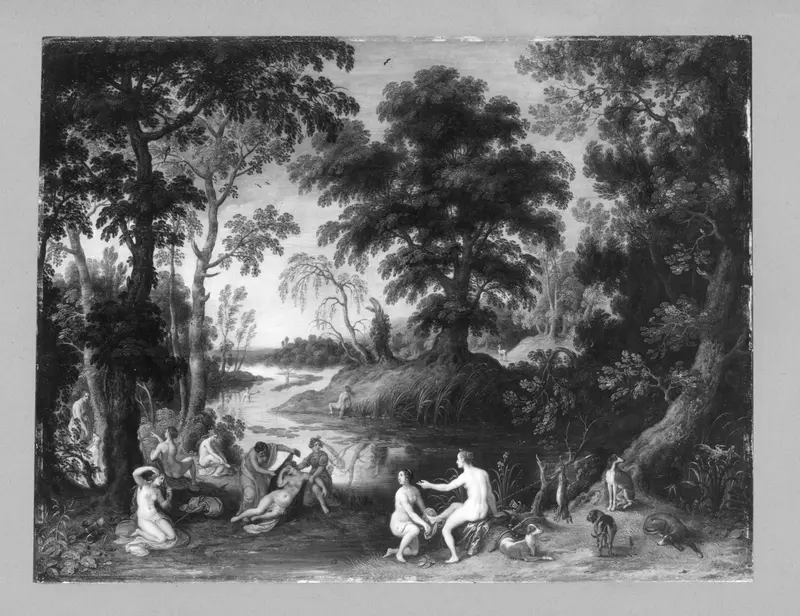
the error of Calisto
Alexander Keirincx
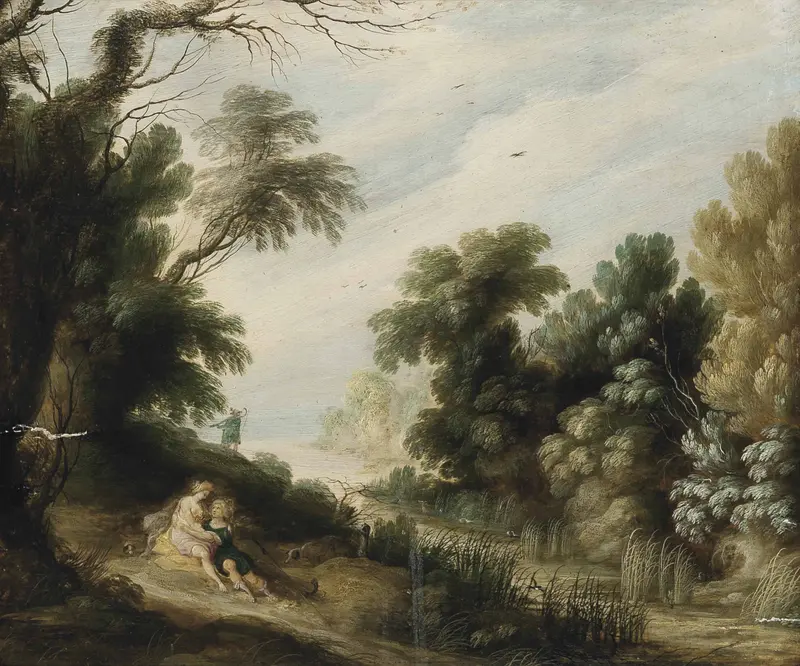
Wooded river landscape with Venus and Adonis
Alexander Keirincx
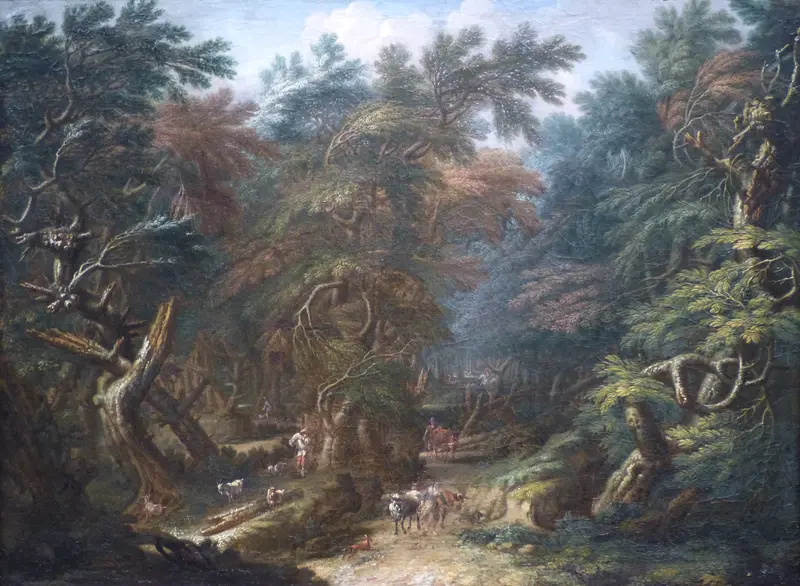
Paysage boisé avec bergers et chasse au cerf
Alexander Keirincx
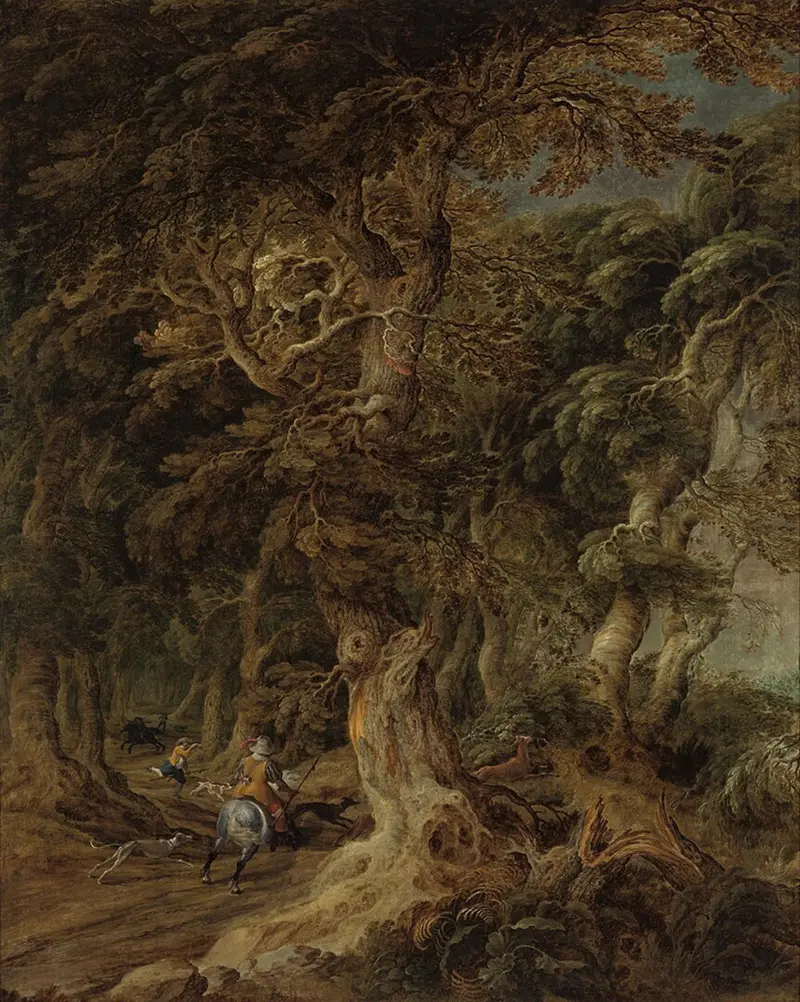
Forest View with Large Oak
Alexander Keirincx
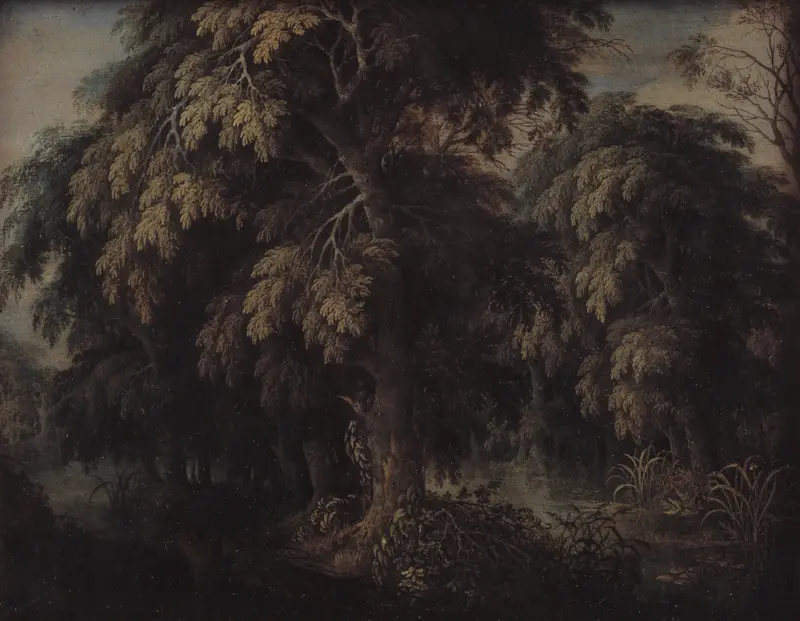
Wooded Landscape
Alexander Keirincx
More Landscape Art

The Starry Night
Vincent van Gogh

View of Delft
Johannes Vermeer

Water Lilies
Claude Monet

The Grand Canal, Venice, looking north-west from the Ca' Corner to the Ca' Contarini degli Scrigni, with the campanile of Santa Maria della Carità
Canaletto

Windsor Castle
Canaletto

The Grand Canal looking North-East from the Palazzo Dolfin-Manin to the Rialto Bridge
Canaletto