
Wooded Landscape with Figures — History & Facts
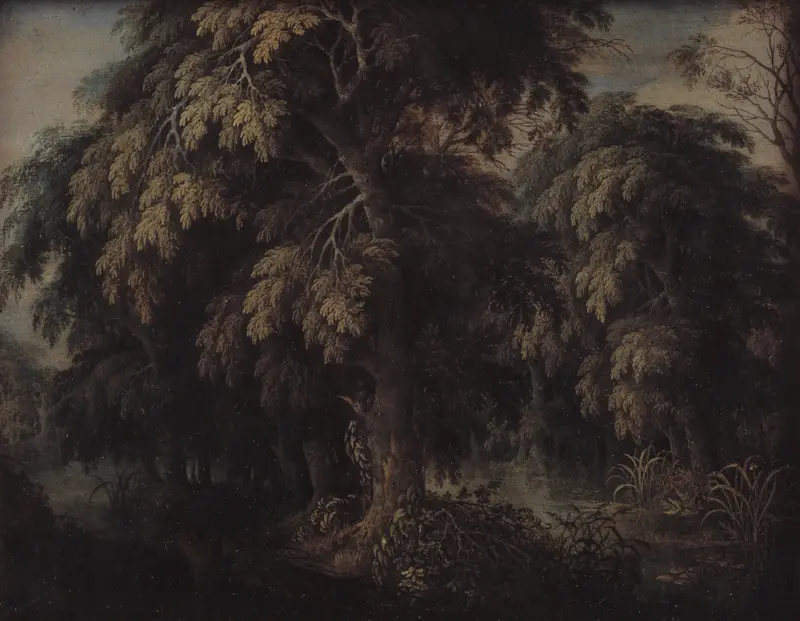
A hush falls over this wooded glade, where the sky takes up nearly half the canvas and the trees arch protectively over a winding stream. Your eye is drawn first to the figures at the water’s edge: a woman in a blue drapery steps lightly onto the rocks, while another, nude, wades into the gentle current. In the middle distance, a shepherd tends his flock, his presence almost swallowed by the dense, layered greenery.
The light is soft and dappled, filtering through the foliage to pick out details—a bare shoulder, the curve of a tree root, the shimmer of water—while the vast sky, streaked with clouds, stretches the scene into a tranquil, endless afternoon. Every element seems placed to invite the viewer in, to follow the stream deeper into the painted woods. Painted in 1630, Wooded Landscape with Figures by Alexander Keirincx belongs to a world where landscapes were gaining new pride of place on collectors’ walls. In the Dutch and Flemish tradition, artists like Keirincx created these scenes both as meditations on nature and as quiet celebrations of rural life, often for urban patrons longing for a glimpse of the countryside.
The Mauritshuis, where this painting now resides, preserves it as a testament to that era’s fascination with the balance between human presence and the grandeur of the natural world. History has kept few traces of this painting’s early journey, but its calm, measured beauty still rewards patient looking—let your gaze wander through the trees and see where the path might lead.
More Artworks by Alexander Keirincx

River Landscape with Oak Forest
Alexander Keirincx
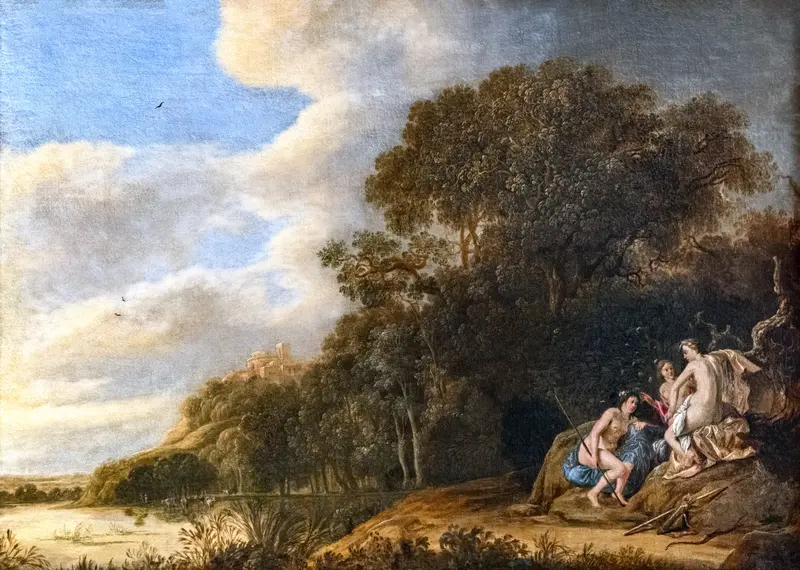
Rest of the nymphs
Alexander Keirincx
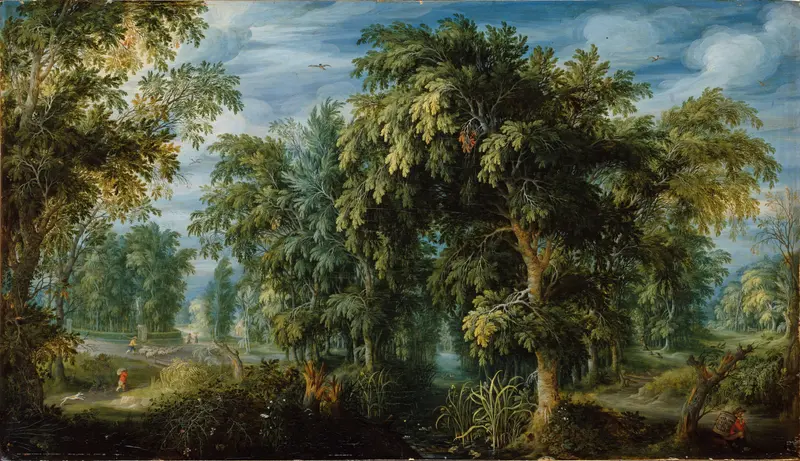
Forest landscape
Alexander Keirincx
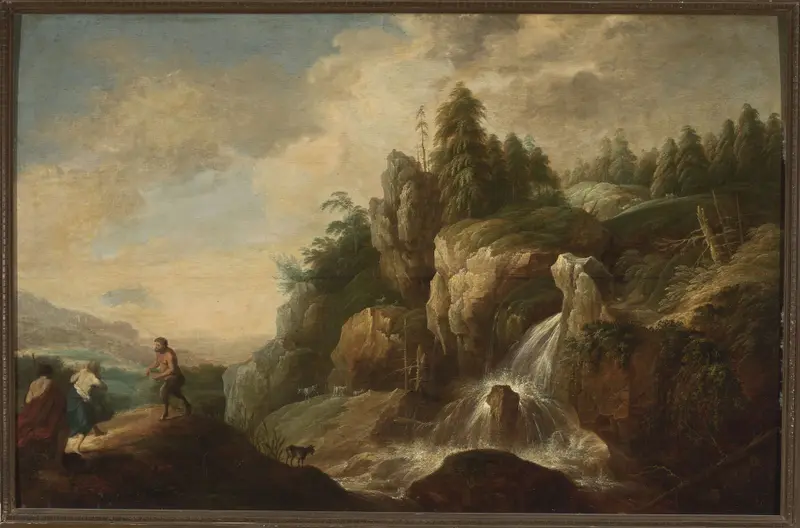
Landscape at a waterfall
Alexander Keirincx
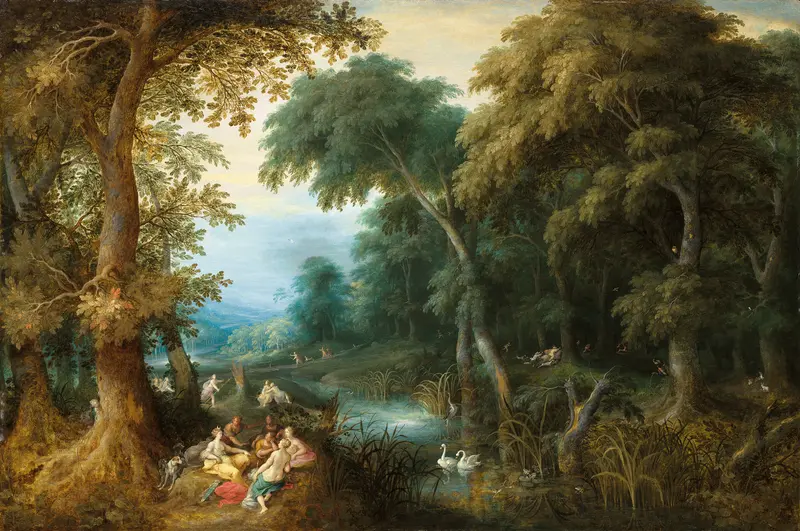
Diana and her nymphs in a wooded landscape
Alexander Keirincx
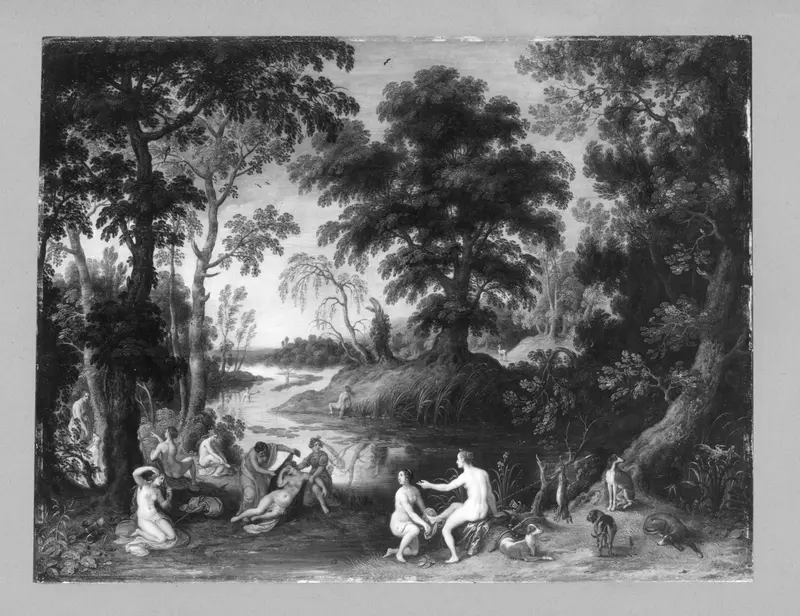
the error of Calisto
Alexander Keirincx
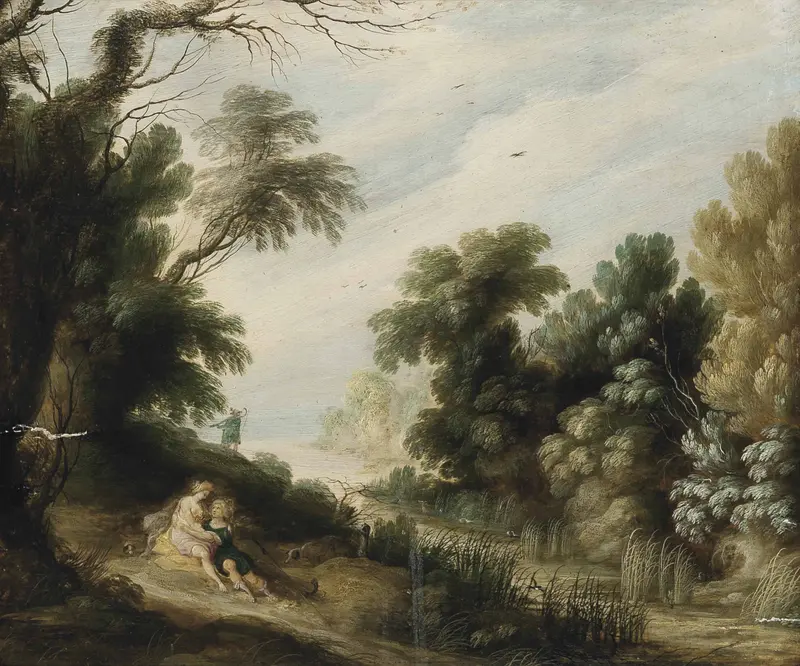
Wooded river landscape with Venus and Adonis
Alexander Keirincx
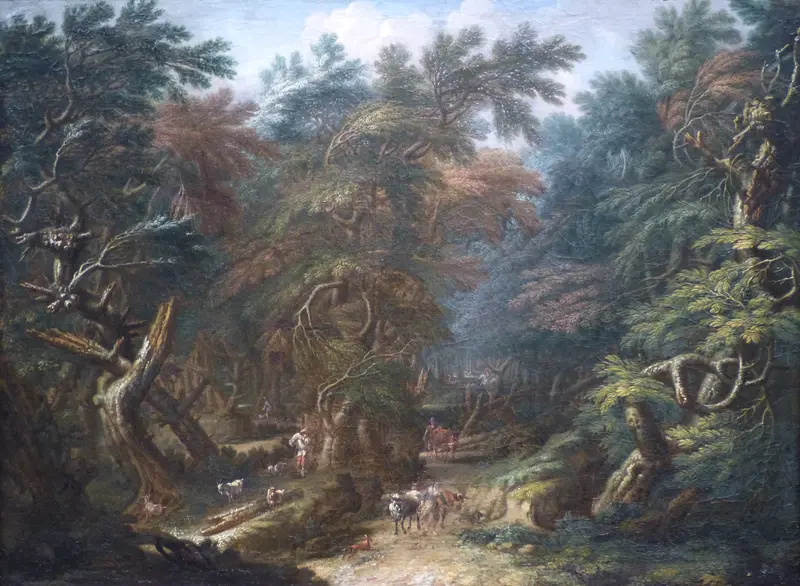
Paysage boisé avec bergers et chasse au cerf
Alexander Keirincx
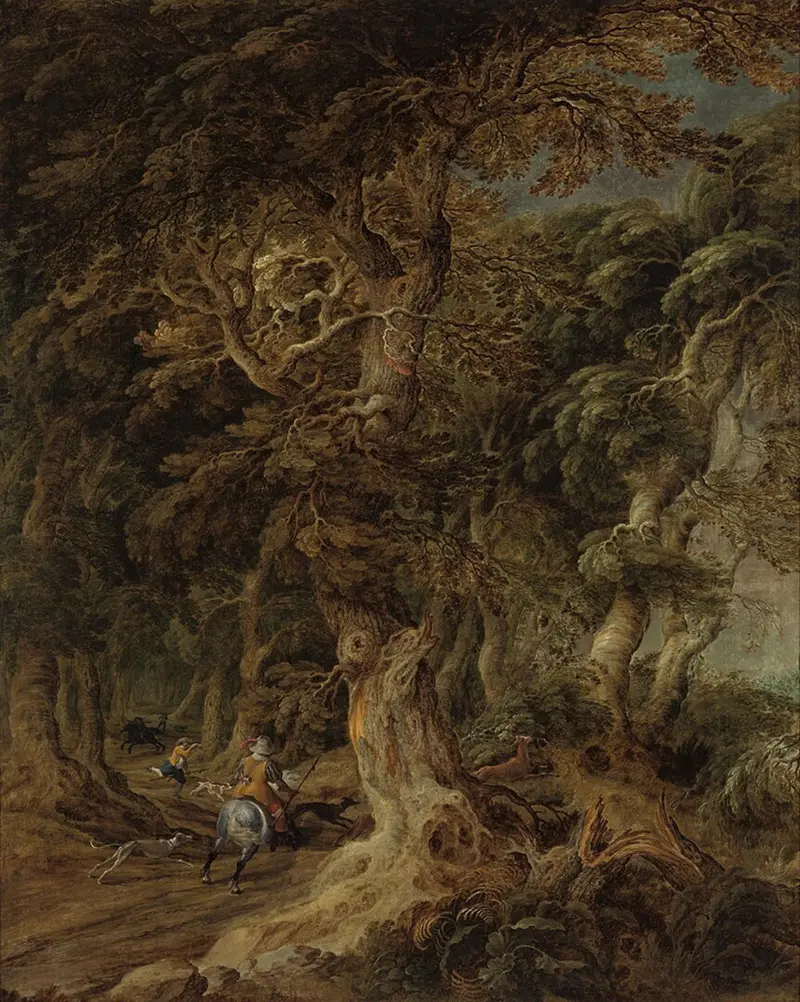
Forest View with Large Oak
Alexander Keirincx
Wooded Landscape
Alexander Keirincx
More Landscape Art

The Starry Night
Vincent van Gogh

View of Delft
Johannes Vermeer

Water Lilies
Claude Monet

The Grand Canal, Venice, looking north-west from the Ca' Corner to the Ca' Contarini degli Scrigni, with the campanile of Santa Maria della Carità
Canaletto

Windsor Castle
Canaletto

The Grand Canal looking North-East from the Palazzo Dolfin-Manin to the Rialto Bridge
Canaletto