
Four Men on a Stone Bridge — History & Facts
A stone bridge slices quietly across the center of the scene, anchoring the viewer’s gaze as four men pause in silent congress—each figure caught in a moment of stillness that suggests a story just out of reach. The eye is drawn first to the crisp arch of the bridge, then up through the tangle of trees whose branches frame the figures and lead the imagination deeper into the print. The men’s gestures are understated, yet the careful spacing between them hints at conversation or contemplation, while the lone figure in the boat below bends to his task, absorbed in the work of the riverbank.
Light, rendered through delicate hatching, settles gently over the landscape, giving the scene a sense of early morning or late afternoon hush. The composition’s low horizon lets the sky breathe, filling the upper half with a sense of calm and space. Works like Four Men on a Stone Bridge belong to the world of seventeenth-century Dutch landscape, where artists such as Antonie Waterloo found poetry in the everyday. These prints were often collected by the burgeoning middle class, who prized them both for their technical skill and their evocation of the countryside’s quiet dignity.
While little is recorded about the specific history of this sheet, its presence in the National Gallery of Art’s collection—shared through open access—places it among the many works that survive as windows onto a vanished rural rhythm. The viewer is left to wonder what words pass between the men, and what stories the bridge has carried across its span.
More Artworks by Antonie Waterloo
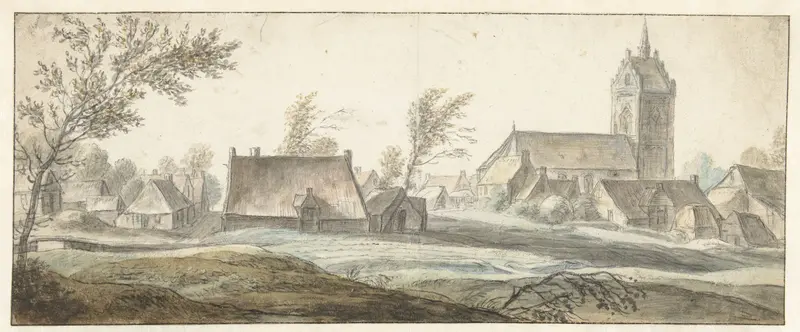
Gezicht op het dorp Soest
Antonie Waterloo
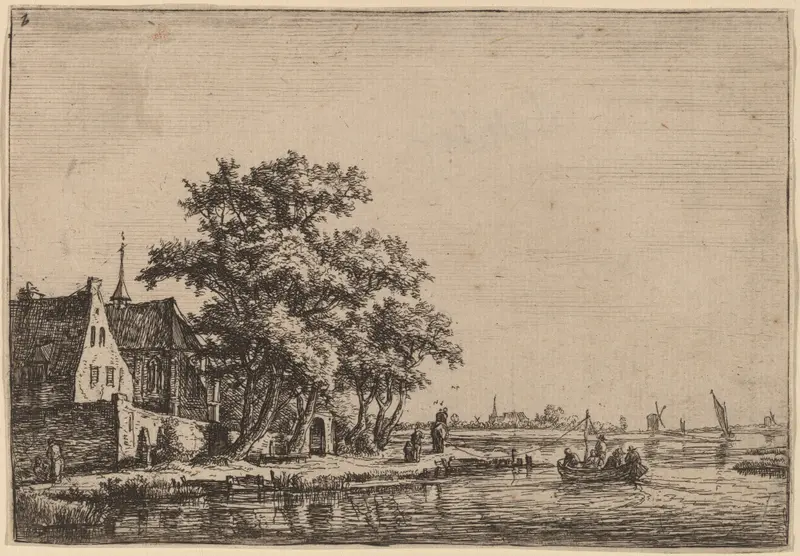
Churchyard at the Waterside
Antonie Waterloo
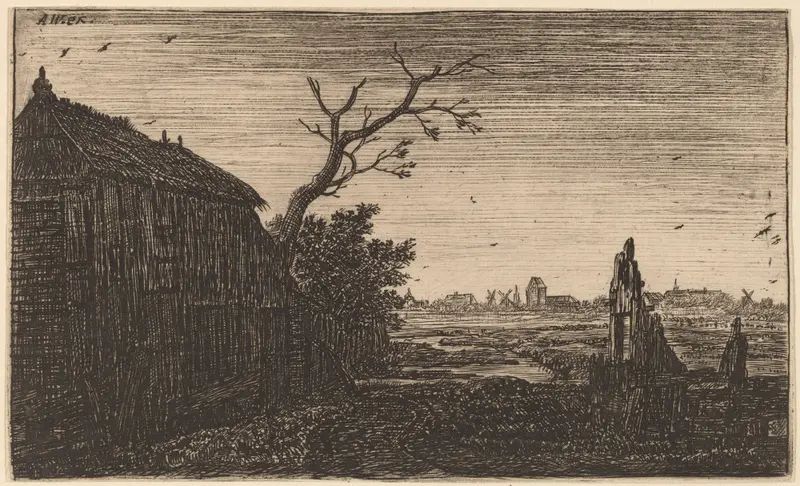
The Sluice
Antonie Waterloo
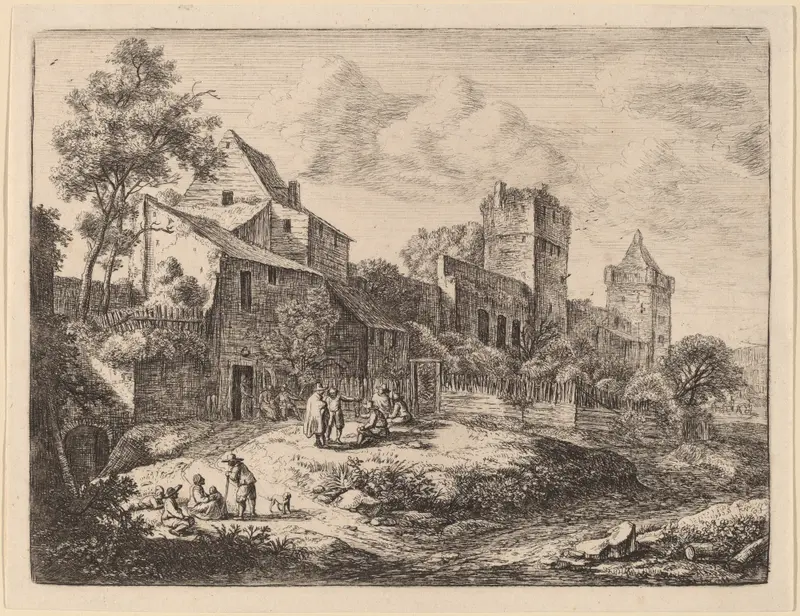
Square in Front of an Inn
Antonie Waterloo
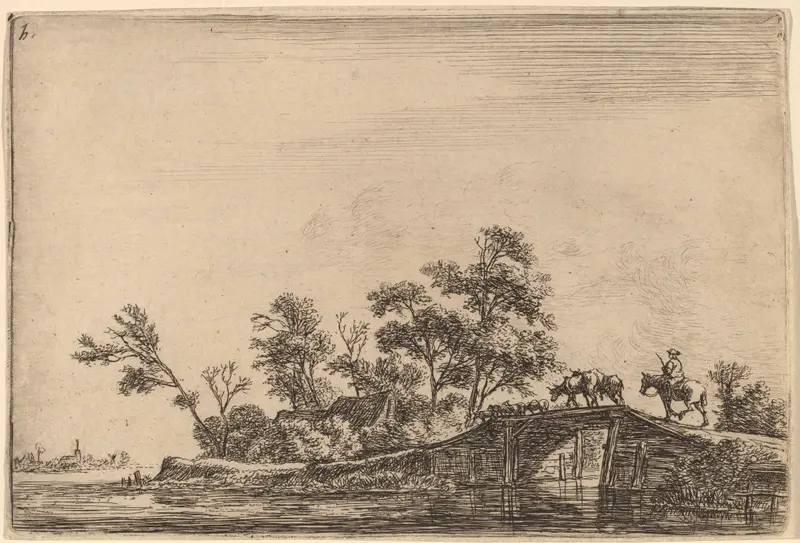
Rider and Flock on a Bridge
Antonie Waterloo
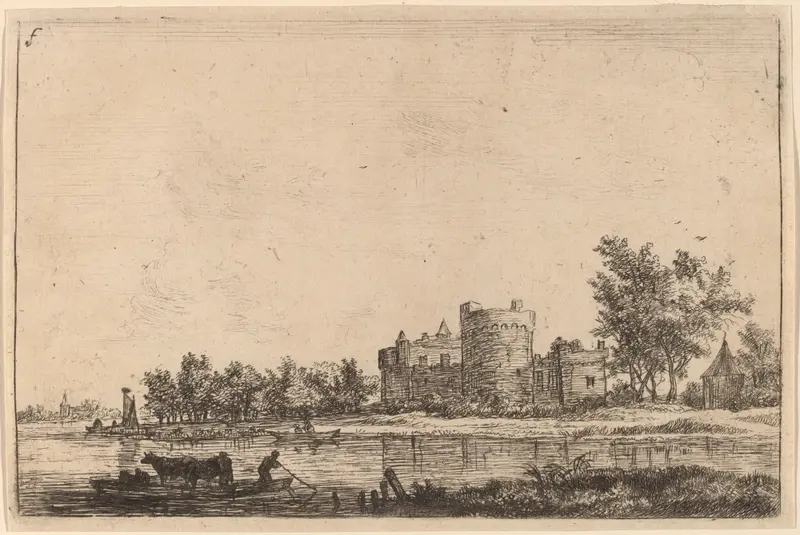
Two Cows on a Ferry
Antonie Waterloo
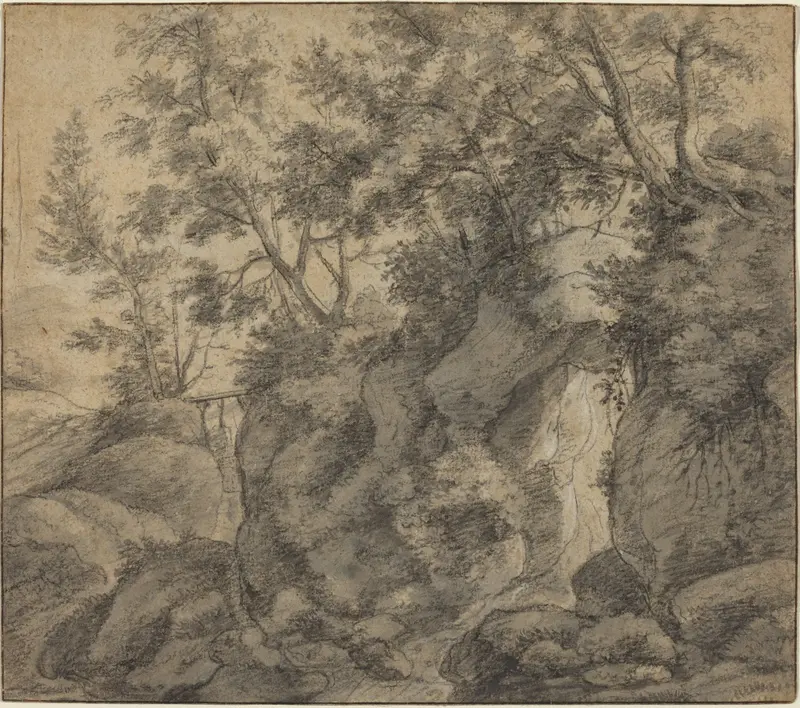
Landscape with a Wooded Ravine
Antonie Waterloo
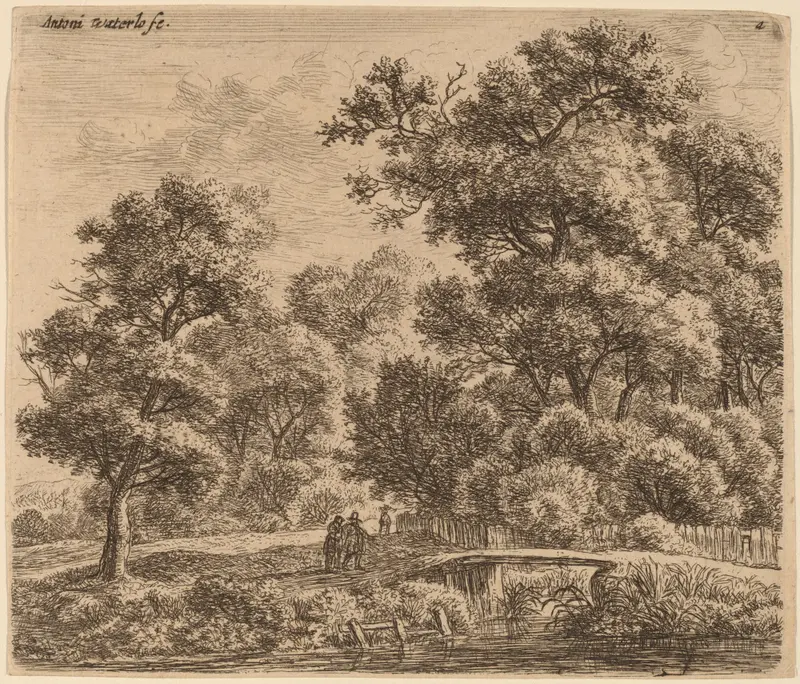
Wooded Landscape with a Bridge
Antonie Waterloo
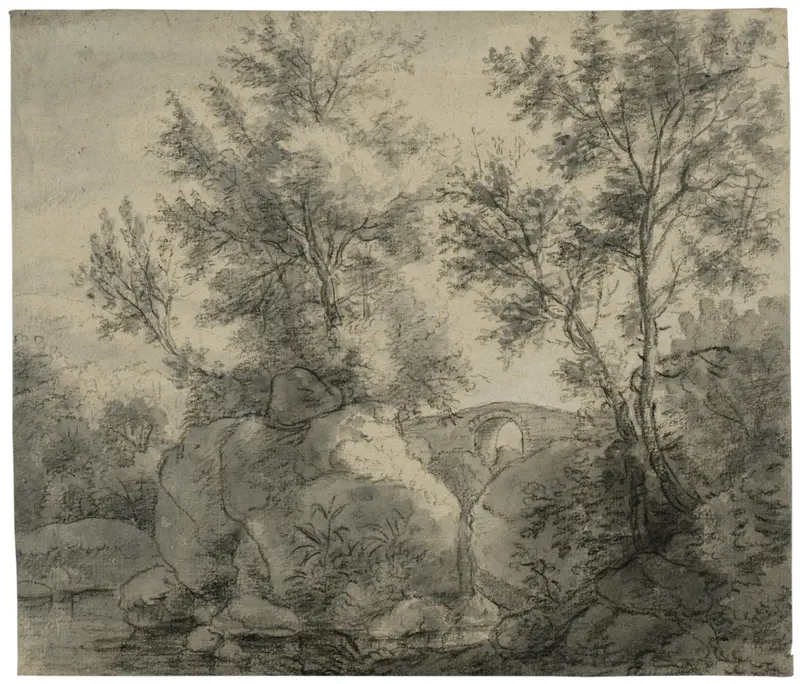
Rocky Landscape with a Stone Bridge
Antonie Waterloo
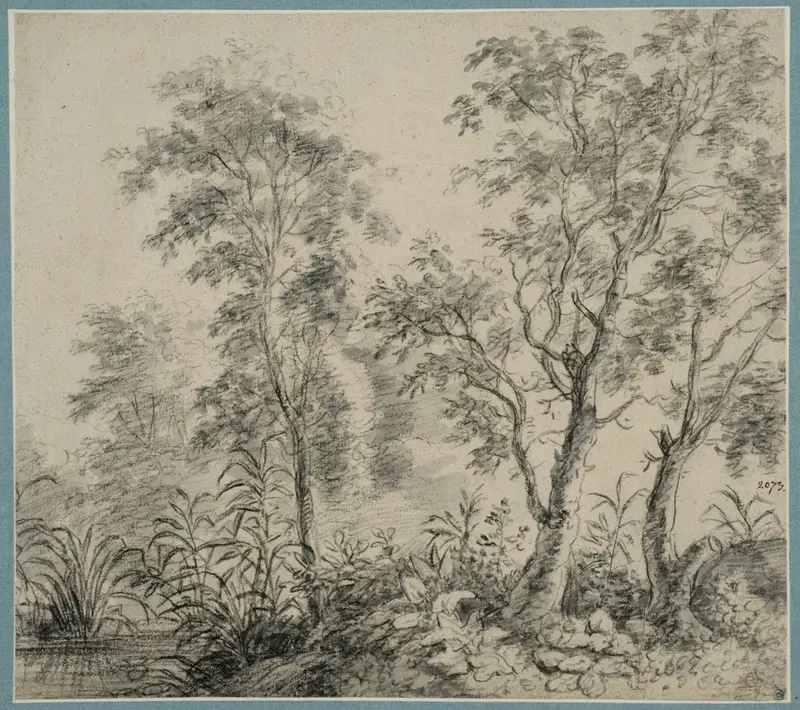
River Bank with a Row of Trees
Antonie Waterloo
More Landscape Art

The Starry Night
Vincent van Gogh

View of Delft
Johannes Vermeer

Water Lilies
Claude Monet

The Grand Canal, Venice, looking north-west from the Ca' Corner to the Ca' Contarini degli Scrigni, with the campanile of Santa Maria della Carità
Canaletto

Windsor Castle
Canaletto

The Grand Canal looking North-East from the Palazzo Dolfin-Manin to the Rialto Bridge
Canaletto