
Früchte — History & Facts
A riot of color greets the viewer, as if the table has been set not just for eating but for the sheer pleasure of looking. The eye is drawn first to the bold, almost electric contrast between the yellow lemons and the deep greens and blues of the bowls that contain them. A mirror at the back doubles the bounty, reflecting not only the fruit but also the vibrant blue vase and a cascade of orange-red flowers that tumble into the scene from above.
The thick, confident brushstrokes and the high-key palette pulse with energy, making the still life feel anything but still—here, fruit and pottery seem to hum with the afterglow of a sunlit afternoon. Painted in 1910, Früchte by Hermann Max Pechstein belongs to a world in flux, when artists in Germany were breaking away from academic restraint and embracing the wild colors and expressive forms of the Brücke movement. Still lifes like this were not mere decoration; they were declarations of artistic freedom, experiments in pure color and form. Collectors of the time—often private citizens with a taste for the new—brought such works into their homes as symbols of modernity and daring.
This painting, once in the collection of Alfred Eisenlohr in Munich, carries with it the spirit of its age: a moment when the everyday—fruit, flowers, a vase—became a laboratory for seeing the world afresh. Look again at the reflection, and notice how the mirror turns the ordinary into something almost theatrical.
More Artworks by Hermann Max Pechstein
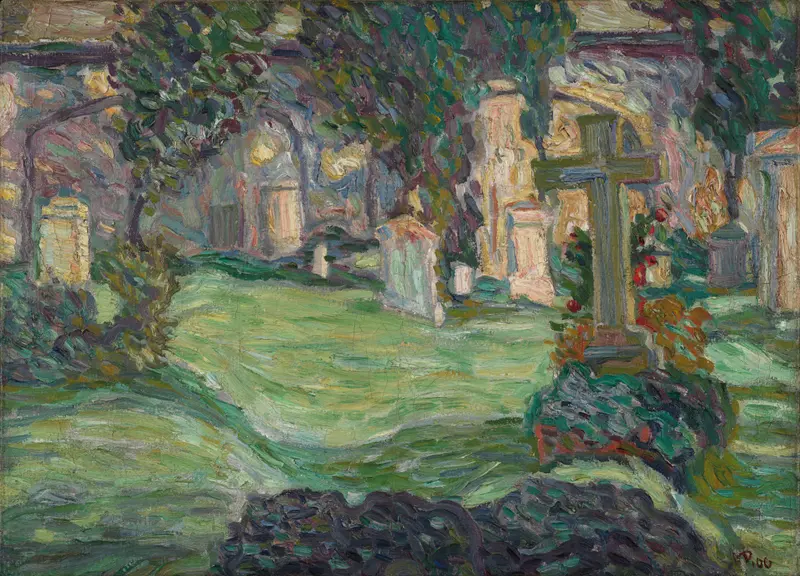
Max Pechstein Eliasfriedhof in Dresden
Hermann Max Pechstein
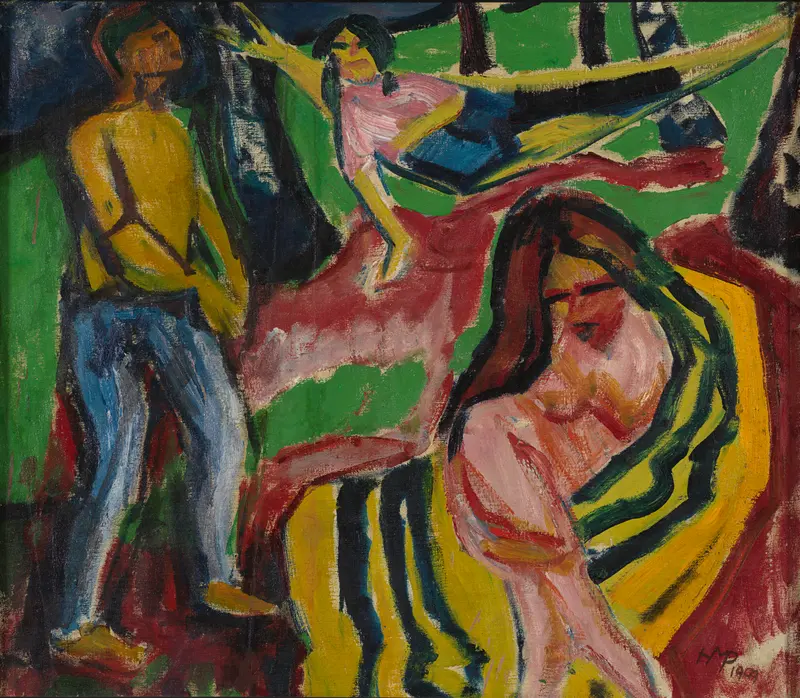
Im Wald bei Moritzburg
Hermann Max Pechstein
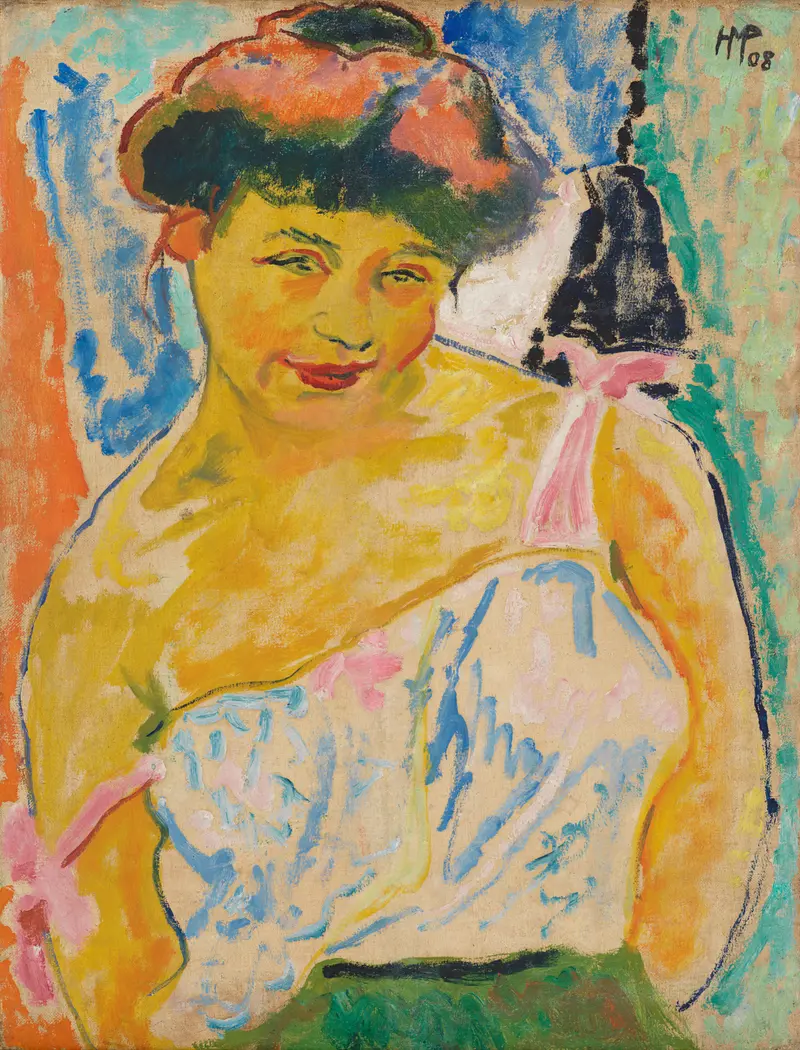
Junges Mädchen
Hermann Max Pechstein
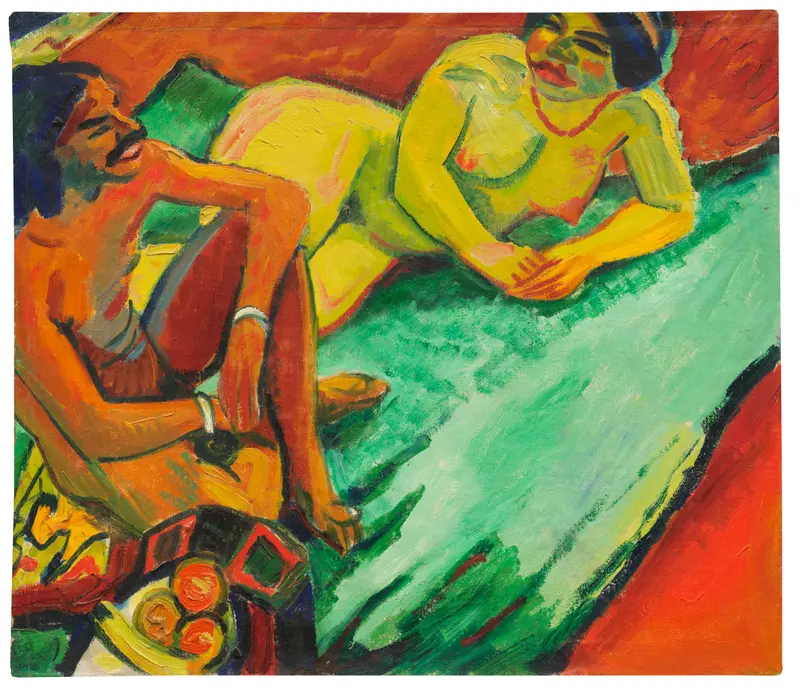
Weib mit Inder auf Teppich
Hermann Max Pechstein
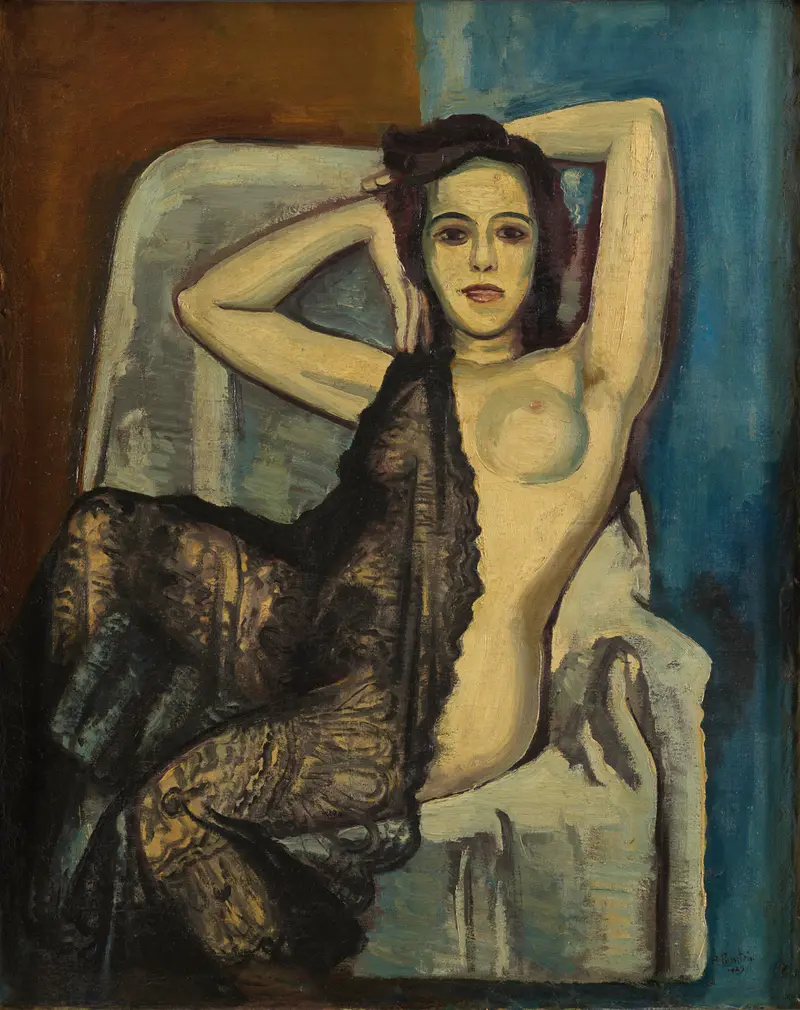
Max Pechstein Mädchen mit Schleier
Hermann Max Pechstein
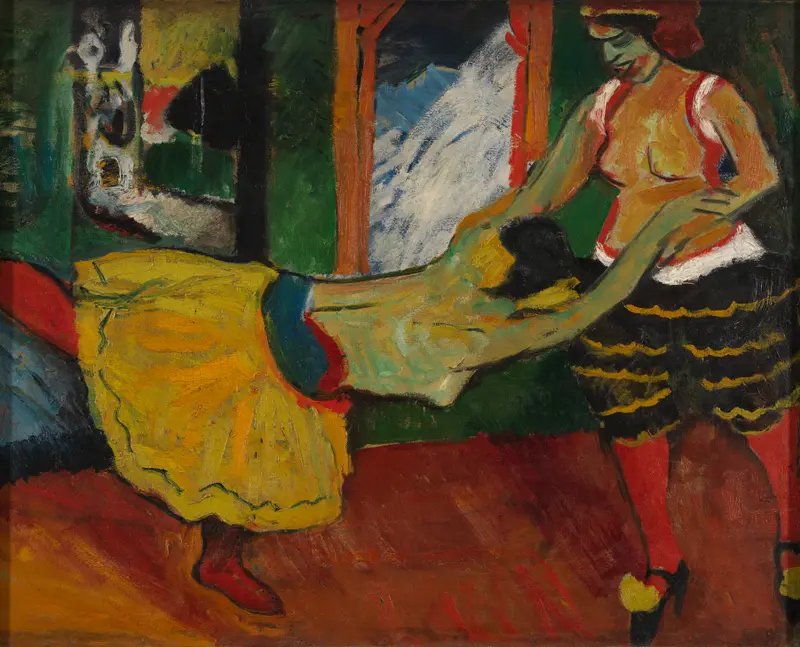
Max Pechstein Tanz
Hermann Max Pechstein
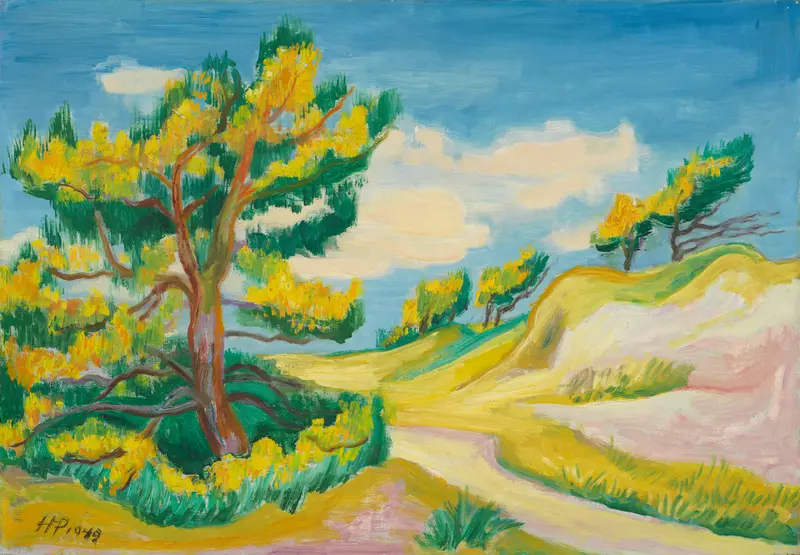
Blühende Kiefern in den Dünen
Hermann Max Pechstein

Die Quelle
Hermann Max Pechstein
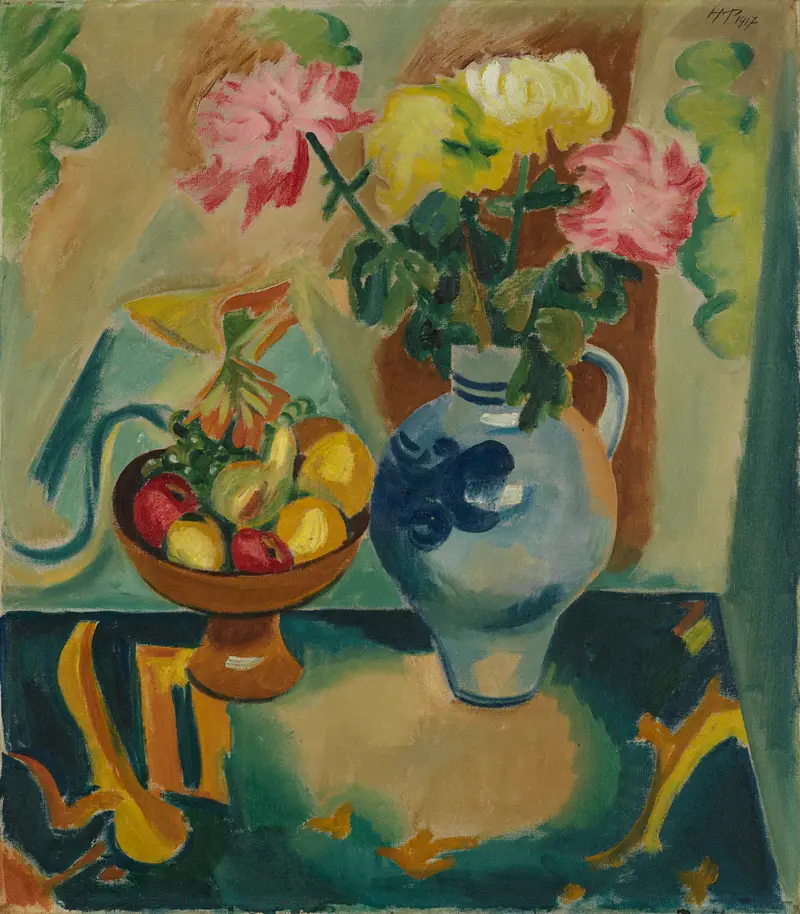
Stilleben mit Chrysanthemen und Früchten
Hermann Max Pechstein
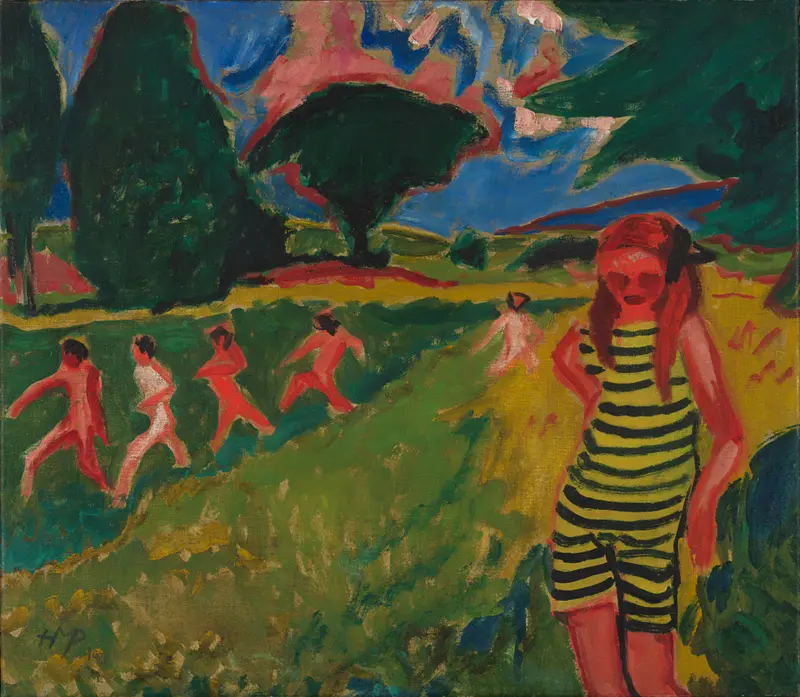
Das gelbschwarze Trikot
Hermann Max Pechstein





