
Blühende Kiefern in den Dünen — History & Facts
What first catches the eye in Blühende Kiefern in den Dünen is the way the central pine tree seems to pulse with life, its branches twisting outward as if stretching to embrace the sky. The artist, Hermann Max Pechstein, uses bold, confident strokes and a palette of yellows and greens to animate both tree and dune, making the landscape feel charged with energy. The sunlight is not just shown but felt, its warmth radiating through the yellow foliage and the sandy paths that wind through the scene.
The sky, painted in broad, sweeping blues and soft clouds, draws the viewer’s gaze upward, inviting a sense of openness and movement. Every brushstroke seems to insist that nature here is not static, but alive and restless. Painted in 1949, this work emerges from a world still reckoning with the aftermath of war, when artists in Germany sought solace and renewal in the landscape. Pechstein, a key figure of the Brücke group, had long championed expressive color and form, and here he channels that vision into a scene that is both familiar and quietly radical.
Landscapes like this were rarely just decorative; for artists of his generation, they offered a way to reconnect with a sense of place and identity, often in deliberate contrast to the turmoil of modern life. Now part of the Brücke-Museum Berlin’s collection, Blühende Kiefern in den Dünen stands as a testament to the enduring power of color and gesture to transform a simple view into a living memory—one that asks the viewer to linger, and look again.
More Artworks by Hermann Max Pechstein
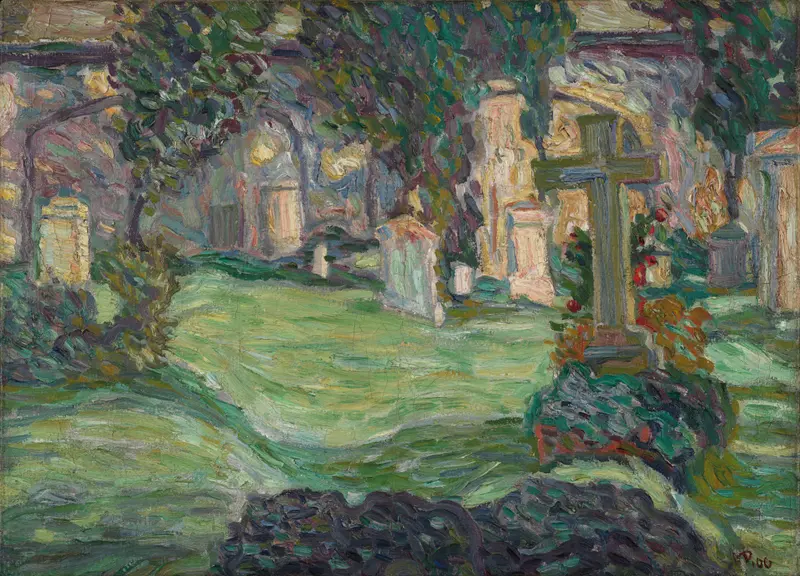
Max Pechstein Eliasfriedhof in Dresden
Hermann Max Pechstein

Früchte
Hermann Max Pechstein
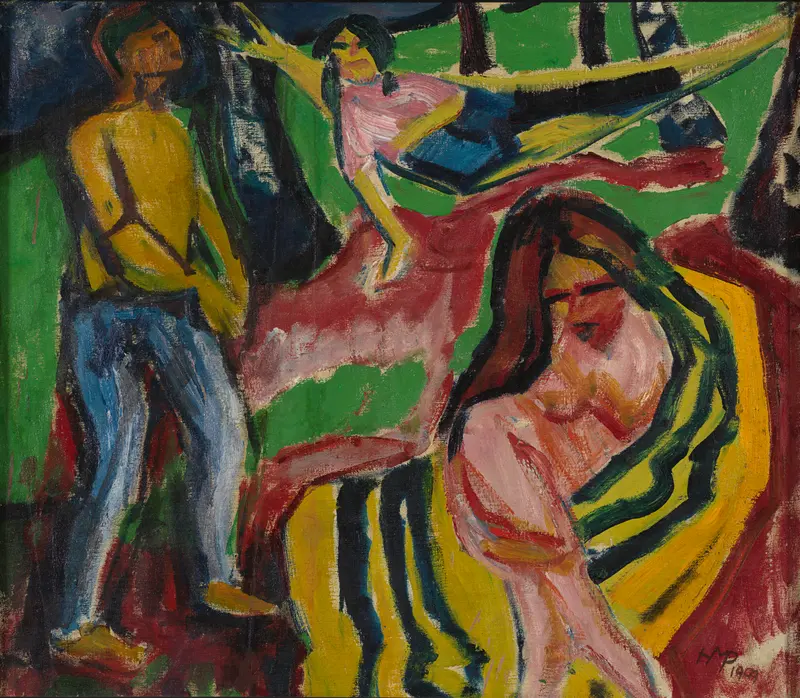
Im Wald bei Moritzburg
Hermann Max Pechstein
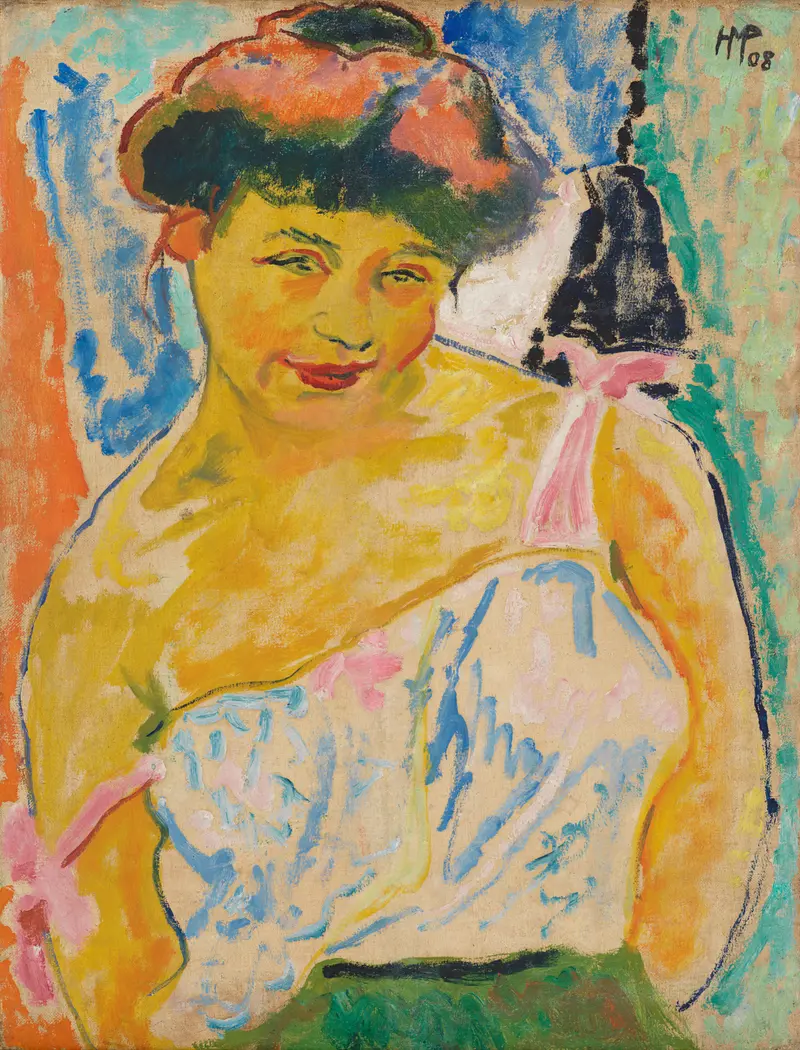
Junges Mädchen
Hermann Max Pechstein
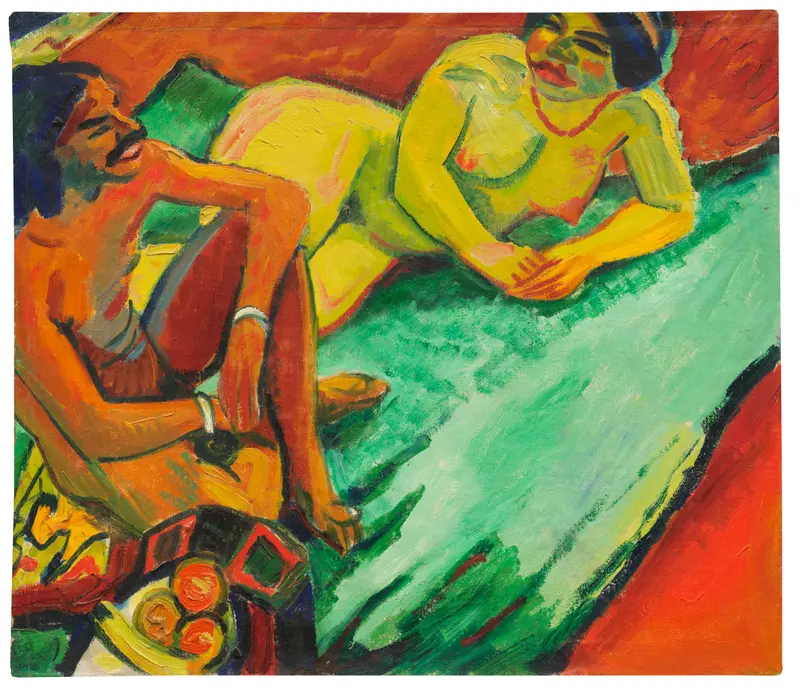
Weib mit Inder auf Teppich
Hermann Max Pechstein
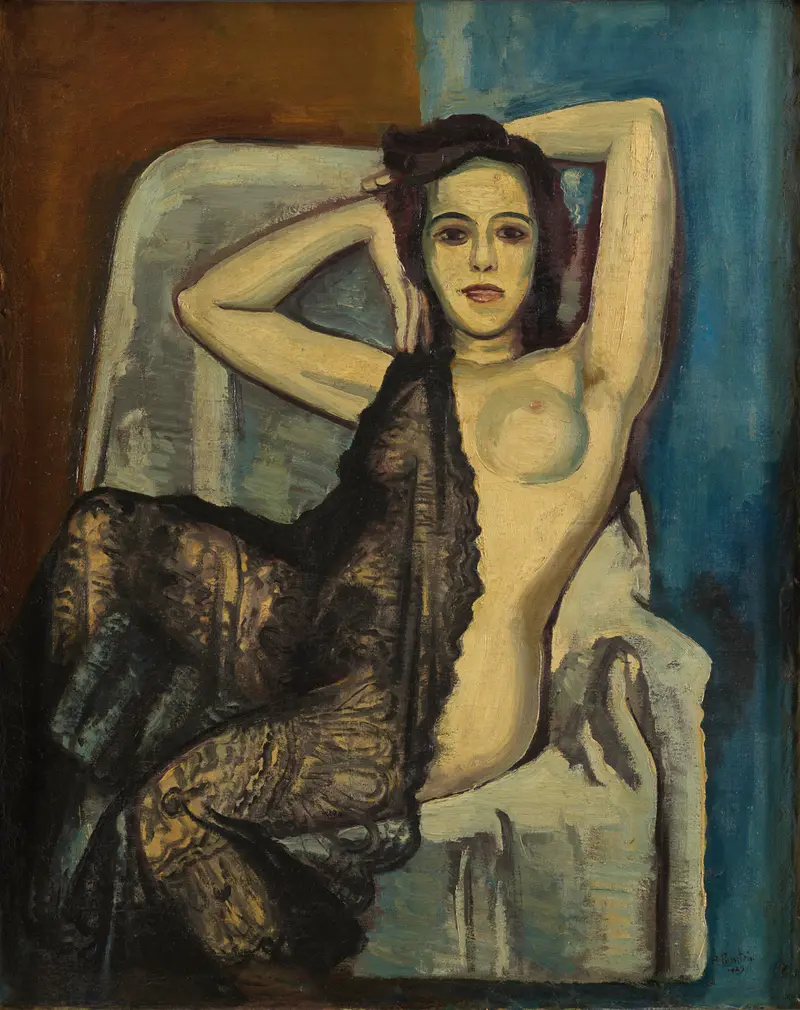
Max Pechstein Mädchen mit Schleier
Hermann Max Pechstein
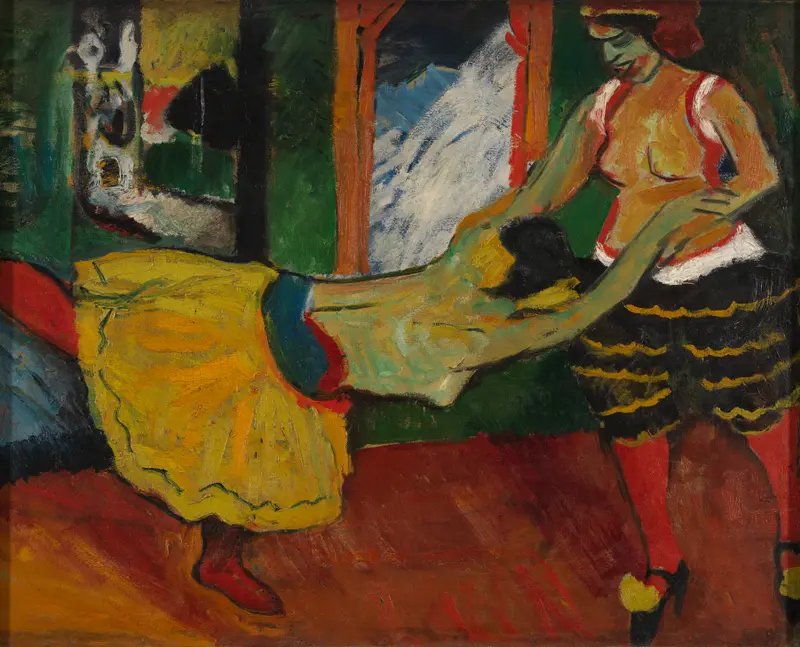
Max Pechstein Tanz
Hermann Max Pechstein

Die Quelle
Hermann Max Pechstein
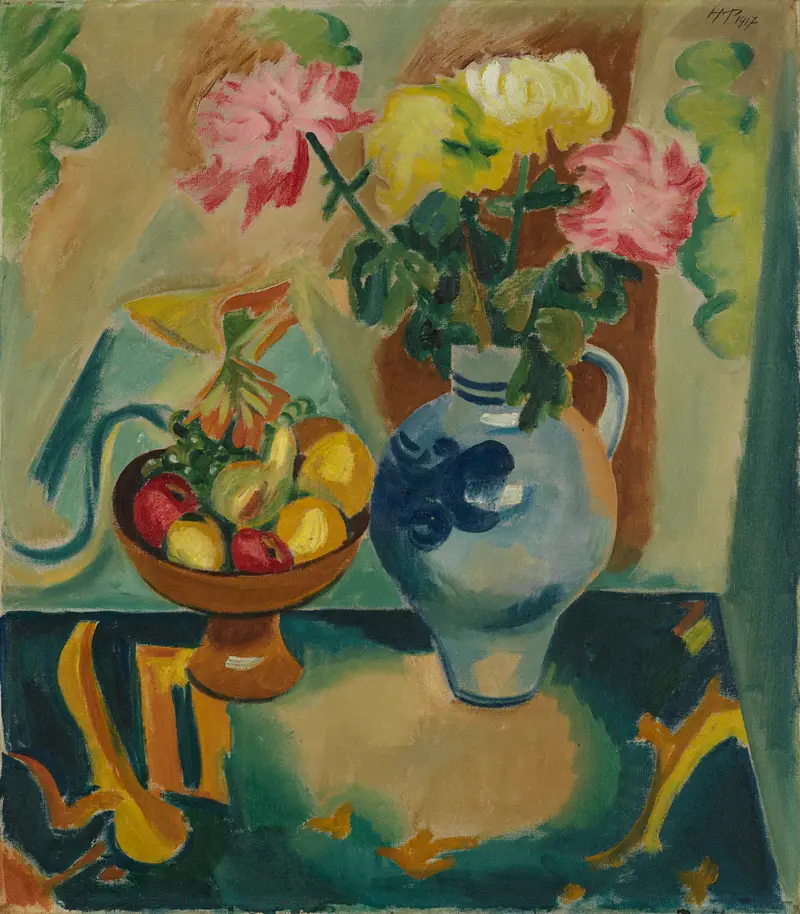
Stilleben mit Chrysanthemen und Früchten
Hermann Max Pechstein
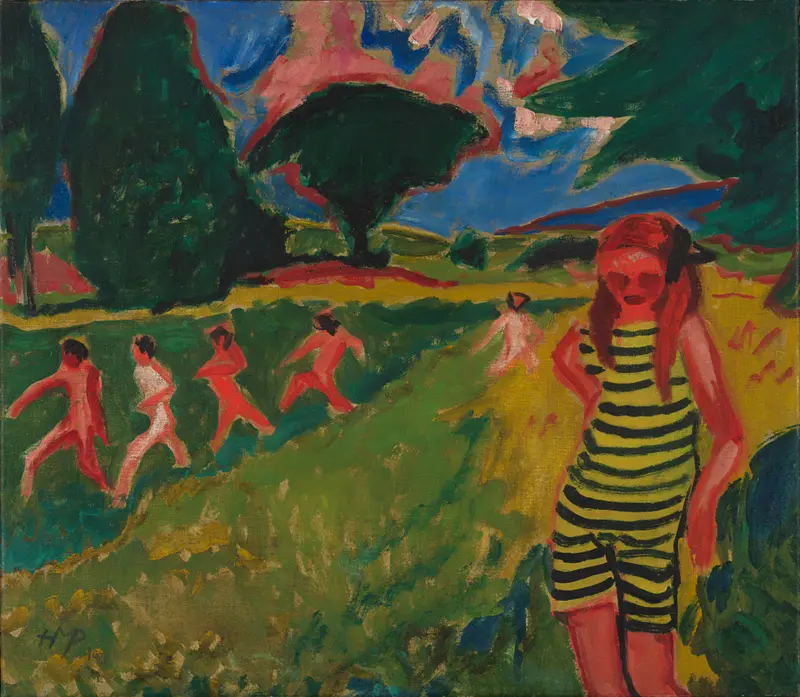
Das gelbschwarze Trikot
Hermann Max Pechstein
More Landscape Art

The Starry Night
Vincent van Gogh

View of Delft
Johannes Vermeer

Water Lilies
Claude Monet

The Grand Canal, Venice, looking north-west from the Ca' Corner to the Ca' Contarini degli Scrigni, with the campanile of Santa Maria della Carità
Canaletto

Windsor Castle
Canaletto

The Grand Canal looking North-East from the Palazzo Dolfin-Manin to the Rialto Bridge
Canaletto