
Max Pechstein Mädchen mit Schleier — History & Facts
What first seizes the eye in Mädchen mit Schleier is the commanding presence of the sitter, her gaze steady and unflinching, her posture both relaxed and defiantly direct. The figure’s arm arches behind her head, a gesture that opens the body to the viewer without a hint of coyness, while the sheer veil draped across her lap both reveals and conceals, playing a quiet game of ambiguity. The background is split into earthy brown and cool blue, a deliberate division that frames her form and heightens the sense of psychological tension.
Every brushstroke in her face and torso is deliberate, the palette lending her skin a sculptural solidity, while the dark lace and shadow anchor her to the chair. Here, the light is not just illumination but a sculptor, carving her from the canvas and forcing the viewer to reckon with her presence. Painted in 1929, this work stands at the crossroads of a changing Germany, when artists like Hermann Max Pechstein—a founding member of the Brücke group—sought new ways to express the inner life and the rawness of human experience. The nude, a subject as old as art itself, is here stripped of myth and allegory; she is neither Venus nor odalisque, but a modern woman, seen through the lens of Expressionism’s bold color and psychological intensity.
Such portraits were rarely commissions; rather, they were acts of personal exploration, often painted in the studio for exhibition or private reflection. Today, Mädchen mit Schleier resides in the Brücke-Museum Berlin, a fitting home for a work that still challenges the viewer to meet the sitter’s gaze and wonder what she withholds behind that veil.
More Artworks by Hermann Max Pechstein
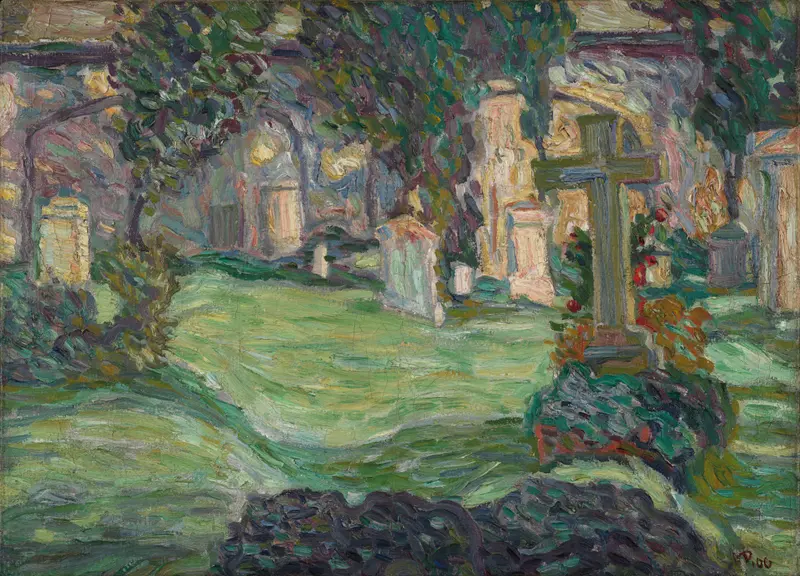
Max Pechstein Eliasfriedhof in Dresden
Hermann Max Pechstein

Früchte
Hermann Max Pechstein
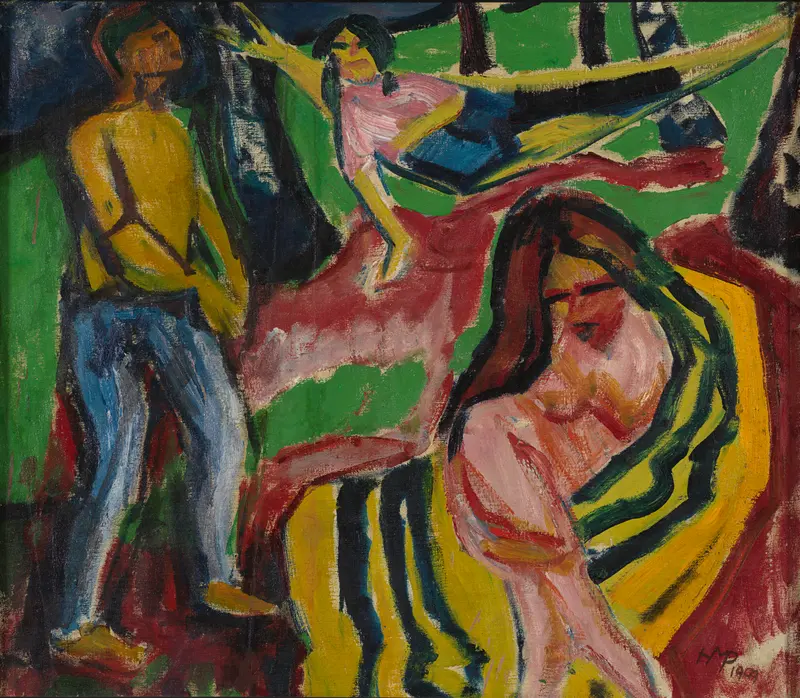
Im Wald bei Moritzburg
Hermann Max Pechstein
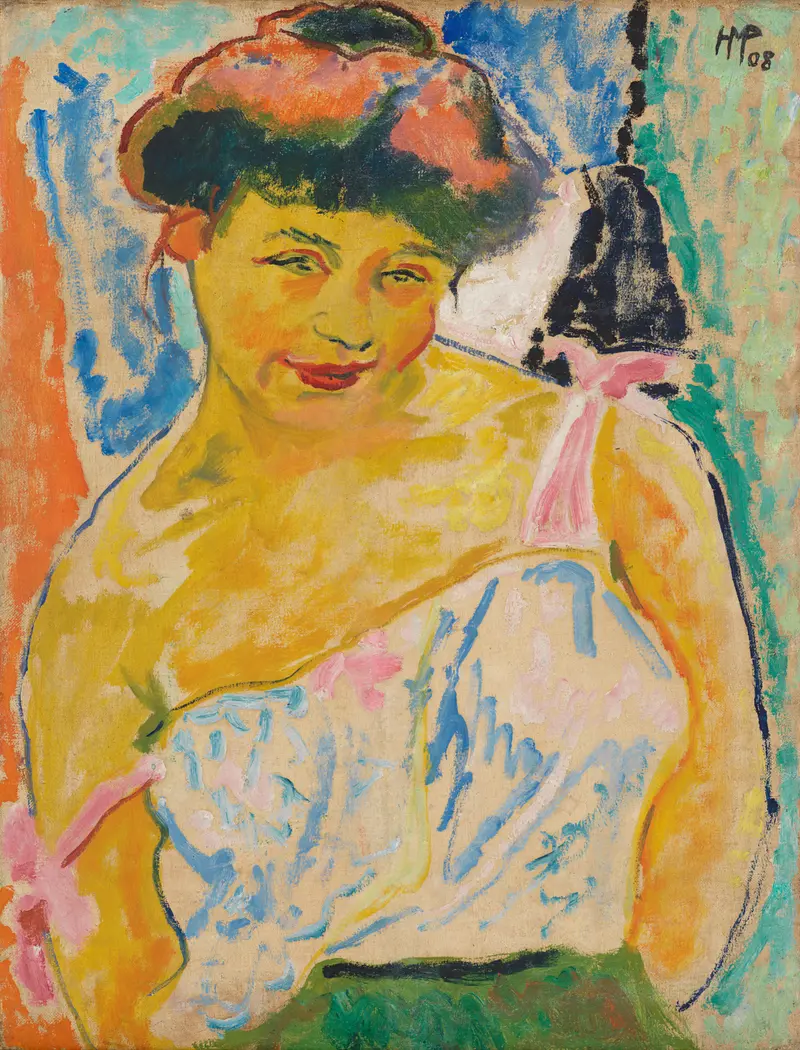
Junges Mädchen
Hermann Max Pechstein
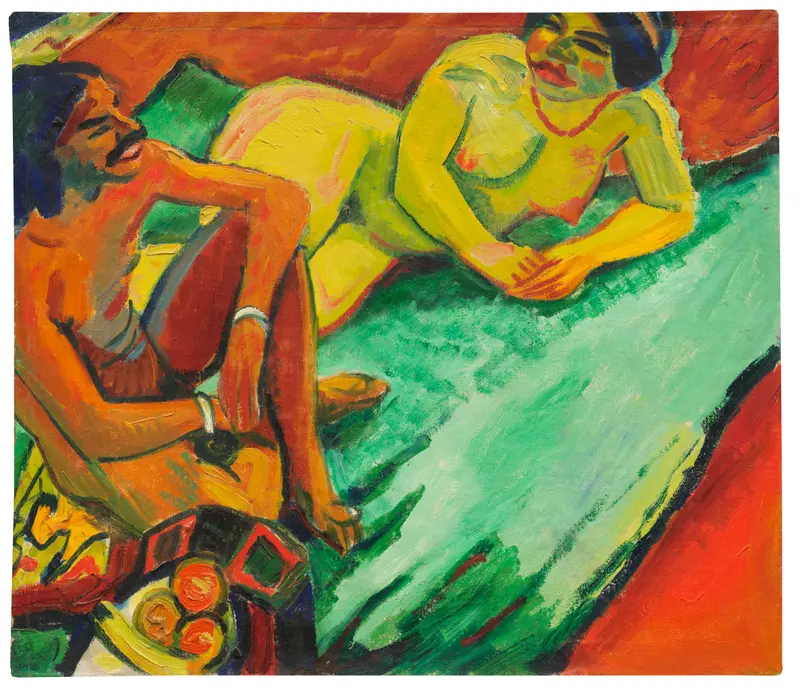
Weib mit Inder auf Teppich
Hermann Max Pechstein
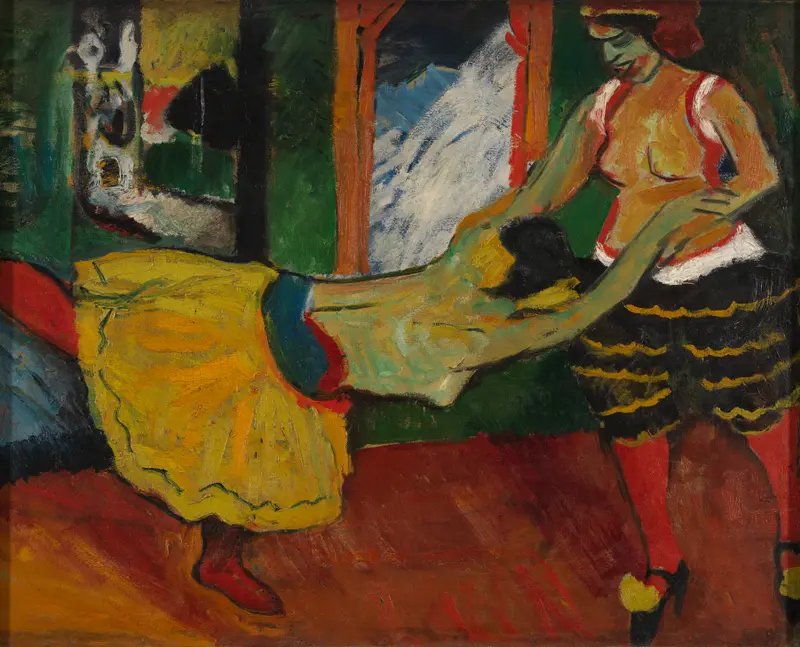
Max Pechstein Tanz
Hermann Max Pechstein
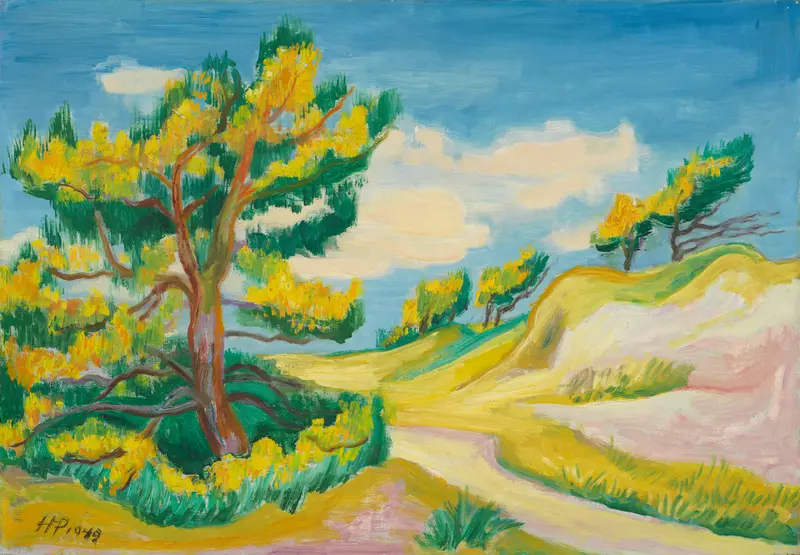
Blühende Kiefern in den Dünen
Hermann Max Pechstein

Die Quelle
Hermann Max Pechstein
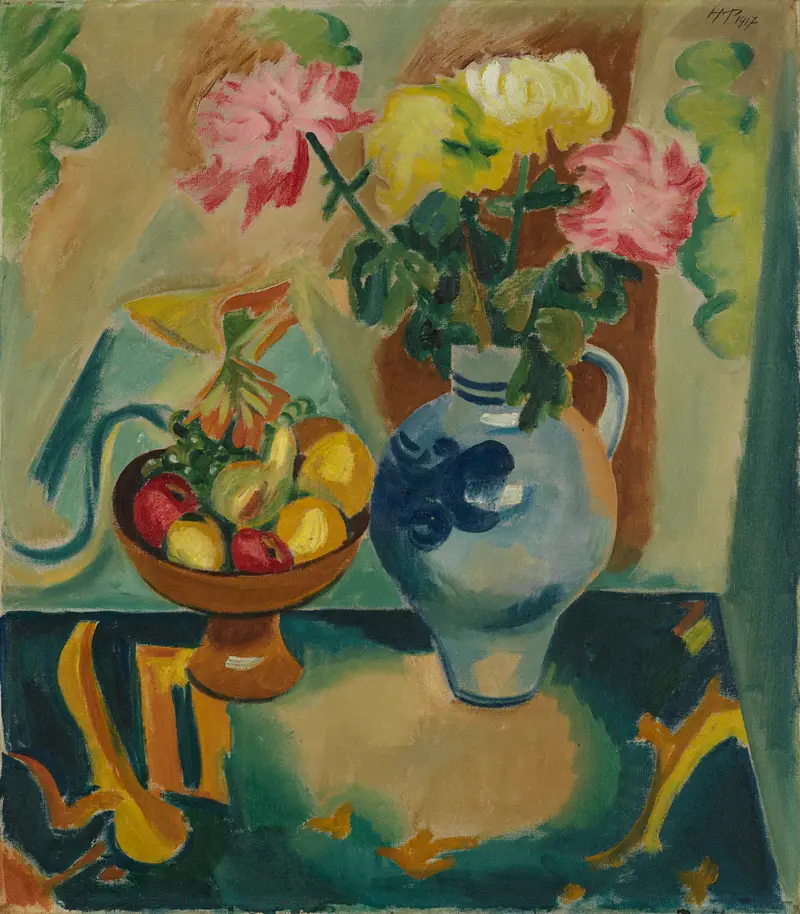
Stilleben mit Chrysanthemen und Früchten
Hermann Max Pechstein
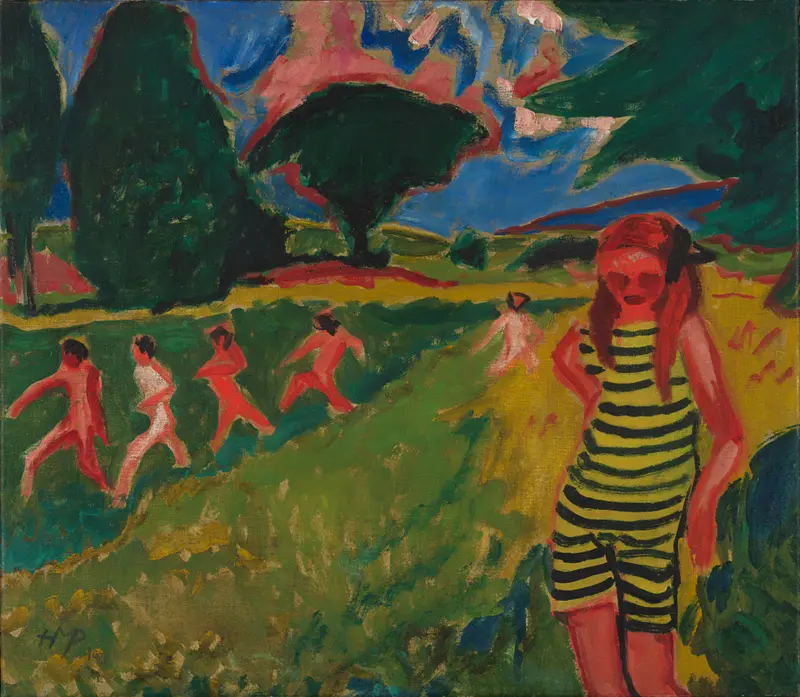
Das gelbschwarze Trikot
Hermann Max Pechstein





