
Weib mit Inder auf Teppich — History & Facts
A woman reclines across a riot of patterned carpets, her body at ease, her gaze direct, while beside her, a man with striking features and dark skin sits upright, his posture alert yet calm. The scene is charged with contrasts: the languor of the nude against the upright presence of her companion, the saturated reds and greens of the textiles against the pale flesh, the intimacy of the setting against the sense of distance between the two figures. Every brushstroke pulses with the energy of Hermann Max Pechstein’s hand—bold, rhythmic, almost impatient to capture the heat and color of the moment.
The woman’s relaxed pose, modeled by Pechstein’s future wife Charlotte "Lotte" Kaprolat, draws the viewer into the private world of artist and muse, while the man’s presence unsettles any easy reading of the scene, inviting questions about identity, desire, and the allure of the exotic. Painted in 1910, this double-sided canvas belongs to the restless years of German Expressionism, when artists like Pechstein—members of the Brücke group—sought to break with academic tradition and plunge into new ways of seeing. The vivid palette, the thick outlines, and the flattened perspective all speak to a fascination with non-European art and a hunger for direct, unmediated experience. In this era, artists often painted their friends and lovers in bohemian interiors, using the nude not as a classical ideal but as a living, breathing presence.
The painting’s energy is not just in its colors, but in the tension between its figures—a tension echoed in the art world of the time, as Germany’s avant-garde looked outward and inward, searching for authenticity in a rapidly changing world. The longer you look, the more the painting’s mysteries multiply, each detail asking you to linger just a little longer.
More Artworks by Hermann Max Pechstein
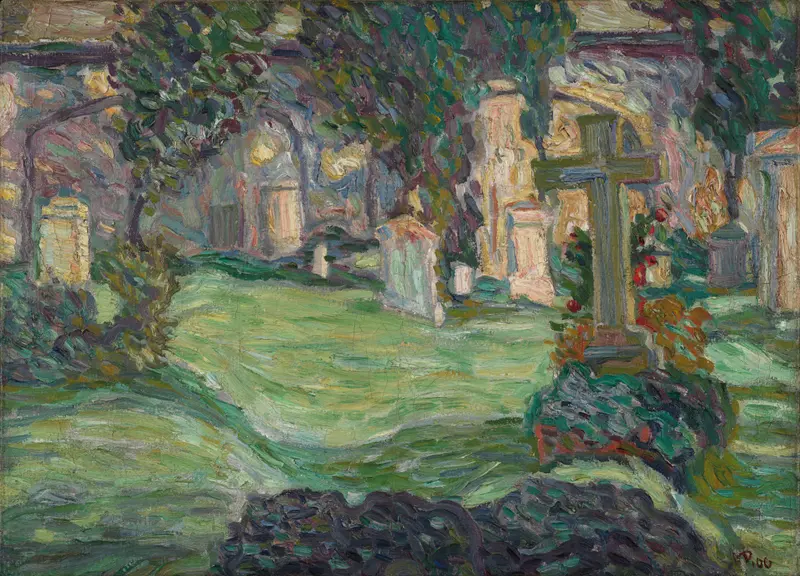
Max Pechstein Eliasfriedhof in Dresden
Hermann Max Pechstein

Früchte
Hermann Max Pechstein
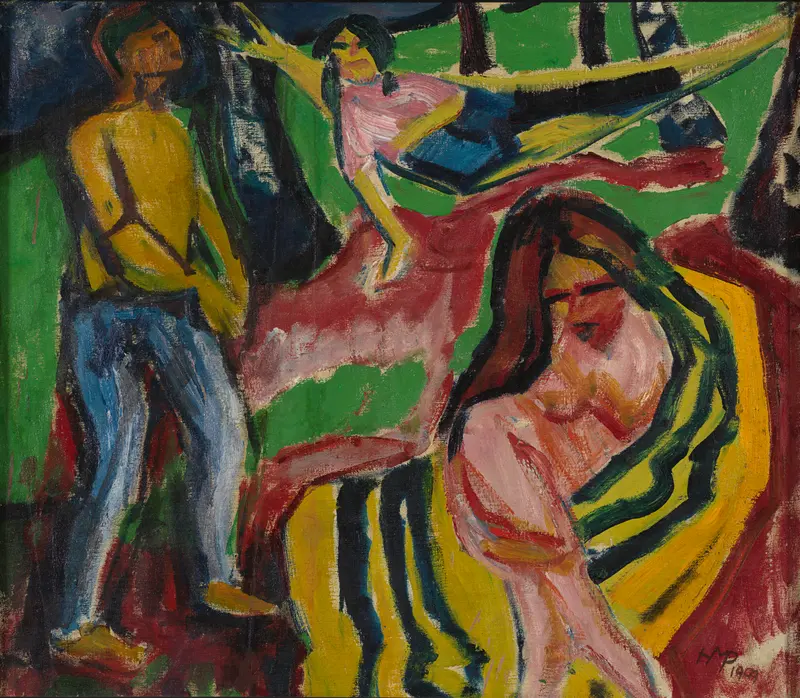
Im Wald bei Moritzburg
Hermann Max Pechstein
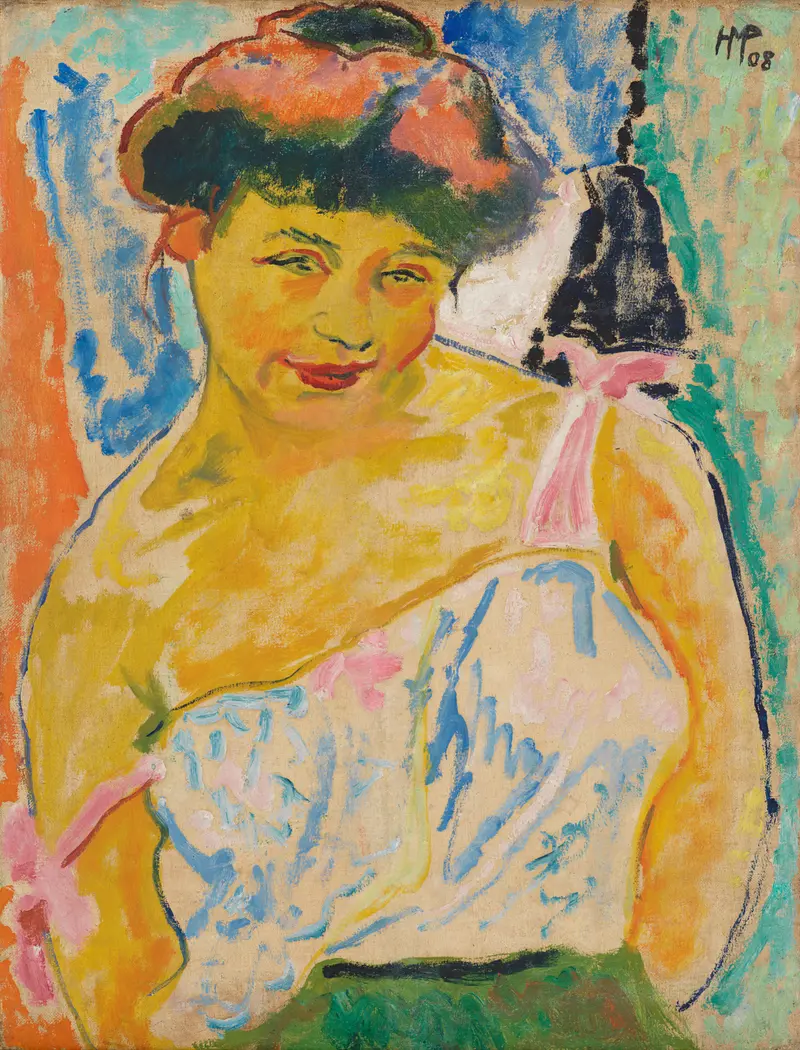
Junges Mädchen
Hermann Max Pechstein
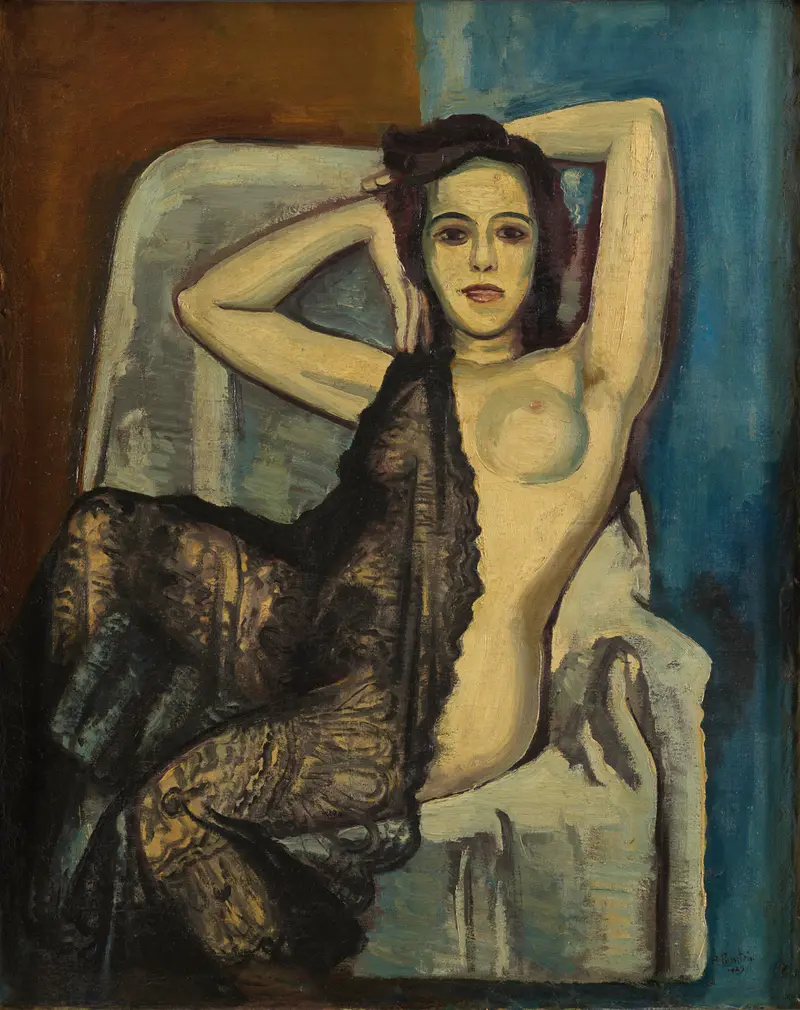
Max Pechstein Mädchen mit Schleier
Hermann Max Pechstein
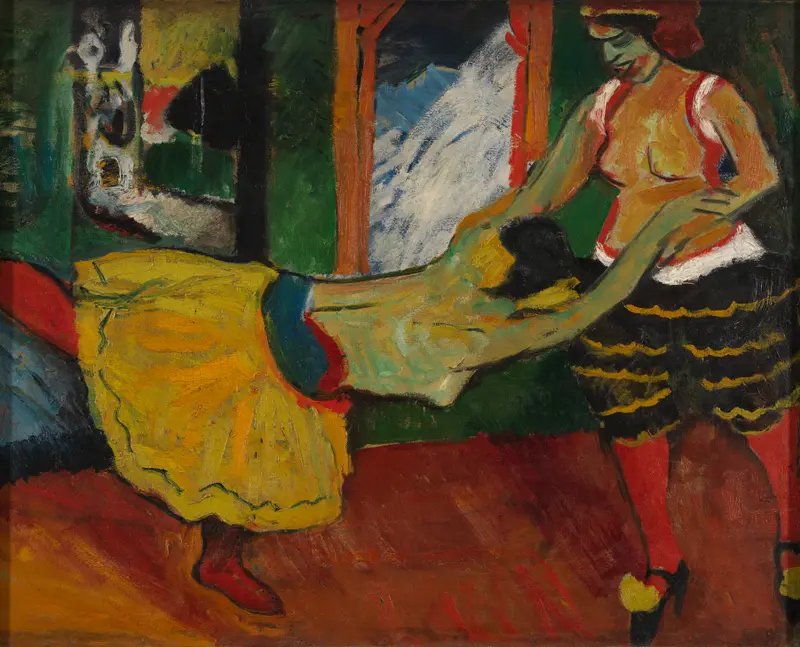
Max Pechstein Tanz
Hermann Max Pechstein
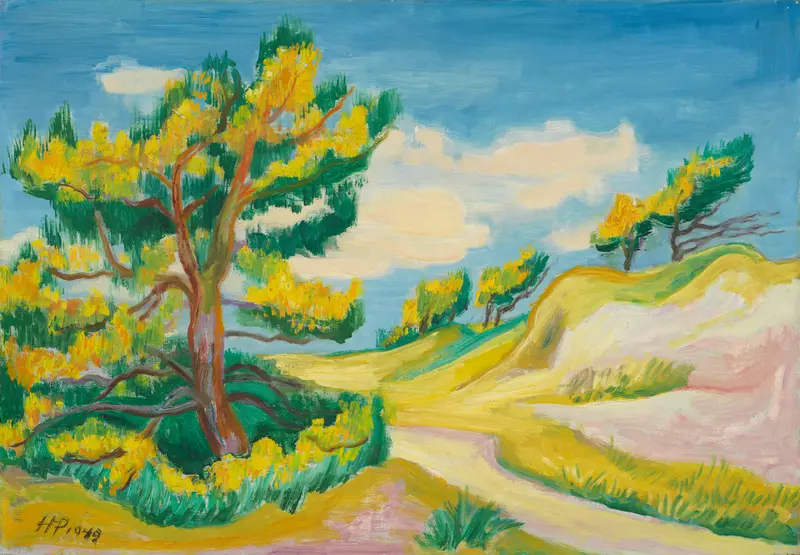
Blühende Kiefern in den Dünen
Hermann Max Pechstein

Die Quelle
Hermann Max Pechstein
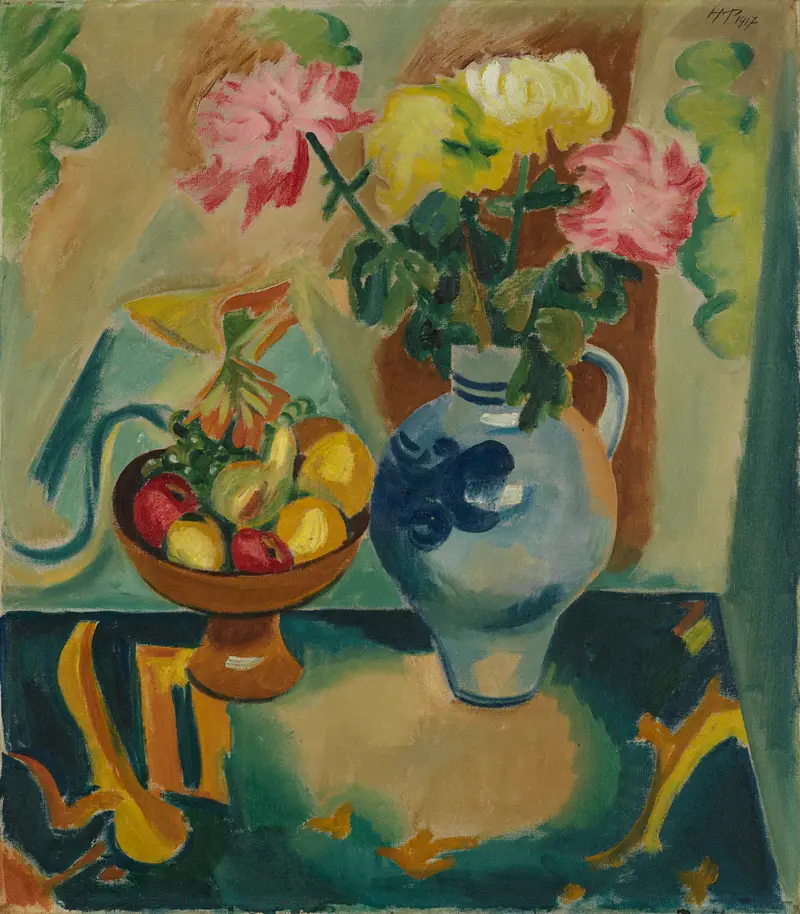
Stilleben mit Chrysanthemen und Früchten
Hermann Max Pechstein
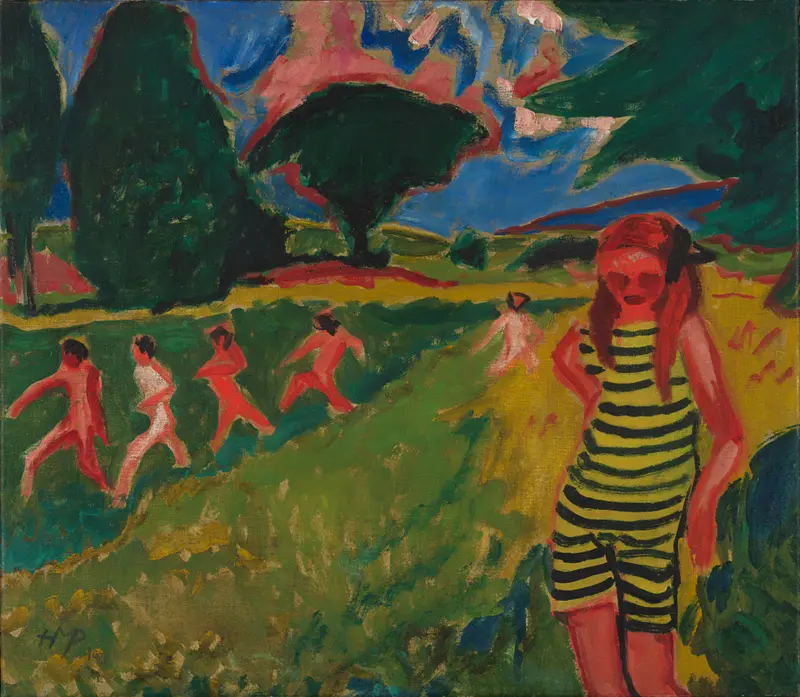
Das gelbschwarze Trikot
Hermann Max Pechstein



