
Junges Mädchen — History & Facts
A young woman’s gaze meets the viewer directly, her face framed by a shock of dark hair and a background of vibrating, unnatural color. The brushwork is brisk, almost impatient, with bold outlines and abrupt contrasts that seem to pulse with the energy of a new century. Her lips are parted as if on the verge of speech, but it is the eyes—wide, unblinking, and outlined in blue—that hold us in place.
The skin is rendered in unexpected greens and oranges, a choice that speaks less to naturalism than to a search for psychological truth. In this portrait, every contour and color feels chosen to heighten the sense of inner life, the artist’s hand as restless as the times. Painted in 1908, this work belongs to the world of Die Brücke, the Berlin-based group that sought to break free from academic tradition and capture the rawness of modern existence. The artists of this movement, including Hermann Max Pechstein, turned to portraits not as records of likeness but as experiments in color, emotion, and form—often painting friends, lovers, or models from their own bohemian circles.
The Brücke-Museum Berlin now houses this painting, a fitting home for a work that embodies the group’s radical spirit. In the charged brushstrokes and daring palette, we glimpse the anxieties and hopes of a generation poised on the edge of upheaval—inviting us to look closer, and perhaps to see ourselves reflected in that unwavering stare.
More Artworks by Hermann Max Pechstein
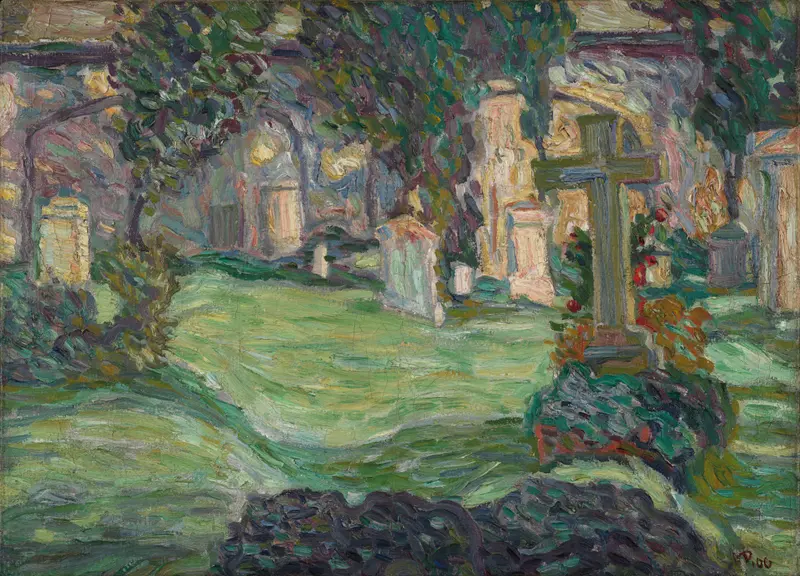
Max Pechstein Eliasfriedhof in Dresden
Hermann Max Pechstein

Früchte
Hermann Max Pechstein
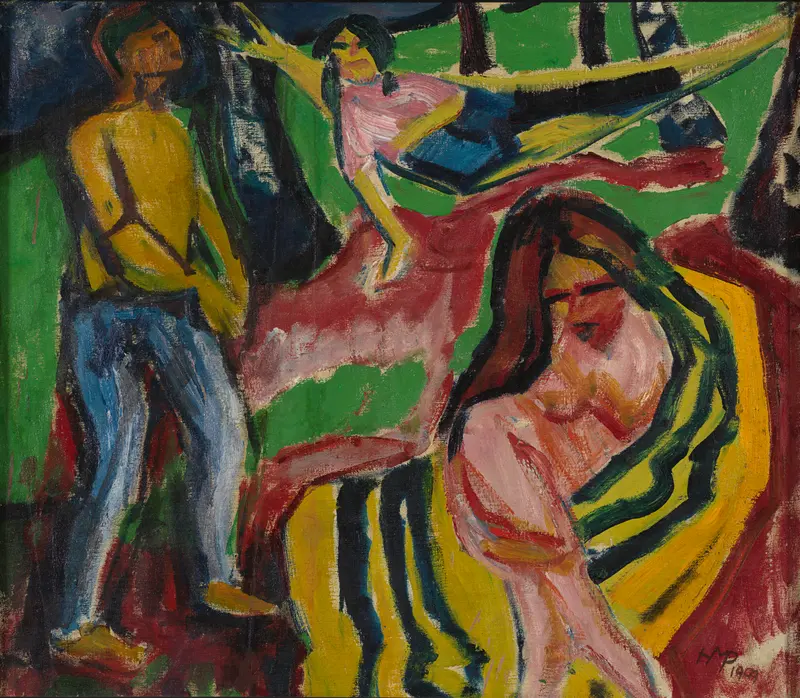
Im Wald bei Moritzburg
Hermann Max Pechstein
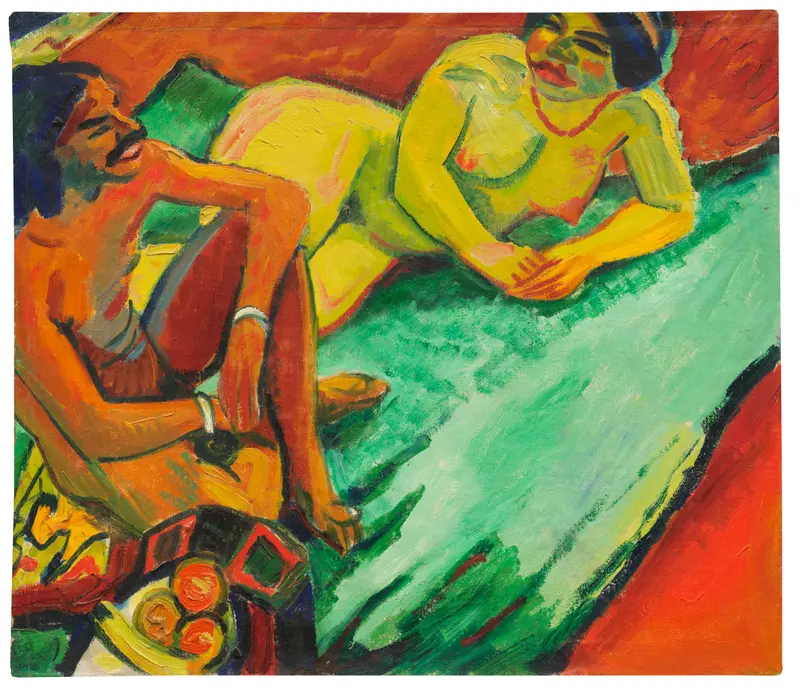
Weib mit Inder auf Teppich
Hermann Max Pechstein
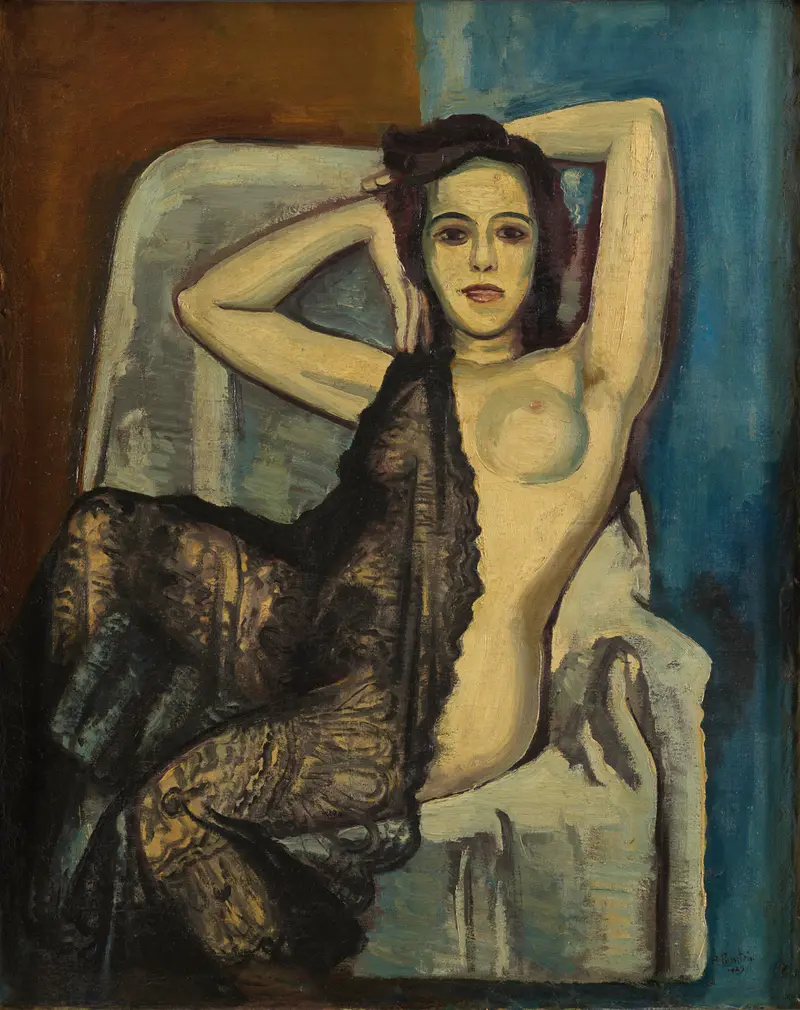
Max Pechstein Mädchen mit Schleier
Hermann Max Pechstein
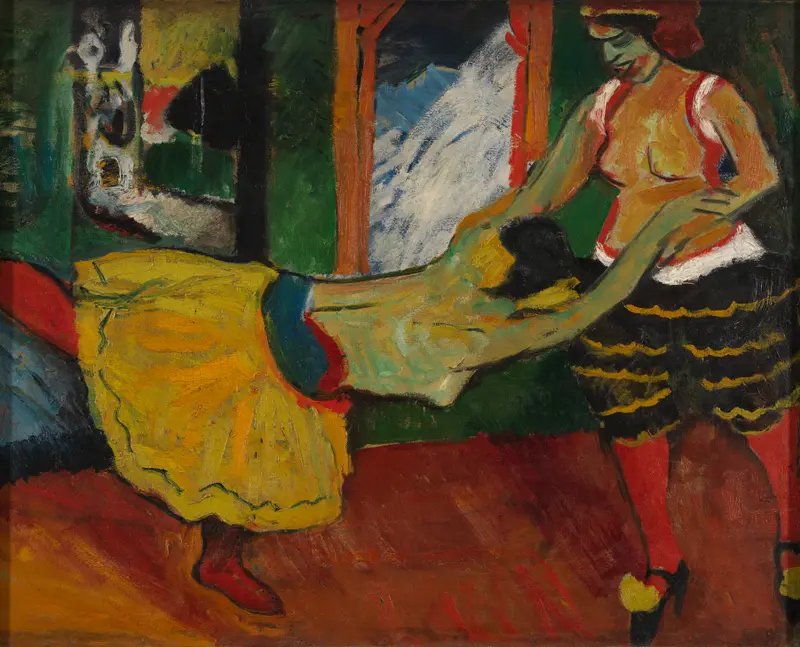
Max Pechstein Tanz
Hermann Max Pechstein
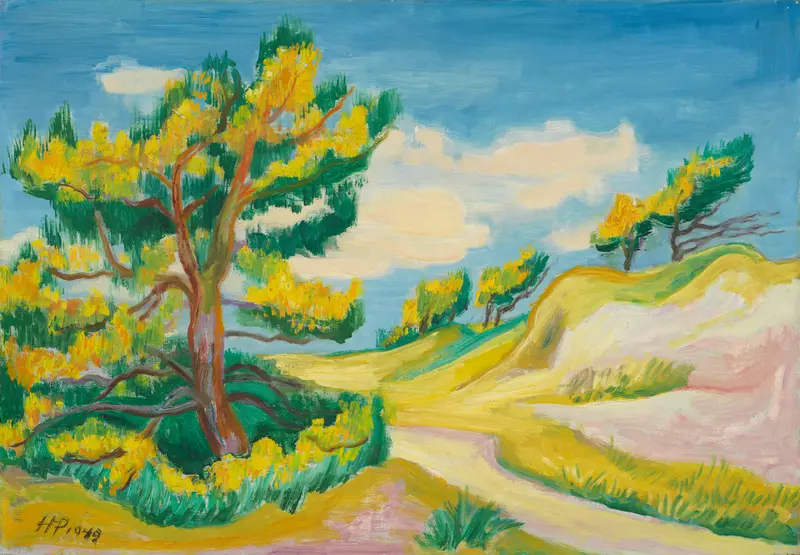
Blühende Kiefern in den Dünen
Hermann Max Pechstein

Die Quelle
Hermann Max Pechstein
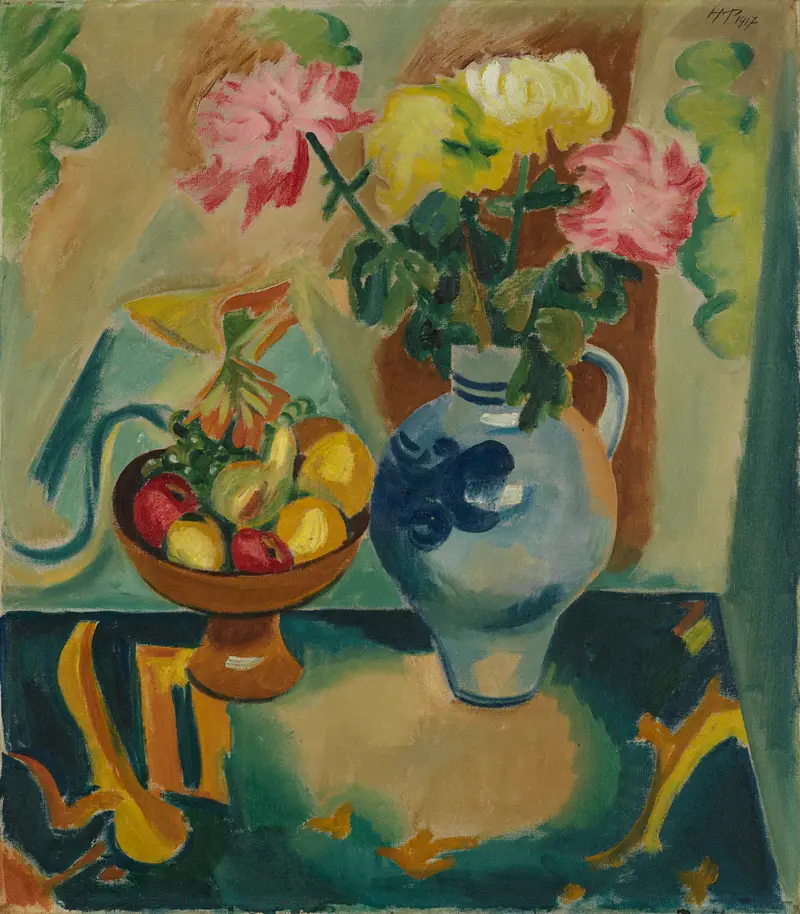
Stilleben mit Chrysanthemen und Früchten
Hermann Max Pechstein
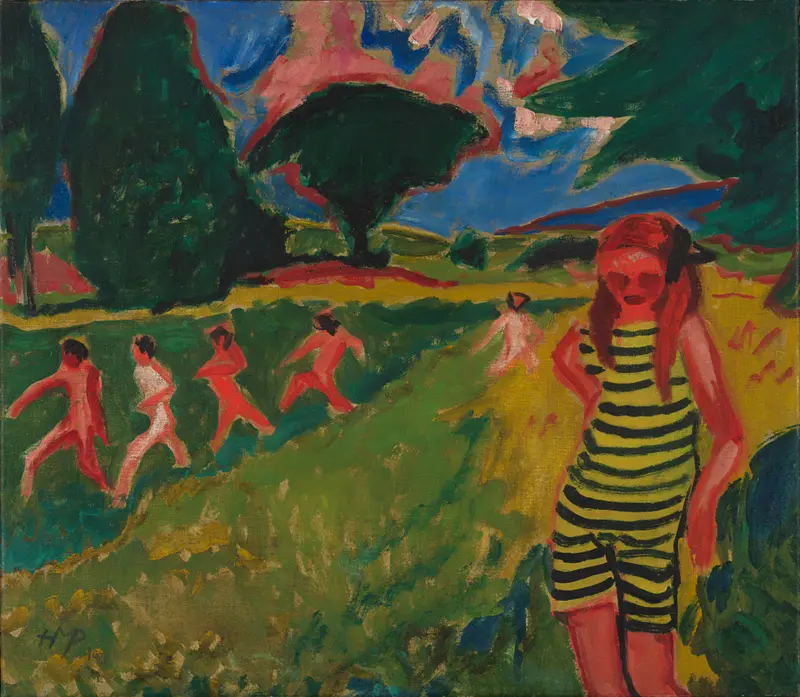
Das gelbschwarze Trikot
Hermann Max Pechstein





