
Das gelbschwarze Trikot — History & Facts
A figure in a yellow-and-black striped suit stands boldly at the edge of the canvas, her body angled toward us, her gaze ambiguous—challenging, perhaps, or simply lost in thought. Behind her, a vibrant field explodes with color: the grass is a riot of greens and yellows, the sky a patchwork of blue and rose, and a group of figures, rendered in urgent strokes of red, race across the open space. The stripes of the suit are not just a costume; they slice through the wild landscape, anchoring the viewer in the present moment while the other figures dissolve into movement and play.
The paint itself seems restless, as if the entire scene is caught in the act of becoming. Painted in 1910, Das gelbschwarze Trikot belongs to the world of Die Brücke, the German Expressionist group that sought to break with tradition and capture the rawness of modern life. These artists, including Hermann Max Pechstein, turned to nature and the figure for inspiration, often painting friends and models outdoors in vivid, unnatural colors. Their canvases were not meant for academic salons but for a new audience hungry for change, and their subjects—like the swimmers and bathers here—spoke of freedom, youth, and a return to the elemental.
Now housed in the Brücke-Museum Berlin, this painting is a testament to a brief, electric moment in art history when color and form were set loose, and the world seemed to pulse with possibility. Let your eye linger on the stripes, and see if you can feel the pulse too.
More Artworks by Hermann Max Pechstein
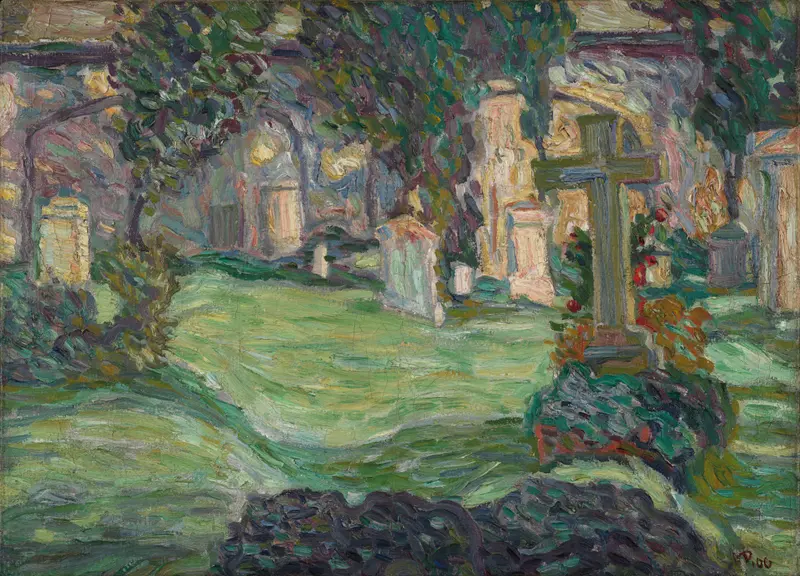
Max Pechstein Eliasfriedhof in Dresden
Hermann Max Pechstein

Früchte
Hermann Max Pechstein
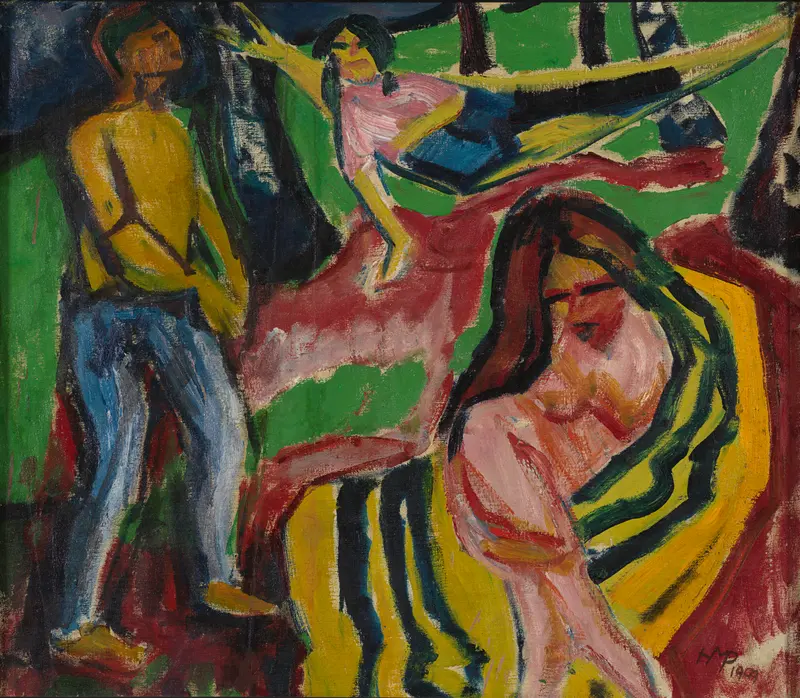
Im Wald bei Moritzburg
Hermann Max Pechstein
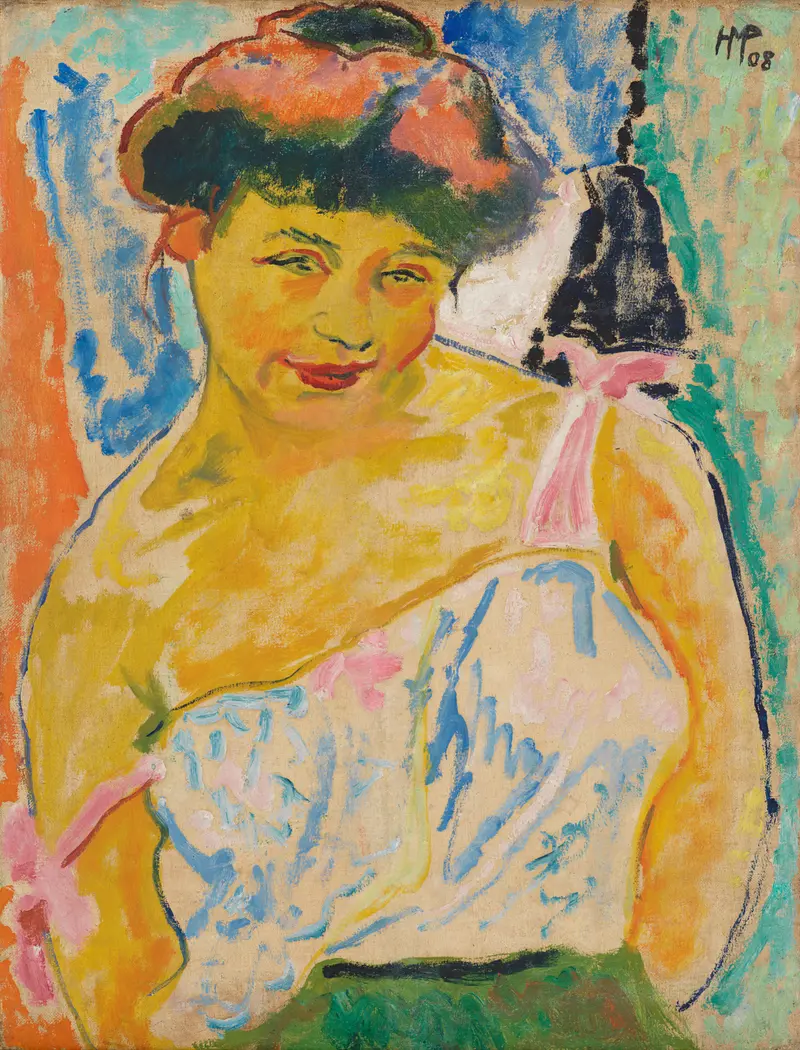
Junges Mädchen
Hermann Max Pechstein
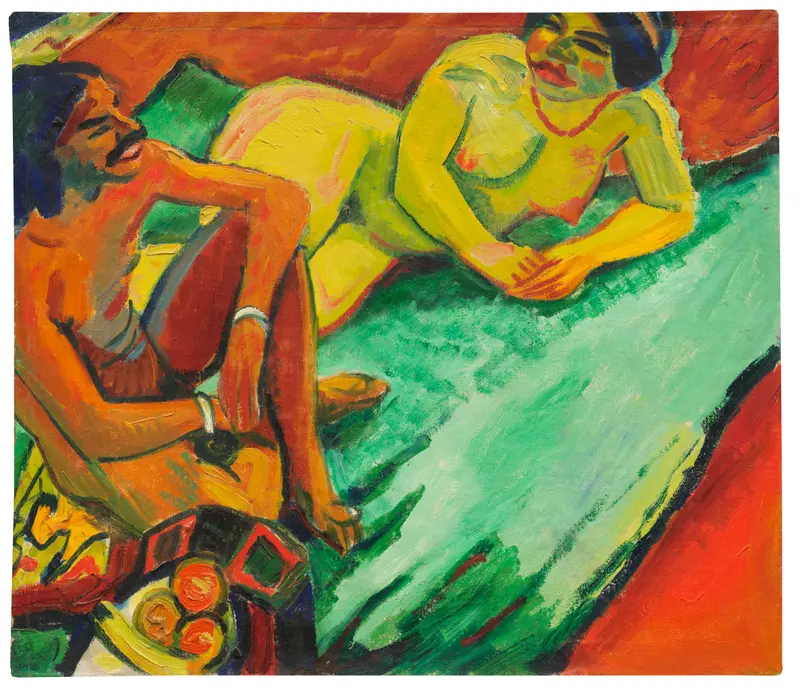
Weib mit Inder auf Teppich
Hermann Max Pechstein
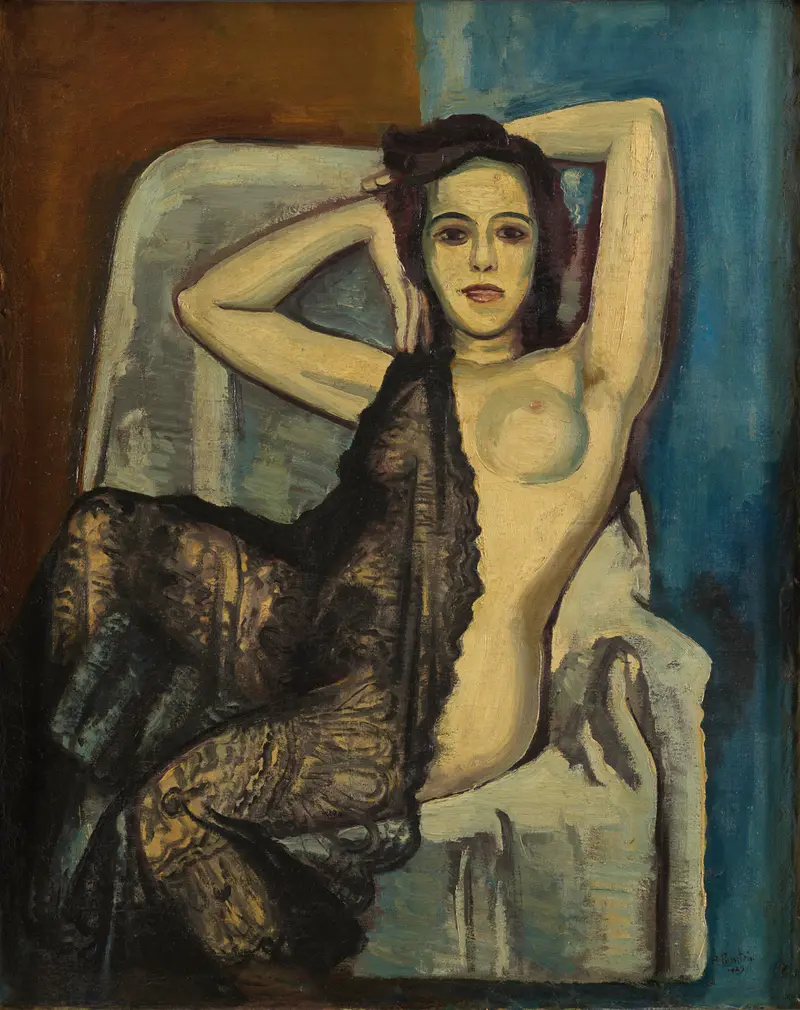
Max Pechstein Mädchen mit Schleier
Hermann Max Pechstein
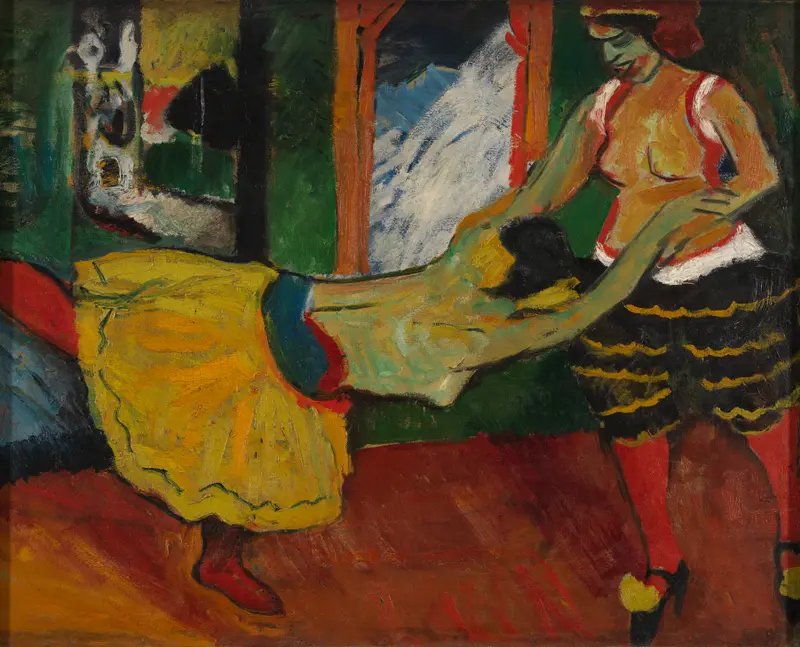
Max Pechstein Tanz
Hermann Max Pechstein
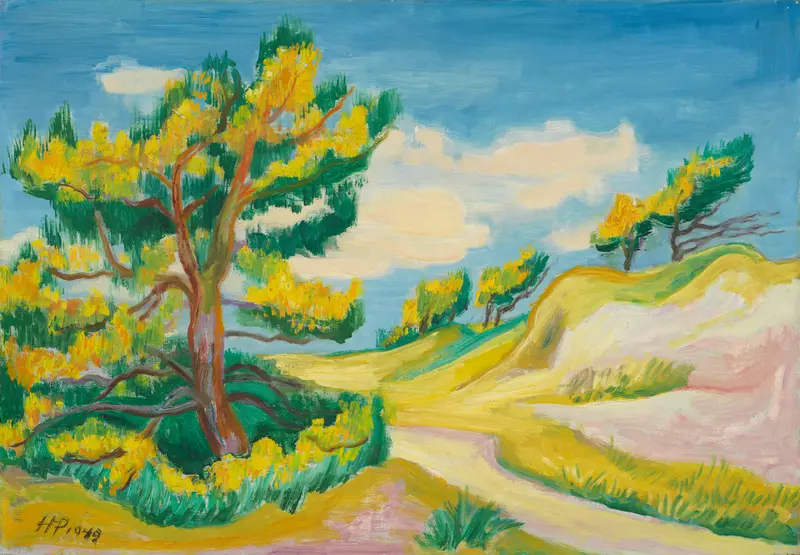
Blühende Kiefern in den Dünen
Hermann Max Pechstein

Die Quelle
Hermann Max Pechstein
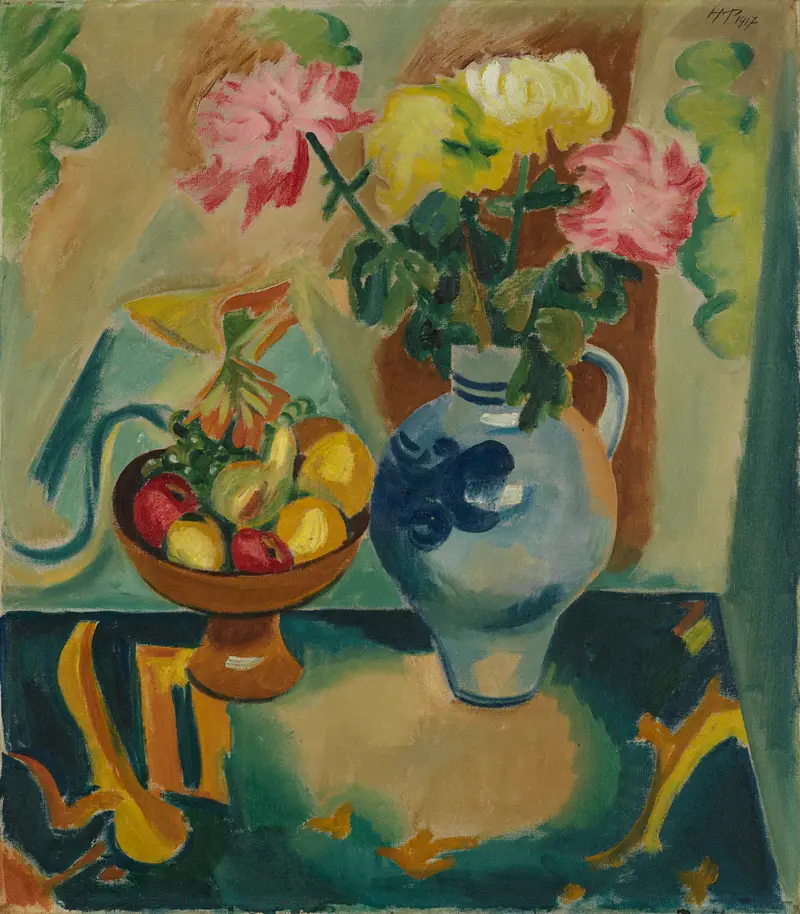
Stilleben mit Chrysanthemen und Früchten
Hermann Max Pechstein



