
Fruit in a ruin — History & Facts
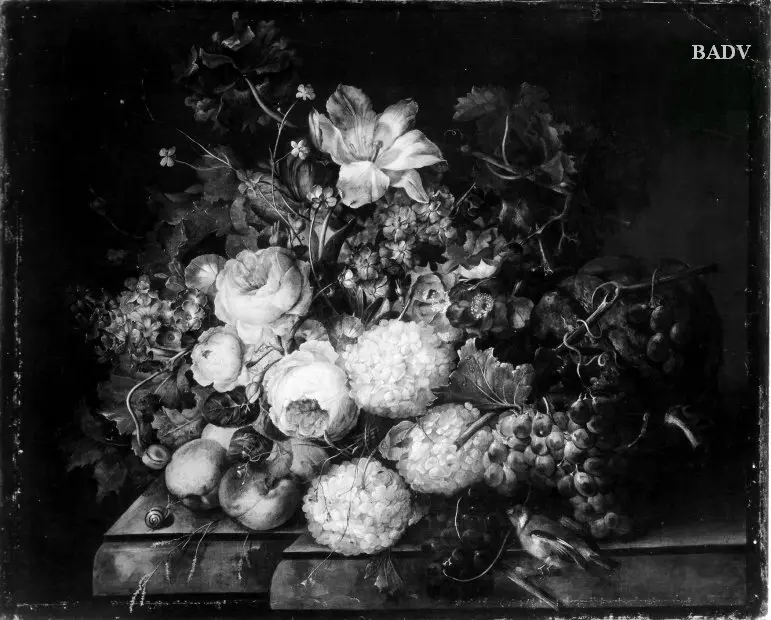
A tumble of fruit, ripe and bursting, seems to spill out from the shadows of a ruined wall, drawing the eye into a world where nature reclaims the remnants of human ambition. The painter, Abraham Mignon, orchestrates a drama of abundance and decay: grapes glisten with dew, peaches split to reveal their flesh, and a bird’s nest, cradling pale blue eggs, sits at the heart of the composition. Every leaf and feather is rendered with a precision that invites close inspection, but the real story is in the play of light—how it picks out the delicate bloom on a plum, the glossy skin of a tomato, or the iridescent wing of a bird swooping in from the dusk.
The ruin in the background is no mere backdrop; it hints at the passage of time, the cycle of growth and decline, and perhaps even the vanity of earthly riches. Paintings like this, born in the second half of the 17th century, flourished in the Dutch and German-speaking worlds where still life became a showcase for both painterly skill and moral reflection. Collectors of the era prized such works for their ability to conjure plenty and to remind viewers of the fleeting nature of pleasure—luxury and loss entwined in a single image. Fruit in a ruin belongs to this tradition, its origins documented in the Web Gallery of Art, yet history has kept few traces of its early journey or intended audience.
What endures is the sense of a world in balance: every detail, from the curling vine to the watchful bird, draws us back to the painting’s quiet invitation to look again, and more closely.
More Artworks by Abraham Mignon

Still Life with Flowers and a Watch
Abraham Mignon
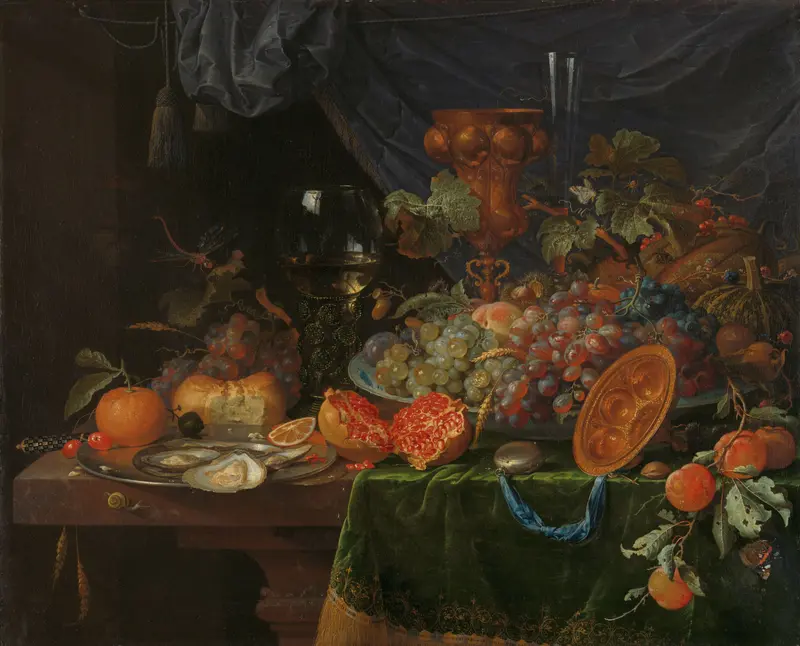
Still Life with Fruit and Oysters
Abraham Mignon
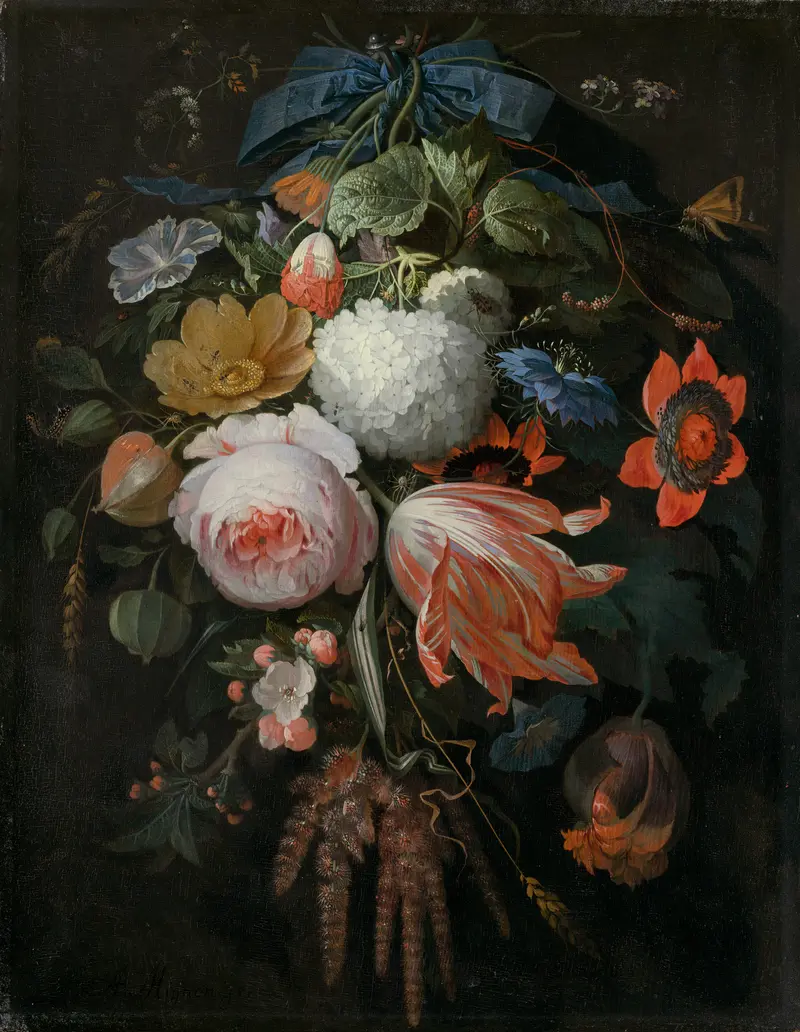
A Hanging Bouquet of Flowers
Abraham Mignon
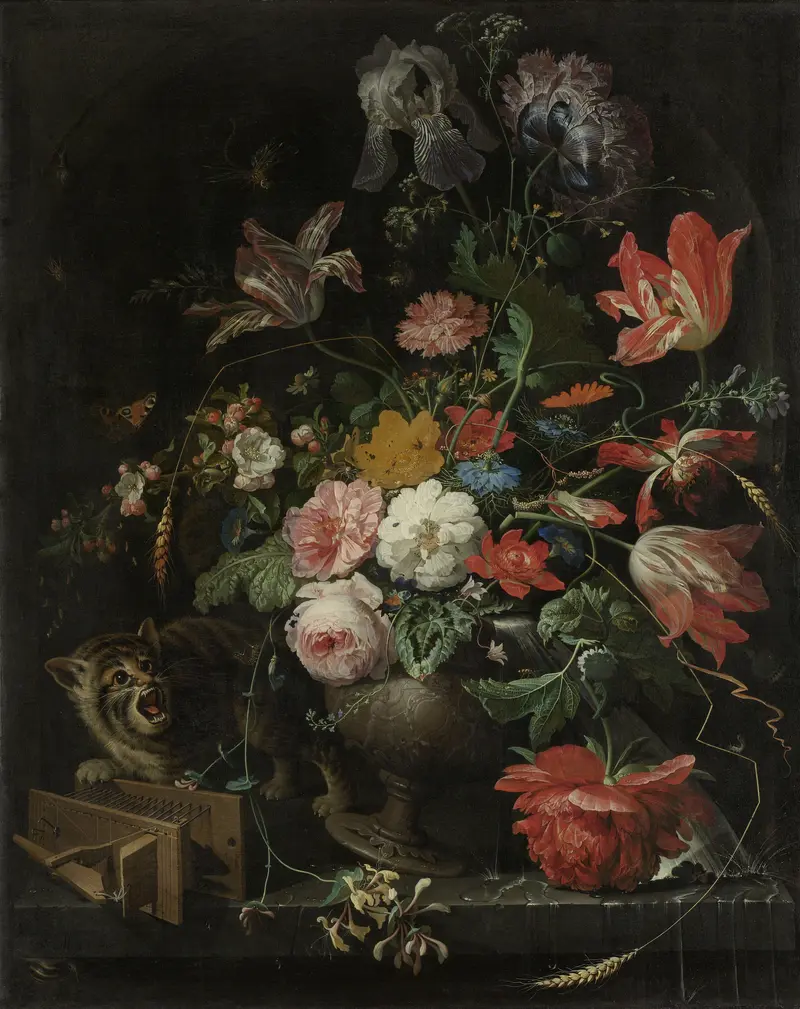
Bouquet with cat and mousetrap
Abraham Mignon
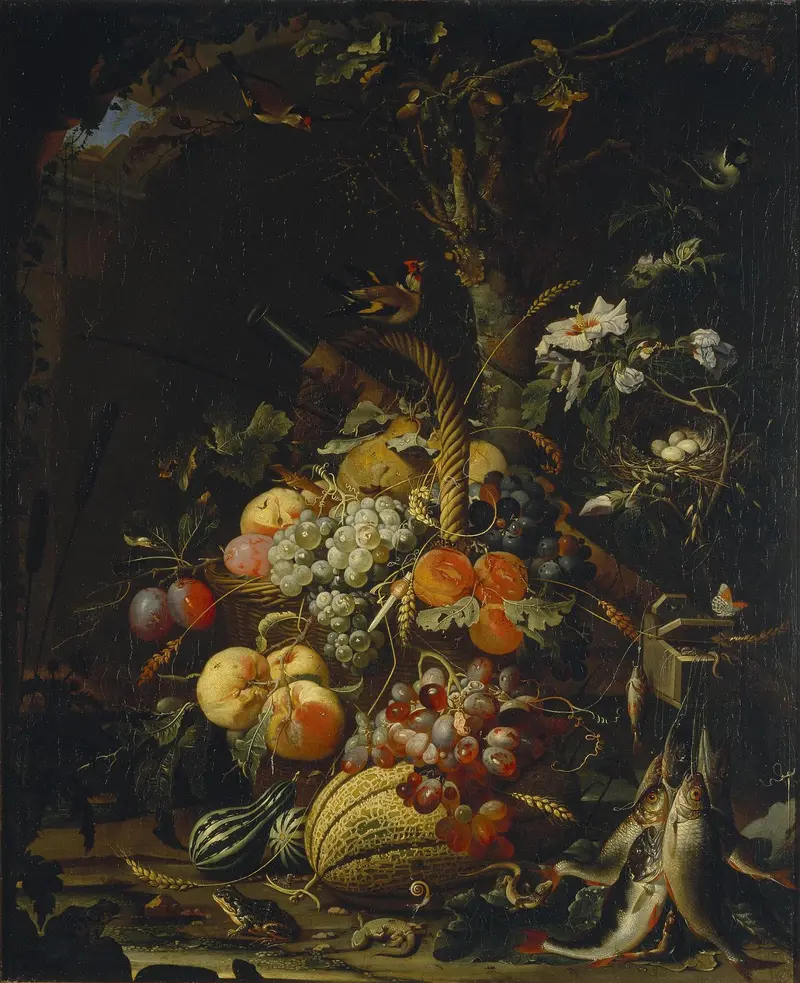
Forest floor still life with fruit, fish and a bird's nest
Abraham Mignon
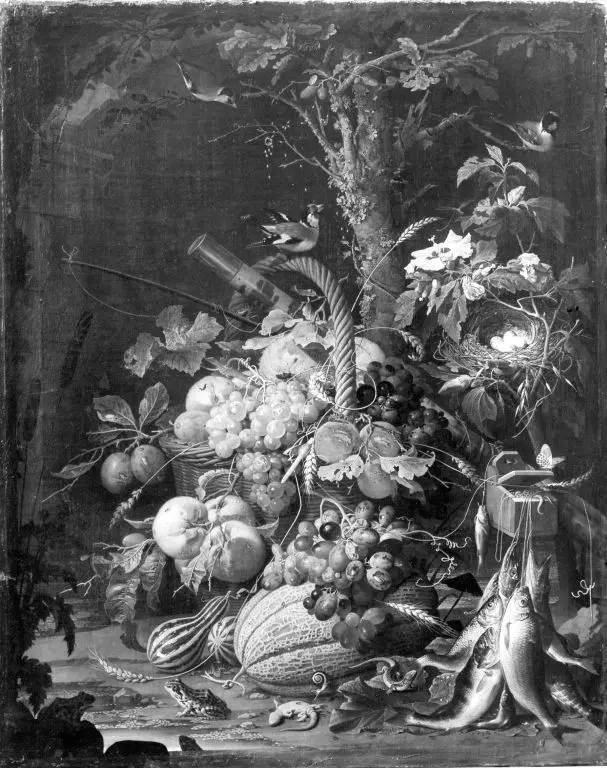
Still life with fruit, fish and a bird's nest
Abraham Mignon
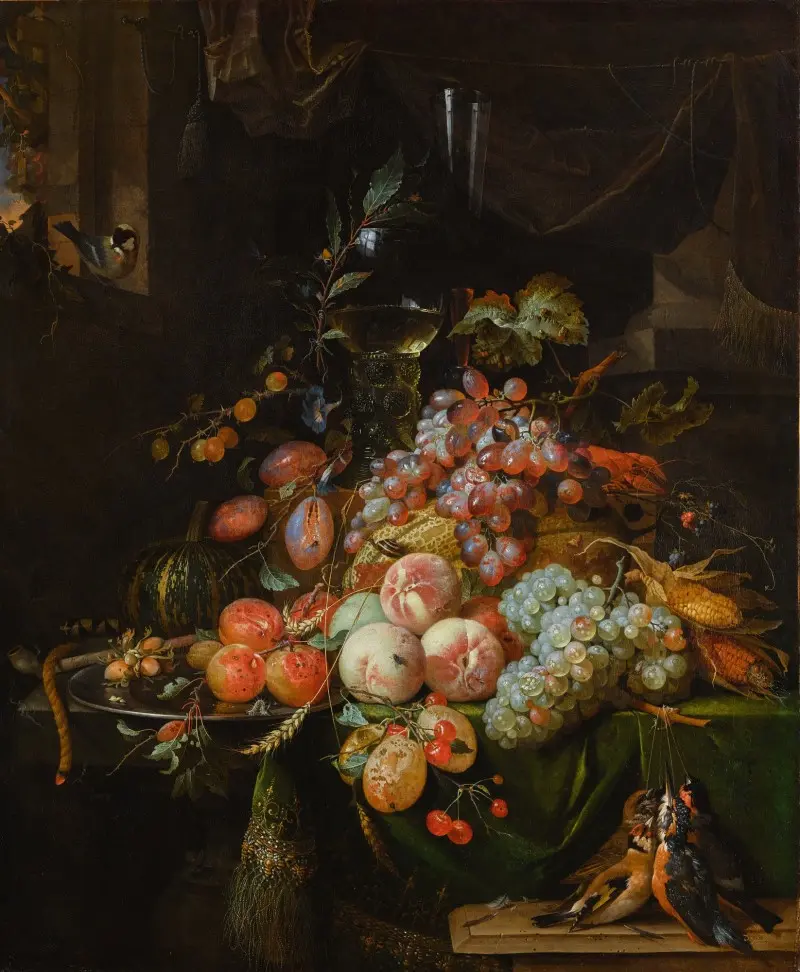
Still Life with Plums, Peaches, Apricots, Grapes and a Melon
Abraham Mignon
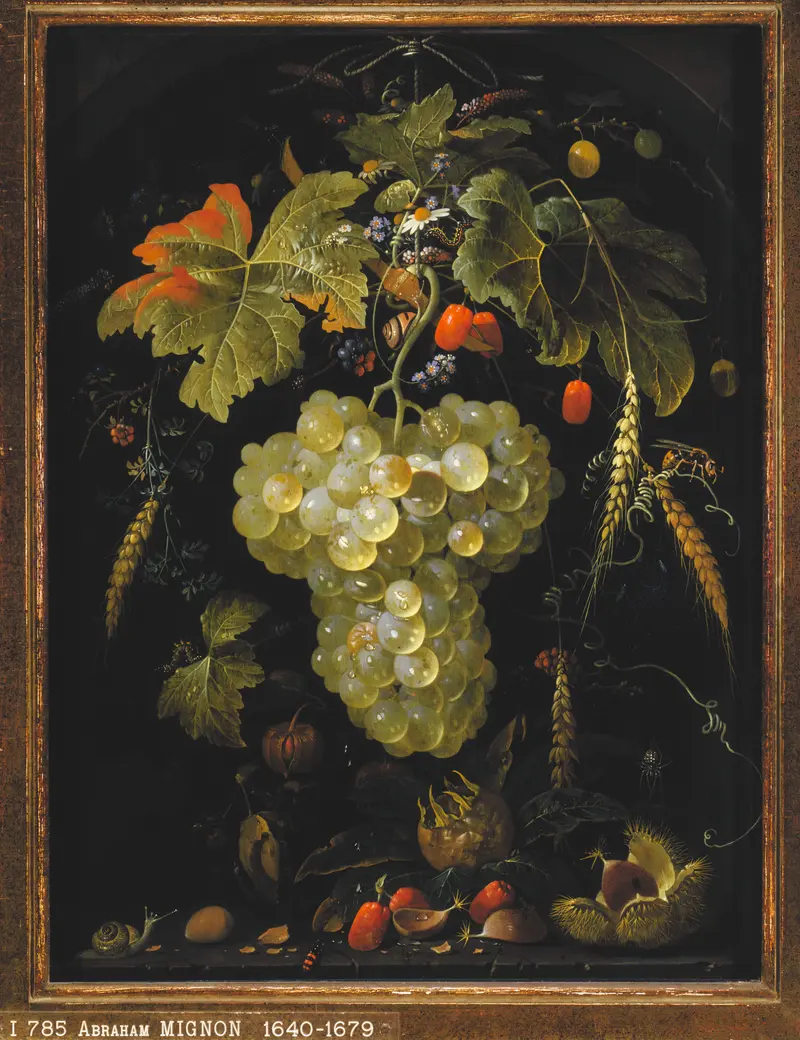
Festoon of fruit suspended from a rope, in a niche
Abraham Mignon
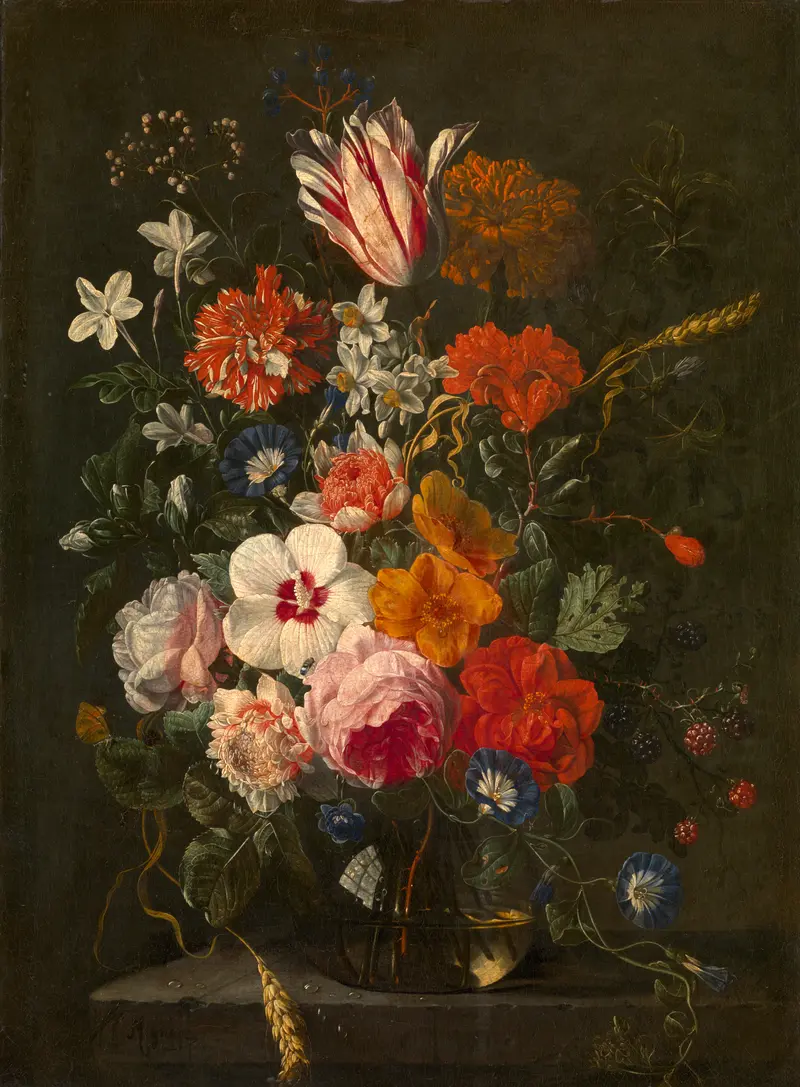
Flowers and a branch of berries in a glass vase on a stone ledge
Abraham Mignon
Flowers and fruit on a plinth
Abraham Mignon





