
Fruit Still-life — History & Facts
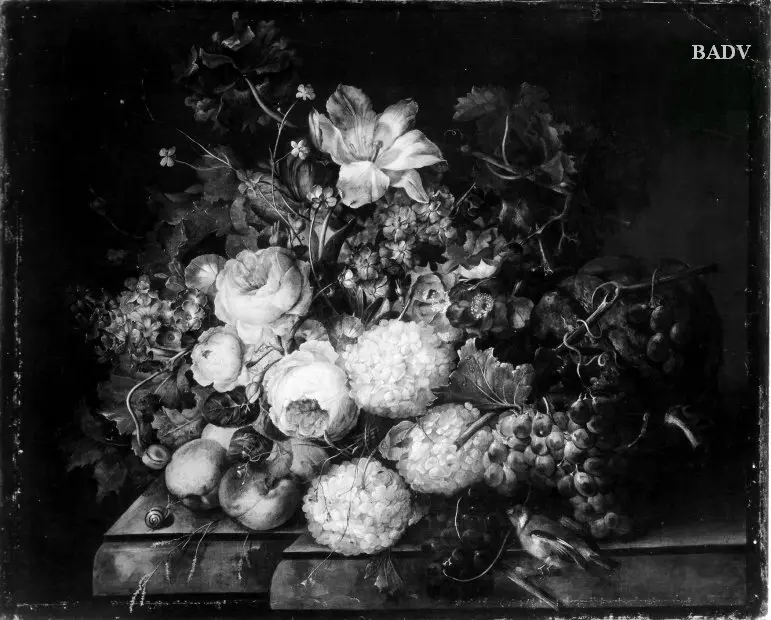
What first catches the eye in Fruit Still-life by Abraham Mignon is the almost theatrical arrangement of fruit—lush, ripe, and impossibly tactile—set against a shadowed backdrop that seems to hush the world around it. The viewer is drawn into a quiet drama: peaches, melon, and a downy quince crowd together, their surfaces alive with the soft gleam of light and the subtle blemishes of nature. Insects crawl across the fruit, their presence both a sign of ripeness and a gentle reminder of decay.
A snail glides at the edge, its spiral shell echoing the curves of the fruit, while scattered leaves and husks hint at a recent harvest. Mignon’s brush guides the gaze from the foreground’s crisp detail to the deeper shadows, where foliage recedes into darkness, creating a sense of abundance tinged with fragility. Works like this, painted in 1672, belong to the golden age of still-life in the Dutch Republic, when artists like Abraham Mignon turned the bounty of nature into meditations on beauty and impermanence. Such paintings were prized by prosperous merchants and collectors who delighted in their realism and the moral lessons they quietly conveyed: wealth and pleasure, yes, but always with a nod to the fleetingness of both.
The genre’s popularity soared as trade brought exotic fruits and curiosities to northern Europe, and painters competed in rendering every texture and reflection. This particular still-life, now part of the collection at the Pinakothek, stands as a testament to that era’s fascination with the everyday made extraordinary—inviting the viewer to linger, to look again, and to notice what might otherwise be missed.
More Artworks by Abraham Mignon

Still Life with Flowers and a Watch
Abraham Mignon
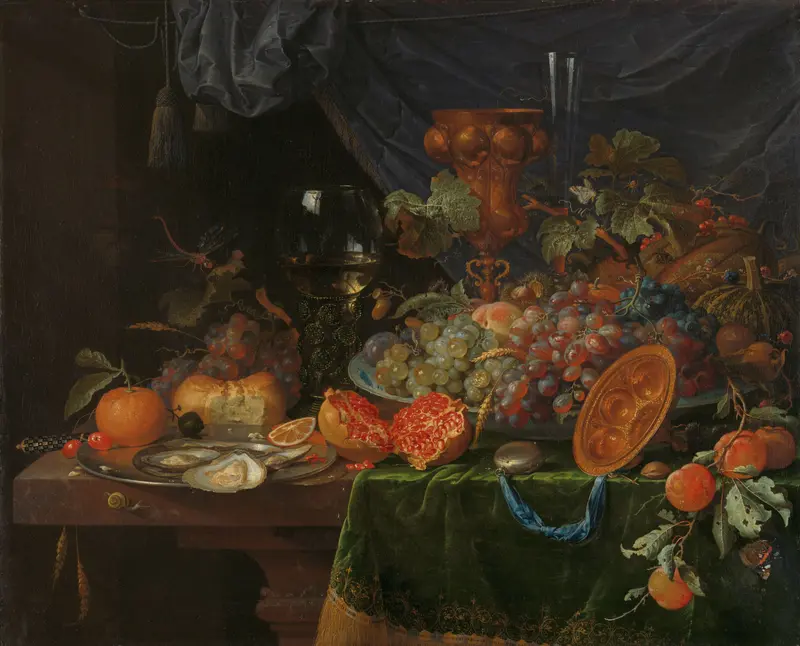
Still Life with Fruit and Oysters
Abraham Mignon
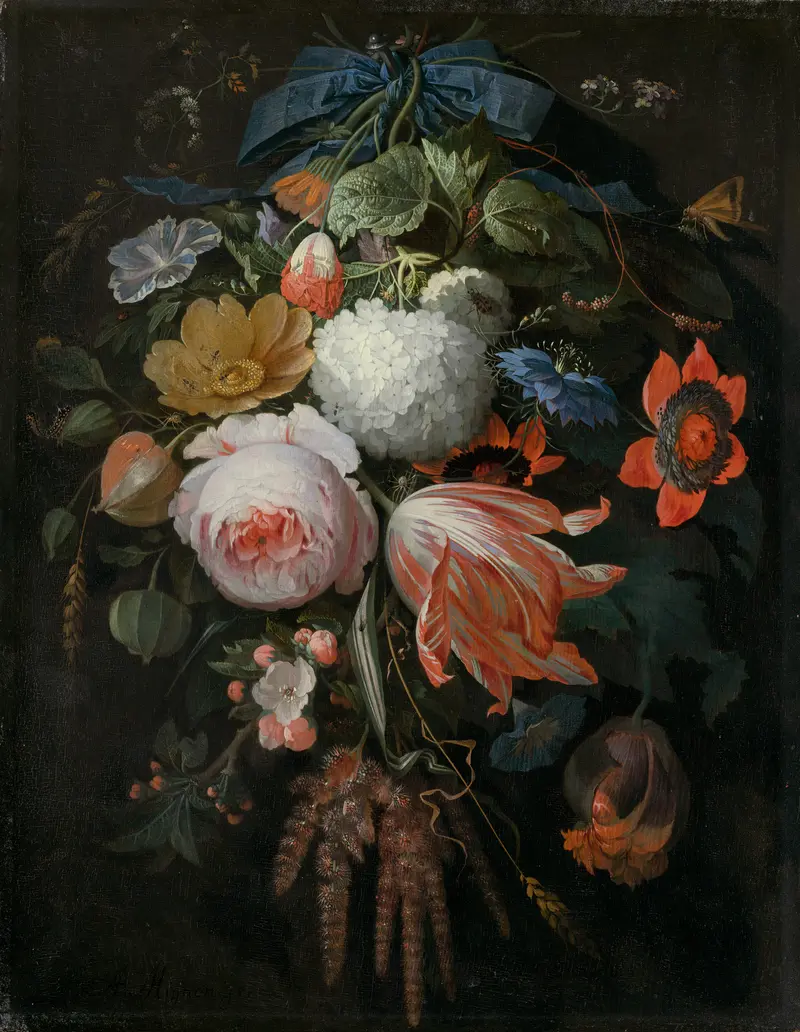
A Hanging Bouquet of Flowers
Abraham Mignon
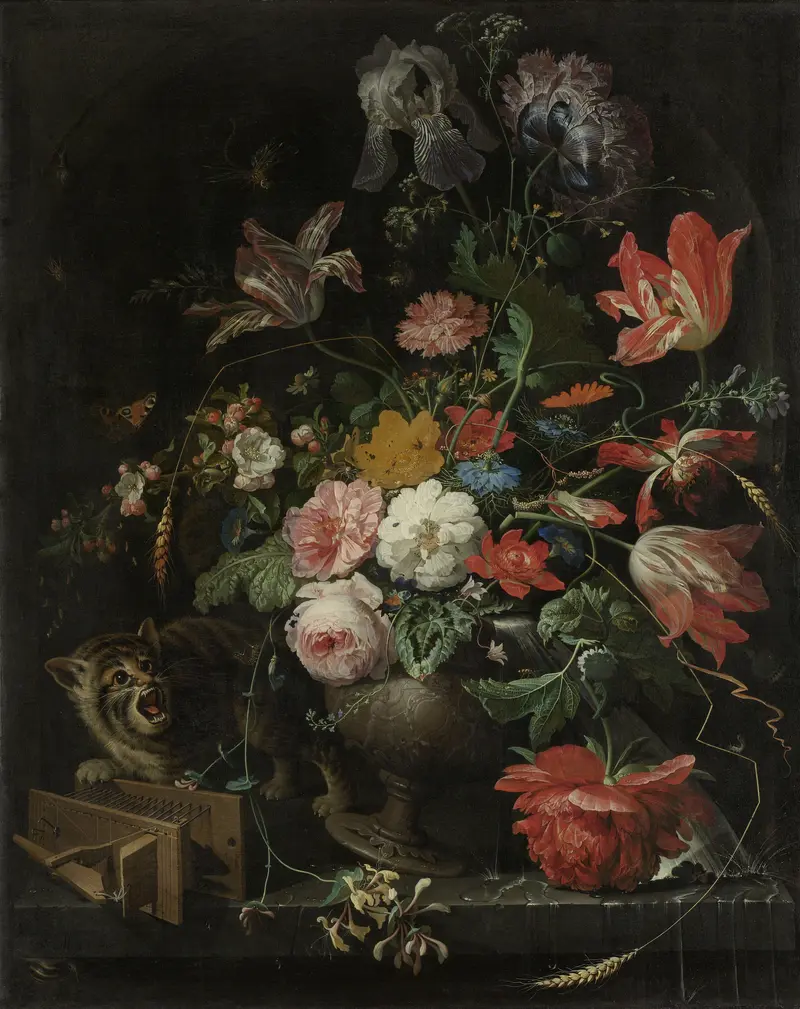
Bouquet with cat and mousetrap
Abraham Mignon
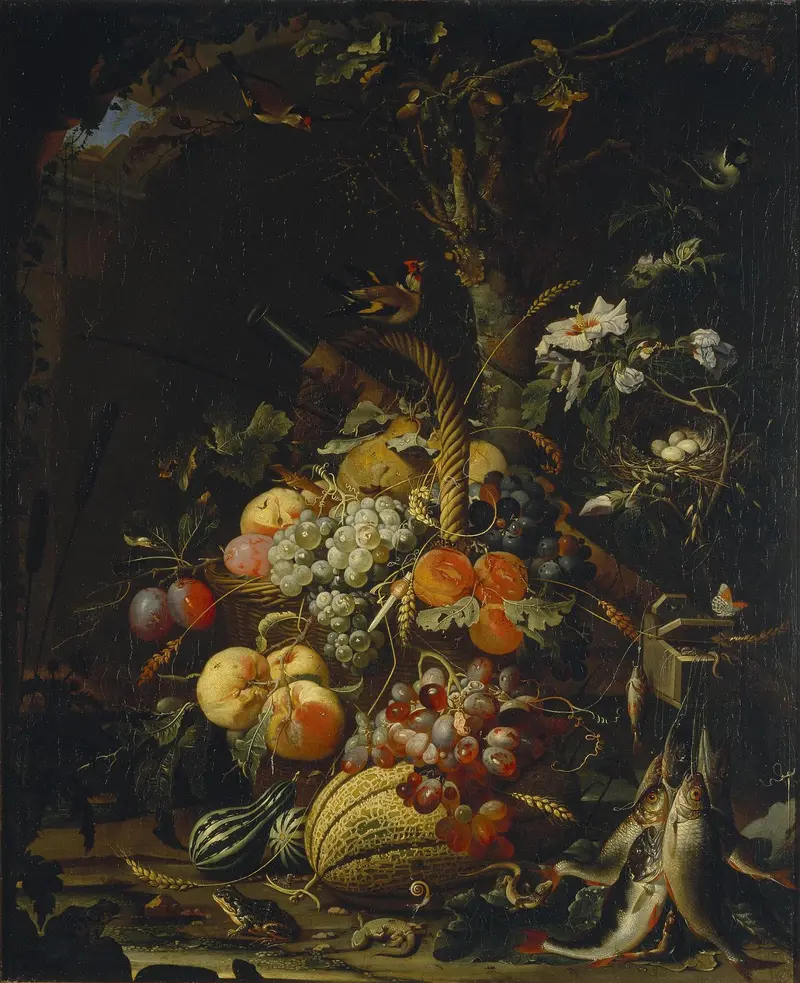
Forest floor still life with fruit, fish and a bird's nest
Abraham Mignon
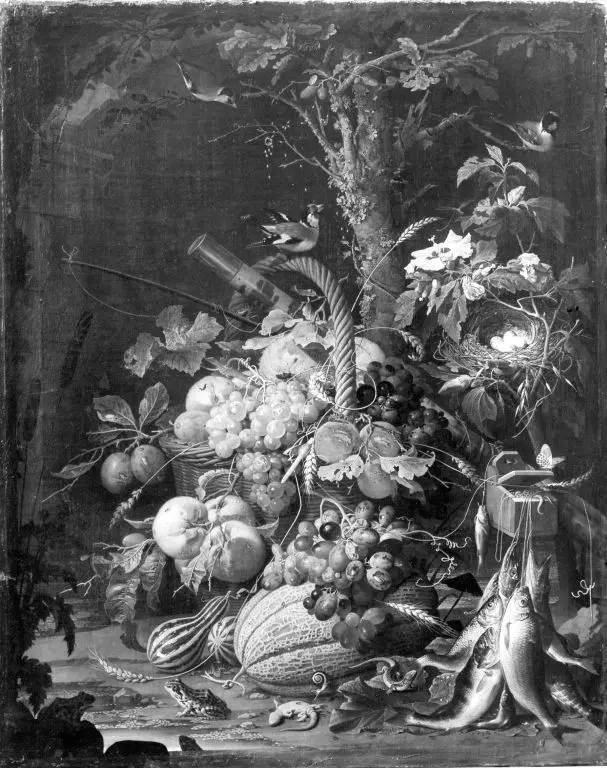
Still life with fruit, fish and a bird's nest
Abraham Mignon
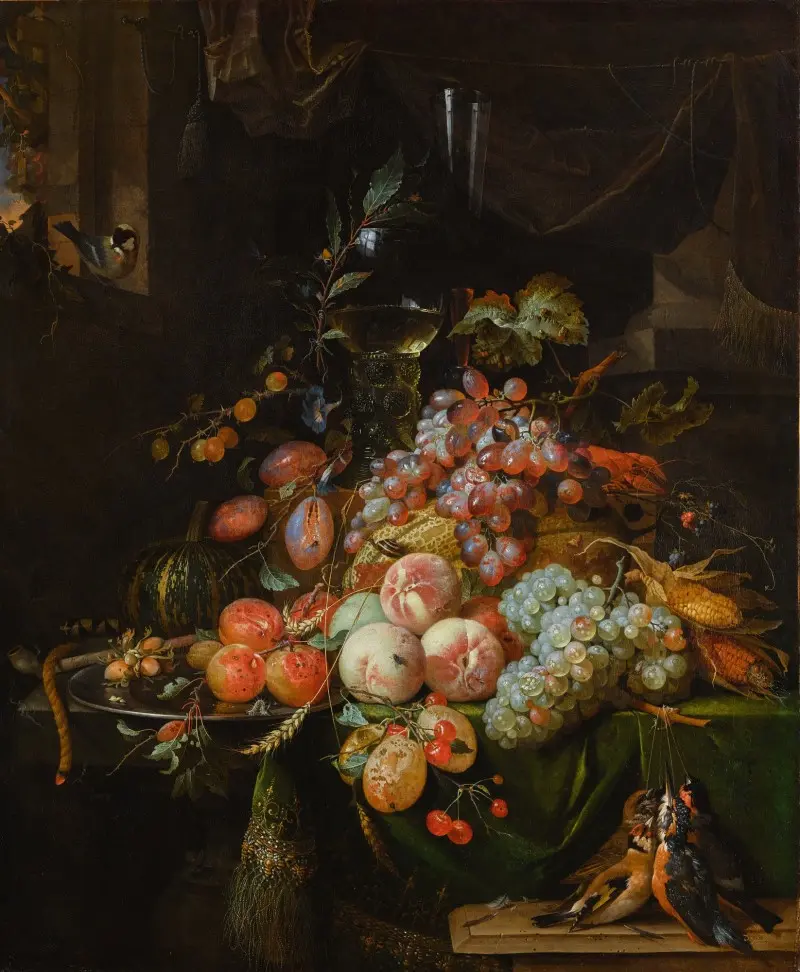
Still Life with Plums, Peaches, Apricots, Grapes and a Melon
Abraham Mignon
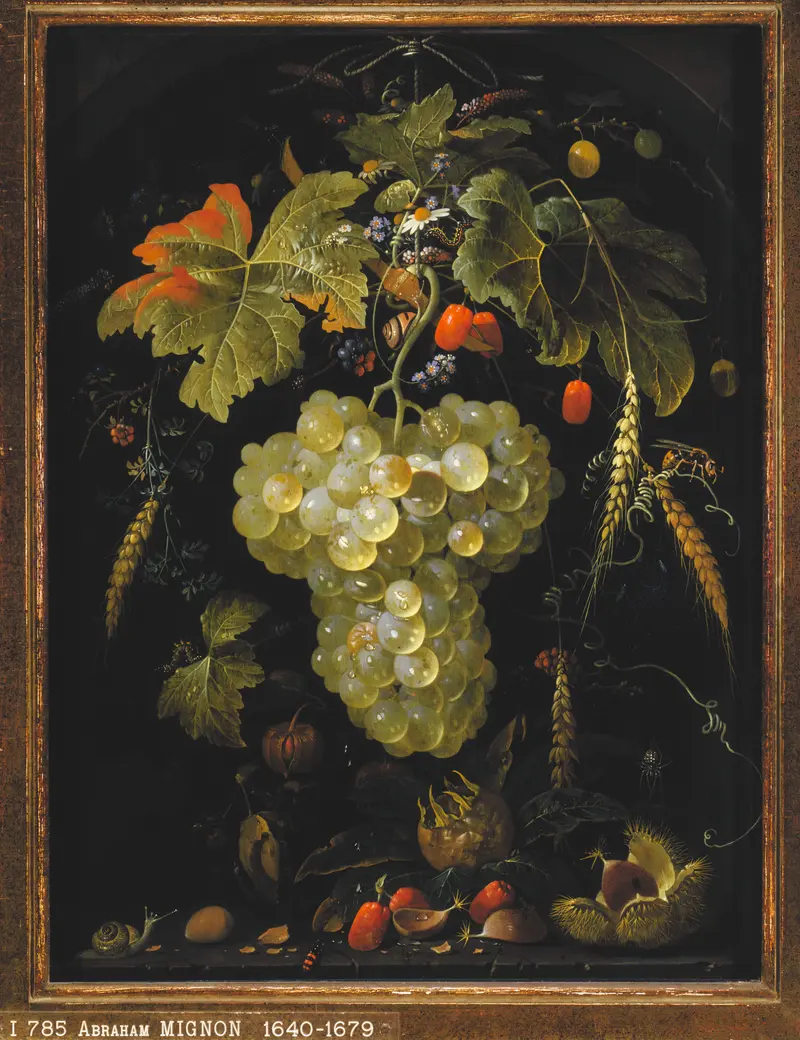
Festoon of fruit suspended from a rope, in a niche
Abraham Mignon
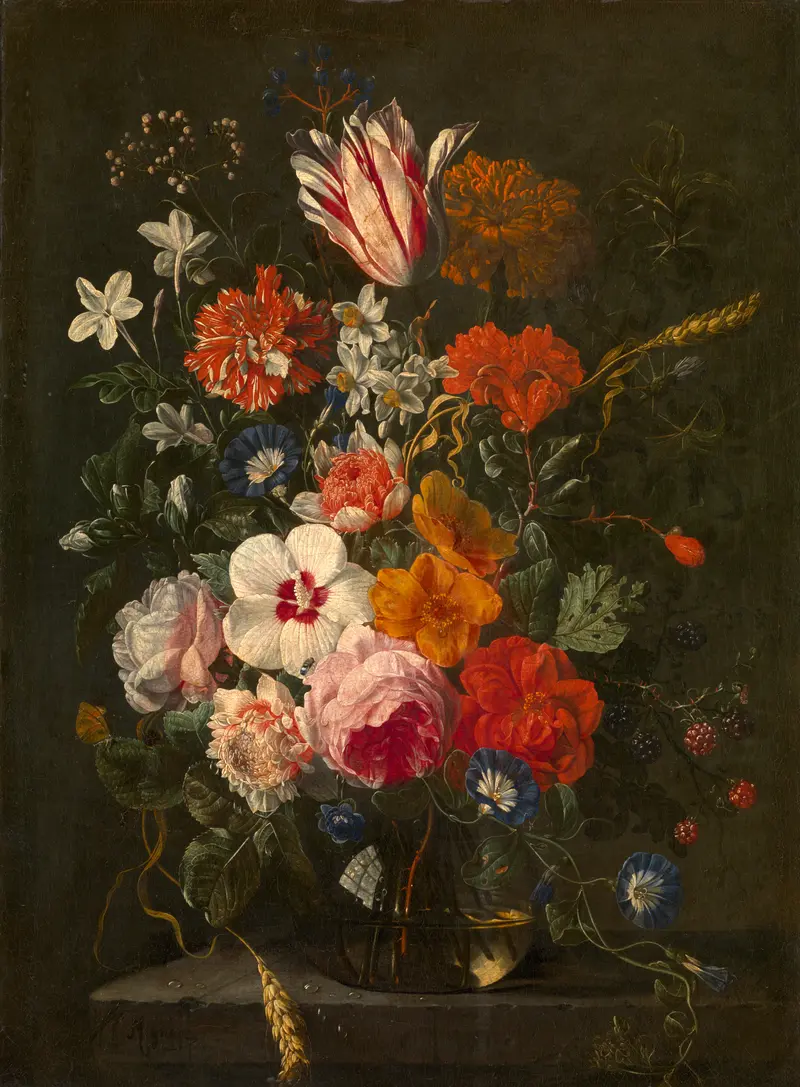
Flowers and a branch of berries in a glass vase on a stone ledge
Abraham Mignon
Flowers and fruit on a plinth
Abraham Mignon





