
Fuji Musume, the Wisteria Maid — History & Facts
When Fuji Musume, the Wisteria Maid appeared in Edo in 1799, it was not just another image by Katsushika Hokusai—it was a visual echo of a wildly popular kabuki dance first staged only a few years earlier. The "Wisteria Maiden" dance, with its graceful performer draped in trailing blossoms, had captivated audiences, and Hokusai’s interpretation quickly became one of the most sought-after images among print collectors. The subject’s enduring popularity led to many versions by various artists, but Hokusai’s stands out for its early date and the freshness of its design, marking a moment when ukiyo-e prints were rapidly evolving in both style and audience. At the center of the composition, a young woman stands beneath a cascade of wisteria, her kimono patterned with delicate motifs and her gaze lowered in quiet reverie.
The figure embodies both the literal wisteria maiden of the dance and the poetic ideal of feminine beauty in Edo-period Japan. The trailing branches she holds are more than decoration—they symbolize longing and ephemeral love, themes woven into the original kabuki performance. Hokusai’s careful attention to the flow of fabric and the gentle arc of the wisteria recalls the movement of the dancer on stage, while the restrained color palette and asymmetrical balance set his version apart from later, more ornate interpretations by artists like Utagawa Kunisada. Though the precise medium of Fuji Musume, the Wisteria Maid is uncertain, it is likely a woodblock print, the favored format for popular images in late 18th-century Edo.
The work’s early date places it among Hokusai’s formative pieces, before his later fame with Thirty-Six Views of Mount Fuji. Like many ukiyo-e prints, it would have been sold through print shops and handled by countless admirers, making pristine early examples rare today. Its survival and continued appreciation speak to both the enduring appeal of its subject and Hokusai’s unique ability to capture the spirit of his time.
More Artworks by Katsushika Hokusai

The Great Wave off Kanagawa
Katsushika Hokusai
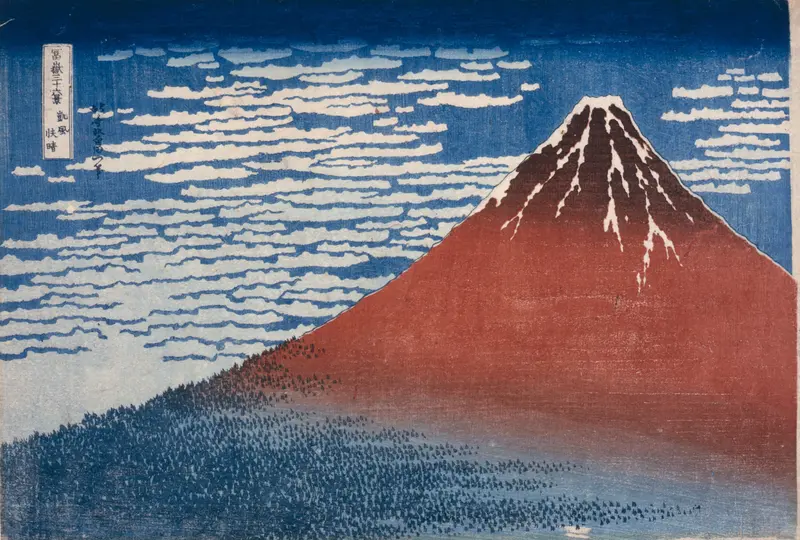
Fine Wind, Clear Morning (Red Fuji)
Katsushika Hokusai
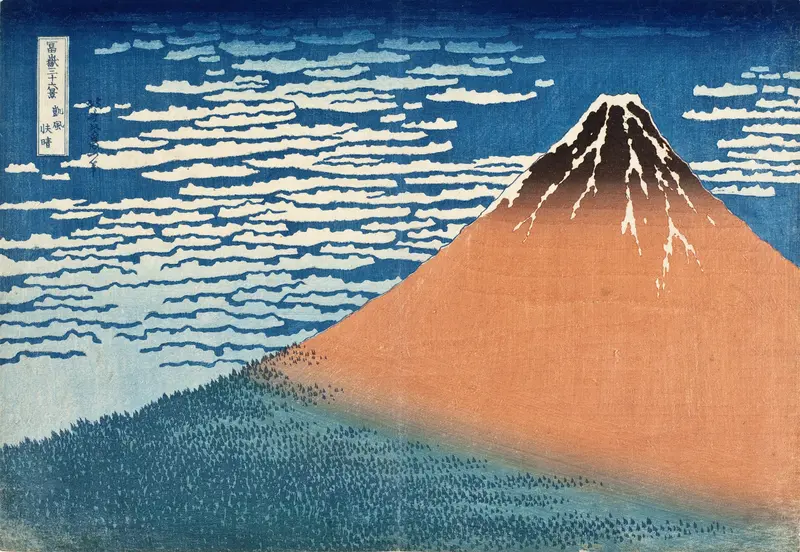
South Wind, Clear Dawn
Katsushika Hokusai
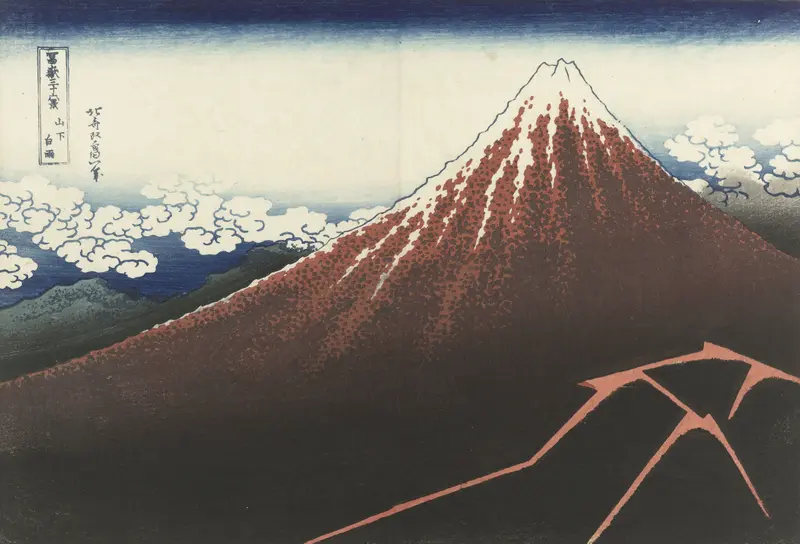
Rainstorm Beneath the Summit
Katsushika Hokusai
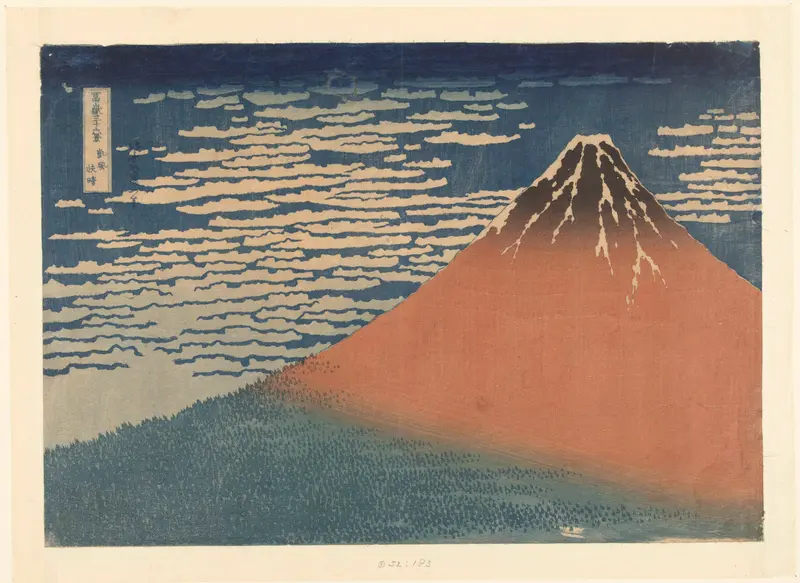
Clear Weather with a Southerly Wind
Katsushika Hokusai
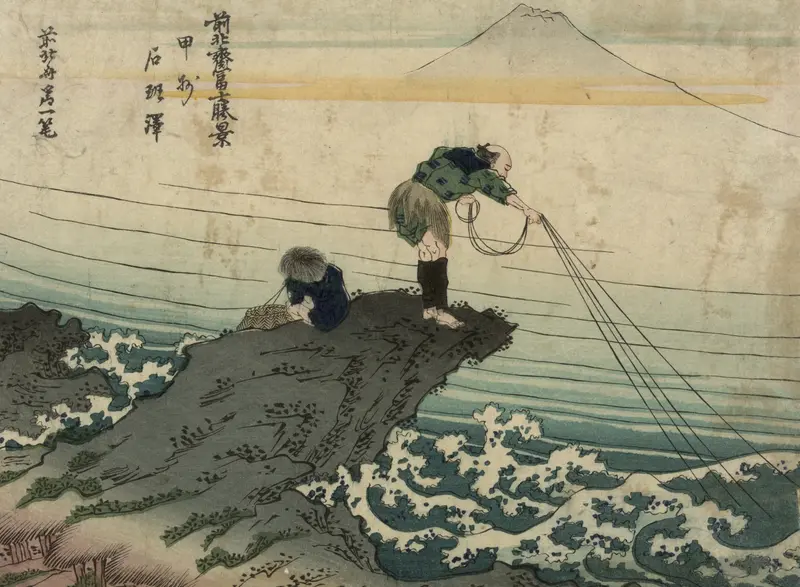
Kōshū kajikazawa
Katsushika Hokusai
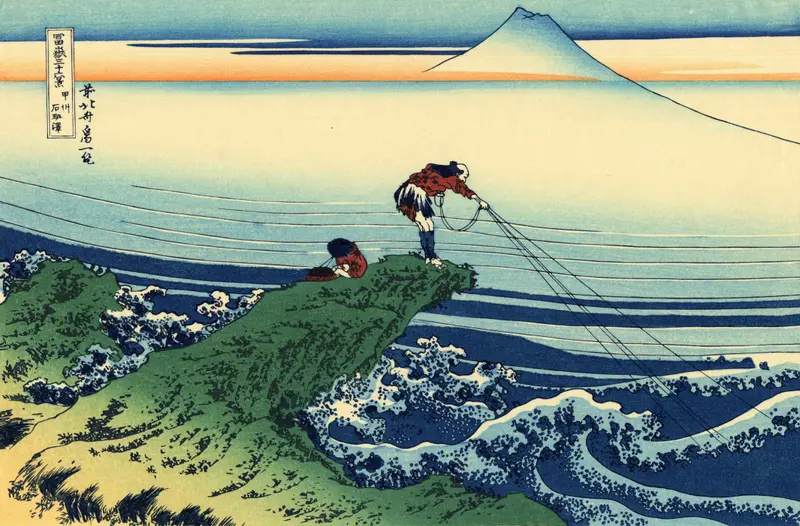
Kōshū kajikazawa 2
Katsushika Hokusai
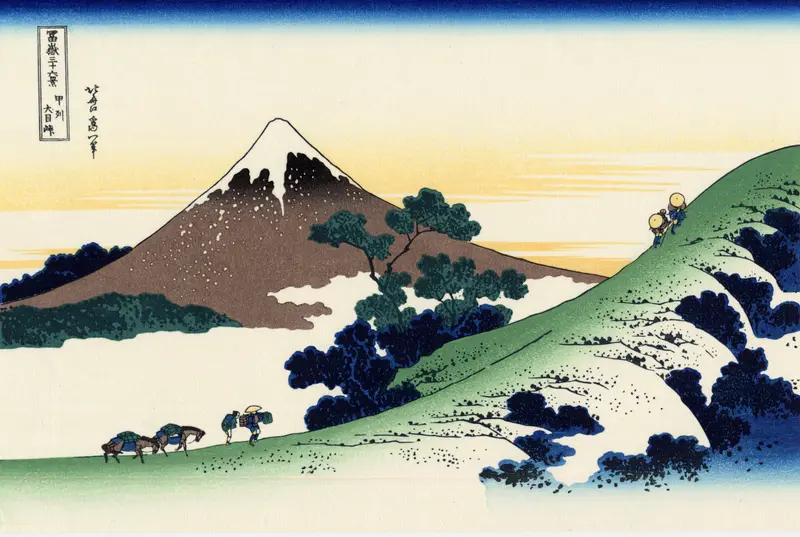
Inume Pass in Kai Province (Kôshû inume-tôge)
Katsushika Hokusai

Yoro Falls in Mino Province (Mino no Yoro no taki), from the series "A Tour of Waterfalls in Various Provinces (Shokoku taki meguri)"
Katsushika Hokusai
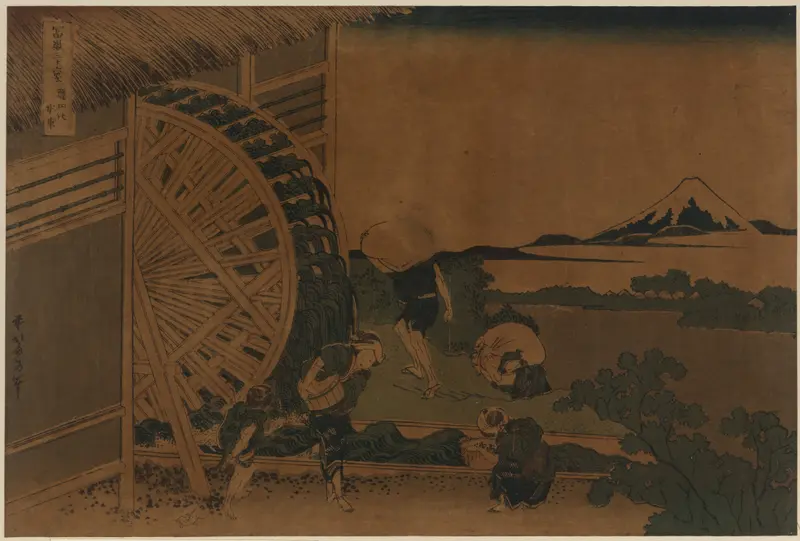
Onden no suisha
Katsushika Hokusai



