
Fusssteig nach Menzenschwand — History & Facts
When did color learn to lie? In a world where hues promise permanence, it is the subtle interplay of light and shadow that reveals fragility beneath the surface. Look to the left at the winding path, where earth meets foliage, embracing the viewer with a gentle invitation. The pastel greens and soft browns swirl together, skillfully layered to evoke a sense of tranquility and motion. Notice how the dappled sunlight dances through the trees, creating ephemeral patterns on the path, suggesting the passage of time and the delicate balance of nature’s cycle.
The composition draws the eye deeper into the landscape, hinting at unseen destinations. Yet, beneath this serene facade lies an emotional tension. The path, though inviting, vanishes into the unknown, embodying uncertainty and the fragility of life’s journey. The vibrant greens suggest growth and vitality, while the weathered browns whisper of decay and transience.
This contrast reminds us that beauty often coexists with impermanence, urging a moment of introspection. Eugen Bracht painted this piece during a time when the natural world was a primary subject for artists, exploring the relationship between humanity and nature. Although the exact date remains unknown, it is likely from the late 19th to early 20th century, a period marked by a growing appreciation for landscape painting in Europe. Bracht's work reflects a deep connection to the environment, as he sought to capture both its beauty and its inherent fragility, resonating with the era's artistic movements.
More Artworks by Eugen Bracht
Browse all →
Blick auf den Monte Rosa, Westseite
Eugen Bracht
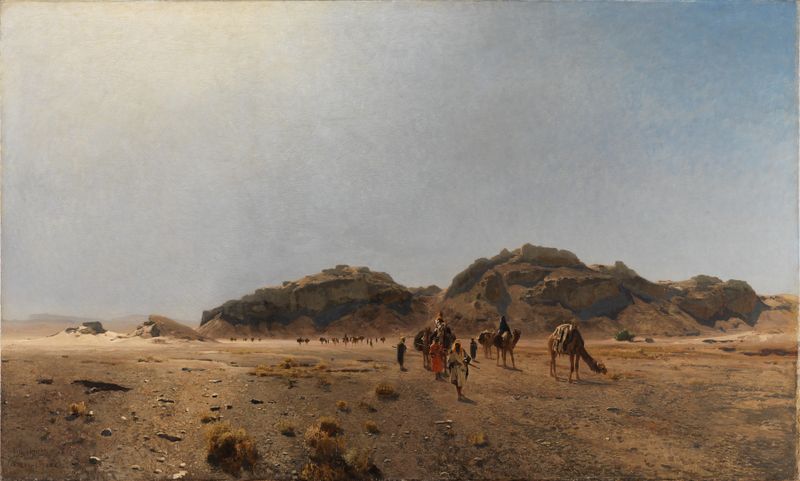
In der Wüste Araba
Eugen Bracht

‘Der alte Hof (n. d. N. Windisch-Eschenbach)’
Eugen Bracht
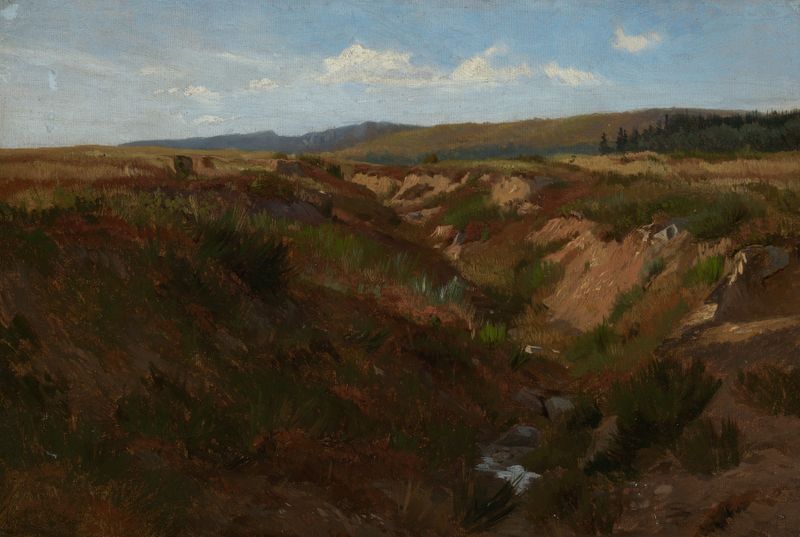
Heide im Soonwald
Eugen Bracht

Bemooste Felsen im Waldtal
Eugen Bracht
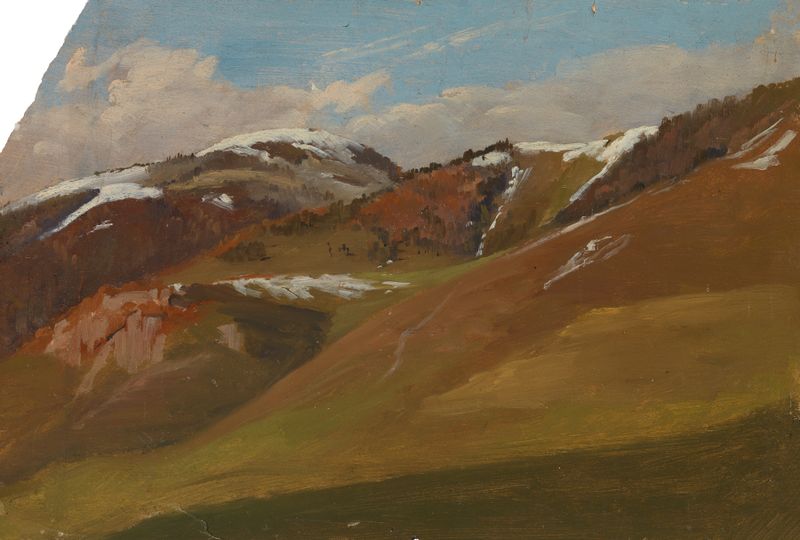
Blick auf Herzogenhorn und Kaiserberg
Eugen Bracht

Das Herzogenhorn im Neuschnee
Eugen Bracht

Abendlandschaft
Eugen Bracht

Nach dem Regenschauer
Eugen Bracht
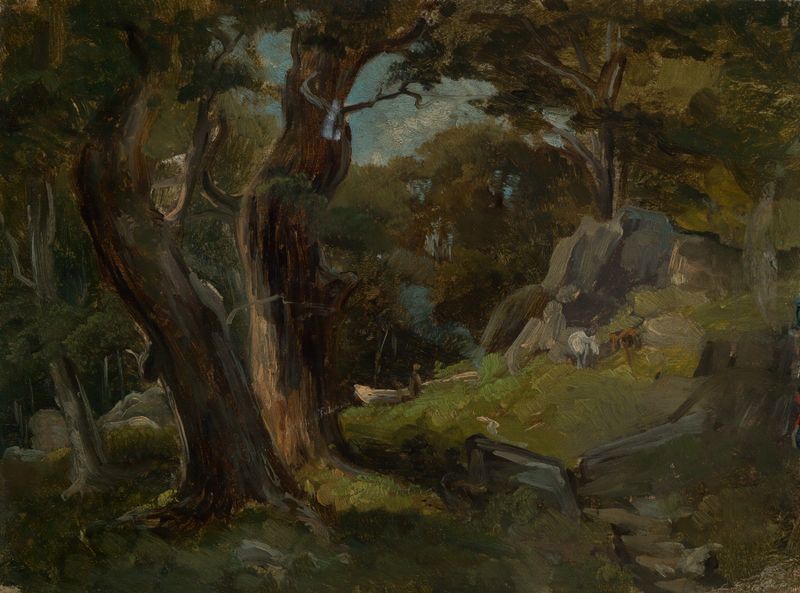
Waldlichtung mit Pferden
Eugen Bracht





