
Game and vegetable sellers — History & Facts
What first arrests the eye in Game and vegetable sellers is not the abundance of game or the crisp freshness of the vegetables, but the charged triangle of glances and gestures at the center. The man on the left, his hat bristling with feathers, seems caught mid-bargain, his hand extended in a gesture that could be persuasion or demand. The woman in the vivid orange hat turns away, her body angled defensively, while the man beside her leans in, his hand gently restraining her arm.
The table between them is a stage crowded with bounty: plump birds, a hare suspended above, and a lush tangle of leeks and cauliflower, all rendered with a tactile realism that invites the viewer to reach out and touch. This is a world alive with commerce and negotiation, a scene that pulses with the energy of a bustling market. The sharp light picks out the sheen on feathers and the delicate veining of leaves, while the muted background throws the figures and their wares into sharp relief. The artist, Adriaen van Utrecht, was known for such compositions, blending the still life’s celebration of nature’s abundance with the drama of human interaction.
In the tradition of 17th-century Flemish market scenes, these paintings were both displays of technical virtuosity and subtle commentaries on social exchange—a genre prized by prosperous urban patrons who saw in them both a mirror of their own world and a testament to their good taste. History has kept few traces of this particular canvas, now documented in a 2009 collection, but its vivid storytelling still draws the viewer into the noisy, fragrant heart of the early modern marketplace.
More Artworks by Adriaen van Utrecht
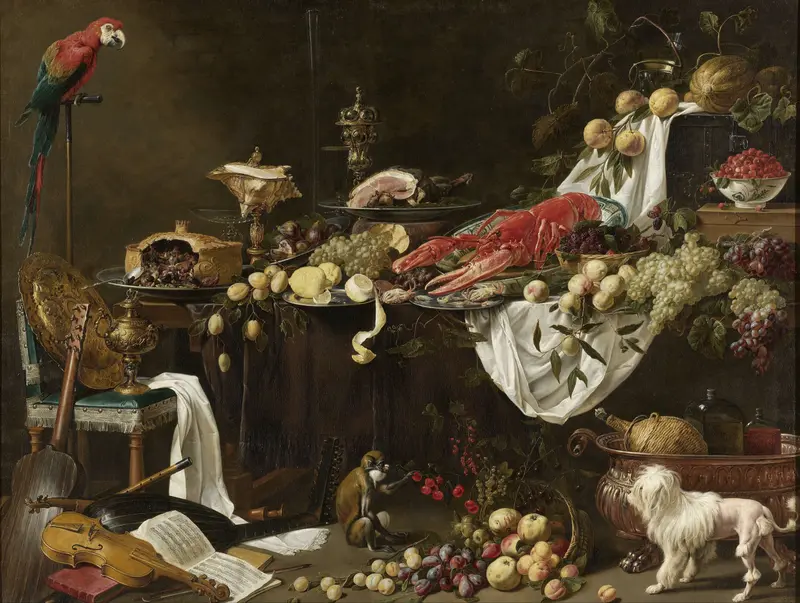
Banquet Still Life
Adriaen van Utrecht
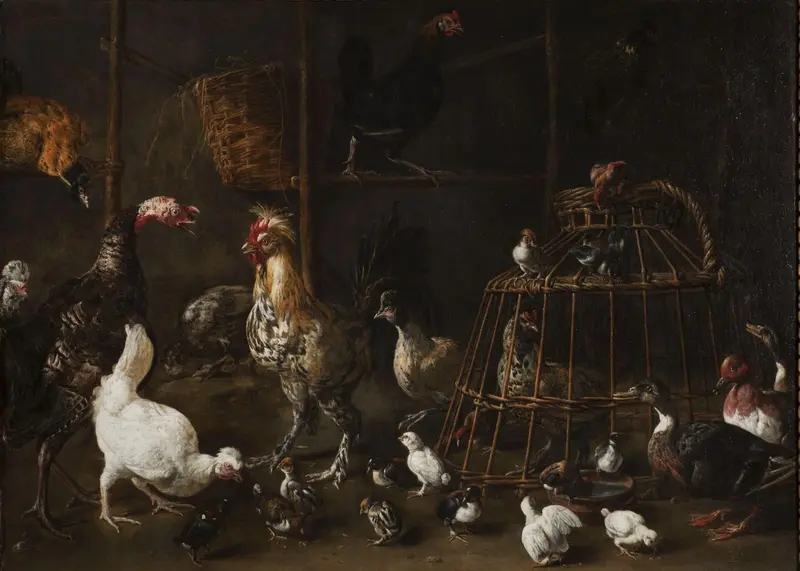
A barn interior with a turkey
Adriaen van Utrecht
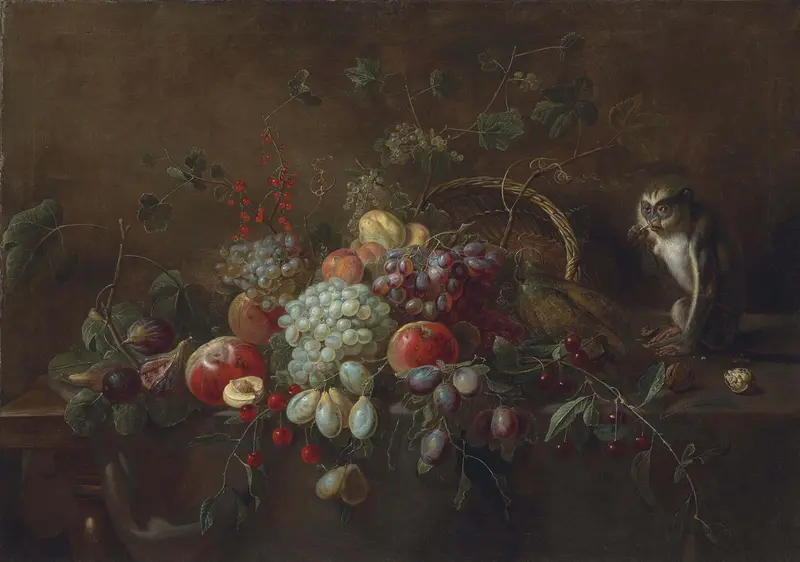
Grapes, apples, plums, figs and other fruit on a partly draped wooden table, a monkey eating walnuts by an upturned woven basket
Adriaen van Utrecht
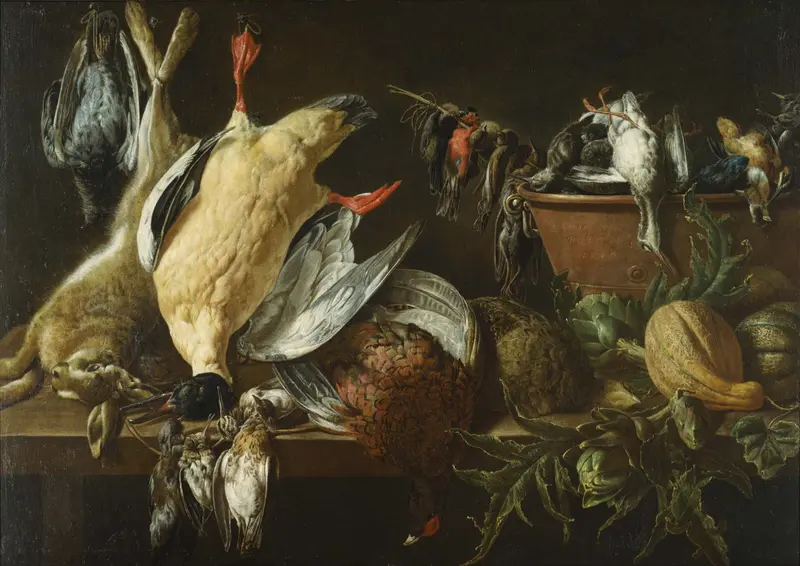
Still Life with Games and Vegetables
Adriaen van Utrecht
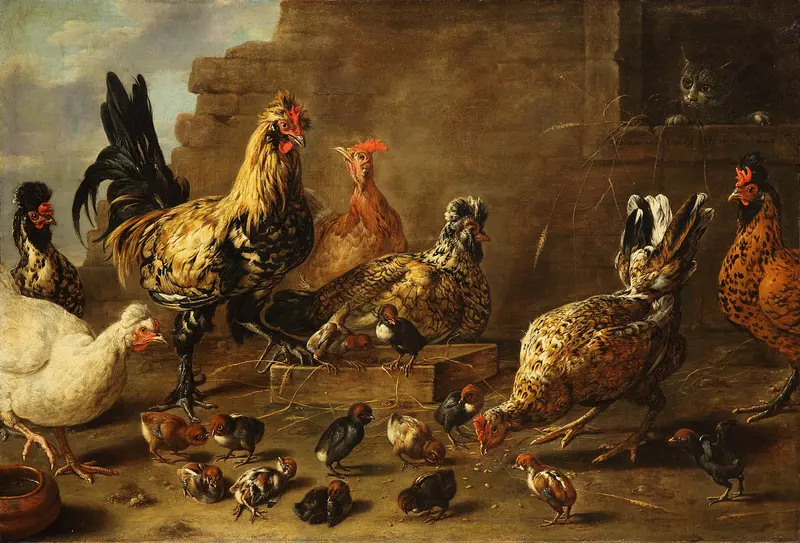
The chicken yard
Adriaen van Utrecht
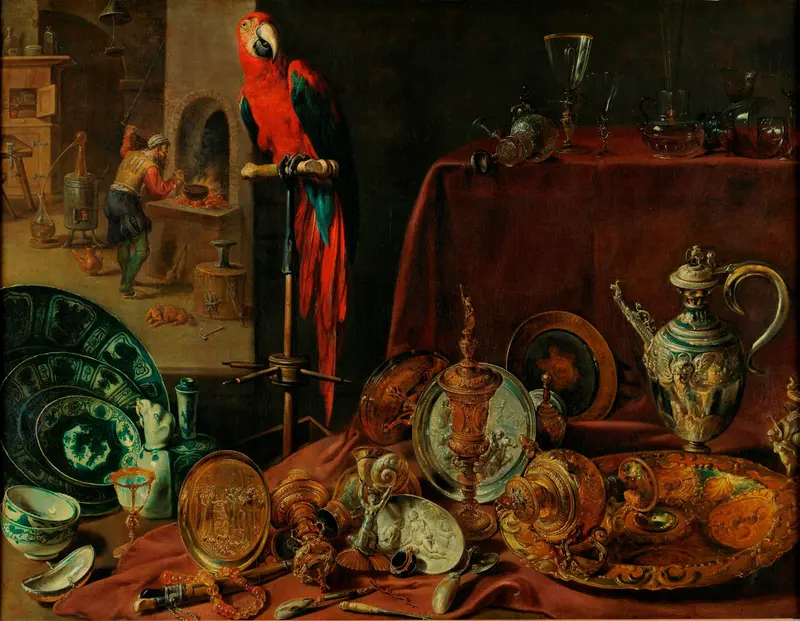
Still life with parrot, an allegory of fire
Adriaen van Utrecht
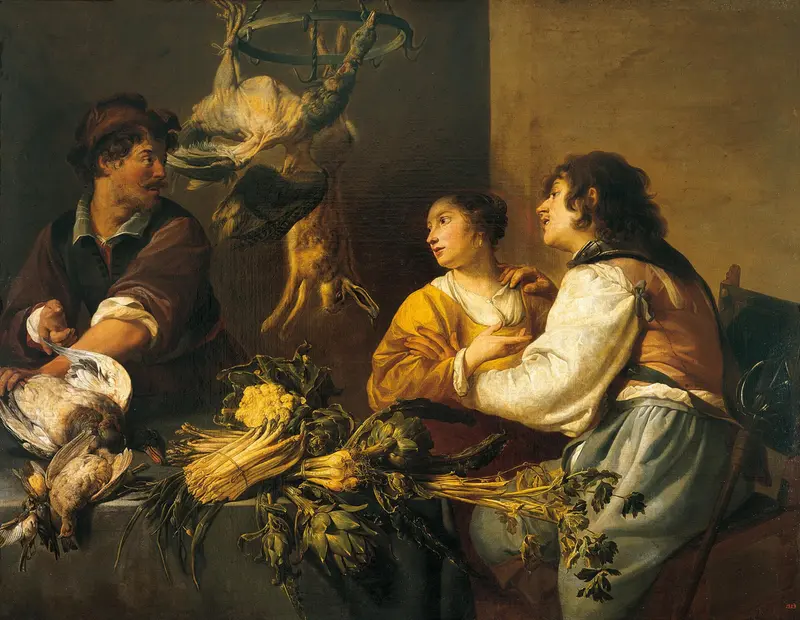
Kitchen
Adriaen van Utrecht
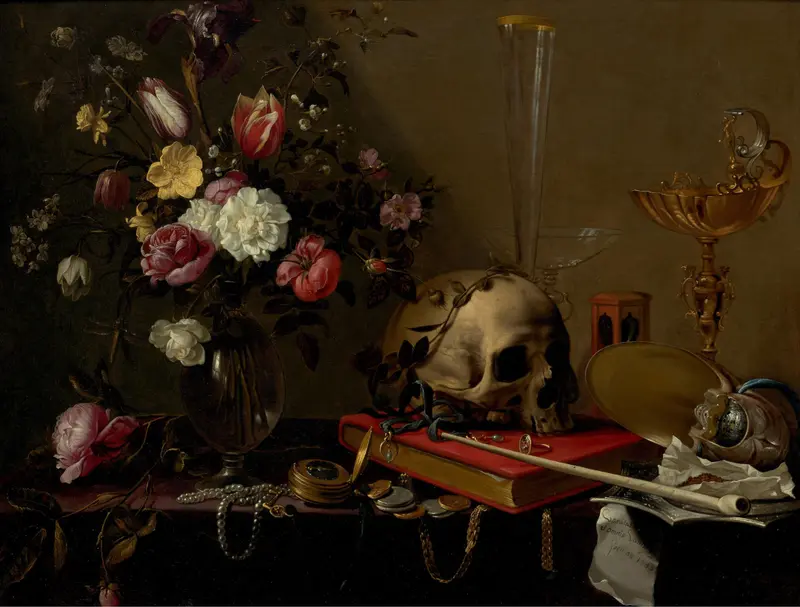
Vanitas - Still Life with Bouquet and Skull
Adriaen van Utrecht
A Larder
Adriaen van Utrecht
A Kitchen Still Life with Figures
Adriaen van Utrecht
More Genre Scene Art

Banquet of the Officers of the St George Civic Guard
Frans Hals

Rembrandt and Saskia in the Scene of the Prodigal Son
Rembrandt van Rijn

Bal du moulin de la Galette
Pierre-Auguste Renoir

Quadrille at the Moulin Rouge
Henri de Toulouse-Lautrec

A Burial at Ornans
Gustave Courbet

When Will You Marry?
Paul Gauguin