
Game, Fish, and a Nest on a Forest Floor — History & Facts
What first catches the eye in Game, Fish, and a Nest on a Forest Floor is not the orderly bounty of a hunter’s table, but a wild, tangled abundance that seems to spill out of the forest itself. The painting draws you in with a riot of detail: a squirrel, frozen mid-fall, its russet fur vivid against the gloom; a cluster of fish, their scales catching stray glimmers of light; a bird’s nest, cradled in a tangle of twigs and guarded by watchful parents. Every surface is alive with texture—soft moss, glossy leaves, the rough bark of a broken stump.
The light falls in patches, guiding your gaze from the bright poppies in the foreground up to the hidden birds and the mysterious depths beyond, as if inviting you to lose yourself in this miniature wilderness. Painted in 1675, this work belongs to a world where the boundaries between nature and artifice were eagerly explored. In the Dutch Golden Age, such still lifes were more than mere decoration; they were displays of knowledge, wealth, and the painter’s technical prowess. Collectors prized these intricate compositions for their ability to bring the outside world indoors, celebrating both the beauty and the fleetingness of natural abundance.
Abraham Mignon was known for his meticulous attention to detail and his ability to weave together elements of life and death, plenty and decay, in a single frame. Though little is recorded about the specific journey of this painting—photographed here in 2017—it stands as a vivid testament to the era’s fascination with nature’s theater, inviting us to look closer, and then closer still.
More Artworks by Abraham Mignon

Still Life with Flowers and a Watch
Abraham Mignon
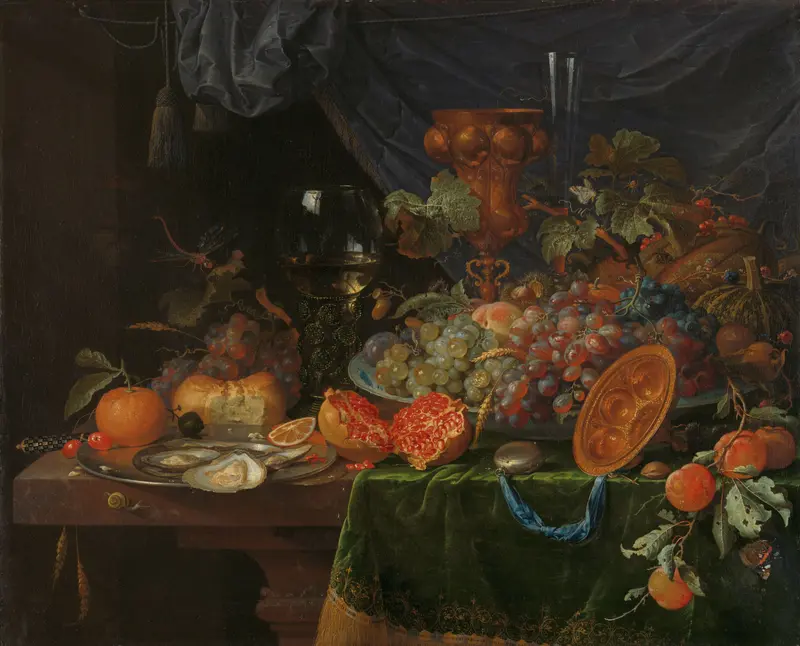
Still Life with Fruit and Oysters
Abraham Mignon
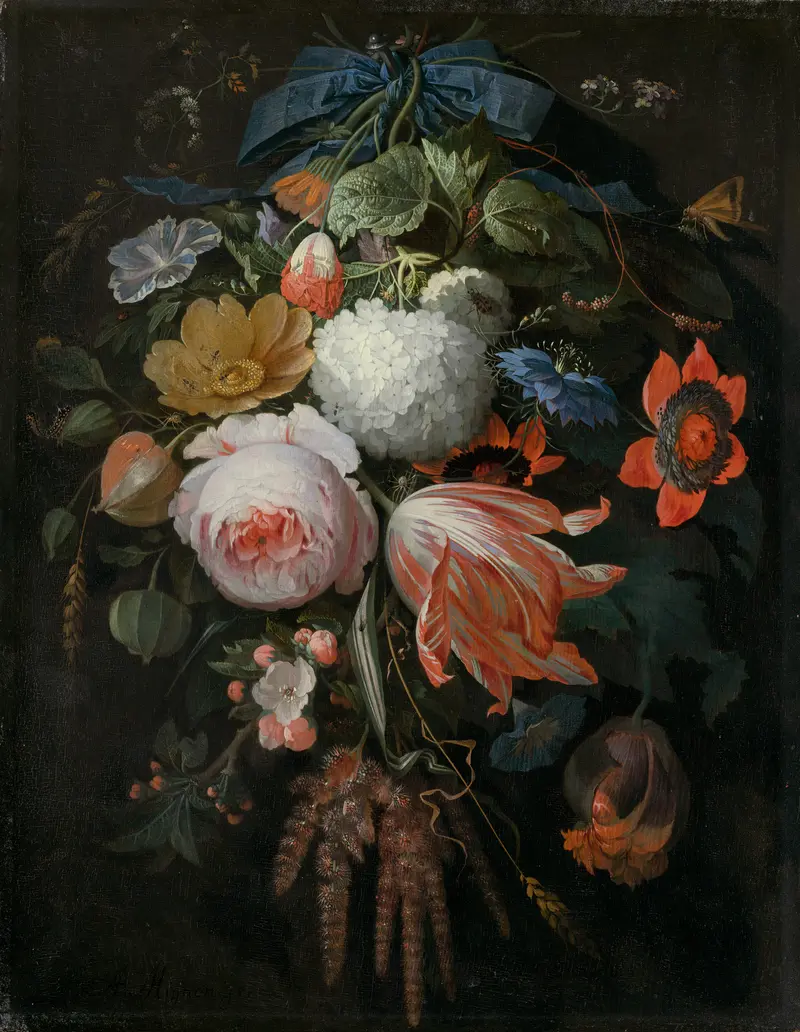
A Hanging Bouquet of Flowers
Abraham Mignon
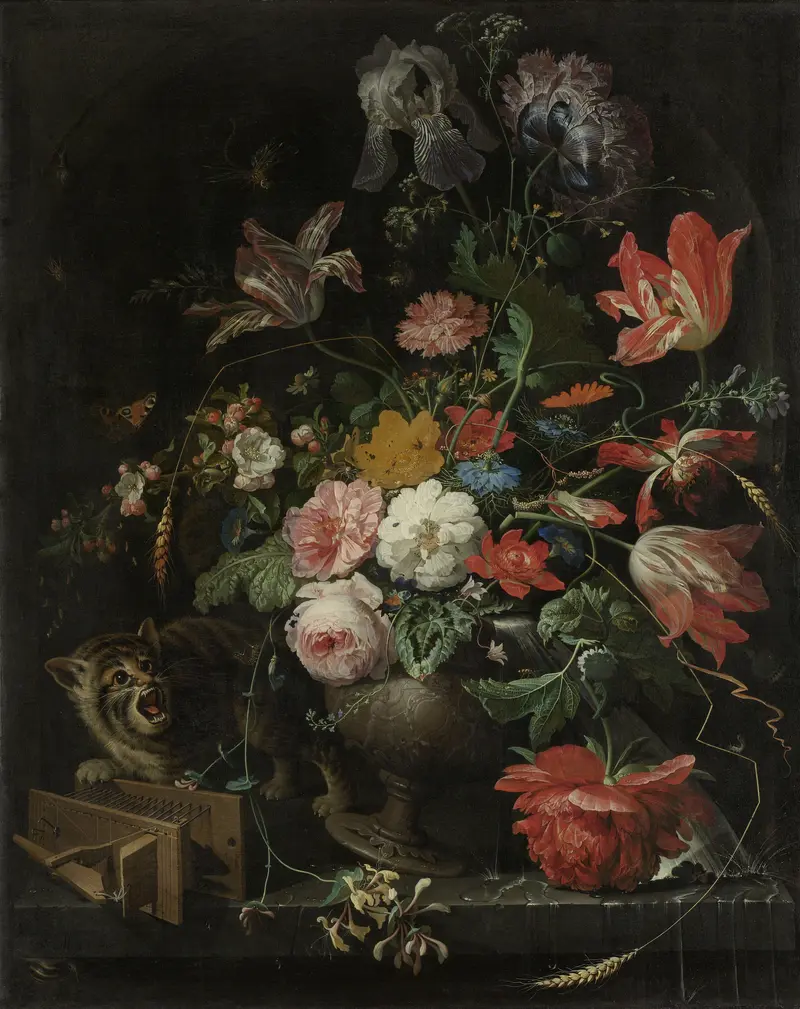
Bouquet with cat and mousetrap
Abraham Mignon
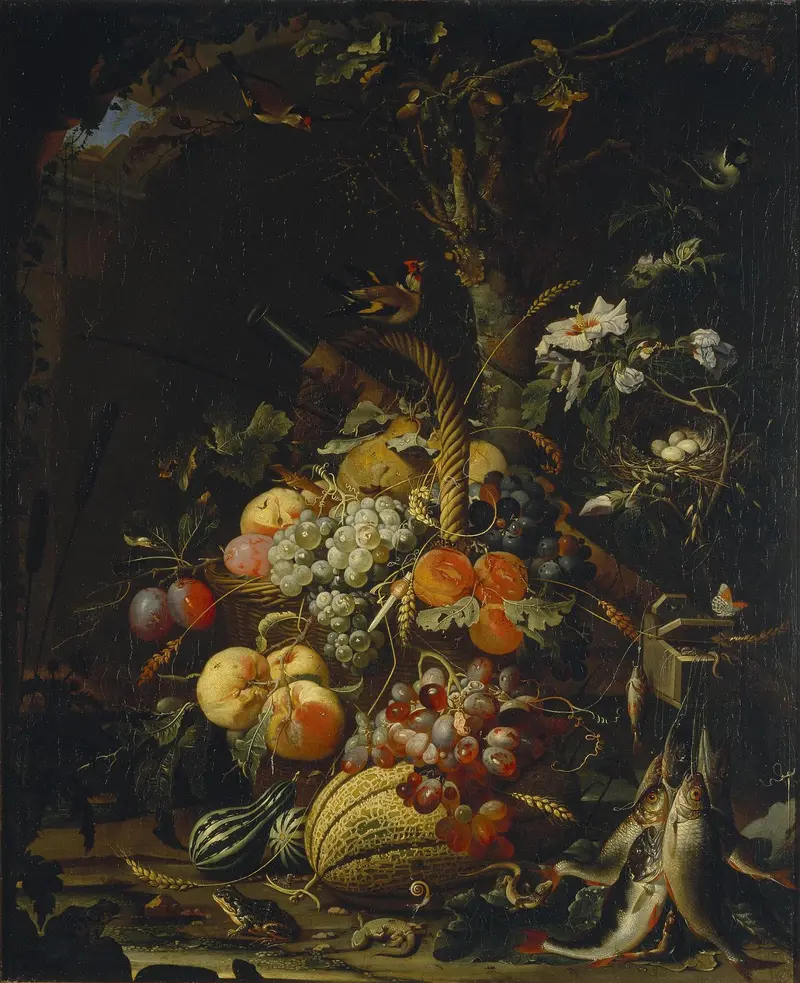
Forest floor still life with fruit, fish and a bird's nest
Abraham Mignon
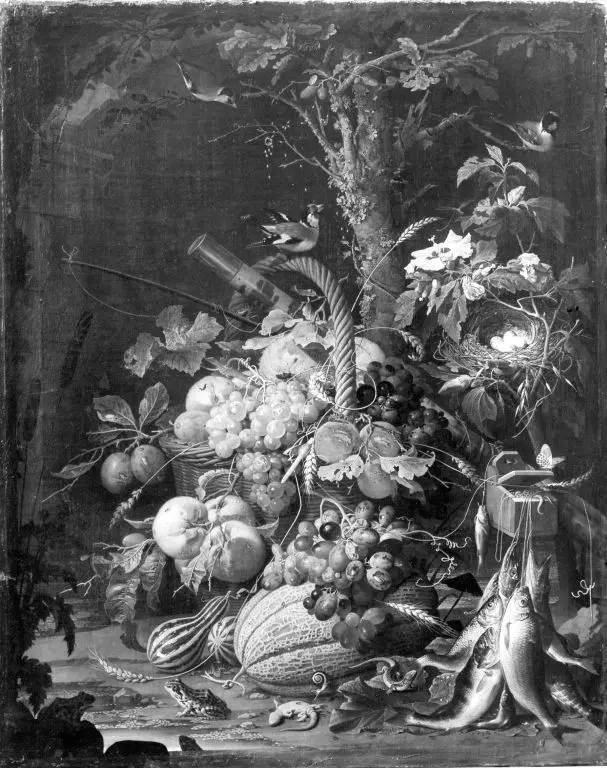
Still life with fruit, fish and a bird's nest
Abraham Mignon
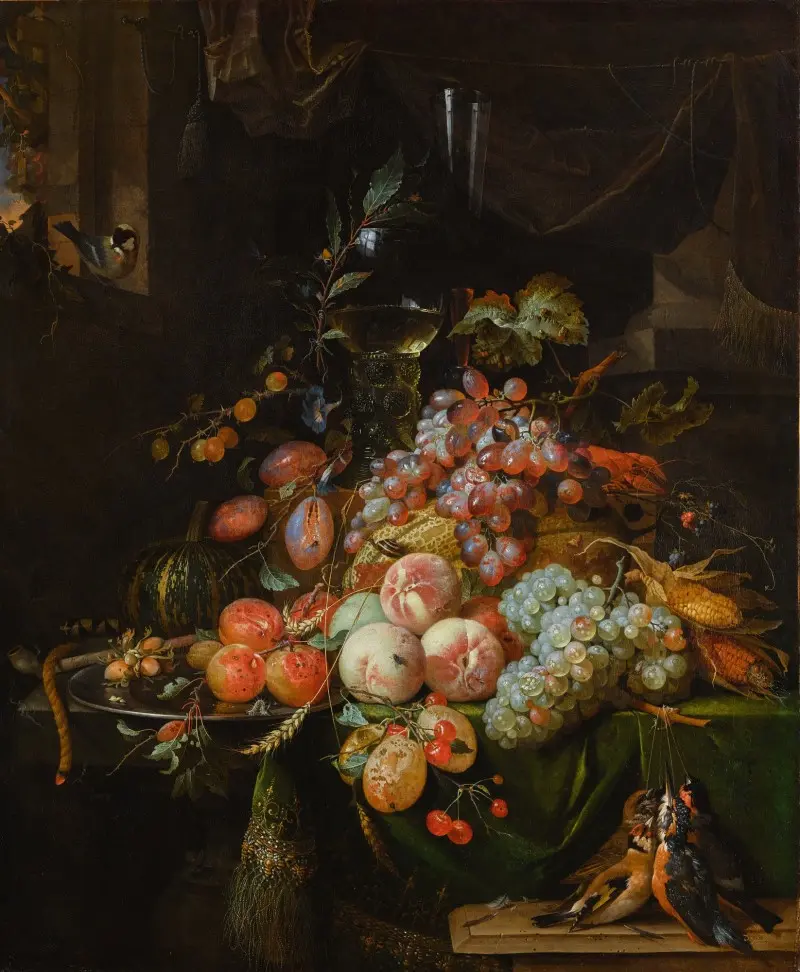
Still Life with Plums, Peaches, Apricots, Grapes and a Melon
Abraham Mignon
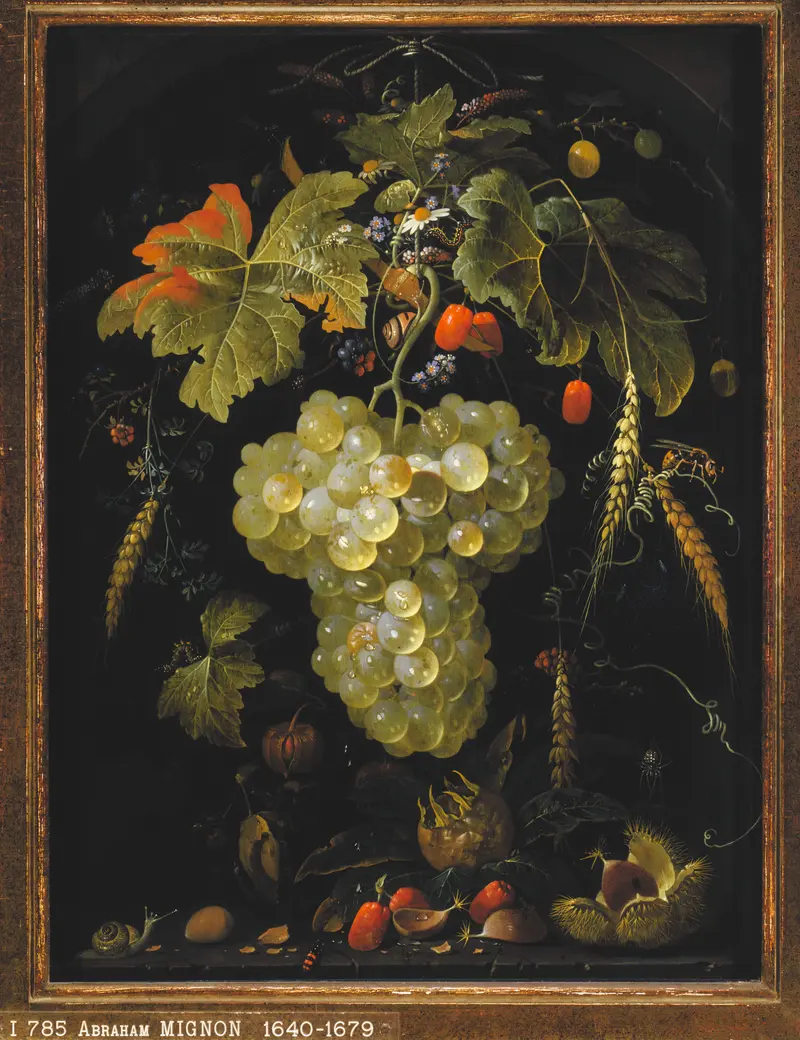
Festoon of fruit suspended from a rope, in a niche
Abraham Mignon
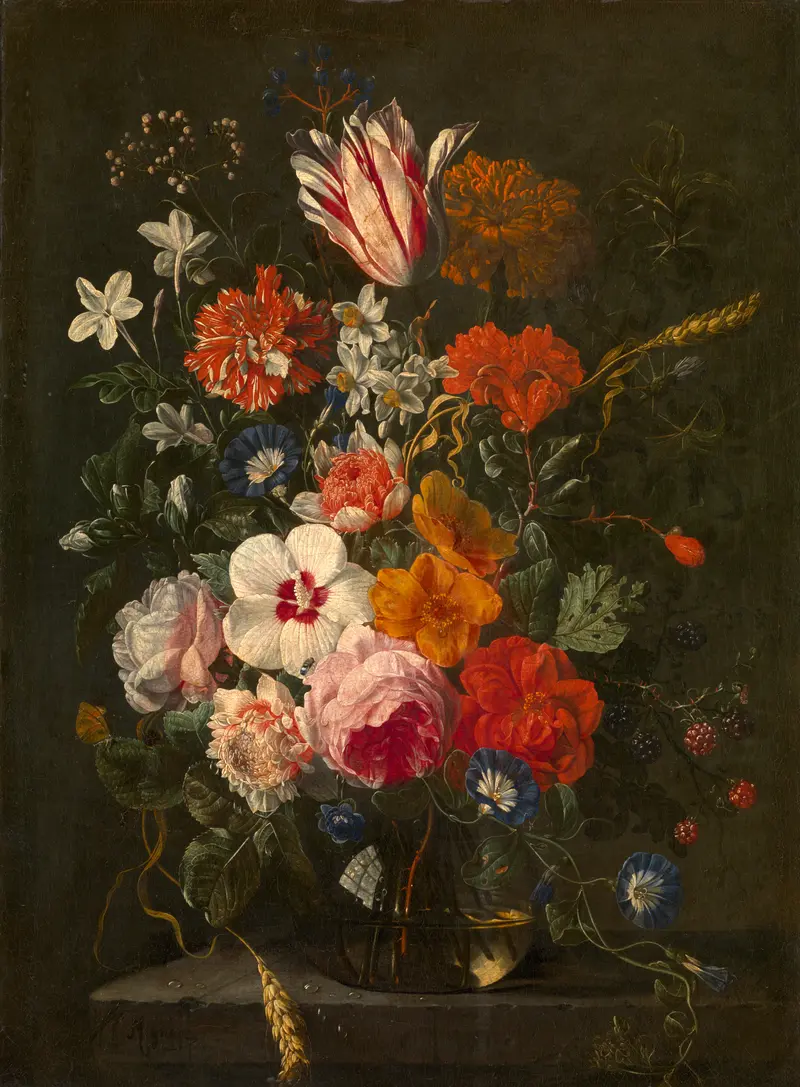
Flowers and a branch of berries in a glass vase on a stone ledge
Abraham Mignon
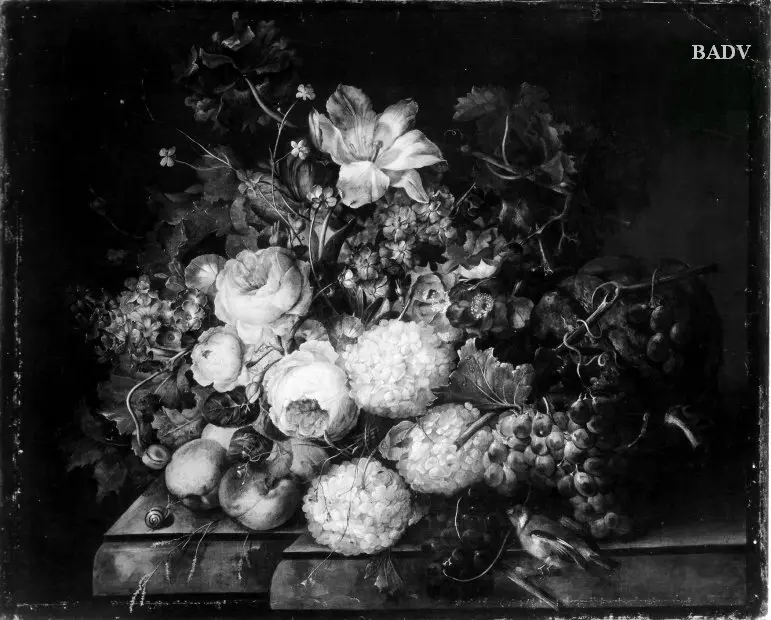
Flowers and fruit on a plinth
Abraham Mignon





