
Garland of Flowers — History & Facts
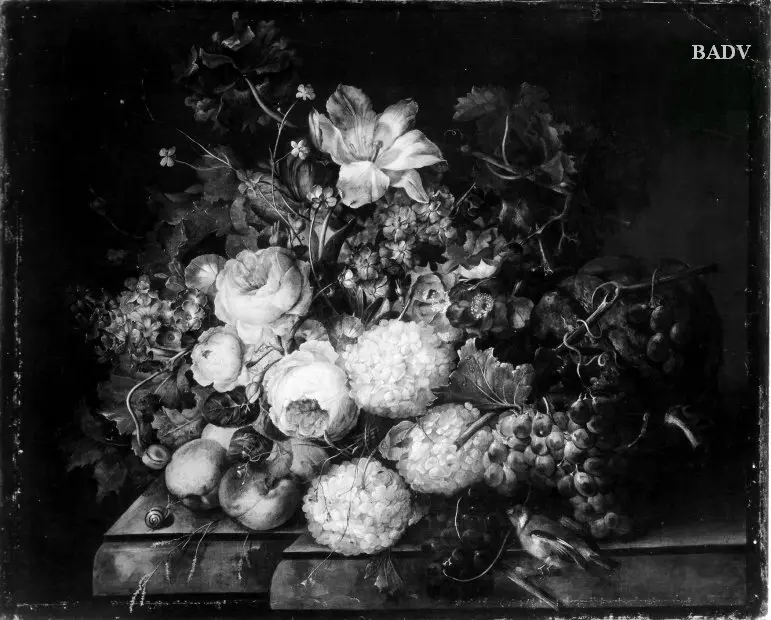
A riot of blossoms bursts from the darkness, drawing the eye into a world where nature’s bounty forms a theatrical frame. Each petal and leaf is rendered with such precision that you can almost sense the weight of dew on their surfaces. The flowers—lilies, tulips, poppies, irises—gather in a lush garland, their colors leaping forward against the deep black background.
At the heart of this floral spectacle, a young woman stands in quiet profile, her figure half-shadowed, as if she too is a rare bloom held in delicate suspension. The blue ribbon at the base ties the composition together, its cool tone a gentle pause amid the riotous reds and whites. Works like this from the 1670s belong to a world where still life painting had become a showcase of both technical skill and symbolic meaning. In the Dutch and Flemish tradition to which Abraham Mignon belonged, such garlands were often painted for private collectors who delighted in the illusion of abundance and the hidden references to transience and beauty.
The genre flourished in an age of scientific curiosity and horticultural obsession, when artists could dazzle with their ability to capture the fleeting perfection of a bloom. Little is recorded about the specific journey of this Garland of Flowers, now found in the digital galleries of Google Arts & Culture, but its opulence and precision invite us to linger, searching for the secrets tucked among the petals.
More Artworks by Abraham Mignon

Still Life with Flowers and a Watch
Abraham Mignon
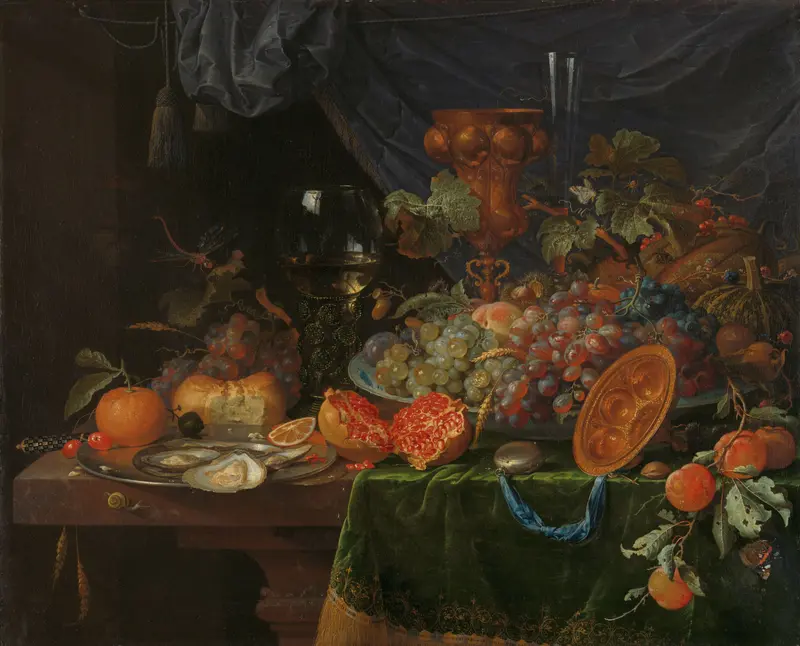
Still Life with Fruit and Oysters
Abraham Mignon
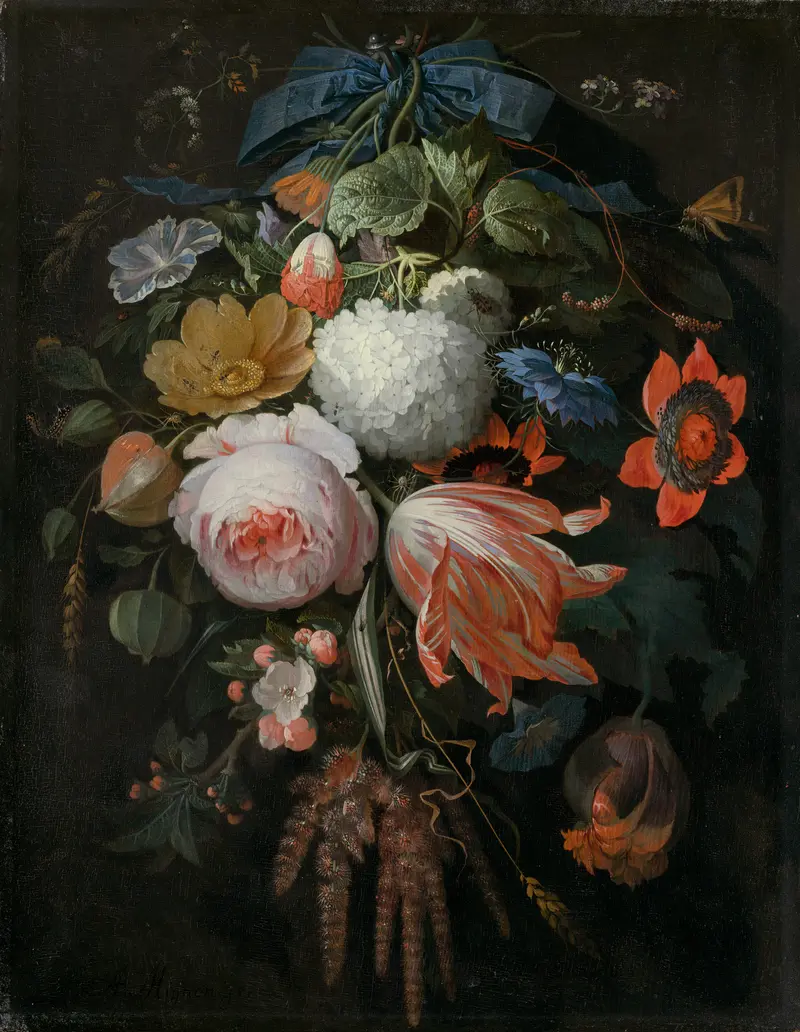
A Hanging Bouquet of Flowers
Abraham Mignon
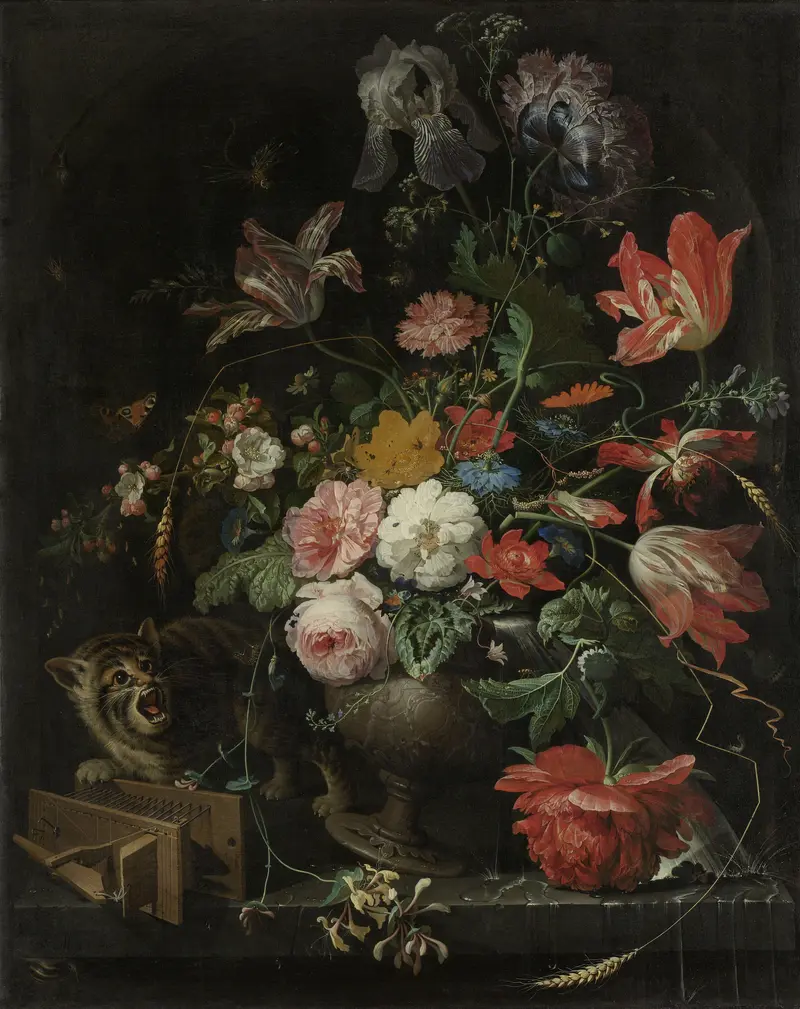
Bouquet with cat and mousetrap
Abraham Mignon
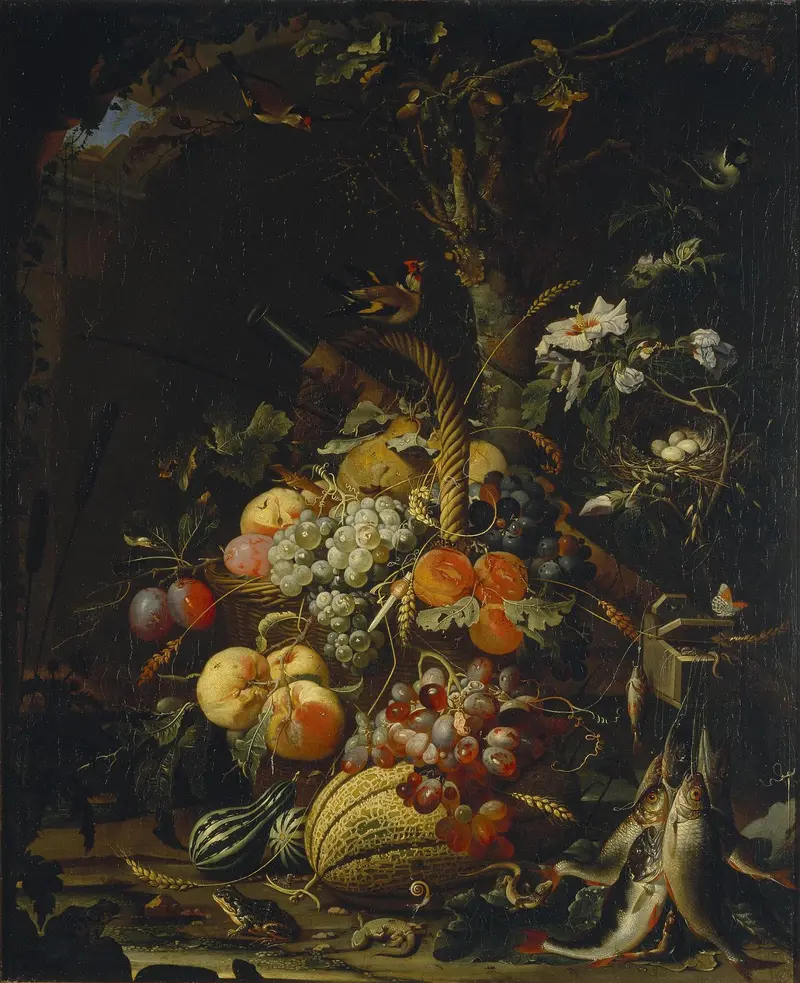
Forest floor still life with fruit, fish and a bird's nest
Abraham Mignon
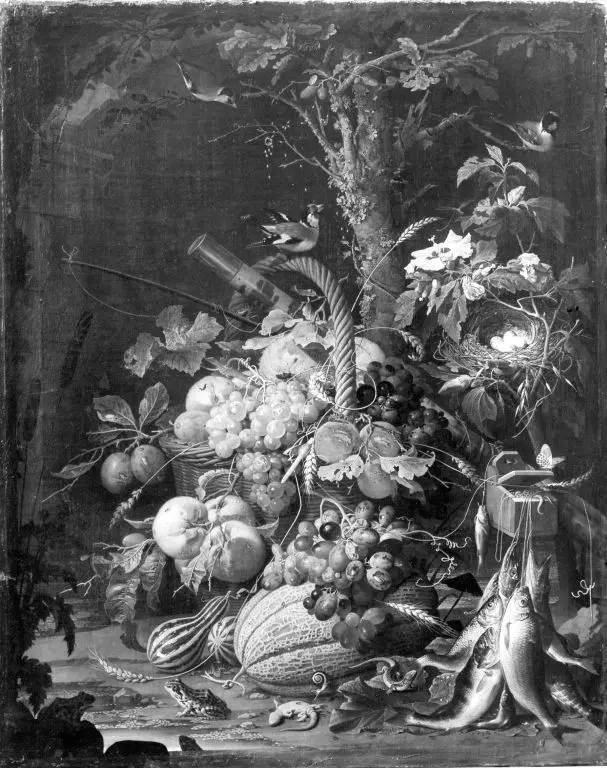
Still life with fruit, fish and a bird's nest
Abraham Mignon
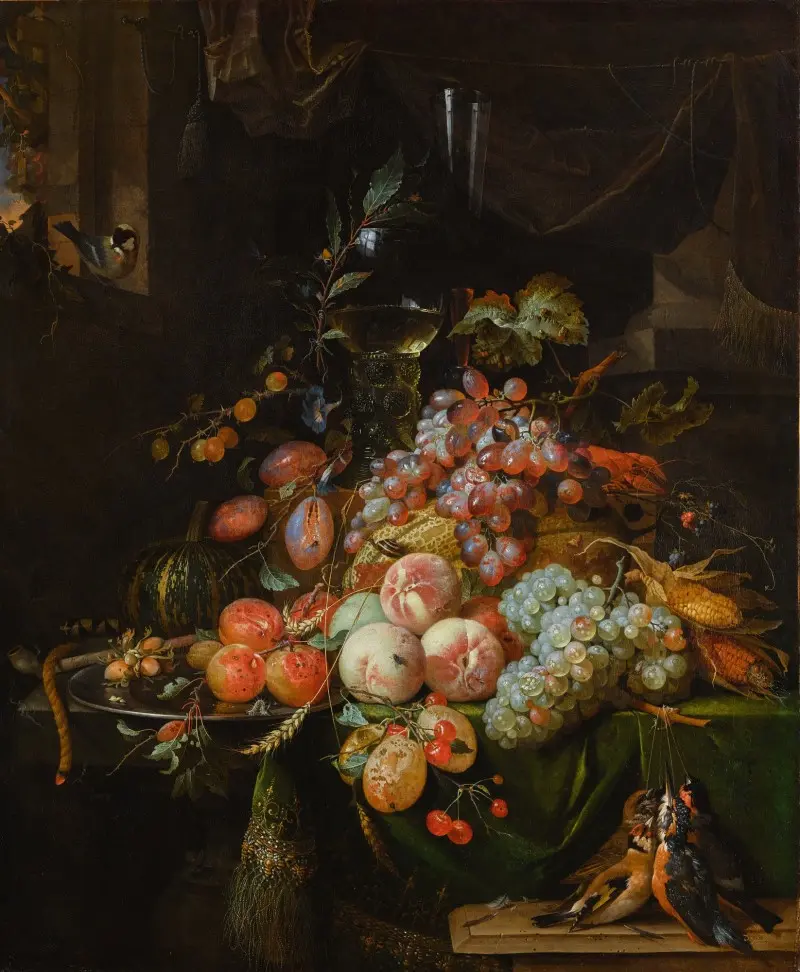
Still Life with Plums, Peaches, Apricots, Grapes and a Melon
Abraham Mignon
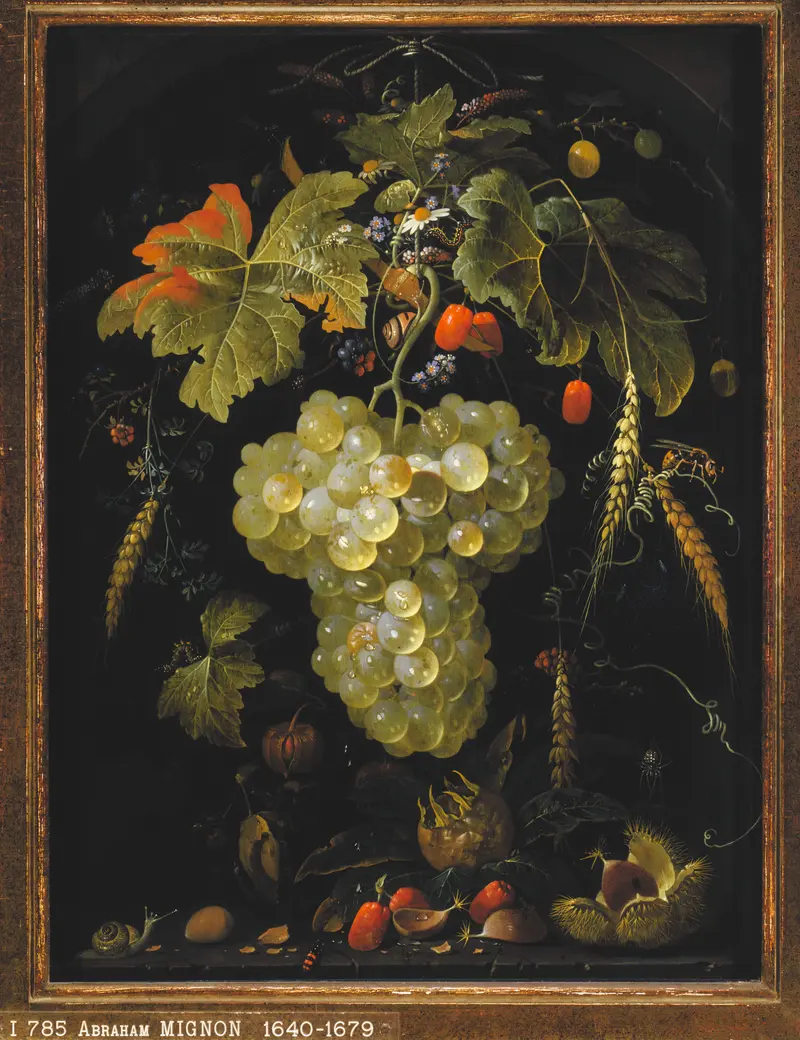
Festoon of fruit suspended from a rope, in a niche
Abraham Mignon
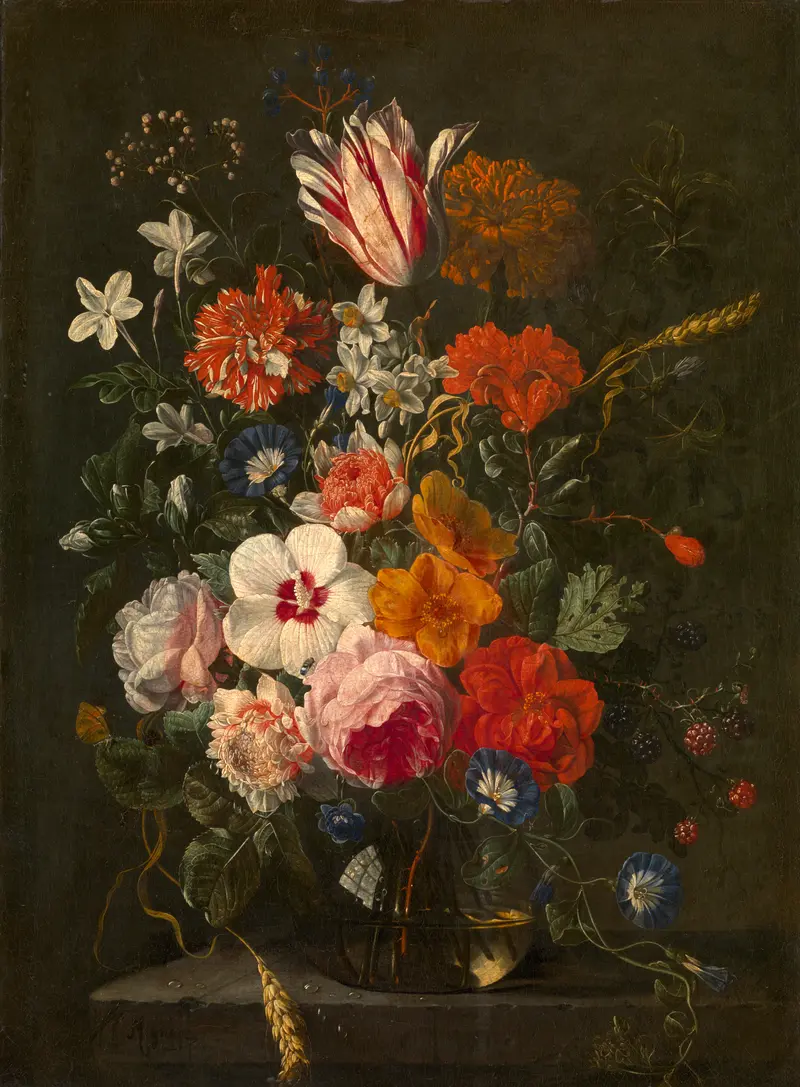
Flowers and a branch of berries in a glass vase on a stone ledge
Abraham Mignon
Flowers and fruit on a plinth
Abraham Mignon





