
Garland of fruit — History & Facts
The eye is immediately caught by the theatrical sweep of blue ribbons, tied in exuberant bows at the upper corners, as if to announce a celebration. From these, a garland of fruit spills downward in a lush, almost overflowing abundance: peaches, grapes, hazelnuts, corn, and berries, each rendered with a tactile precision that invites you to reach out and touch the dew still clinging to the grapes. The composition is anchored by the play of light, which glances off the fuzzy skin of the peaches and the translucent grapes, while the darker background recedes into shadow, making the fruit seem to glow.
Look closer, and you’ll find small dramas at the margins—a snail gliding along the stone ledge, a butterfly poised delicately, and a fly that hints at the passage of time and the impermanence of all this ripeness. Painted around 1670, Garland of fruit belongs to a world where such images were far more than decoration. In the Dutch Republic, still lifes like this one were prized by a wealthy merchant class eager to display both their prosperity and their taste for the wonders of nature. Artists such as Abraham Mignon became specialists in these intricate compositions, which often carried subtle reminders of mortality and the cycles of nature—here, the perfect fruit is shadowed by hints of decay and the quiet presence of insects.
Though little is recorded about the specific journey of this painting, it now resides in the Centraal Museum, a testament to the enduring fascination with the richness and fragility of life. Let your gaze linger, and see how many stories you can find woven among the leaves and fruit.
More Artworks by Abraham Mignon

Still Life with Flowers and a Watch
Abraham Mignon
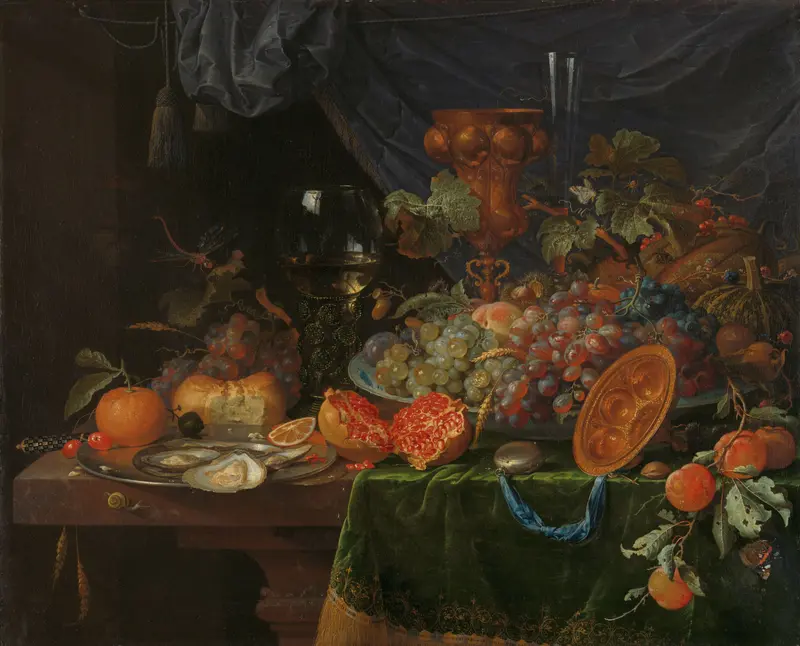
Still Life with Fruit and Oysters
Abraham Mignon
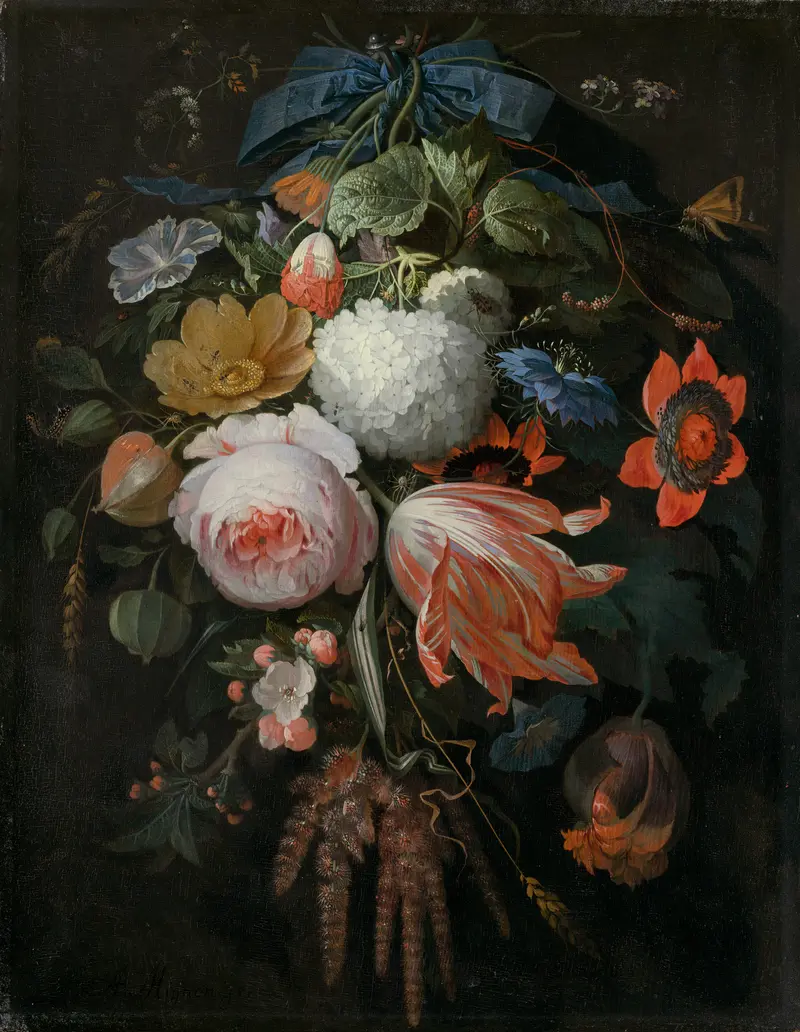
A Hanging Bouquet of Flowers
Abraham Mignon
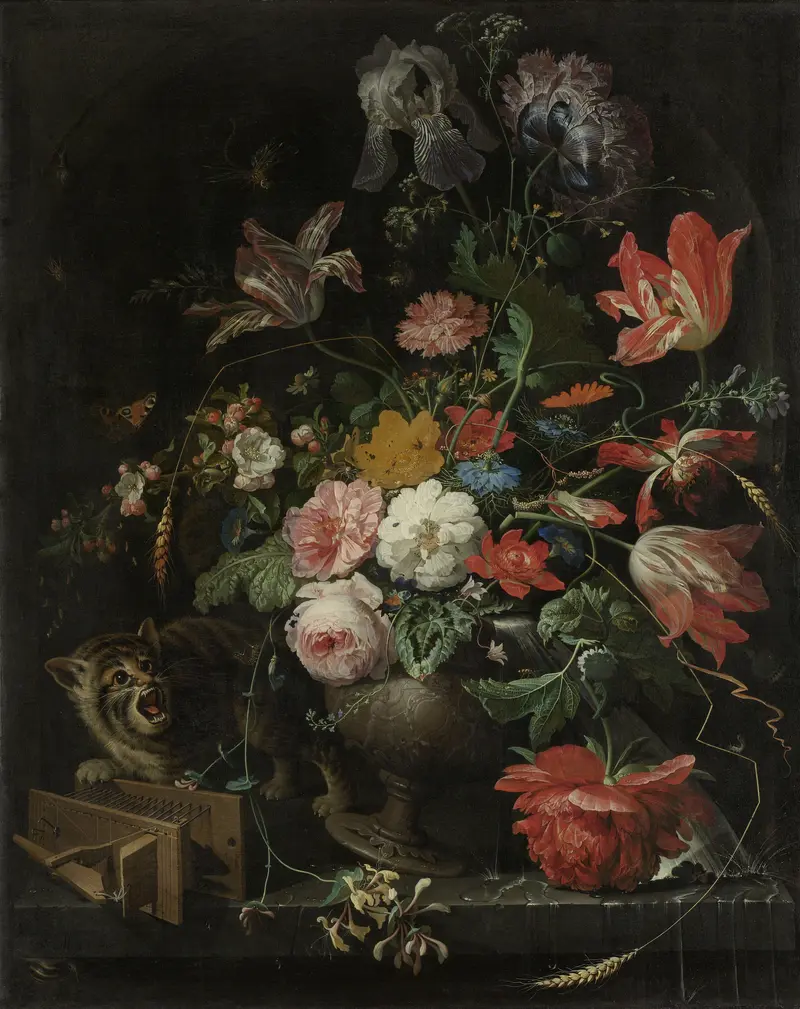
Bouquet with cat and mousetrap
Abraham Mignon
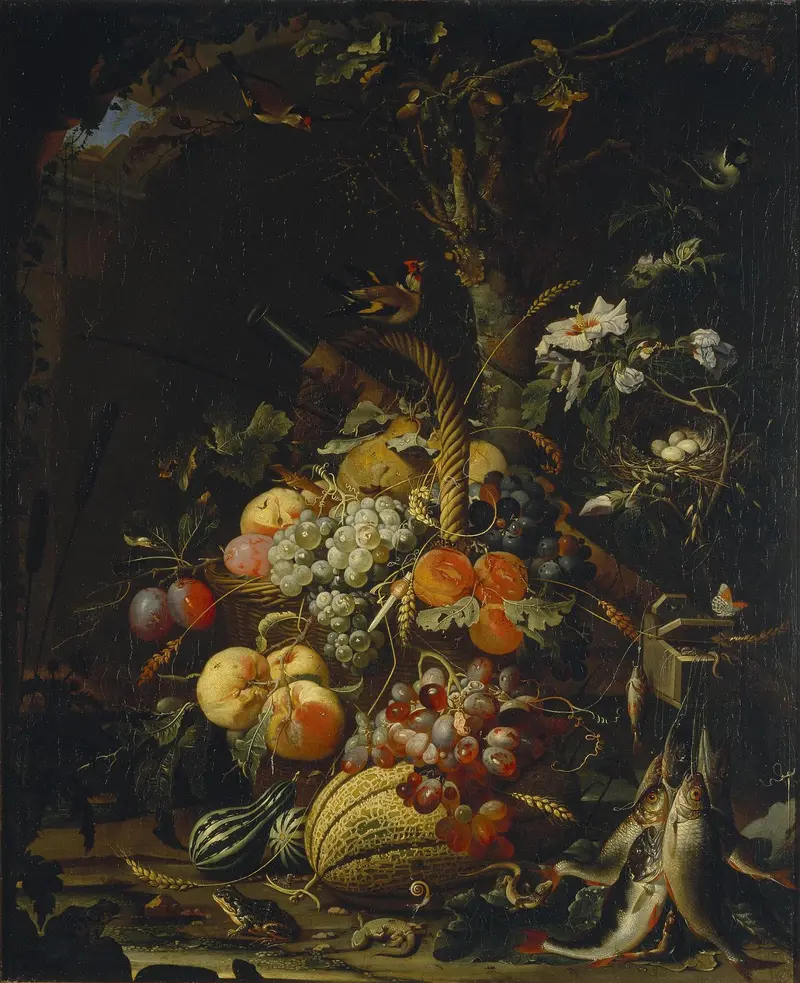
Forest floor still life with fruit, fish and a bird's nest
Abraham Mignon
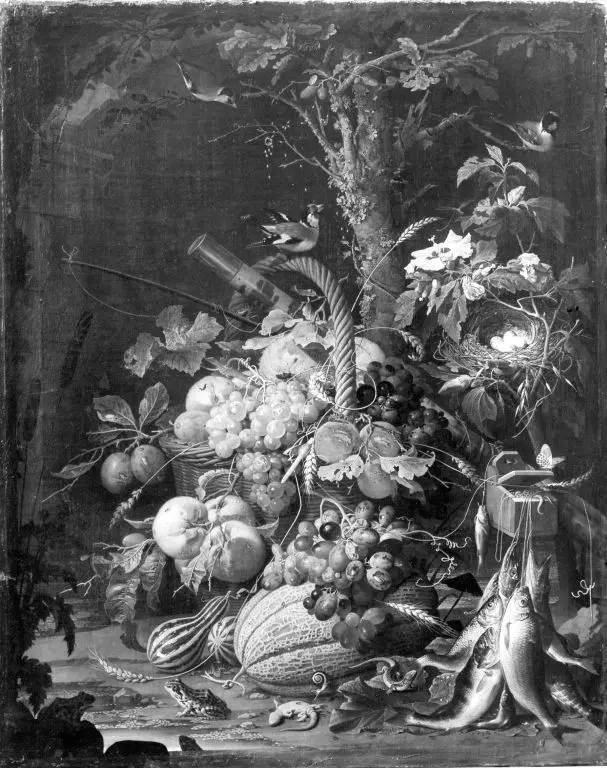
Still life with fruit, fish and a bird's nest
Abraham Mignon
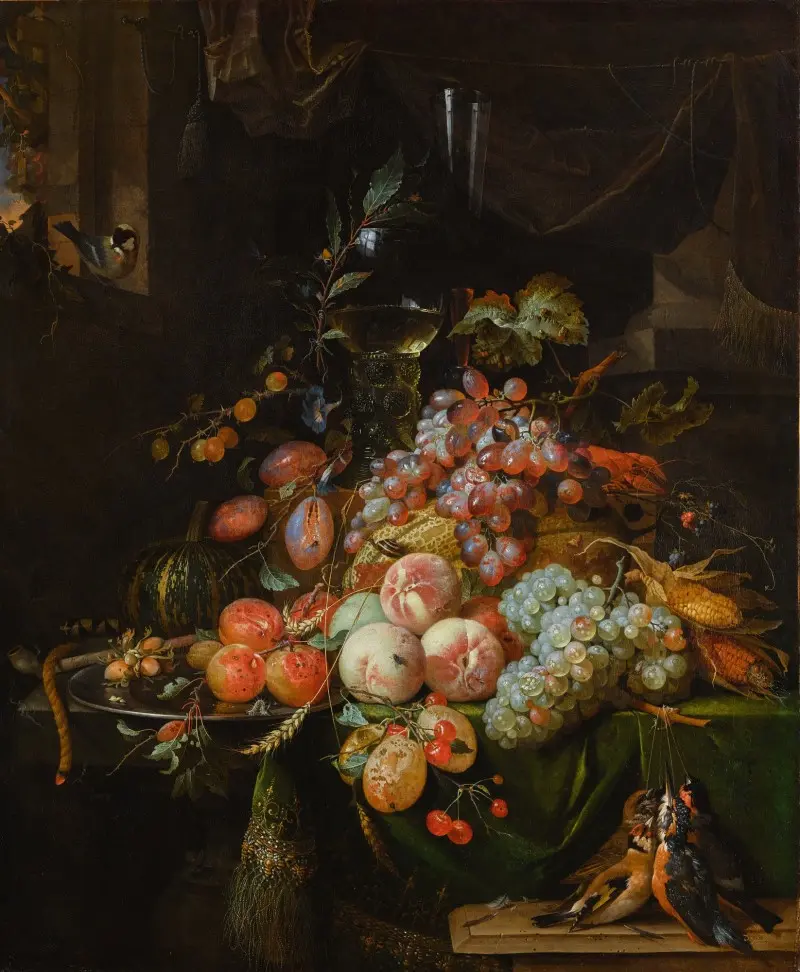
Still Life with Plums, Peaches, Apricots, Grapes and a Melon
Abraham Mignon
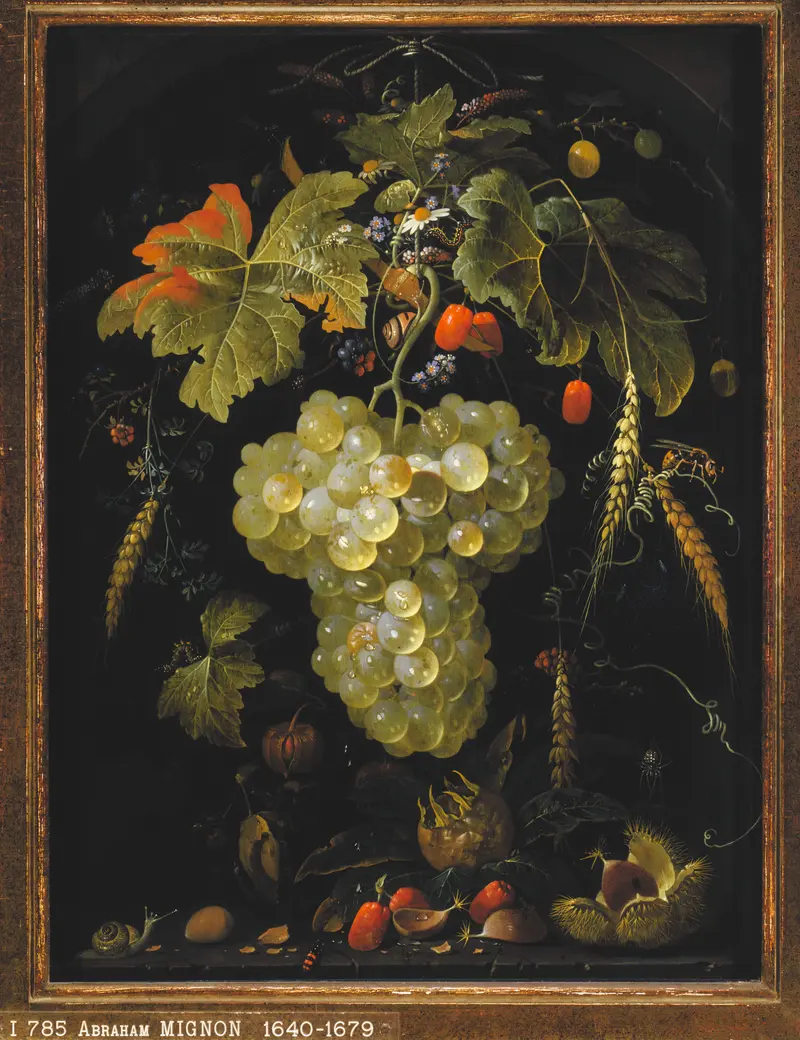
Festoon of fruit suspended from a rope, in a niche
Abraham Mignon
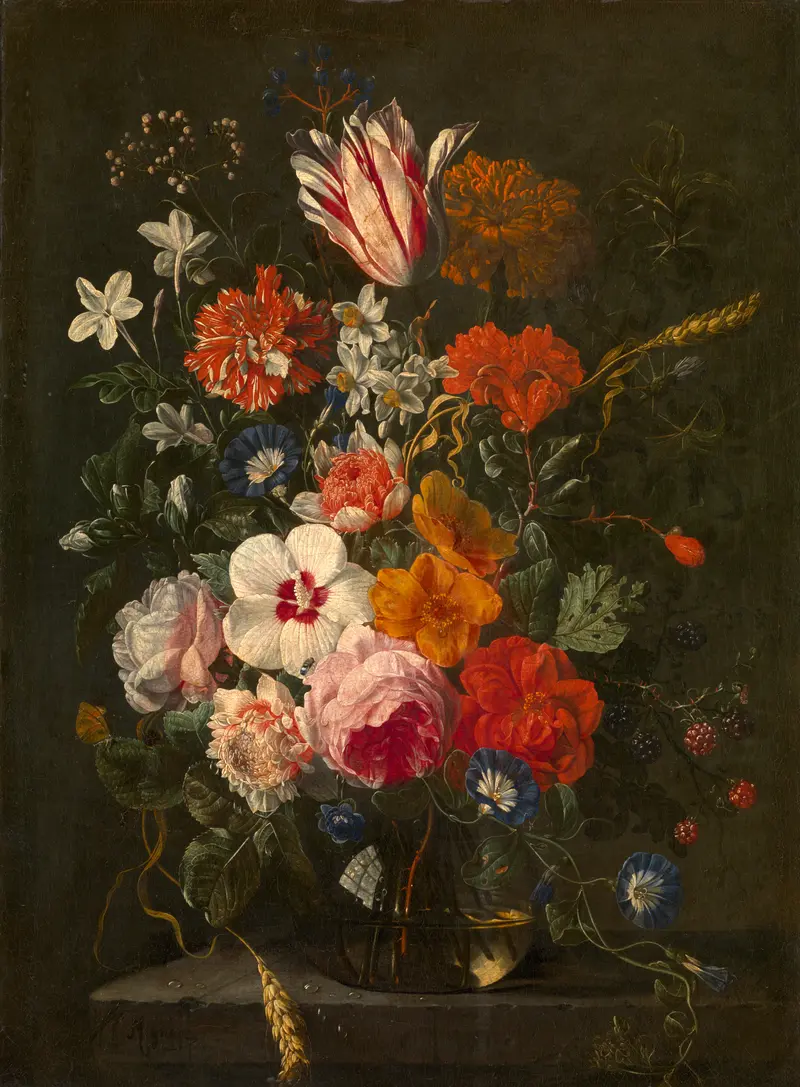
Flowers and a branch of berries in a glass vase on a stone ledge
Abraham Mignon
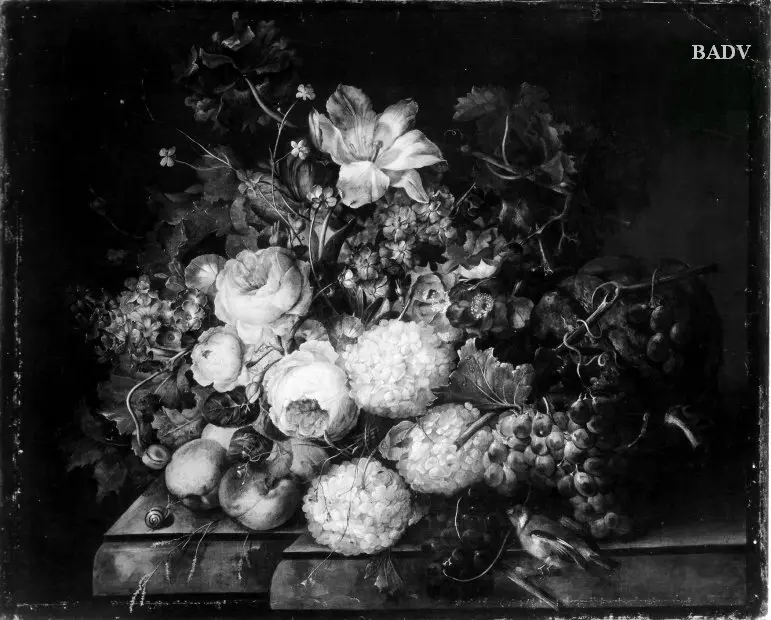
Flowers and fruit on a plinth
Abraham Mignon





