
Gay Head — History & Facts
No one can say for certain when Albert Pinkham Ryder painted Gay Head, nor precisely what inspired it, but the work’s title points unmistakably to the dramatic cliffs of Aquinnah on Martha’s Vineyard—one of the most storied and painted landmarks of the American Northeast. Ryder’s fascination with the sea and the shifting moods of coastal landscapes was lifelong, and Gay Head is among the rare works in which he turned his gaze from allegory and myth to a real, personal place. The painting’s uncertain date and medium have fueled decades of scholarly debate, with some suggesting it was a late-career experiment, others believing it predates his more visionary canvases.
The lack of documentation has only added to its allure, making it a small legend among Ryder’s admirers. In Gay Head, Ryder captures the moment when the last light of day brushes the clay cliffs and the restless Atlantic below. The cliffs rise in rough, ochre and red strata, their forms softened by Ryder’s famously thick, textured brushwork. A lone sailboat, barely distinguishable, drifts near the horizon—a motif Ryder often used to evoke solitude and the unknown.
The sky, heavy with layered clouds, presses down on the scene, amplifying the sense of isolation. Unlike the crisp realism of Winslow Homer’s seascapes, Ryder’s approach is all mood and mystery, the forms dissolving into one another, as if seen through memory or dream. The journey of Gay Head as an object is as enigmatic as its making. Its early provenance is unclear; no records survive of a commission or early exhibition, and it is absent from Ryder’s own lists.
Over the years, the painting has been handled with care, as Ryder’s notoriously unstable materials have led to conservation challenges—his thick, experimental layering often resulted in cracking and darkening. Today, Gay Head is recognized as a rare landscape in Ryder’s oeuvre, a testament to his ability to transform a familiar American scene into something hauntingly personal. It now hangs in a public collection, where it continues to puzzle and enchant viewers, standing apart from the mythic and literary subjects that define most of Ryder’s work.
More Artworks by Albert Pinkham Ryder

The Toilers of the Sea
Albert Pinkham Ryder
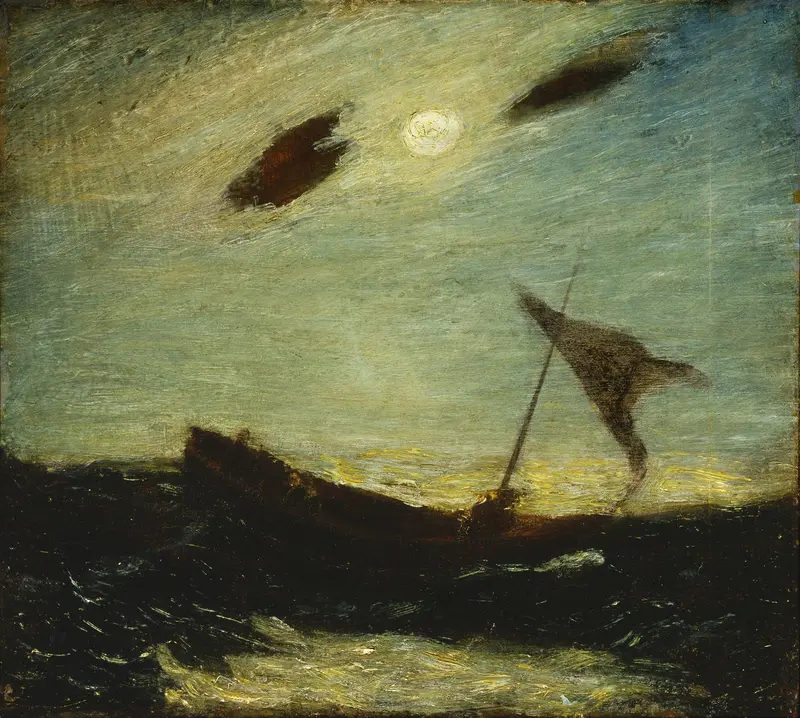
Moonlight
Albert Pinkham Ryder
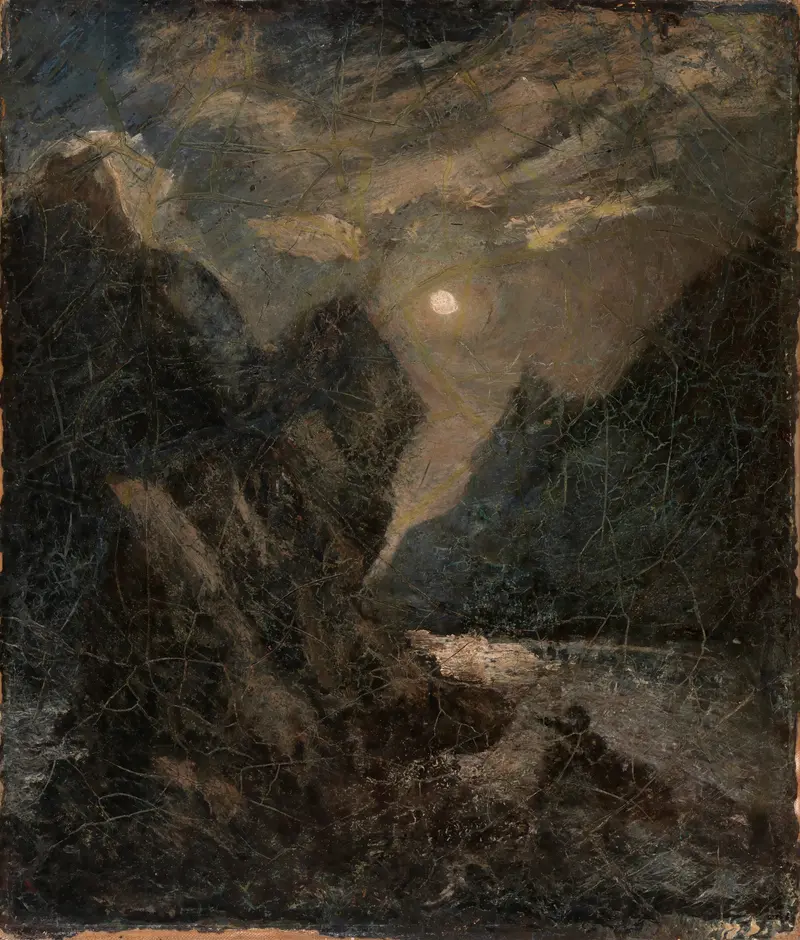
The Lorelei
Albert Pinkham Ryder
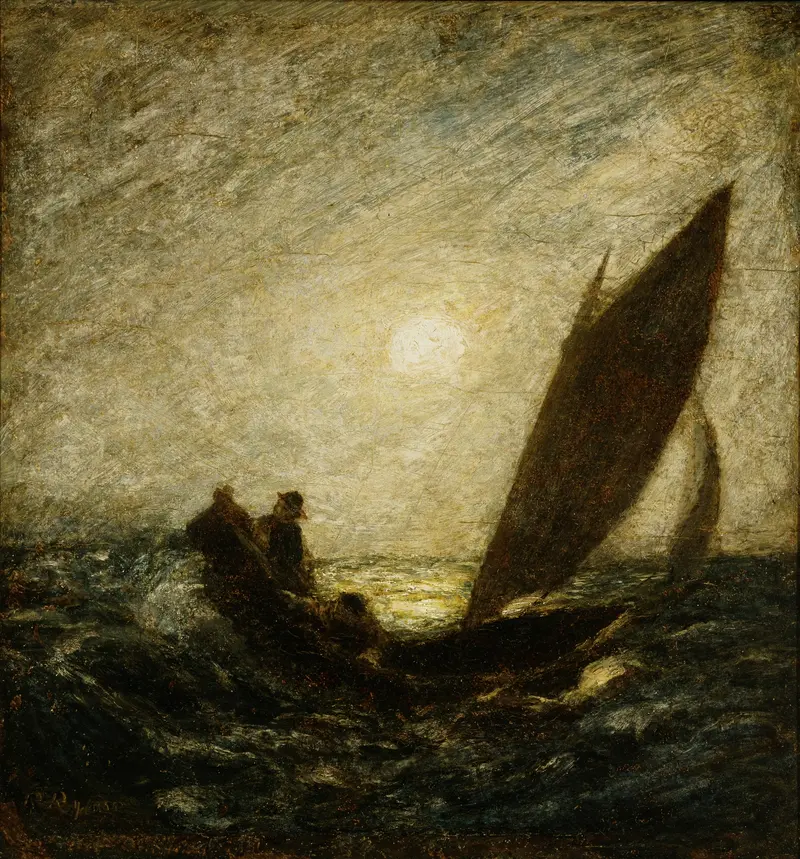
With Sloping Mast And Dipping Prow
Albert Pinkham Ryder
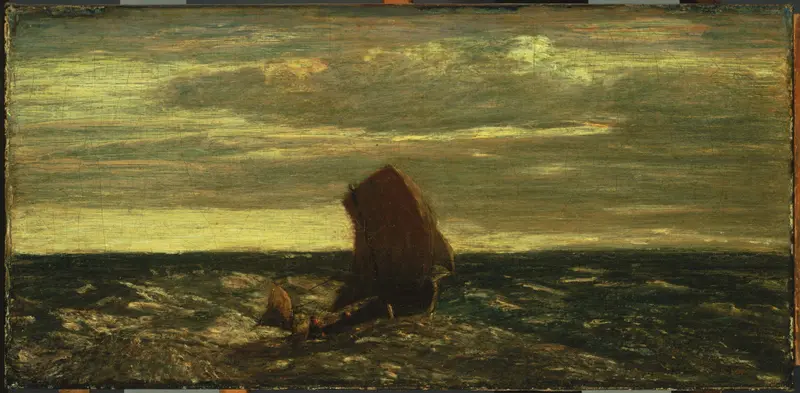
Homeward Bound
Albert Pinkham Ryder
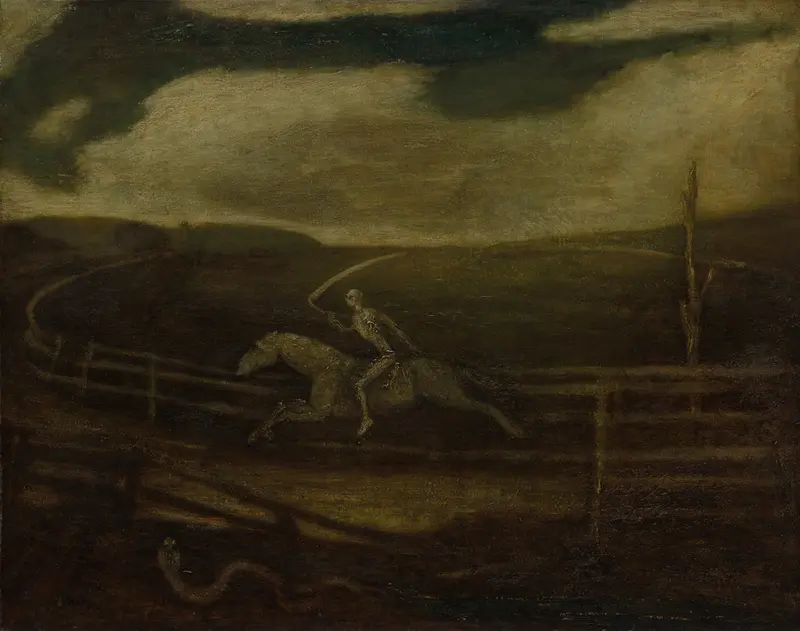
The Race Track (Death on a Pale Horse)
Albert Pinkham Ryder
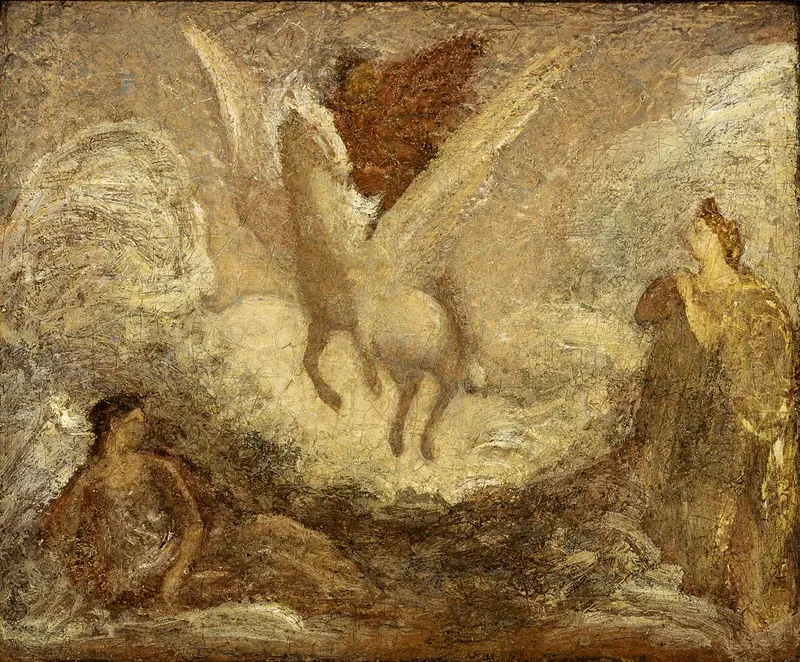
Pegasus Departing
Albert Pinkham Ryder
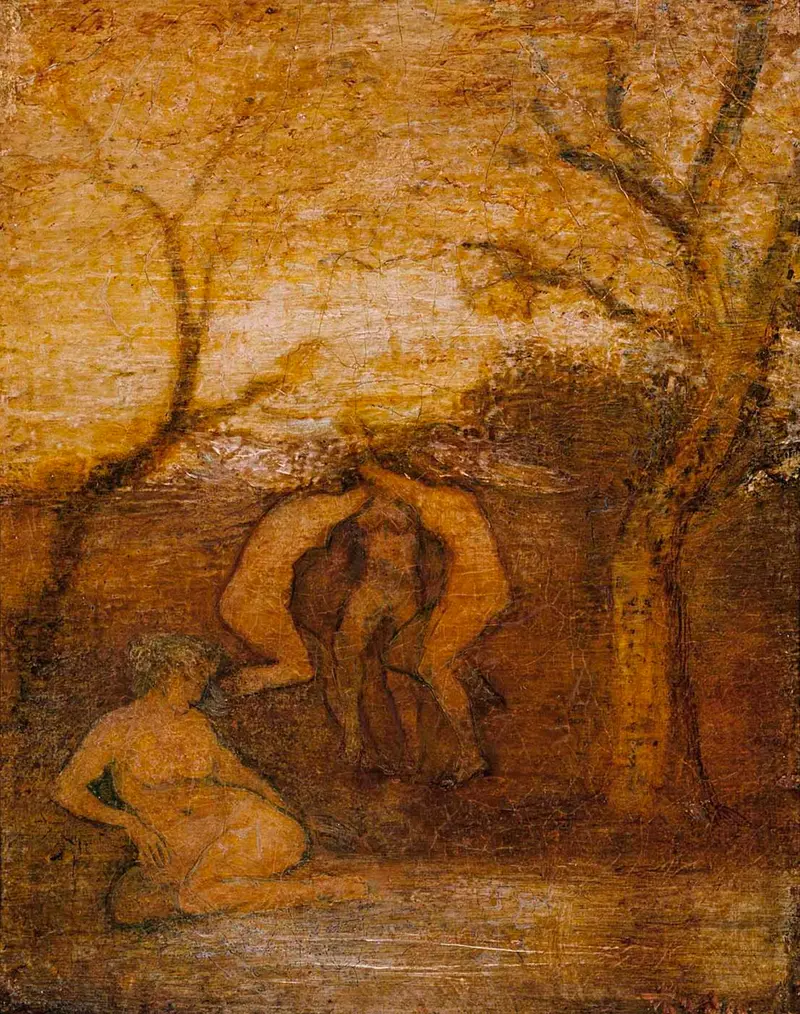
Dancing Dryads
Albert Pinkham Ryder
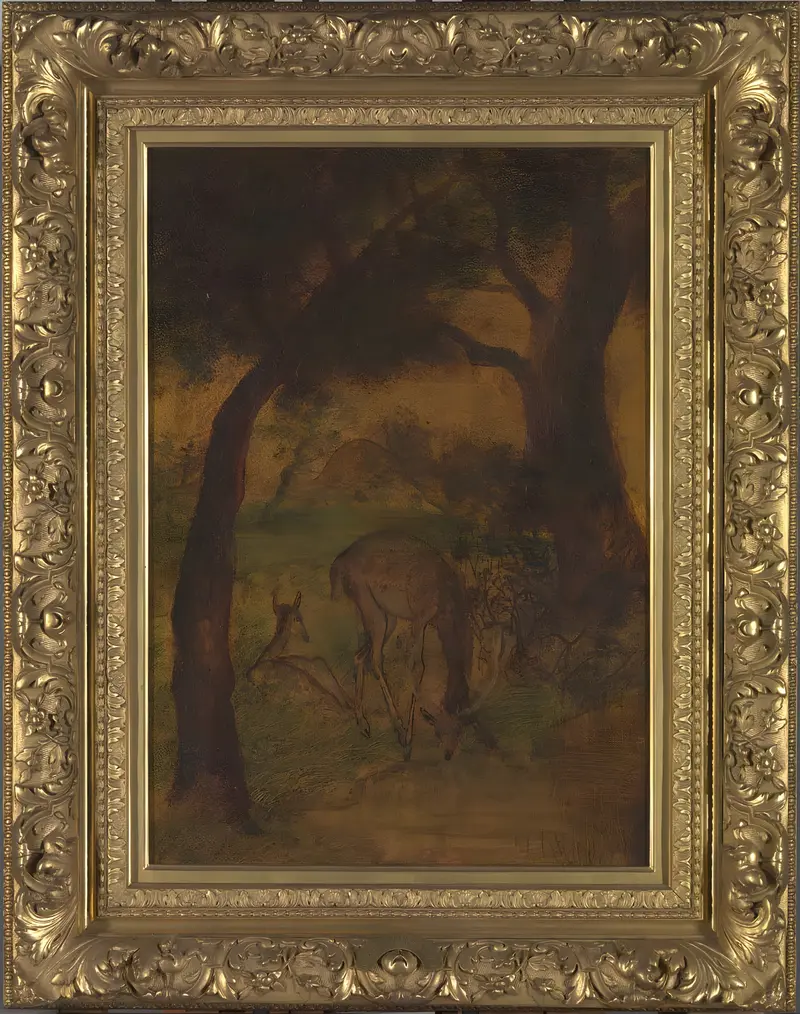
A Stag Drinking
Albert Pinkham Ryder
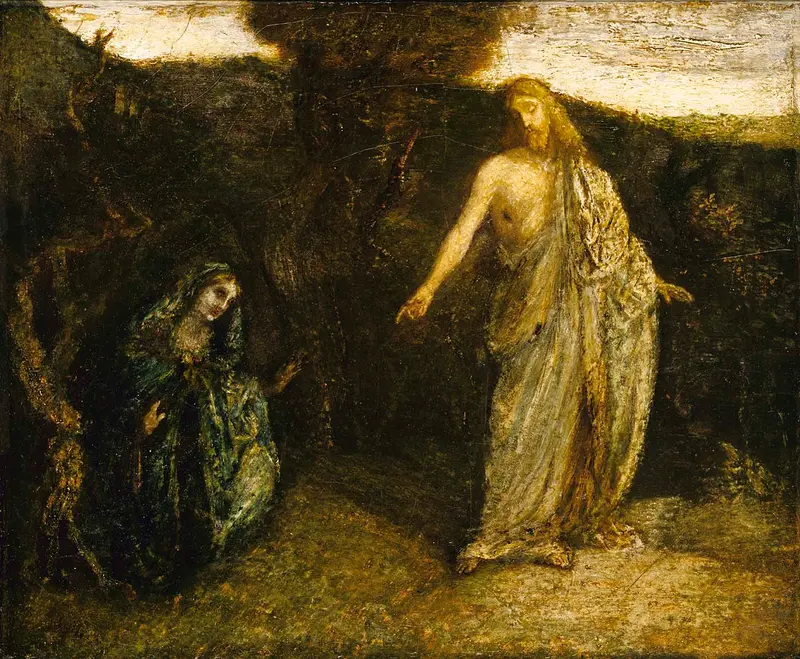
Christ Appearing to Mary
Albert Pinkham Ryder
More Landscape Art

The Starry Night
Vincent van Gogh

View of Delft
Johannes Vermeer

Water Lilies
Claude Monet

The Grand Canal, Venice, looking north-west from the Ca' Corner to the Ca' Contarini degli Scrigni, with the campanile of Santa Maria della Carità
Canaletto

Windsor Castle
Canaletto

The Grand Canal looking North-East from the Palazzo Dolfin-Manin to the Rialto Bridge
Canaletto