
The Race Track (Death on a Pale Horse) — History & Facts
When The Race Track (Death on a Pale Horse) was first exhibited, it shocked viewers with its haunting vision and became the subject of anxious speculation among critics and friends of Albert Pinkham Ryder. The painting was inspired by the suicide of a jockey Ryder knew, a real-life tragedy that deeply affected the artist and led him to meditate on fate and mortality. Unusually for Ryder, he inscribed the frame with the words “Death on a Pale Horse,” directly linking the work to the biblical Apocalypse and making its subject unmistakable.
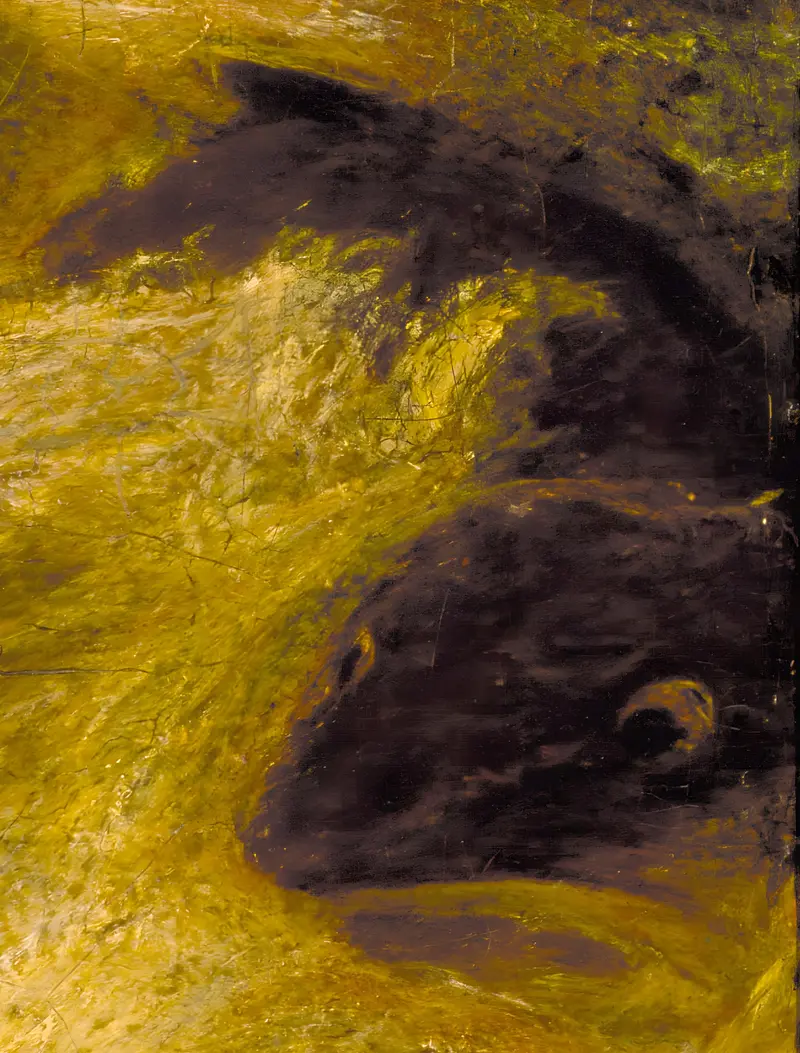
The painting’s eerie atmosphere and cryptic symbolism have made it one of the most discussed and debated works in American art. At the center of the composition, a lone jockey rides a skeletal white horse in endless circles around a dark, barren track. The rider’s red jacket is the only flash of color, a signal of life and violence, while the pale horse—an unmistakable reference to the Book of Revelation—heralds death itself. The empty stands and the swirling, stormy sky press in, creating a sense of isolation and doom.
Ryder’s thick, encrusted paint and shadowy forms blur the boundary between reality and nightmare, much as Francisco de Goya did in his late Black Paintings. Here, the race is not for victory but for survival, and the finish line is nowhere in sight. The Race Track (Death on a Pale Horse) was painted over several years, with Ryder obsessively reworking its surface—a hallmark of his mature style. The painting’s medium is uncertain, as Ryder often experimented with unconventional mixtures, leading to later conservation challenges.
After Ryder’s death in 1917, the painting passed through private hands before entering the collection of the Cleveland Museum of Art, where it remains today. This work stands as a late-career meditation on mortality and fate, and is widely considered Ryder’s most powerful and enigmatic statement. Its brooding vision continues to fascinate, a testament to the artist’s singular imagination and the mysteries that haunted him.
Sources: Wikidata Q60513294 · Image source (Wikimedia Commons)
More Artworks by Albert Pinkham Ryder

The Toilers of the Sea
Albert Pinkham Ryder
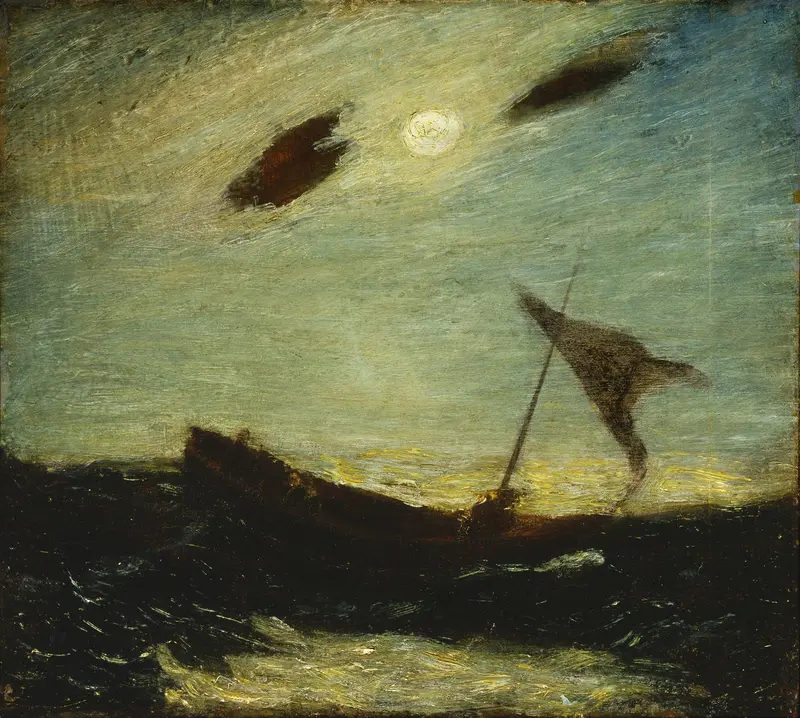
Moonlight
Albert Pinkham Ryder
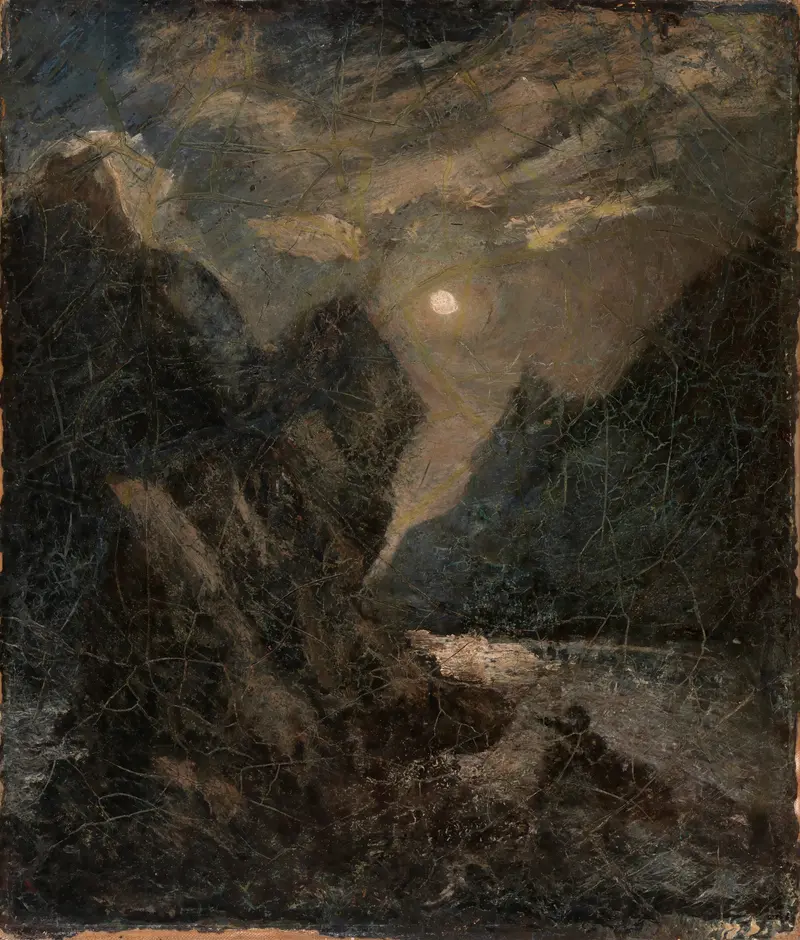
The Lorelei
Albert Pinkham Ryder
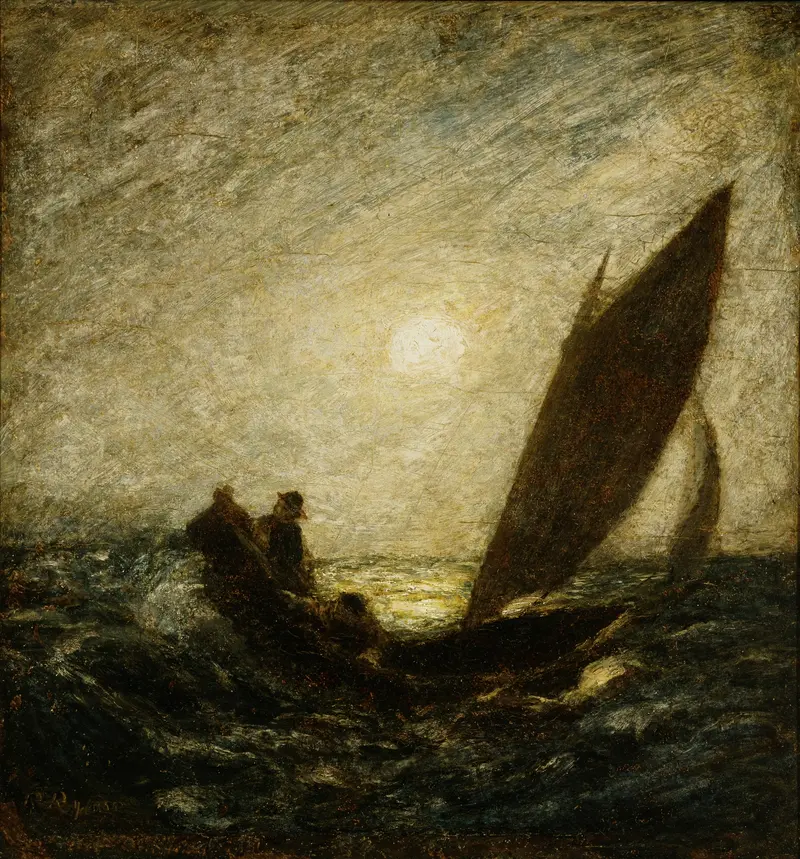
With Sloping Mast And Dipping Prow
Albert Pinkham Ryder
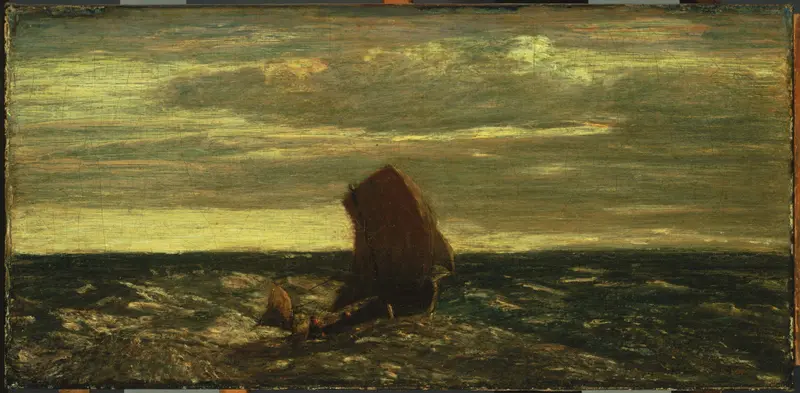
Homeward Bound
Albert Pinkham Ryder
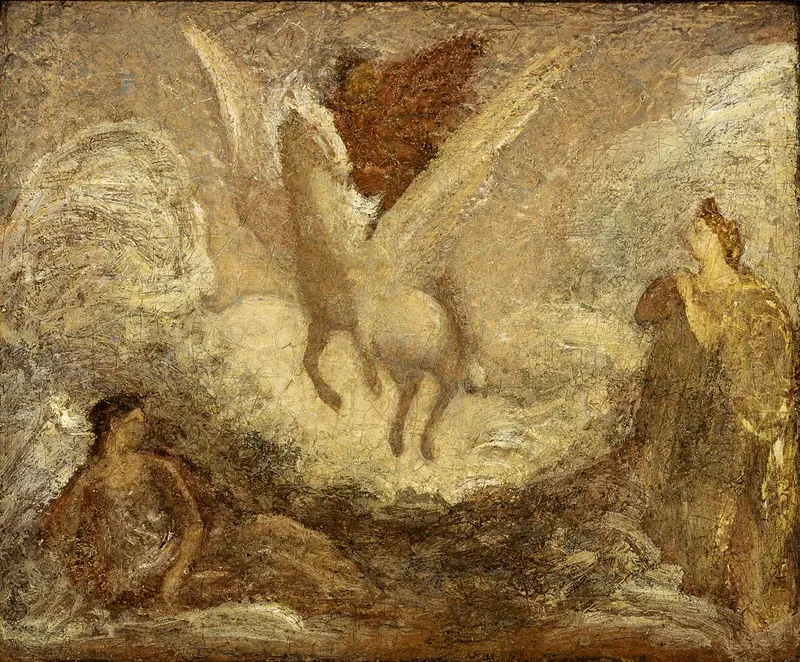
Pegasus Departing
Albert Pinkham Ryder
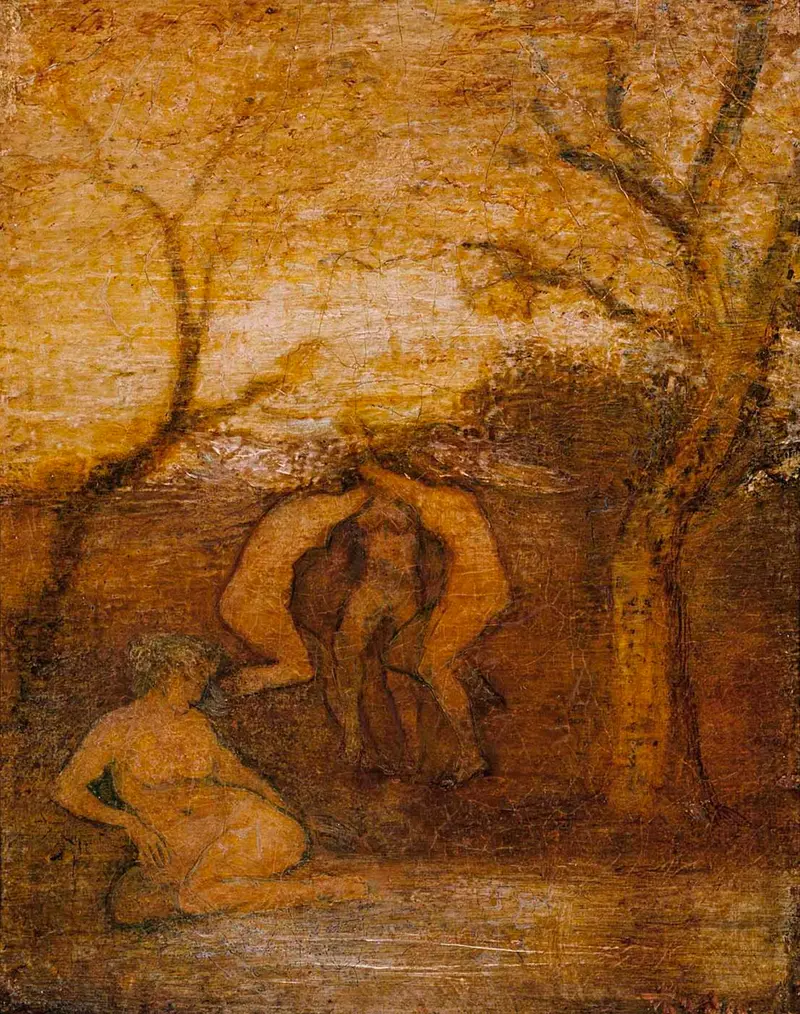
Dancing Dryads
Albert Pinkham Ryder
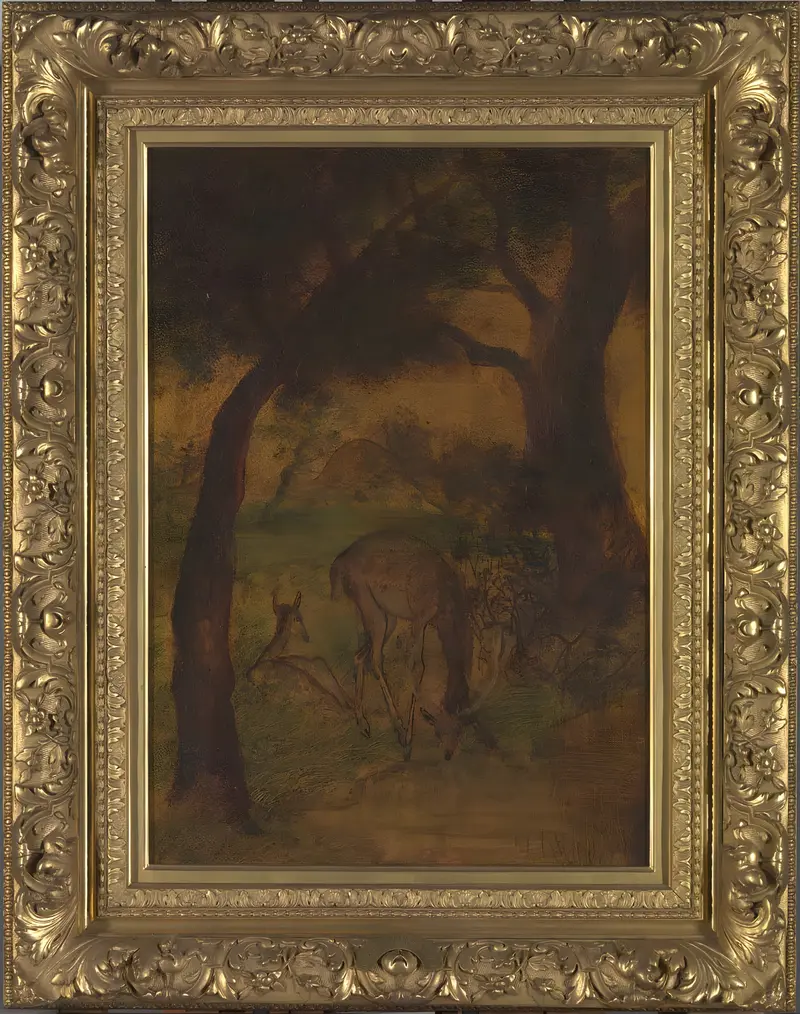
A Stag Drinking
Albert Pinkham Ryder
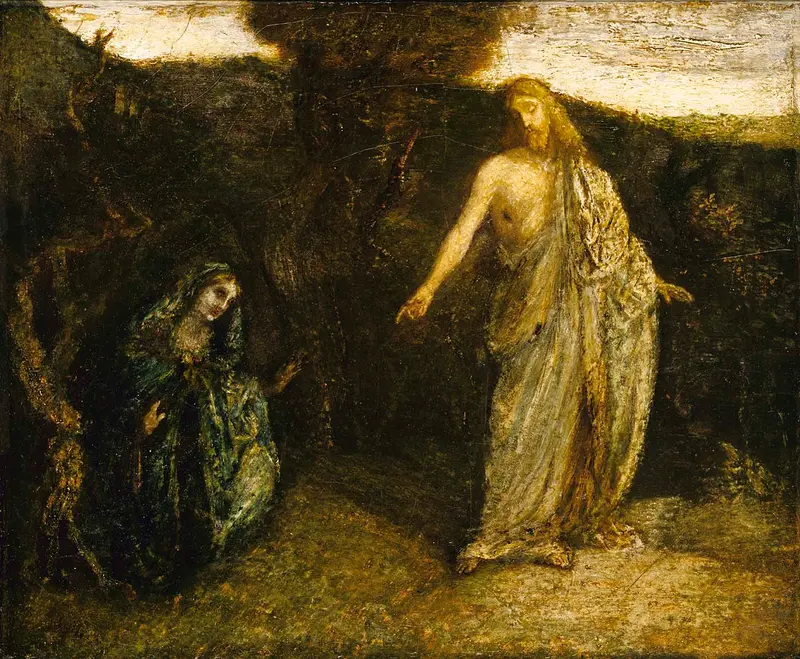
Christ Appearing to Mary
Albert Pinkham Ryder
Jonah
Albert Pinkham Ryder



