
Pegasus Departing — History & Facts
No one knows exactly when Pegasus Departing left the studio of Albert Pinkham Ryder, nor the circumstances of its creation, but the painting’s fate has been wrapped in mystery since Ryder’s lifetime. Ryder was notorious for reworking his canvases for years, sometimes decades, and for his unconventional methods that led many of his works to darken and crack over time. The painting’s subject—a solitary, mythic horse poised between earth and sky—has led some critics to see it as a veiled self-portrait, a meditation on artistic escape and longing.
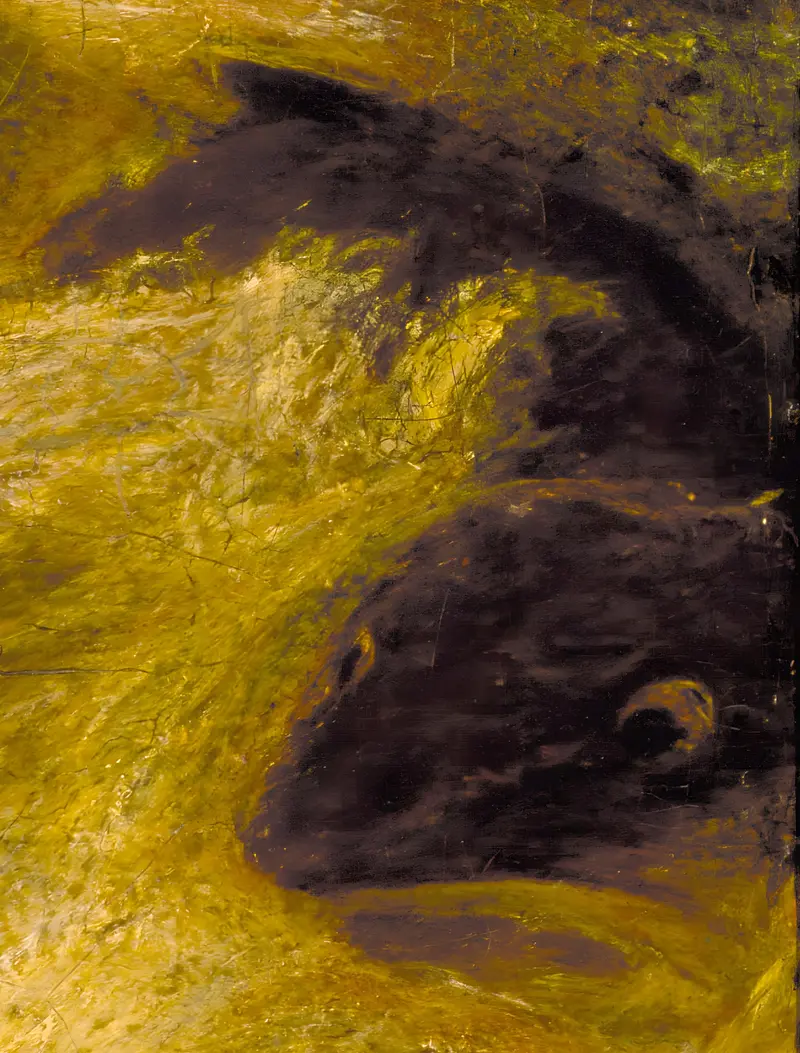
Its uncertain date and medium only add to its aura, making it one of the most enigmatic works in Ryder’s already elusive oeuvre. In Pegasus Departing, Ryder captures the fabled winged horse at the instant of ascent, just as Pegasus leaves the mortal world behind. The legend tells that Pegasus, born from the blood of Medusa, was tamed by the hero Bellerophon and later carried thunderbolts for Zeus. Here, Ryder chooses not the moment of conquest or flight, but the ambiguous threshold: Pegasus, luminous against a shadowed landscape, seems both to rise and to hesitate.
The horse’s outstretched wings and strained muscles suggest movement, while the dark, swirling sky and indistinct ground below create a sense of uncertainty. Unlike Odilon Redon, whose Pegasus soars in dreamlike color, Ryder’s vision is somber, the palette earthy and the forms nearly dissolving, as if the myth itself is fading into memory. The painting’s physical history is as uncertain as its imagery. Like many of Ryder’s works, Pegasus Departing was never formally exhibited during his lifetime, and its early provenance is unclear—typical of an artist who rarely sold or signed his paintings.
Over the years, Ryder’s works have suffered from his experimental techniques, leading conservators to puzzle over their preservation. Today, Pegasus Departing is recognized as a quintessential example of Ryder’s late style, its haunting atmosphere and uncertain boundaries echoing the artist’s own withdrawal from the world. The painting stands as a testament to Ryder’s singular vision, occupying a unique place in American art at the turn of the twentieth century.
More Artworks by Albert Pinkham Ryder

The Toilers of the Sea
Albert Pinkham Ryder
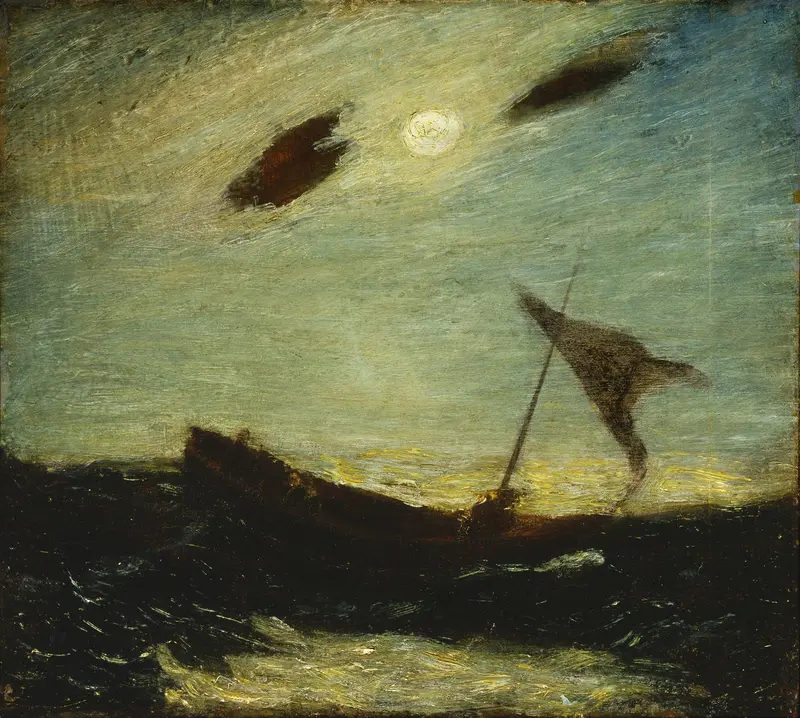
Moonlight
Albert Pinkham Ryder
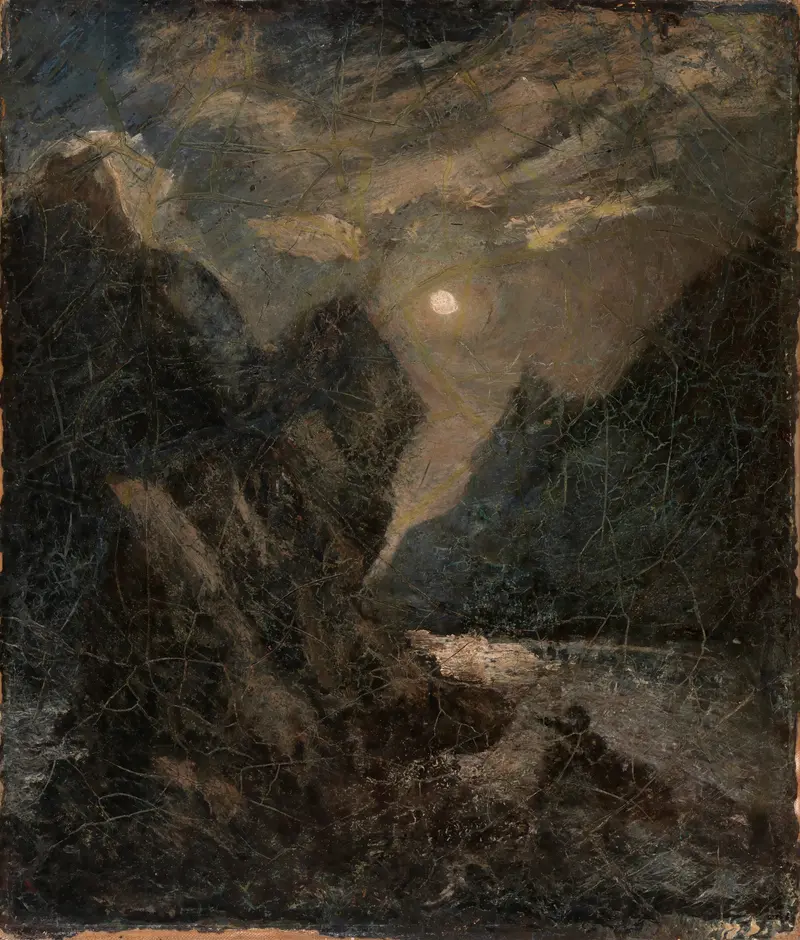
The Lorelei
Albert Pinkham Ryder
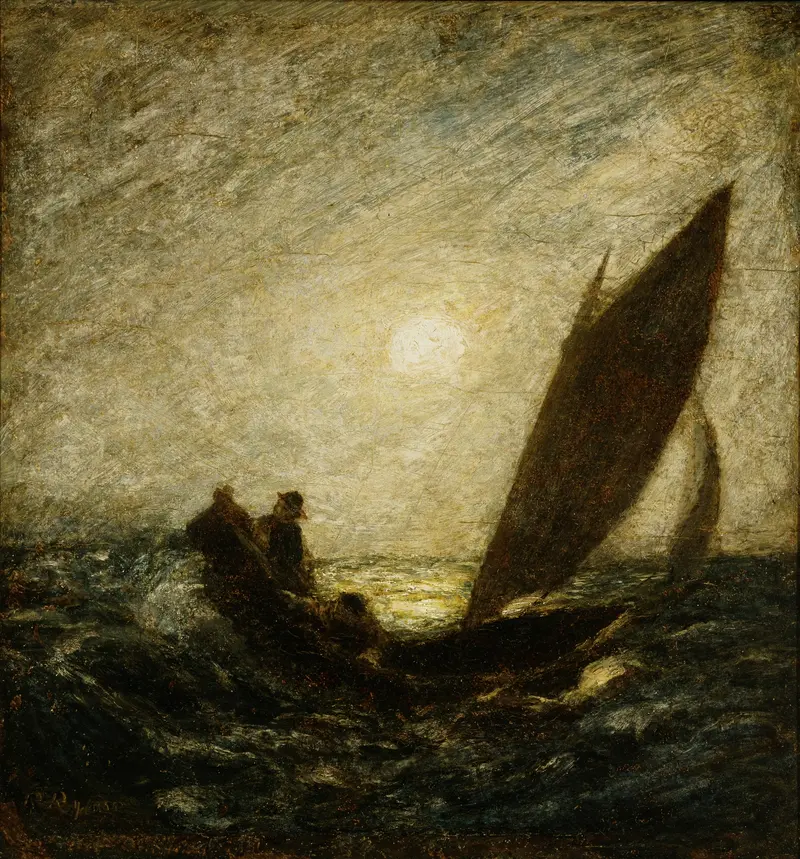
With Sloping Mast And Dipping Prow
Albert Pinkham Ryder
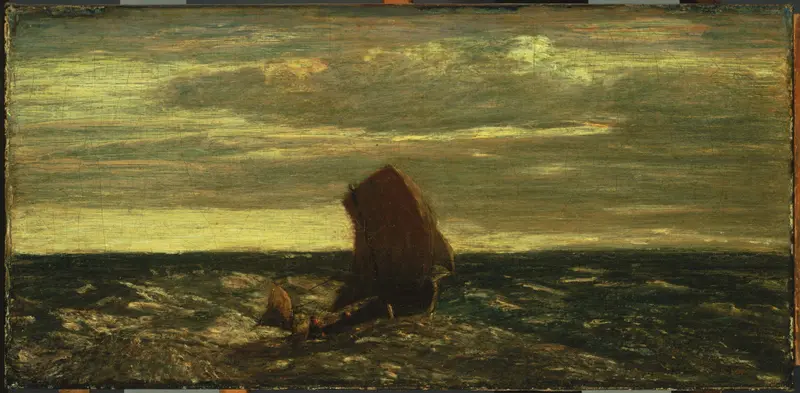
Homeward Bound
Albert Pinkham Ryder
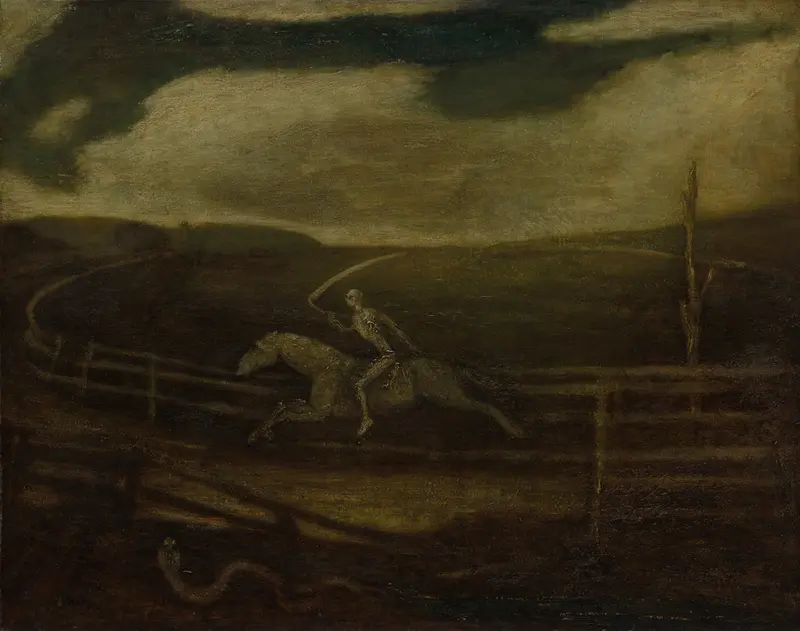
The Race Track (Death on a Pale Horse)
Albert Pinkham Ryder
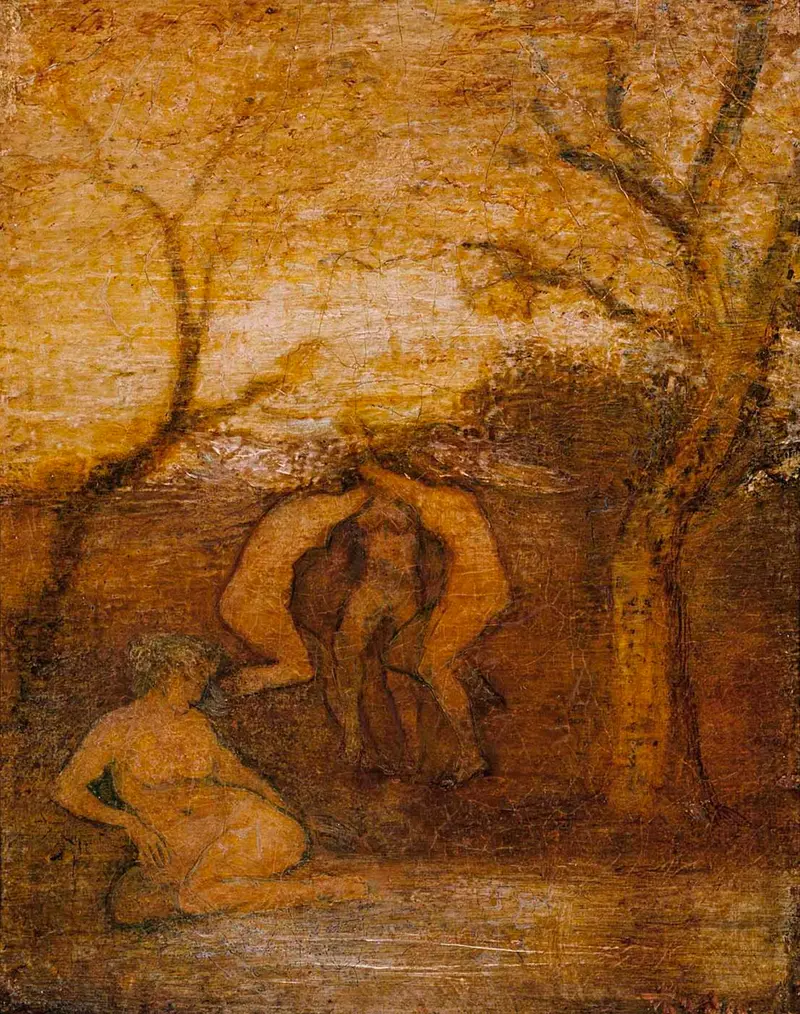
Dancing Dryads
Albert Pinkham Ryder
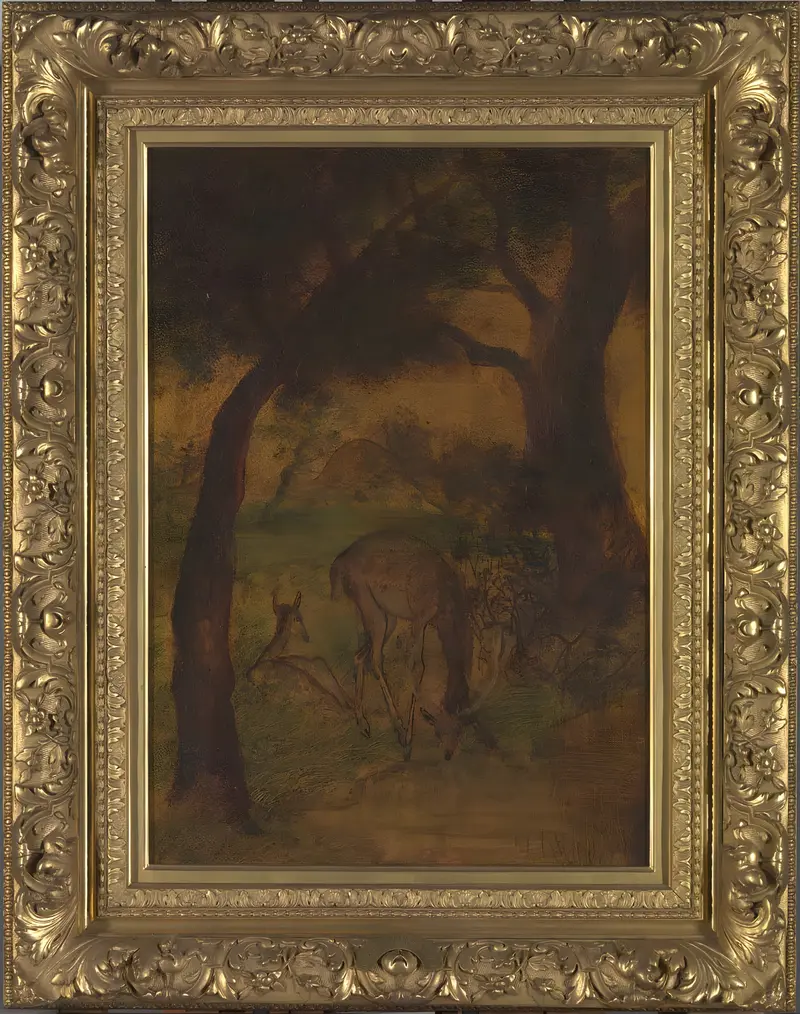
A Stag Drinking
Albert Pinkham Ryder
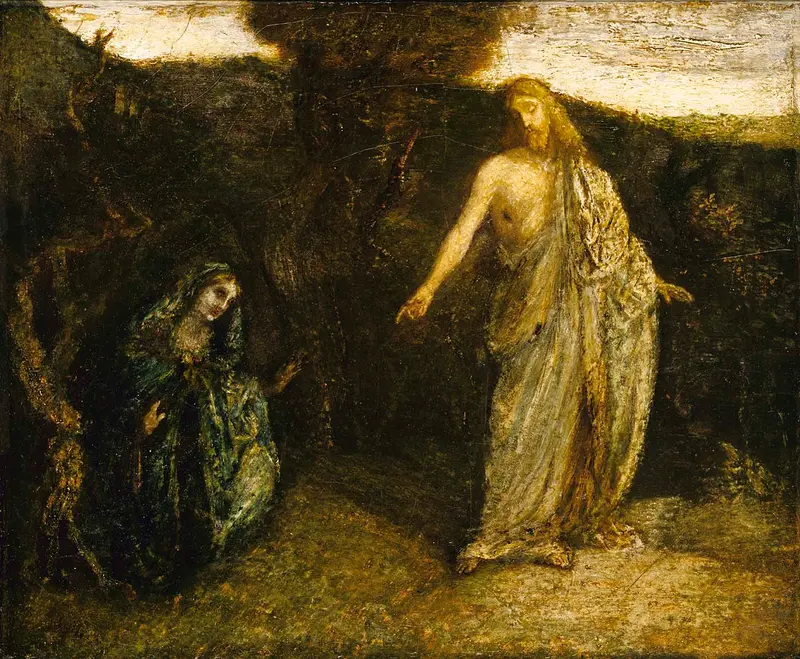
Christ Appearing to Mary
Albert Pinkham Ryder
Jonah
Albert Pinkham Ryder





