
genaamd Cabel VERVALLEN Winterlandschap met ijsvermaak, 1948.0083 Groninger Museum — History & Facts
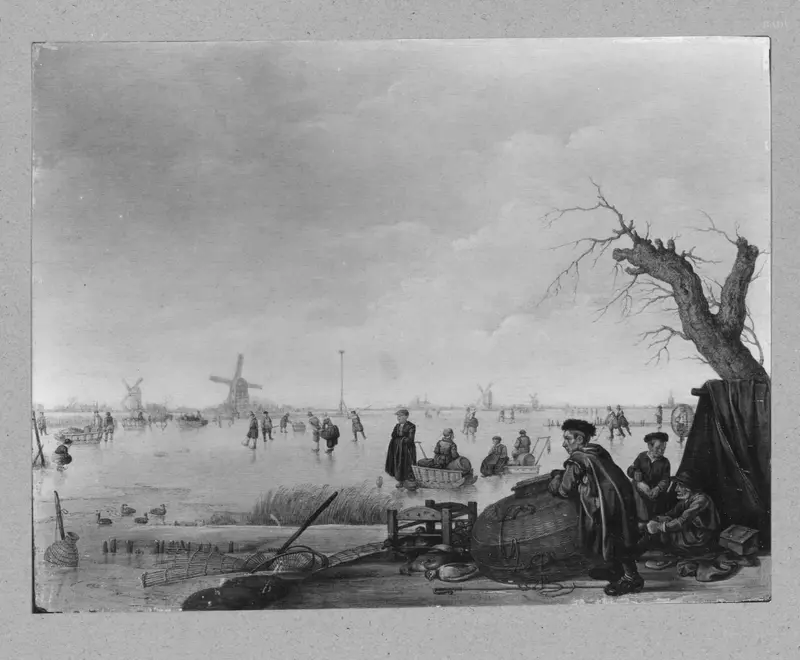
A single bare tree anchors the foreground, its twisted branches stretching across a pale winter sky, while the frozen expanse beyond teems with life. The painter draws your eye from the quiet industry of figures huddled near barrels and nets—tools of daily survival—out onto the ice, where townsfolk skate, walk, and gather in small knots. The low horizon gives the heavens a commanding presence, lending a sense of openness that makes the scattered windmills and distant silhouettes seem both part of the land and dwarfed by it.
Every gesture, from the careful stance of the man at the barrel to the bundled children, is a note in a larger symphony of winter’s routines and pleasures. The muted palette, punctuated by the sharp silhouettes of skaters and birds, sets a mood of brisk clarity, both lively and contemplative. Created between 1606 and 1636, this winter scene belongs to a tradition that flourished in the Dutch Golden Age, when artists like Arent Arentsz. Cabel found beauty and meaning in the rhythms of everyday life.
Such paintings were prized by a new class of urban collectors, eager to see their own world reflected in art—ice scenes in particular became a favorite, celebrating both communal festivity and the quiet endurance of winter. The presence of windmills and the careful attention to humble labor root the image firmly in the landscape and economy of the time. Today, the work resides in the Groninger Museum, a quiet witness to a world where even the coldest days drew people together.
Let your gaze linger on the details: each figure, tool, and shadow is a thread in the fabric of a vanished winter.
More Artworks by Arent Arentsz. Cabel

Ice fun on a frozen river
Arent Arentsz. Cabel
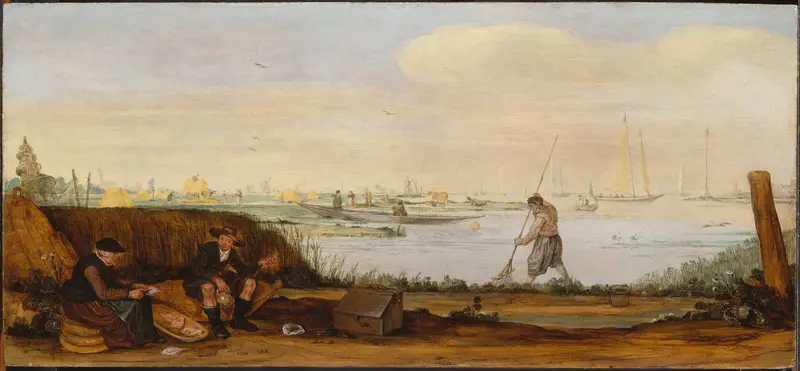
River Landscape with Boats and Fishermen
Arent Arentsz. Cabel
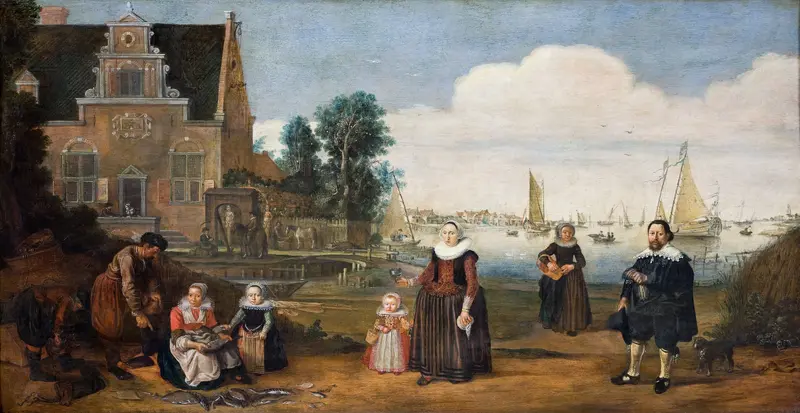
Family
Arent Arentsz. Cabel
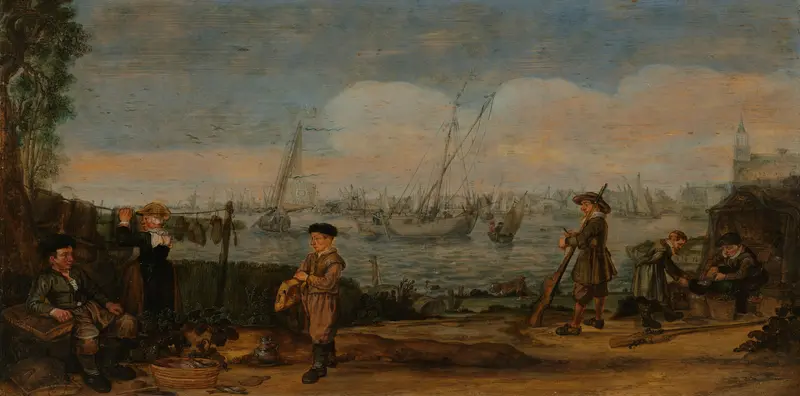
Fishermen and hunters
Arent Arentsz. Cabel
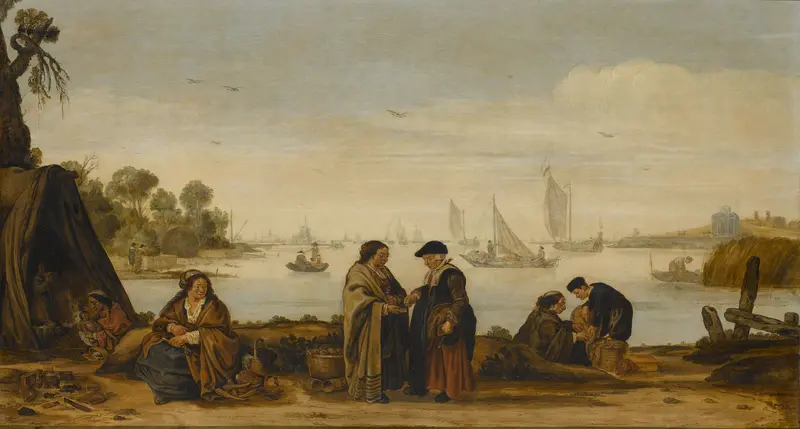
River landcape with gypsies
Arent Arentsz. Cabel
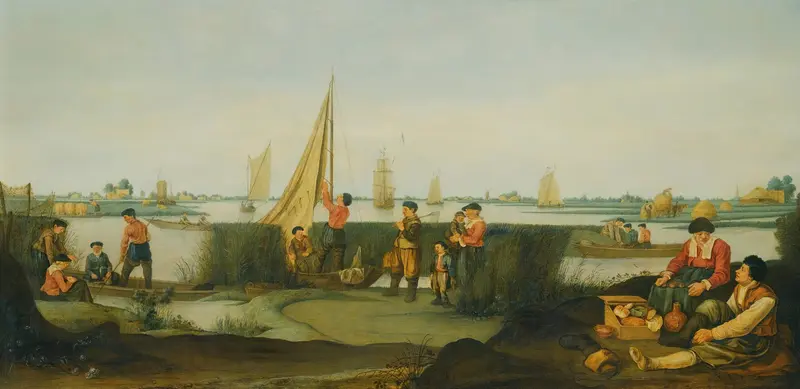
Fishermen On The Banks Of A River Estuary
Arent Arentsz. Cabel
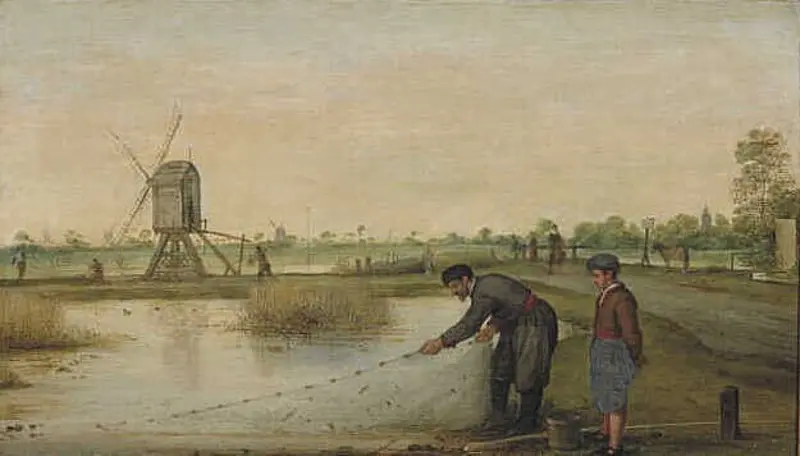
The Fisherman
Arent Arentsz. Cabel
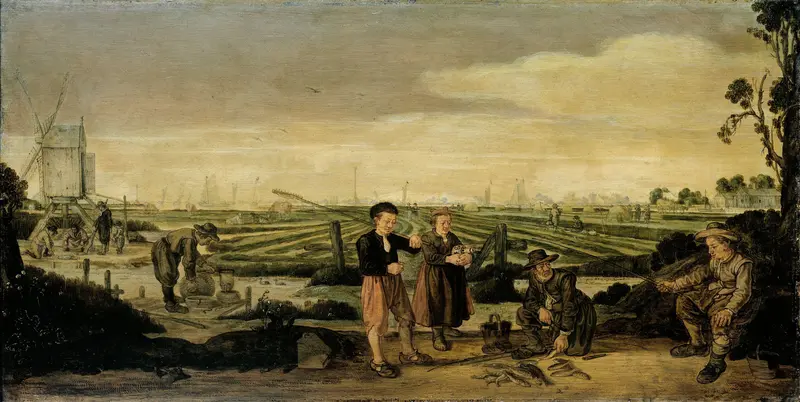
Fishermen and farmers
Arent Arentsz. Cabel
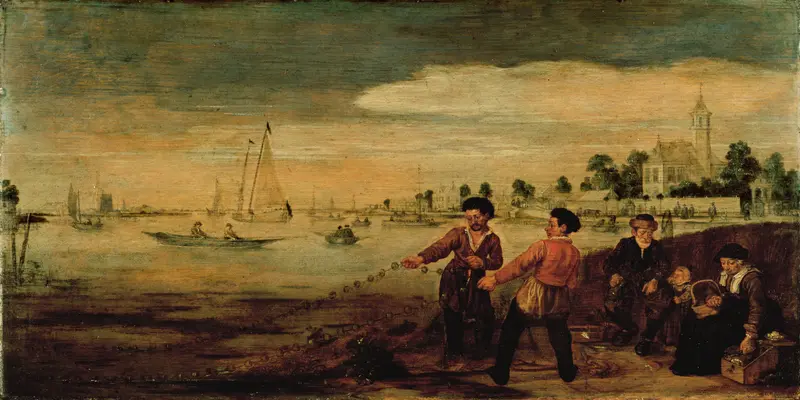
Fisherman on the bank of the Amstel near the Pauwentuin, Amsterdam
Arent Arentsz. Cabel
Ice Landscape with Duck Hunters
Arent Arentsz. Cabel
More Landscape Art

The Starry Night
Vincent van Gogh

View of Delft
Johannes Vermeer

Water Lilies
Claude Monet

The Grand Canal, Venice, looking north-west from the Ca' Corner to the Ca' Contarini degli Scrigni, with the campanile of Santa Maria della Carità
Canaletto

Windsor Castle
Canaletto

The Grand Canal looking North-East from the Palazzo Dolfin-Manin to the Rialto Bridge
Canaletto