
Geoffrey Chaucer (c.1343–1400) — History & Facts
When William Blake painted Geoffrey Chaucer (c.1343–1400) in 1800, he was embarking on a bold new chapter in his life, having just moved to the Sussex countryside under the patronage of William Hayley. This work is remarkable for its role in Blake’s ongoing fascination with English literary giants, and it stands as a rare example of his engagement with portraiture outside his visionary subjects. The painting’s history is also marked by uncertainty: the exact medium remains debated, with some scholars suggesting tempera, others watercolor or mixed media, reflecting Blake’s experimental approach.
Its creation coincided with Blake’s own struggles to balance commercial commissions and his personal, often mystical, artistic ambitions. The image captures Chaucer, the father of English poetry, not in the act of writing, but as a solitary, contemplative figure. Blake chooses a moment of introspection rather than public triumph, presenting Chaucer in modest robes, his hands folded, eyes cast downward in thought. The background is sparse, drawing focus to the poet’s face, where a gentle light seems to suggest inner vision rather than worldly fame.
The effect is intimate, inviting the viewer into the private world of creative imagination. Unlike the grand, formal portrait of Chaucer by Thomas Hoccleve in the Ellesmere Manuscript, Blake’s version is stripped of heraldic display, emphasizing instead the spiritual solitude of the artist. The physical journey of this portrait is less well documented than many of Blake’s major works. It was likely created for Hayley’s literary circle, reflecting the poet’s growing status as a national icon at the turn of the nineteenth century.
Over time, the painting has passed through private hands and now resides in a public collection, where it offers insight into Blake’s unique vision and his reverence for England’s literary heritage. In the context of Blake’s career, Geoffrey Chaucer stands as both homage and self-reflection: a portrait of a poet by a poet, each haunted by the challenge of making art in a turbulent world.
More Artworks by William Blake
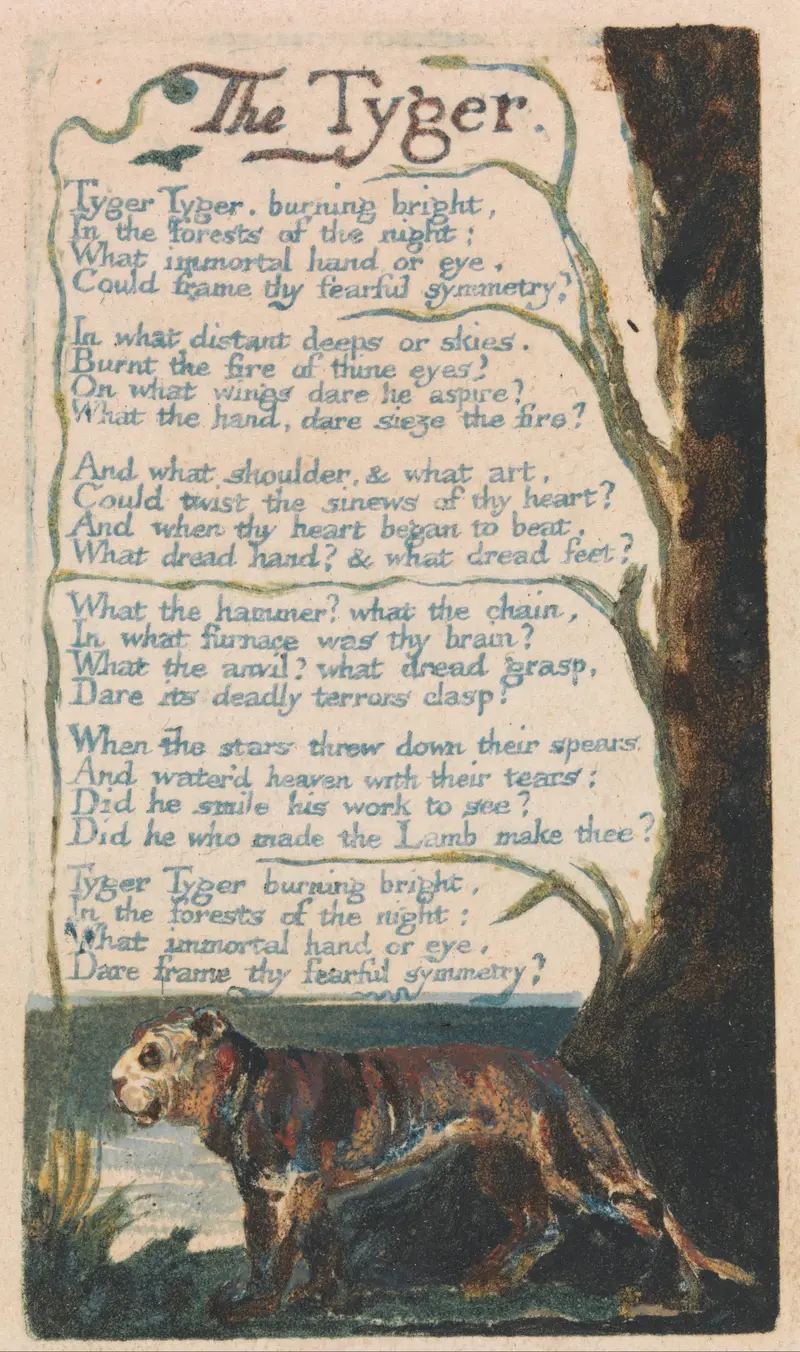
The Tyger
William Blake

Christ Blessing
William Blake
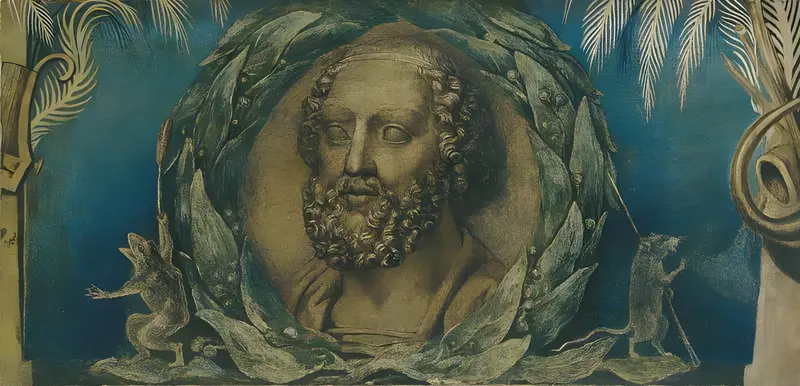
Homer
William Blake
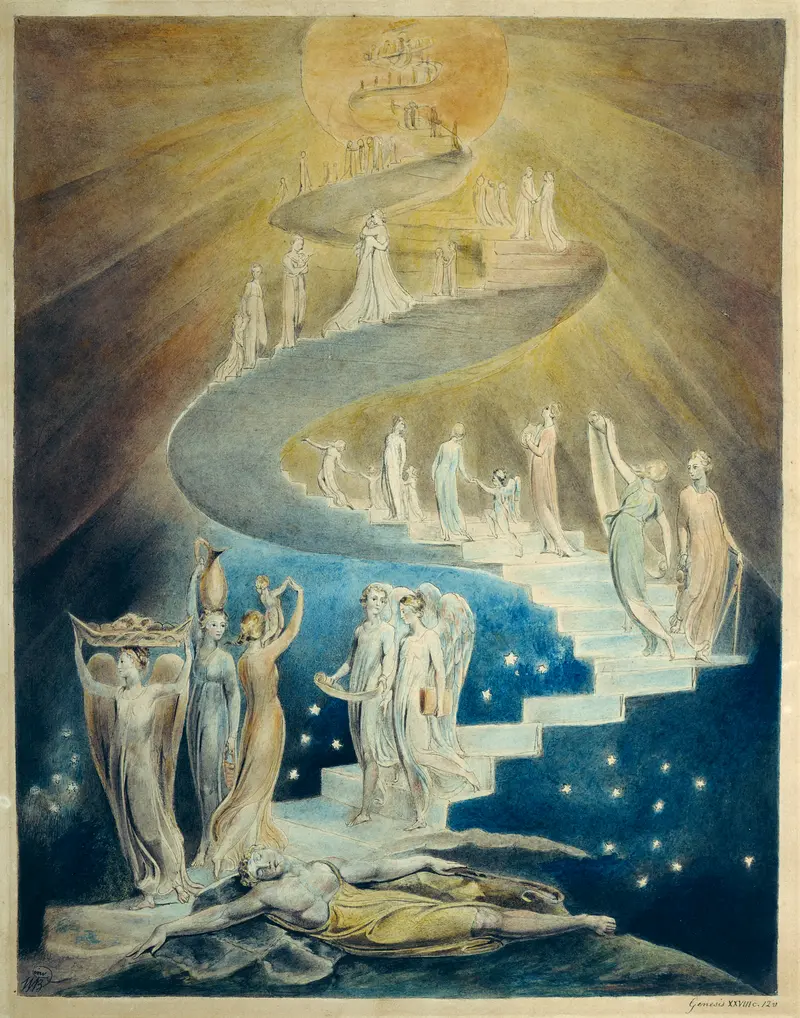
Jacob's Ladder
William Blake
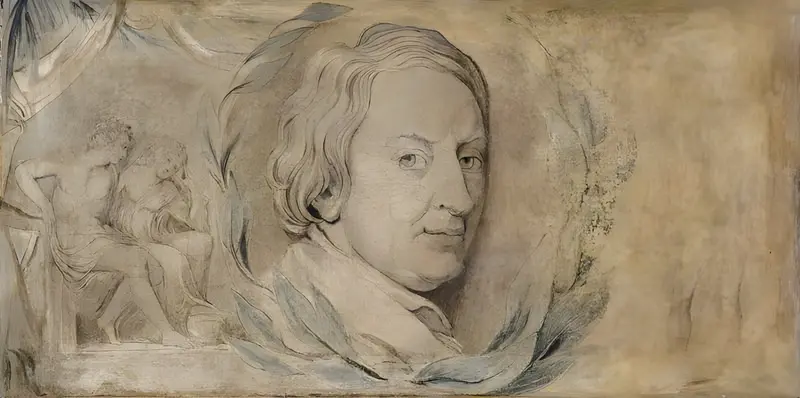
John Dryden (1631–1700)
William Blake
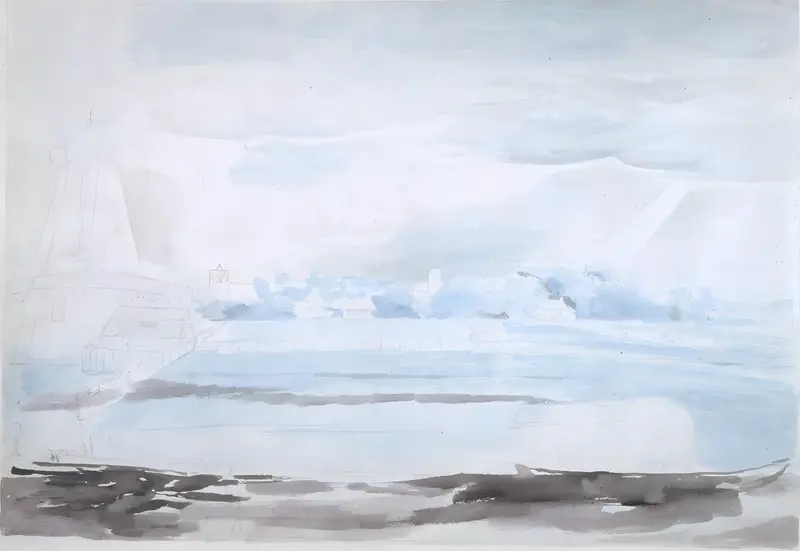
Landscape near Felpham
William Blake
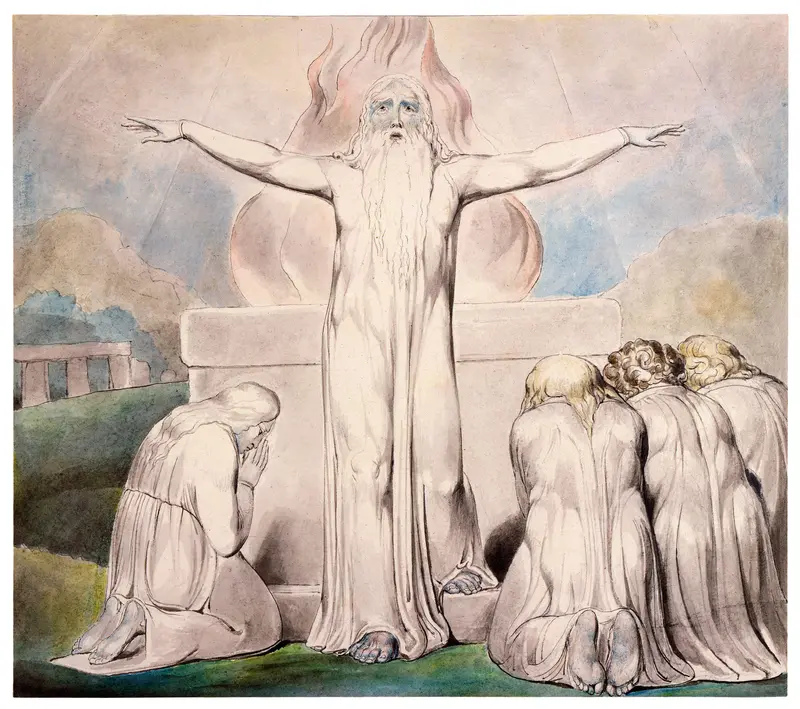
Sacrifice of Job
William Blake
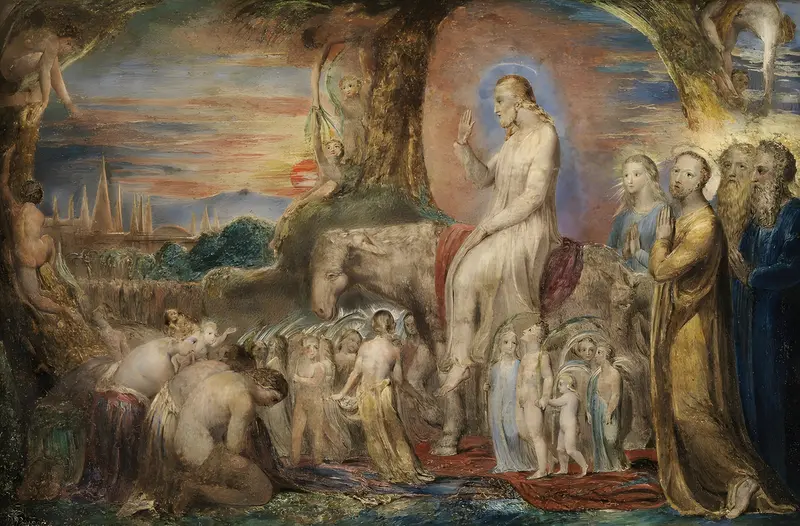
Christ's Entry into Jerusalem
William Blake
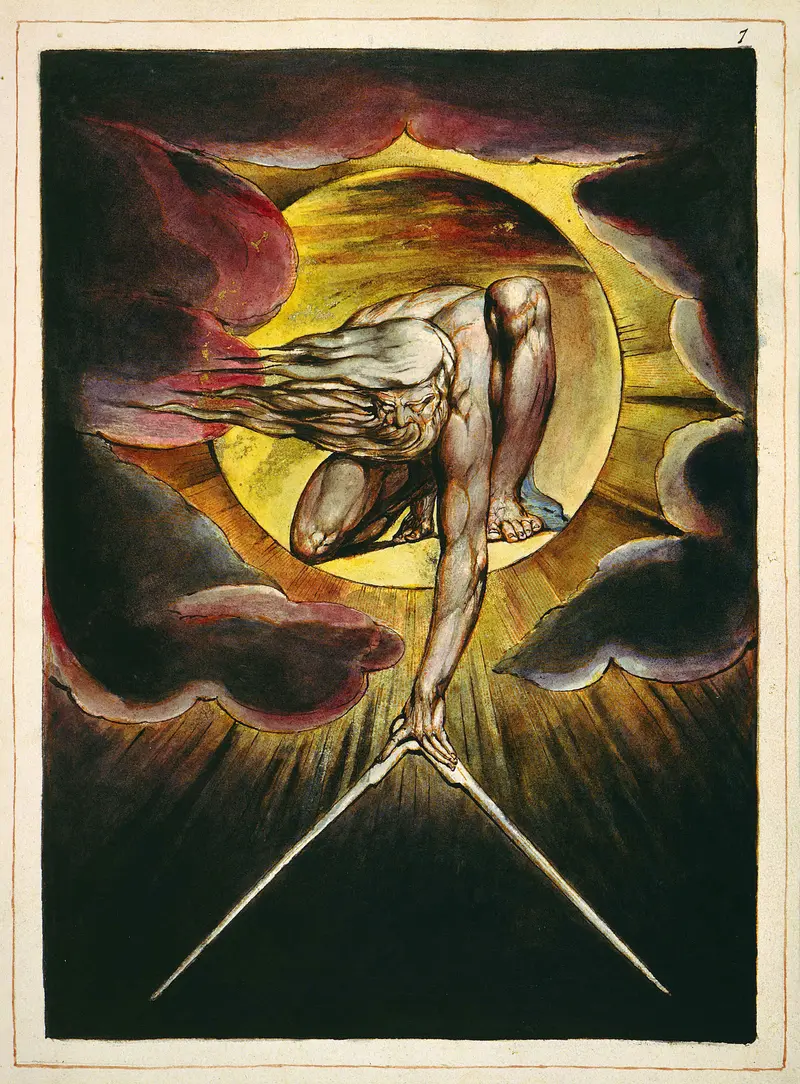
The Ancient of Days
William Blake
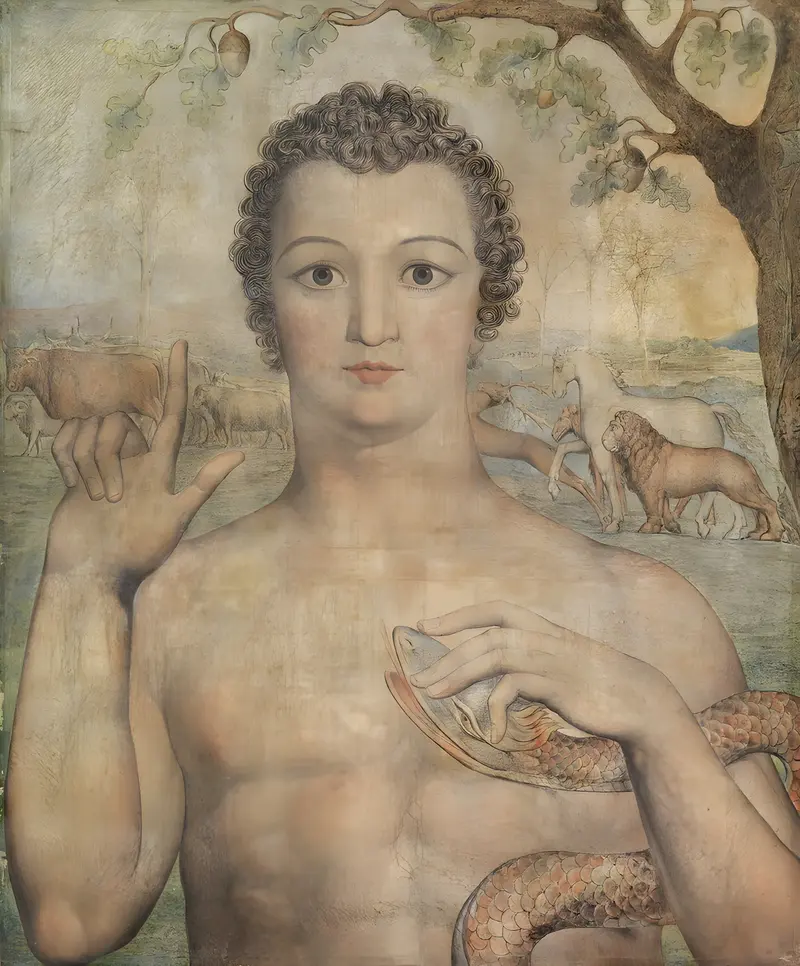
Adam Naming the Beasts
William Blake





