
Georgia Pines — History & Facts
Could a single brushstroke hold eternity? In George Inness's Georgia Pines, each sweeping stroke breathes life into a tranquil symphony of movement, inviting us into a moment suspended between time and nature. Look to the center of the canvas where towering pines rise majestically into an expansive sky, their emerald needles catching the fading light of dusk. Notice how the artist employs a palette of soft greens and warm golds to evoke a sense of harmony, while gentle brushstrokes create a rhythmic flow that guides the eye. The subtle interplay of light and shadow reflects the ephemeral quality of this serene landscape, drawing us deeper into its stillness. Within this peaceful tableau lies a palpable tension between permanence and transience.
The sturdy pines stand as guardians of time, yet the delicate strokes hint at the fragility of nature and the fleeting moments that define our existence. The textured ground below seems to pulse with life, suggesting that beneath the surface, the world is ever-moving, alive with unseen forces. This duality invites contemplation on the relationship between the enduring and the ephemeral in the natural world. Inness painted Georgia Pines in 1890 during his later years, a pivotal time in his career marked by a growing interest in capturing the emotional resonance of landscapes.
He had settled in Montclair, New Jersey, and embraced a more impressionistic approach, aligning with the evolving trends of American art. This painting reflects both his personal journey and a broader shift towards expressing the spiritual connection between man and nature, a hallmark of his legacy.
More Artworks by George Inness
Browse all →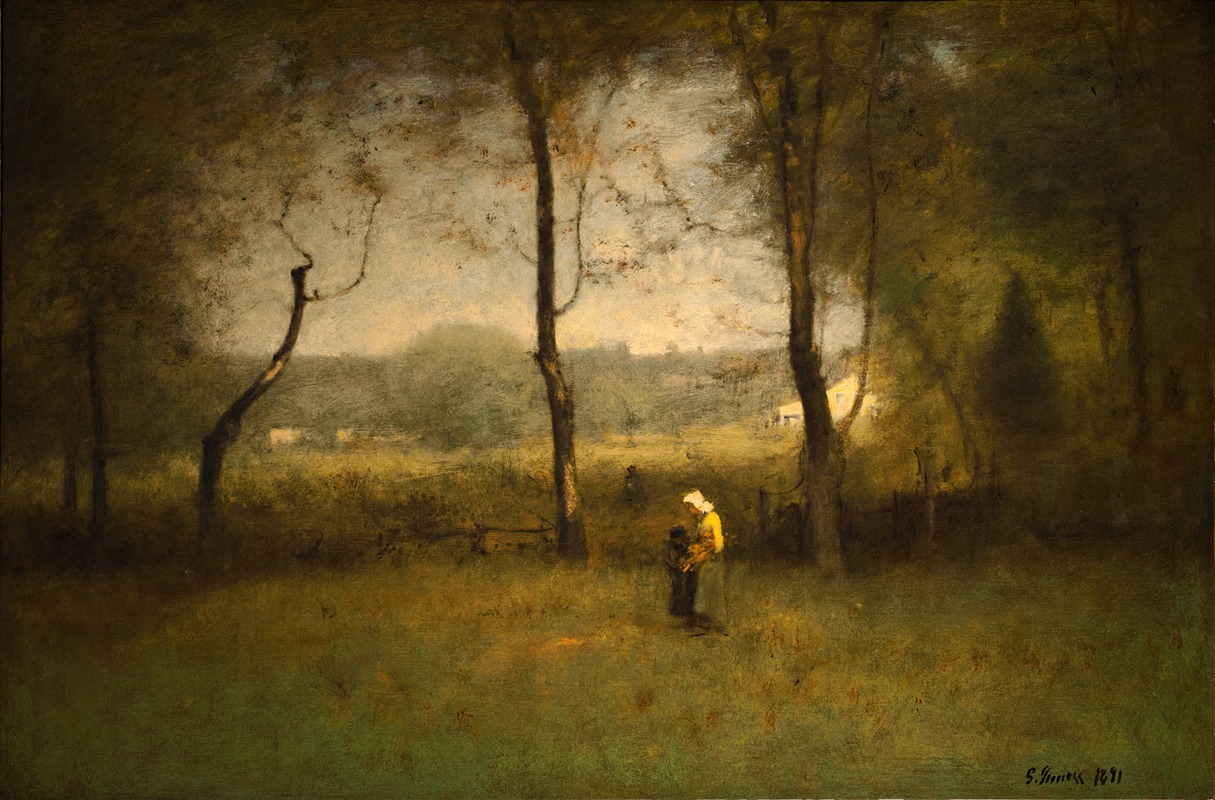
Autumn Woods
George Inness
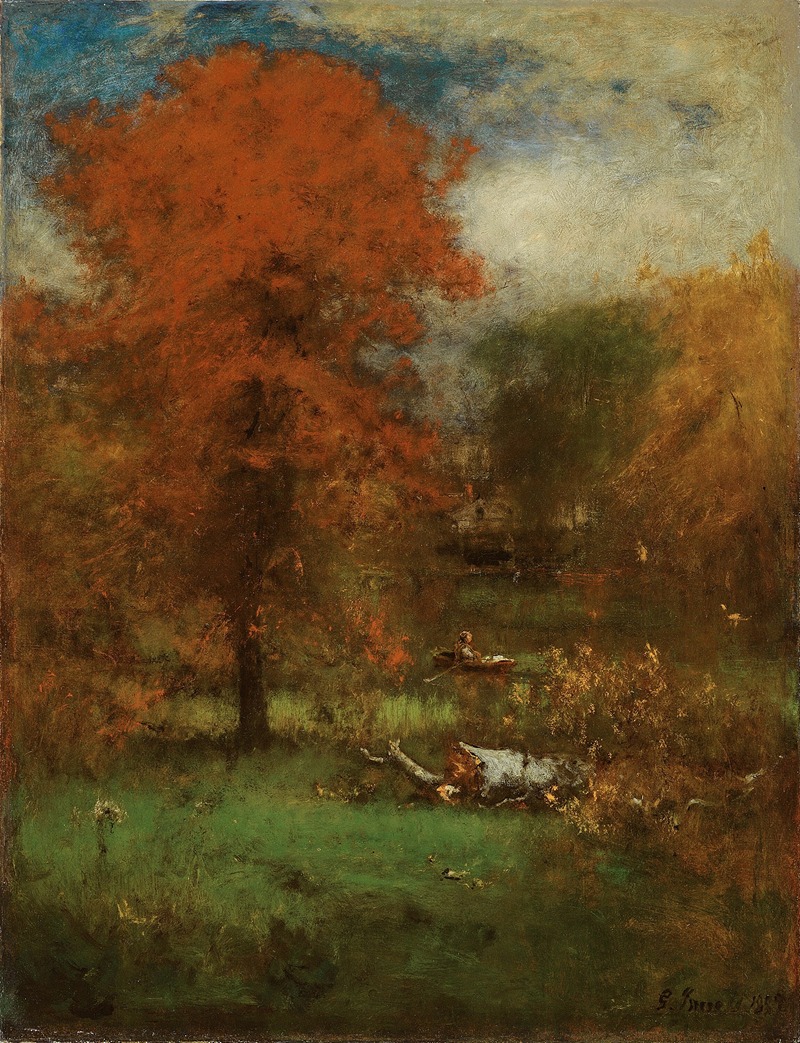
The Mill Pond
George Inness
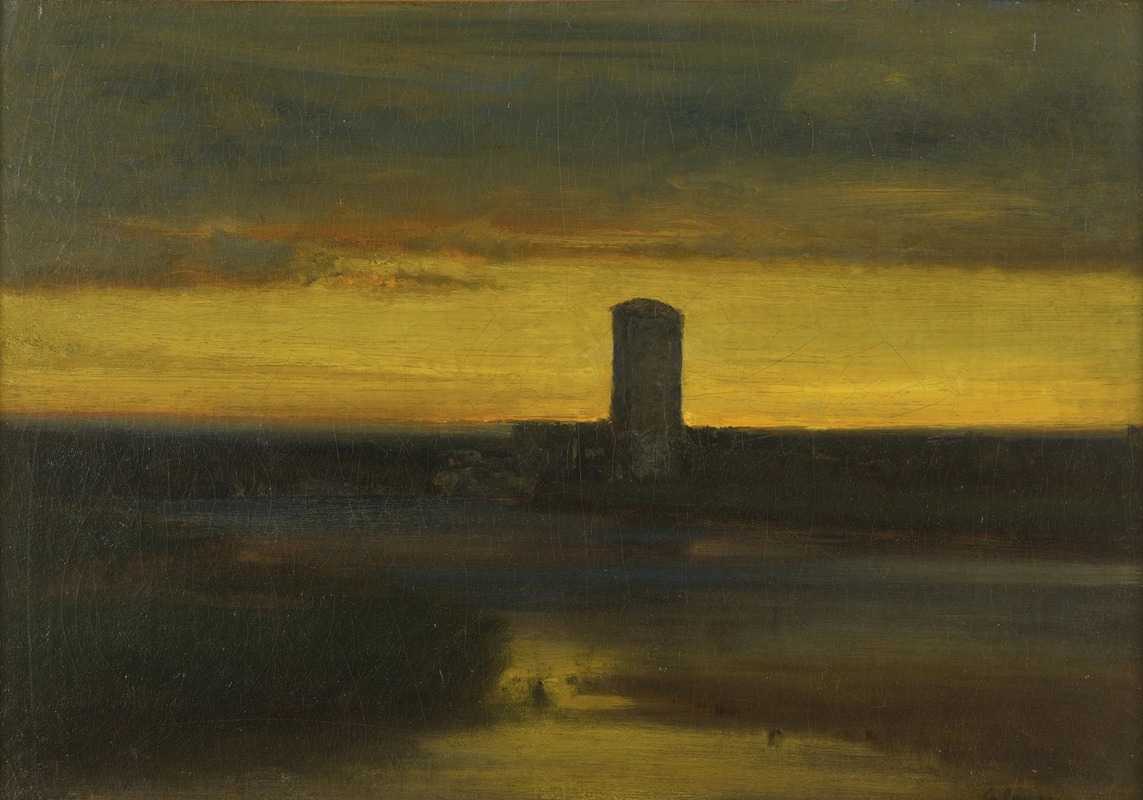
Afterglow
George Inness
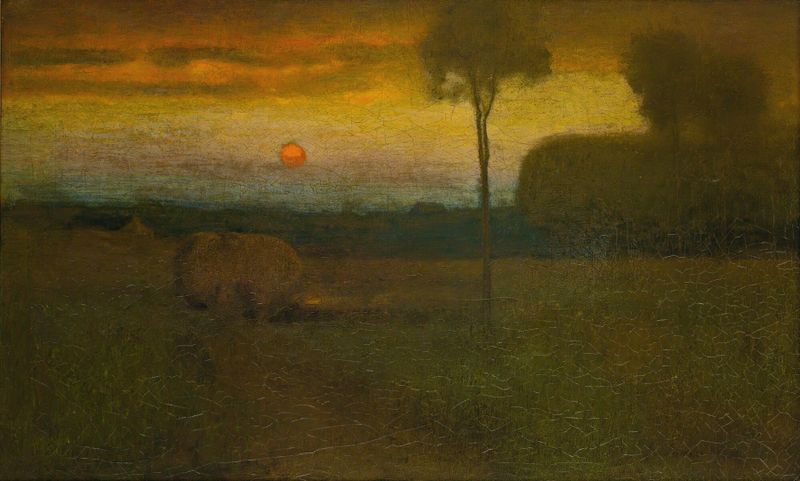
Landscape (Evening Landscape)
George Inness

Montclair
George Inness

View in Berkshire County, Massachusetts, Clearing Off after a September Storm
George Inness

October
George Inness
Landscape, Sunset
George Inness
Afterglow
George Inness
Catskill Mountains
George Inness





