
Gleaners in the Wheat Field — History & Facts
In Gleaners in the Wheat Field, the weight of destiny rests heavily upon the figures laboring amidst vast fields. Look to the left where the light spills over the golden wheat, illuminating the gleaners, their forms bent and weary yet steadfast. Notice how the artist masterfully contrasts the rich, textured strokes of the wheat with the delicate, almost frail lines of the workers. The warm earth tones evoke a sense of labor, while the distant horizon, softened by a gentle haze, hints at an uncertain future. The emotional tension arises from the juxtaposition of toil and tranquility—the gleaners, engaged in their humble task, symbolize resilience against the backdrop of potentially forgotten destinies.
The distant figures under the sprawling sky remind us of the broader human condition, each individual contributing to the cycle of life, even as they face societal neglect. The lushness of the surroundings serves as a poignant reminder of the abundance that often exists alongside hardship. In 1847, John Martin, influenced by the burgeoning Romantic movement, painted this work during a time of societal upheaval and rapid industrialization in England. As the world around him shifted, he sought to capture the essence of human struggle and endurance in the face of adversity, reflecting a deep concern for the plight of the working class.
This context enriches the painting, imbuing it with layers of meaning that resonate beyond its immediate visual appeal.
More Artworks by John Martin
Browse all →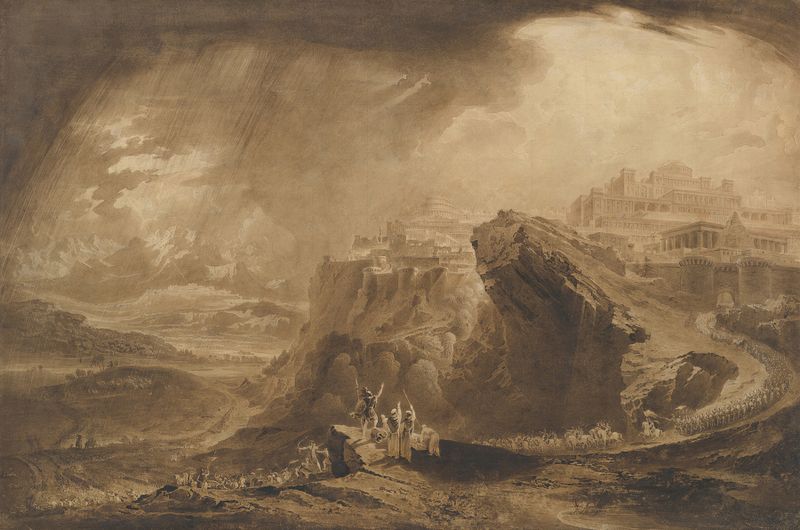
Joshua Commanding the Sun to Stand Still Upon Gibeon
John Martin
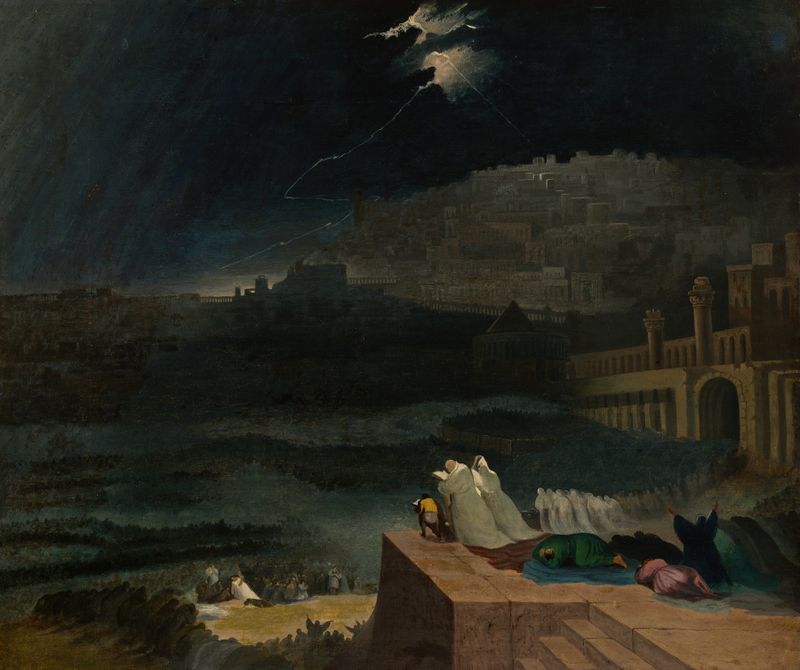
Repentance of Nineveh
John Martin

Sadak in Search of the Waters of Oblivion
John Martin
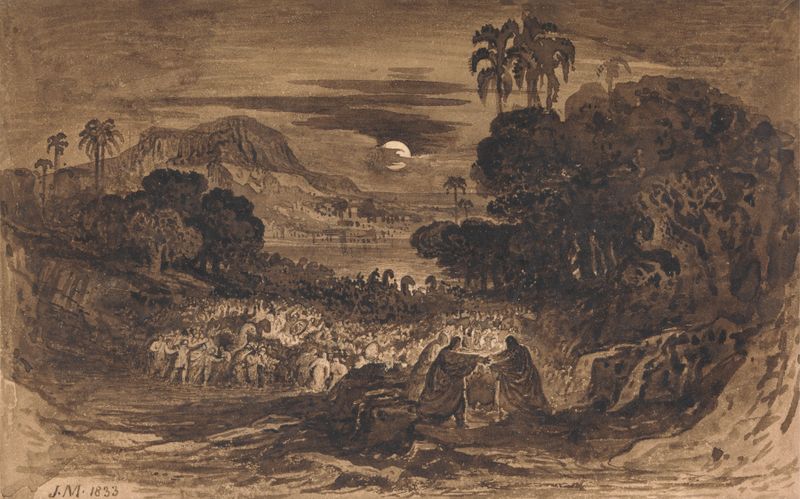
The Rescue of Lot
John Martin

The Valley of the Tyne, My Native Country near Henshaw
John Martin

The City Of God And The Waters Of Life
John Martin
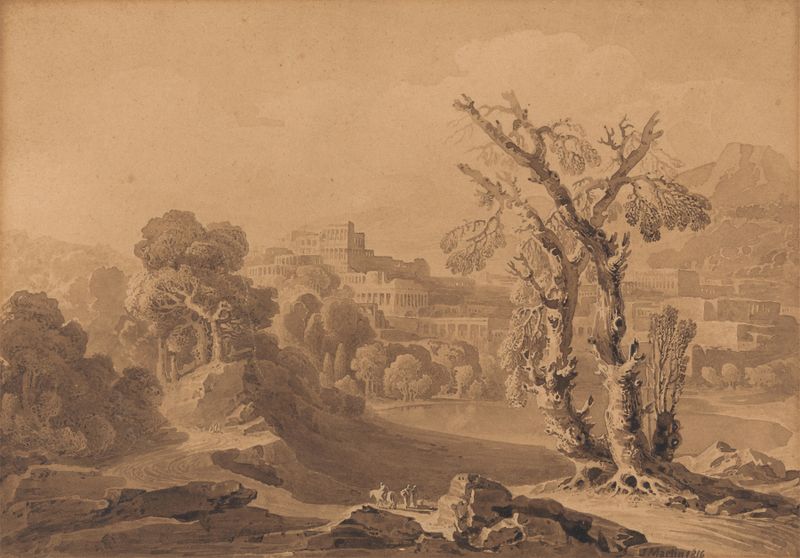
Classical City in Landscape
John Martin

Marcus Curtius
John Martin
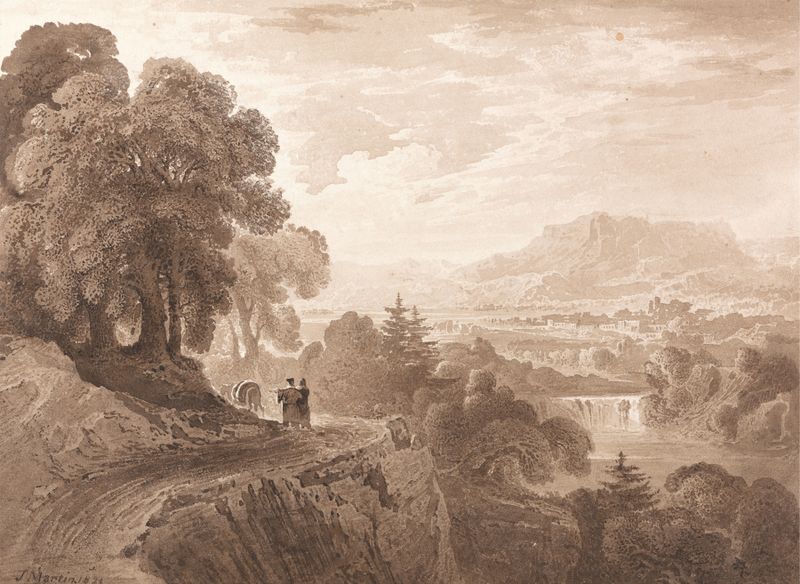
Travelers on a Road above a River
John Martin

Ruins of an Ancient City
John Martin





