
Gonzaga-Zyklus, II. Reihe, 4. Einzug Philipps II. in Mantua — History & Facts
When Tintoretto accepted the commission for the Gonzaga-Zyklus in 1579, he was tasked with immortalizing the power and prestige of the Gonzaga family through a grand cycle of paintings for the Palazzo Ducale in Mantua. One of the most remarkable episodes he chose to depict was the ceremonial entry of Philip II of Spain into Mantua—a moment loaded with political symbolism, as the Spanish king’s visit in the mid-16th century signified a crucial alliance for the Gonzagas. This commission was not only a testament to the family's ambitions but also a rare instance of a Venetian master working for an Italian princely court outside his native city. In Gonzaga-Zyklus, II.
Reihe, 4. Einzug Philipps II. in Mantua, Tintoretto captures the precise moment when Philip II, resplendent in regal attire, processes through the city gates, greeted by the Gonzaga hosts and a throng of Mantuan citizens.
The composition is alive with movement: banners flutter, horses rear, and courtiers lean forward in anticipation. The king’s elevated position on horseback, flanked by richly dressed attendants, signals his dominance, while the architectural backdrop—likely a stylized Mantua—frames the event as both spectacle and statecraft. The use of dramatic diagonals and flickering light recalls Tintoretto’s earlier Venetian works, such as his scenes in the Scuola Grande di San Rocco, but here the pageantry is more restrained, befitting the formality of a dynastic alliance. The painting’s precise journey after its creation is not fully documented, but it is known that the Gonzaga-Zyklus remained in Mantua until the dispersal of much of the Gonzaga collection in the 17th century.
While some works from the cycle have been lost or misattributed over the centuries, this panel survived, bearing witness to Tintoretto’s late-career engagement with courtly themes beyond Venice. Today, it stands as a rare example of the artist’s work for a non-Venetian patron, bridging the worlds of Venetian color and Lombard pageantry, and offering a window into the complex politics of Renaissance Italy.
More Artworks by Tintoretto
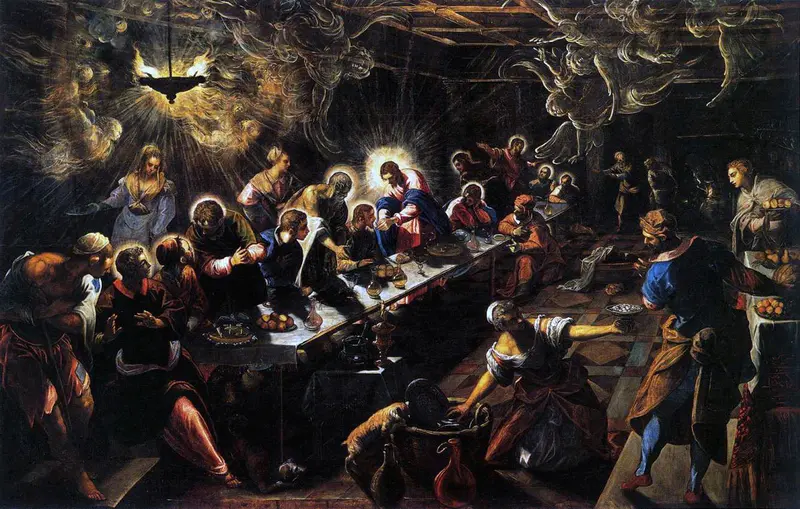
The Last Supper
Tintoretto
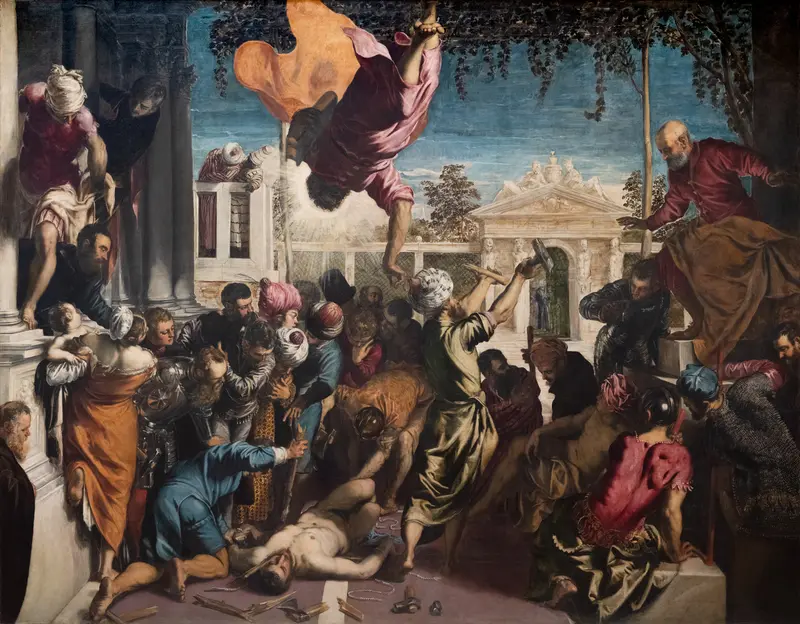
The Miracle of the Slave
Tintoretto
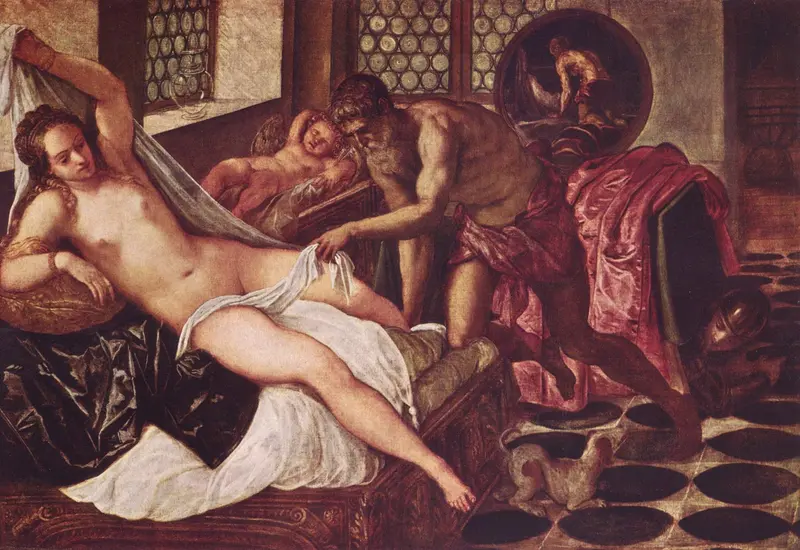
Venus and Mars Surprised by Vulcan
Tintoretto

Adoration of the Shepherds
Tintoretto
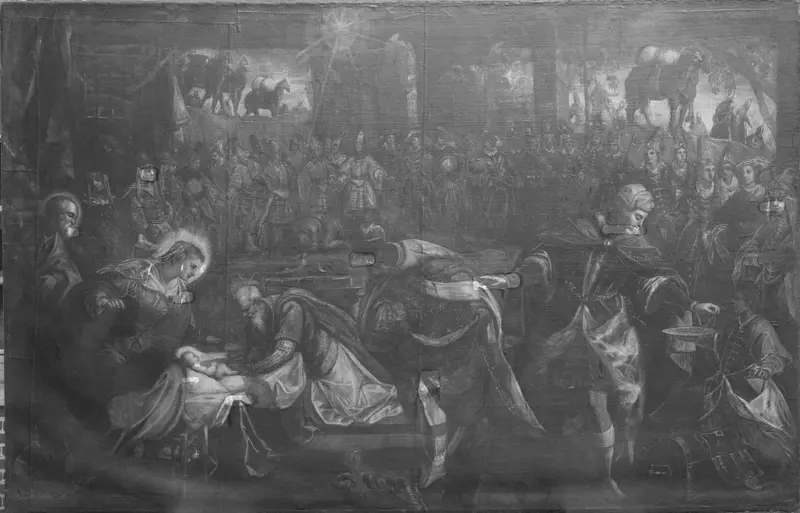
Adoration of the Magi
Tintoretto
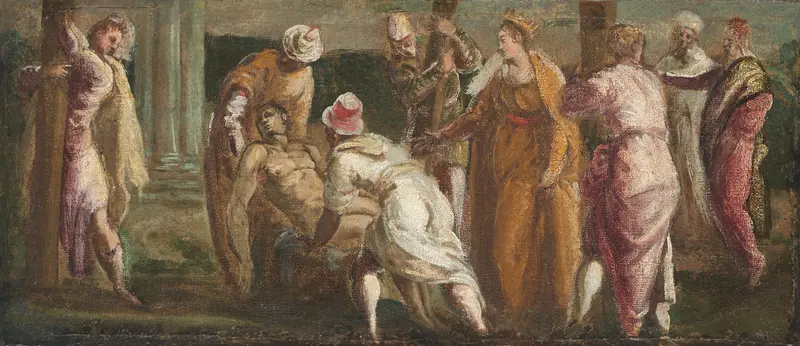
Saint Helen Testing the True Cross
Tintoretto
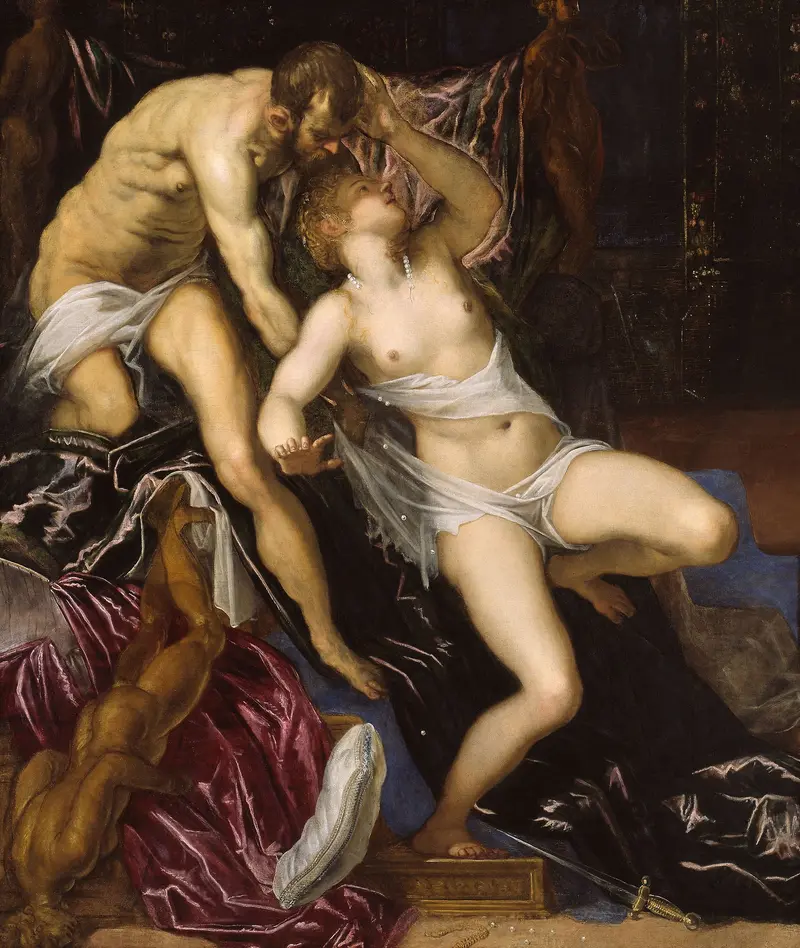
Tarquin and Lucretia
Tintoretto
Two Male Figures in Motion (verso)
Tintoretto
A Female Nude [verso]
Tintoretto
Veduta Kopra
Tintoretto





